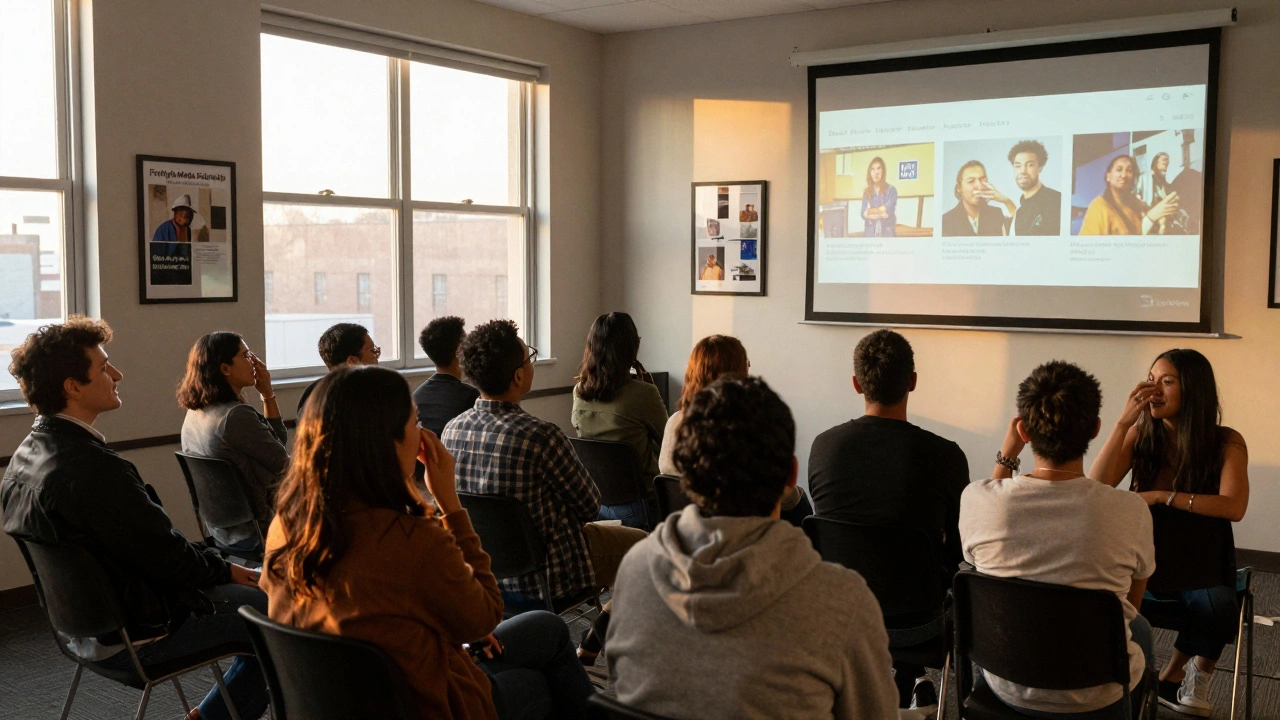
When you're a filmmaker from an underrepresented background, getting your story on screen isn't just about talent-it's about access. Too often, the people with the most urgent, authentic stories are the ones who get shut out before they even start. That’s where grants and fellowships come in. They’re not just checks in the mail. They’re lifelines that turn ideas into films, and silence into voices.
Why Funding Matters More Than Ever
In 2025, only 18% of U.S. feature films had a director who identified as Black, Indigenous, or a person of color, according to the Annenberg Inclusion Initiative. Women directed just 24% of the top 100 films. These numbers aren’t accidents. They’re the result of decades of systems that funnel money, connections, and opportunities to a narrow slice of the population. But change is happening-and it’s being fueled by funding programs that don’t just talk about diversity, they invest in it.
Look at what happened after the Sundance Institute launched its Directors Lab for women and nonbinary filmmakers. In the first five years, 73% of participants went on to direct a feature film within three years. That’s not luck. That’s infrastructure.
Top Grants for Diverse Filmmakers in 2026
Not all grants are created equal. Some are competitive. Others are designed to remove barriers. Here are the most impactful ones right now.
- Adobe Creative Residency - Offers $50,000, a year-long creative fellowship, and access to Adobe’s tools and mentors. Focused on creators from marginalized communities who use storytelling to drive social change. Open to documentary, fiction, and experimental work.
- Firelight Media Documentary Fellowship - Provides $30,000 in unrestricted funding plus mentorship for emerging BIPOC documentary filmmakers. Since 2001, it’s supported over 150 filmmakers whose projects have screened at Sundance, TIFF, and the Oscars.
- Latino Public Broadcasting (LPB) Grants - Funds narrative and documentary projects that reflect Latino experiences in the U.S. Awards range from $10,000 to $100,000. No prior credits required-just a compelling story and cultural authenticity.
- Asian American Film Lab (AAFL) Grant - Gives $25,000 to Asian American and Pacific Islander filmmakers for short films or first features. Applications are judged by a panel of AAPI industry veterans.
- Native American Media Alliance (NAMA) Fellowship - Supports Indigenous filmmakers with up to $40,000 in funding and production support. Priority given to projects that center tribal sovereignty, language, and ancestral knowledge.
These aren’t charity cases. They’re pipelines. Each one has a track record: 60% of Firelight fellows get distribution deals. 80% of Adobe residents release a project within 18 months. These programs don’t just give money-they give credibility.
Fellowships That Change Trajectories
A grant might give you cash. A fellowship gives you a community.
The Sundance Institute’s Ignite Fellowship is one of the most powerful. It brings together 15 young filmmakers aged 18-25 from underrepresented backgrounds for a year-long mentorship program. Fellows get access to Sundance’s network, industry panels, and even a public screening at the festival. Past fellows include the director of Minari and the writer of Reservation Dogs.
Then there’s the Time’s Up Foundation Fellowship, created in response to systemic exclusion in Hollywood. It offers $50,000, a year of professional development, and direct introductions to producers, agents, and distributors. It’s open to women, LGBTQ+, and gender-nonconforming creators of color.
These programs don’t just fund projects-they fund careers. One filmmaker told me, "They didn’t just give me money. They gave me permission to believe I belonged here."
How to Apply (Without Getting Burned)
Applying for funding can feel like a full-time job. And honestly? It often is. But there’s a smarter way.
- Know your story inside out. Funders don’t just want to hear what your film is about-they want to know why you are the only one who can tell it. What lived experience informs your perspective? What’s at stake if this story isn’t told?
- Follow the guidelines exactly. If they ask for a 2-page treatment, don’t send 3. If they require a budget breakdown, include line items. These programs get hundreds of applications. Sloppy submissions get tossed.
- Don’t wait for perfection. A rough cut of your film? A storyboard? A script with notes? Submit it. Funders want to see your vision-not your polished final product. They’re betting on potential.
- Build relationships before you ask. Attend industry events. Comment on funders’ social media. Send a thoughtful email after watching a film they supported. Connection matters more than you think.
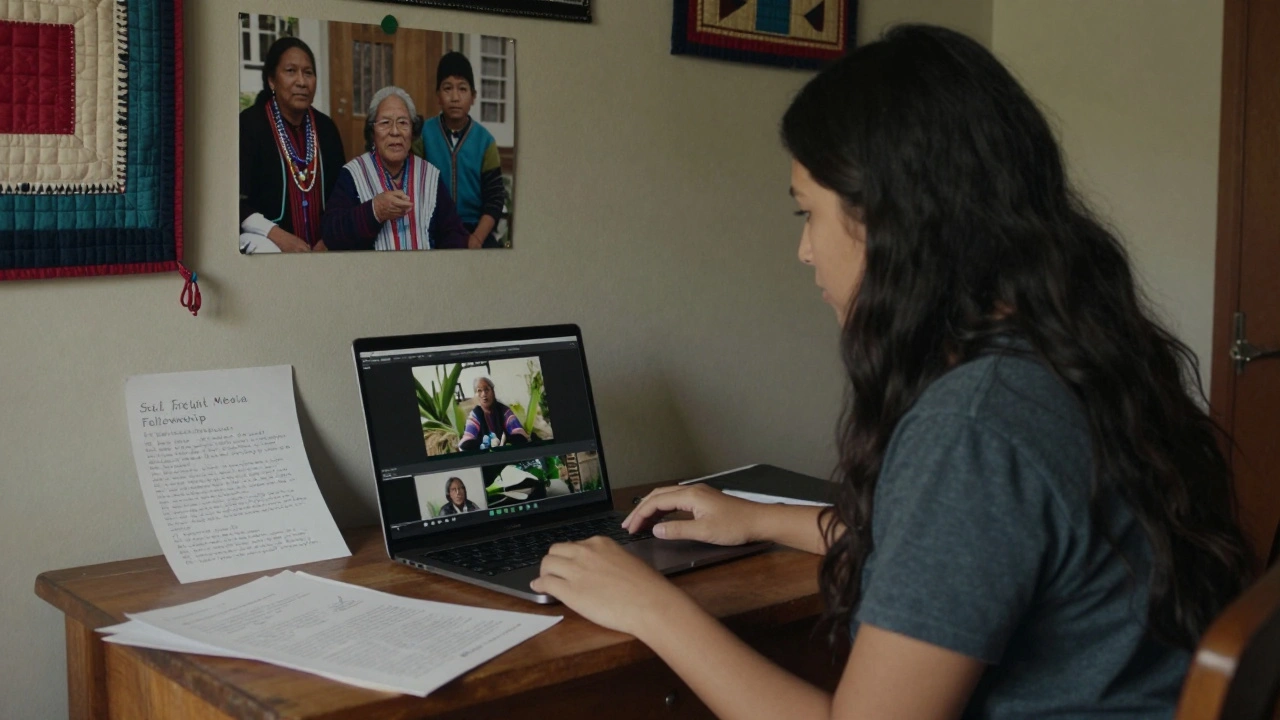
One filmmaker applied to the Firelight Media Fellowship three times before getting in. On her fourth try, she included a video letter from her grandmother, who had never seen a film about her community. That letter? It got her funded.
What to Do After You Get Funded
Getting the money is only the first step. What happens next determines whether your film becomes a movement-or disappears into a hard drive.
- Track your impact. Use your funding to collect data: who watched your film? Where? How did it change conversations? Funders love measurable outcomes.
- Stay connected. Join alumni networks. Attend their events. Mentor someone else. These programs aren’t one-and-done-they’re ecosystems.
- Don’t let the money change you. The biggest mistake new filmmakers make? They think they have to become "Hollywood" to succeed. You don’t. Stay true to your voice. Your authenticity is your asset.
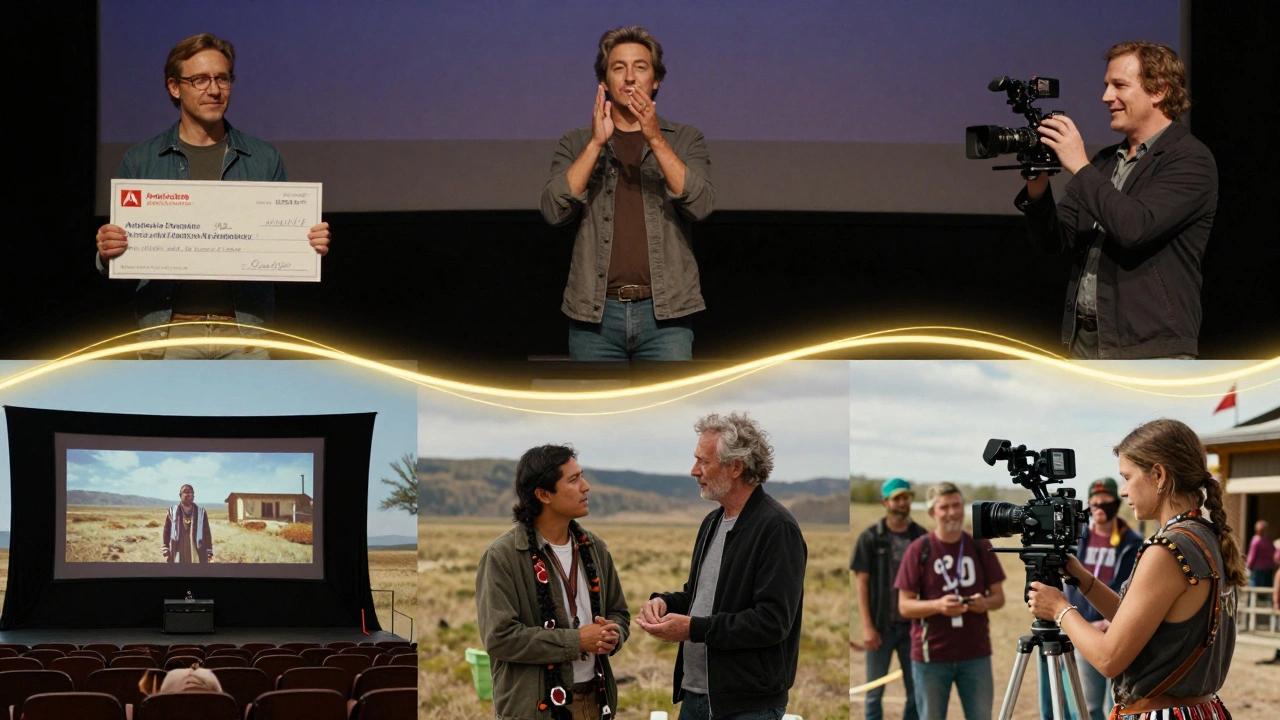
After receiving a grant, filmmaker Amara Li used her funds to host free screenings in rural Native communities. She didn’t just make a film-she built a dialogue. That’s the real goal.
Where to Find More Opportunities
There are dozens more programs out there. Here’s where to look:
- Film Independent’s Fiscal Sponsorship Program - Lets you raise funds through donations under their nonprofit umbrella. Great for indie projects that don’t fit traditional grant molds.
- Women in Film (WIF) Grants - Offers funding for women and nonbinary creators across genres. Their annual grant cycle opens in March.
- Black Film Center & Archive (Indiana University) - Provides microgrants up to $10,000 for Black filmmakers creating work rooted in African diasporic experiences.
- International Documentary Association (IDA) - Offers fiscal sponsorship and grants for global storytellers, especially those from Global South countries.
Bookmark these sites. Sign up for their newsletters. Set calendar reminders. Funding cycles open and close fast.
Don’t Wait for Permission
Here’s the truth: no one is coming to save you. But that doesn’t mean you’re alone. The funding landscape is changing. More organizations are waking up to the fact that diverse stories aren’t niche-they’re essential.
Some filmmakers wait for someone to notice them. The ones who succeed? They show up. They apply. They reapply. They tell their stories, again and again, until someone says yes.
You don’t need a film degree. You don’t need connections in LA. You just need a story that matters-and the courage to ask for the resources to tell it.
Do I need prior film experience to apply for these grants?
No. Many programs specifically target first-time filmmakers. The Firelight Media Fellowship, Adobe Creative Residency, and Native American Media Alliance all prioritize potential over past credits. What matters most is the strength of your story and your commitment to telling it.
Can international filmmakers apply for U.S.-based grants?
Some can, some can’t. Programs like Firelight Media and Adobe Creative Residency accept international applicants, but you must be able to legally work in the U.S. during the fellowship. Others, like Latino Public Broadcasting, require U.S. citizenship or permanent residency. Always check the eligibility requirements before applying.
Are grants taxable income?
Yes. Most grants are considered taxable income by the IRS. You’ll receive a 1099 form if the award is over $600. Set aside 25-30% of your grant for taxes. Some organizations offer tax guidance-ask when you apply.
How long does it take to hear back after applying?
It varies. Most grant cycles take 3-6 months. Fellowships like Sundance Ignite can take up to 8 months. Don’t follow up before the stated notification date. If you haven’t heard back after the deadline window, send a polite email asking for an update. Most programs respond.
What if I don’t get funded the first time?
You’re not alone. Most successful filmmakers applied multiple times. Use feedback if it’s offered. Revise your materials. Keep making work-even if it’s just a short video on your phone. The more you create, the stronger your next application becomes. Persistence beats perfection.
There’s no magic formula. Just a simple truth: stories from marginalized communities aren’t just important-they’re necessary. And the funding is there. You just have to reach for it.


Comments(9)