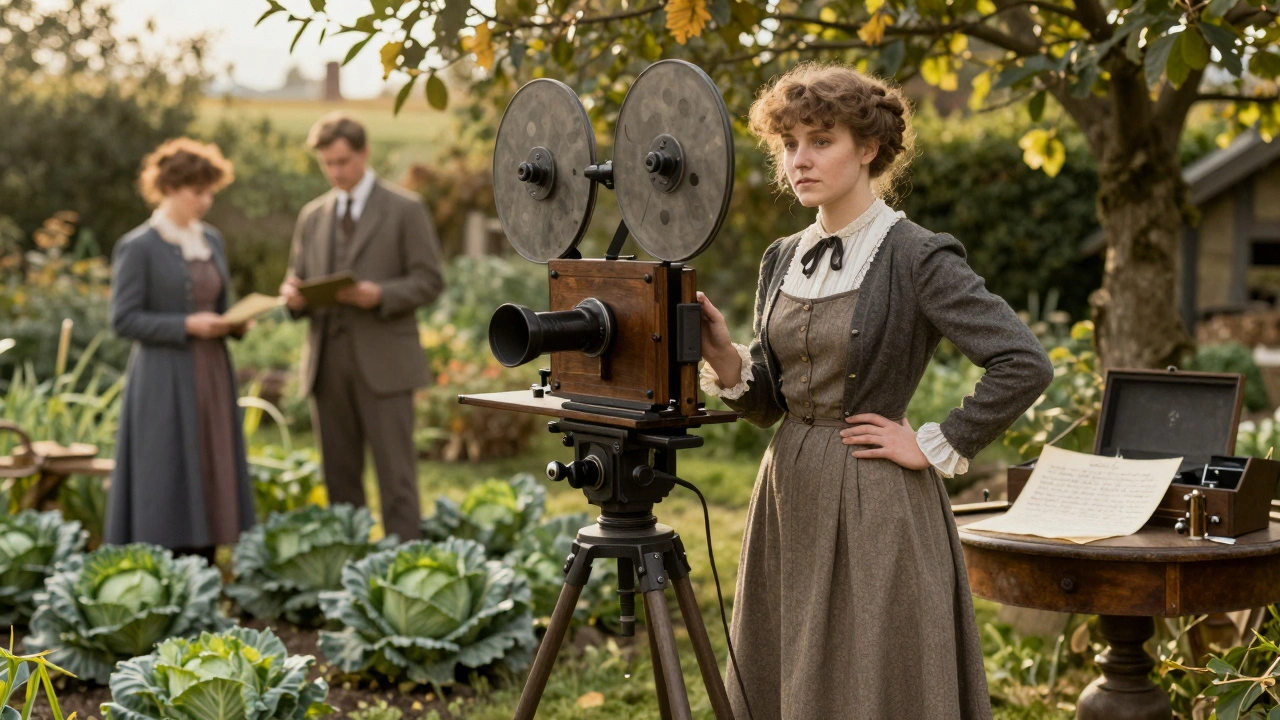
Most people know Charlie Chaplin, D.W. Griffith, and Buster Keaton. But who directed the first narrative film by a woman? Who filmed the first horror movie? Who ran her own studio before Hollywood even had a name? The truth is, women didn’t just appear in front of the camera in early cinema-they were behind it, shaping the medium from the very start.
Alice Guy-Blaché: The First Female Film Director
In 1896, just one year after the Lumière brothers showed their first moving pictures, Alice Guy-Blaché made La Fée aux Choux (The Cabbage Fairy). It wasn’t a documentary. It wasn’t a stunt. It was a scripted, staged story with actors, costumes, and a plot. That made her the first known woman to direct a fiction film.
By 1907, she was running her own studio in New Jersey, Solax Company, one of the first film studios in the U.S. She directed over 1,000 films-many of them now lost-covering genres from comedy to westerns to social dramas. She experimented with color tinting, synchronized sound, and even early special effects. Yet for decades, her name vanished from film history books. It wasn’t until the 1970s that film scholars began digging through archives and rediscovering her work.
Lois Weber: The Queen of Early Hollywood
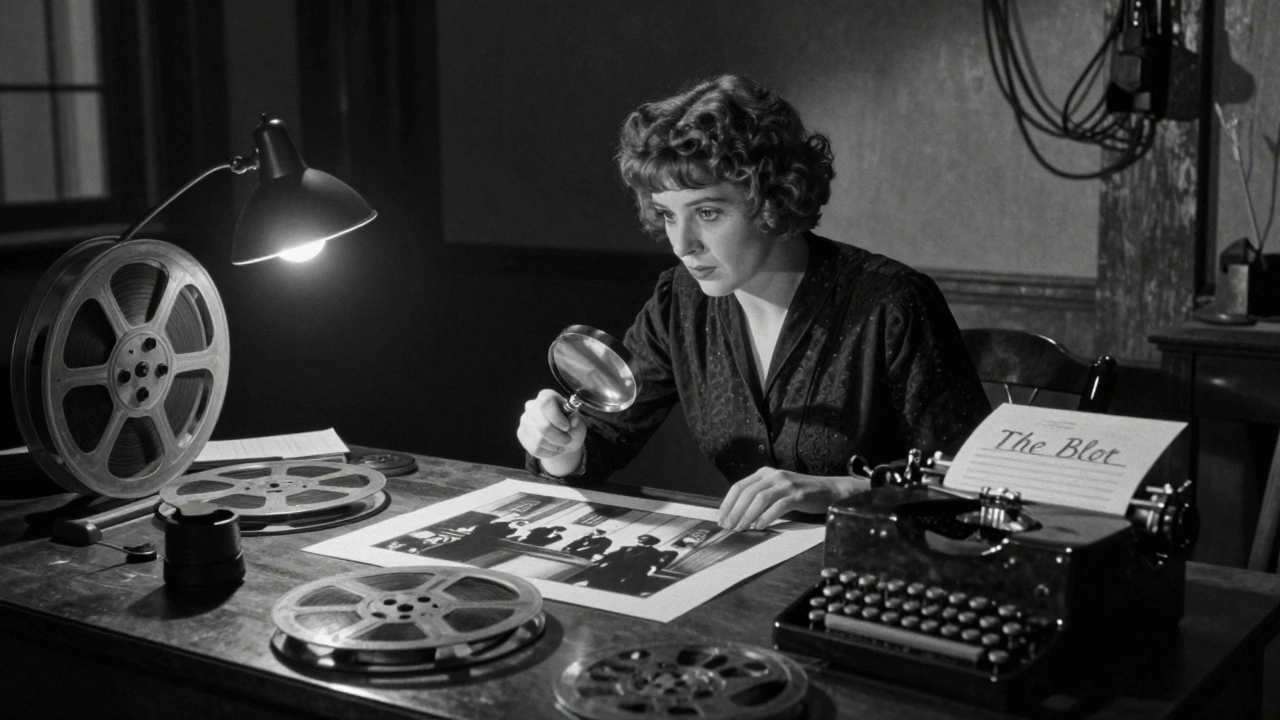
If Alice Guy-Blaché was the pioneer, Lois Weber was the powerhouse. By 1916, she was earning $5,000 a week-more than any other director in Hollywood, male or female. She directed over 100 films, including The Blot (1921), a sharp critique of class inequality, and Where Are My Children? (1916), one of the first films to tackle birth control.
Weber didn’t just make movies-she used them to argue. She filmed scenes inside churches, courtrooms, and hospitals to make her messages feel real. She was the first woman to direct a full-length feature in the U.S. and the first to own her own studio. She even wrote her own scripts and edited her own films. Studios called her "the most important woman in motion pictures." But by the 1920s, as Hollywood became more corporate, her outspoken style fell out of favor. Her films were shelved, and her name faded.
Ida Lupino: Breaking Rules When No One Would Let Her In
By the 1940s, the door to directing had slammed shut for women. But Ida Lupino didn’t wait for permission. After starring in dozens of films, she co-founded a production company called Filmakers in 1949 because no studio would hire her to direct. She made low-budget films on the fringes of the system-films about rape, bigamy, and mental illness. The Hitch-Hiker (1953), a tense noir about two men on the run, was the first film noir directed by a woman.
She didn’t have a big budget or a big studio. She had grit. She used real locations, non-professional actors, and handheld cameras when others used studio sets and stage lights. Her work was raw, urgent, and deeply human. Today, she’s credited with paving the way for independent filmmaking. But back then, she was just a woman trying to tell stories no one else would touch.
Marie Epstein: The Forgotten Architect of French Avant-Garde
In France, Marie Epstein worked alongside her brother Jean in the 1920s and 30s, co-directing experimental films that pushed boundaries. Her 1928 film La Glace à trois faces (The Three-Sided Mirror) was a poetic, non-linear story told through the memories of three women. It was unlike anything else being made at the time.
Epstein also helped establish the Cinémathèque Française, one of the world’s first film archives. She believed films were cultural artifacts, not just entertainment. She preserved works by other women directors, including Alice Guy-Blaché’s, when others were discarding them. Her efforts kept early women’s cinema alive. Yet her name rarely appears in mainstream film histories.
Frances Marion: The Highest-Paid Screenwriter in Hollywood
While women were pushed out of directing, many found power behind the script. Frances Marion was the highest-paid screenwriter in Hollywood during the 1920s and 30s. She wrote over 300 scripts, including The Big House (1930) and The Champ (1931), which won the first Academy Award for Best Story.
Marion didn’t just write for stars-she shaped their careers. She wrote the role of Joan Crawford’s breakthrough performance in Letty Lynton (1932). She also wrote the script for San Francisco (1936), one of the first major films to use real disaster footage. She was the first woman to win an Oscar in screenwriting. But even she was told to keep a low profile. "Women don’t write movies," one producer told her. "They write about them." She wrote them anyway.
Why Their Stories Were Buried
Why don’t we know these names? Because after the 1920s, Hollywood restructured. Studios became corporations. The male-dominated industry began promoting a myth: that filmmaking was a man’s job. Women who directed were labeled "unprofessional" or "emotional." Their films were dismissed as "niche" or "sentimental." Archives were neglected. Prints were destroyed. Credits were erased.
By the 1950s, the narrative was set: women didn’t direct. It wasn’t true. It was just convenient.
What They Left Behind
These women didn’t just make films-they created the tools we still use today. Alice Guy-Blaché pioneered narrative structure. Lois Weber used film as social commentary. Ida Lupino proved you didn’t need a studio to tell hard truths. Marie Epstein saved film history. Frances Marion showed that women could write blockbusters.
Today, when you see a female director on a major film, you’re standing on their shoulders. Their work wasn’t just "important for its time." It was groundbreaking, inventive, and bold. And they did it all while fighting to be seen, heard, and taken seriously.
Where to Start Watching
If you want to see their work, here are a few accessible titles:
- La Fée aux Choux (1896) - Alice Guy-Blaché
- The Blot (1921) - Lois Weber
- The Hitch-Hiker (1953) - Ida Lupino
- La Glace à trois faces (1928) - Marie Epstein
- The Champ (1931) - Screenplay by Frances Marion
Many are available on YouTube, the Internet Archive, or through university film collections. They’re not always polished. But they’re alive with energy, vision, and rebellion.
Why aren’t these women more famous in film history?
For decades, film history was written by men who dismissed women’s contributions. Studios erased credits, prints were lost, and women were pushed out as the industry became more corporate. Even when they succeeded, their work was labeled "women’s films"-a term used to mean "not important." It wasn’t until feminist film scholars in the 1970s began digging through archives that their names resurfaced.
Did any of these women work in color or sound films?
Yes. Alice Guy-Blaché experimented with hand-tinted film as early as 1901 and used synchronized sound in her 1906 film Le Roi de la comédie. Lois Weber directed a sound film in 1929 called The Blot-one of the first talkies made by a woman. Ida Lupino’s 1953 film The Hitch-Hiker was shot in black-and-white but used sound design in innovative ways to build tension.
Were these women able to make a living from directing?
Some did, at least for a while. Lois Weber was earning $5,000 a week in 1916-more than most male directors. Frances Marion was the highest-paid screenwriter in Hollywood. But as studios consolidated power in the 1920s, women were pushed out. Many had to switch to writing, producing, or acting to keep working. Only a few, like Ida Lupino, found ways to keep directing by going independent.
Are any of their films still available to watch today?
Yes, but not all. Many films were lost due to nitrate film decay or deliberate destruction. However, key works like La Fée aux Choux, The Blot, The Hitch-Hiker, and La Glace à trois faces have been restored and are available through archives like the Library of Congress, the British Film Institute, and the Internet Archive. Some are free to watch online.
How did these women influence modern filmmakers?
Modern directors like Kathryn Bigelow, Greta Gerwig, and Ava DuVernay have all cited these pioneers as inspiration. Their legacy isn’t just in the films they made-it’s in the idea that women can tell stories, control the camera, and challenge norms. The independent film movement, feminist cinema, and even streaming platforms owe a debt to these women who refused to wait for permission.
What You Can Do Now
Don’t just learn their names-watch their films. Share them. Talk about them. When you hear someone say "women didn’t direct in early Hollywood," correct them. These women didn’t just exist-they led. And their work didn’t disappear. It’s still there, waiting to be seen.



Comments(5)