When people think of film festivals, they picture Cannes, Sundance, or Venice-glamorous red carpets, A-list stars, and billion-dollar distribution deals. But those aren’t the only places where great movies happen. In fact, some of the most original, daring, and emotionally raw films you’ll ever see never make it to the big international stages. They’re born in small towns, shot on borrowed cameras, and premiered in community centers, libraries, and old theaters that haven’t been renovated since the 1970s. These are the regional film festivals-and they’re where real cinema lives.
What Makes a Regional Film Festival Different?
A regional film festival isn’t just a smaller version of Sundance. It’s a different animal altogether. While major festivals prioritize marketability, celebrity attendance, and industry buzz, regional ones focus on connection. The audience isn’t made up of distributors looking for the next breakout hit. They’re local teachers, farmers, librarians, and high school students who show up because they love stories that feel like their own.
Take the Appalachian Film Festival is a grassroots event held each October in Asheville, North Carolina, that showcases films made by artists from the Eastern U.S. mountain communities. It started in a rented VFW hall with 80 seats. Last year, it sold out 14 screenings over five days. No red carpet. No press releases. Just a projector, a popcorn machine, and a room full of people who stayed because they felt something.
These festivals don’t compete for Oscar buzz. They compete for authenticity.
The Films You Won’t Find Anywhere Else
Major festivals have curators who pick films based on trends, budget, and potential for global sales. Regional festivals have curators who pick films because they made them cry, laugh, or question everything they thought they knew.
At the Lumberjack Film Festival is a small, annual gathering in northern Minnesota that highlights stories from rural working-class communities. in 2024, a 12-minute documentary called Chainsaw and the Quiet won best picture. It followed a logger who spent three years recording the sounds of the forest after his wife passed away. No narration. No interviews. Just wind, birds, and the steady hum of a chainsaw in the distance. It didn’t win awards at TIFF. But in a packed auditorium in Ely, Minnesota, people stood up and clapped for five minutes straight.
These aren’t just indie films. They’re personal archives. A film made by a 17-year-old in rural Alabama about her grandfather’s last harvest. A silent short shot in a single room in a Navajo reservation by a grandmother who never went to film school. A 48-hour experimental piece made by a group of teenagers in rural Ohio using only their smartphones and a borrowed drone.
These stories don’t need big budgets. They need time. And regional festivals give them that.
How These Festivals Keep Local Culture Alive
Global media has a way of homogenizing culture. A Netflix algorithm doesn’t care if your town has a 200-year-old tradition of storytelling under the old oak tree. But a regional film festival does.
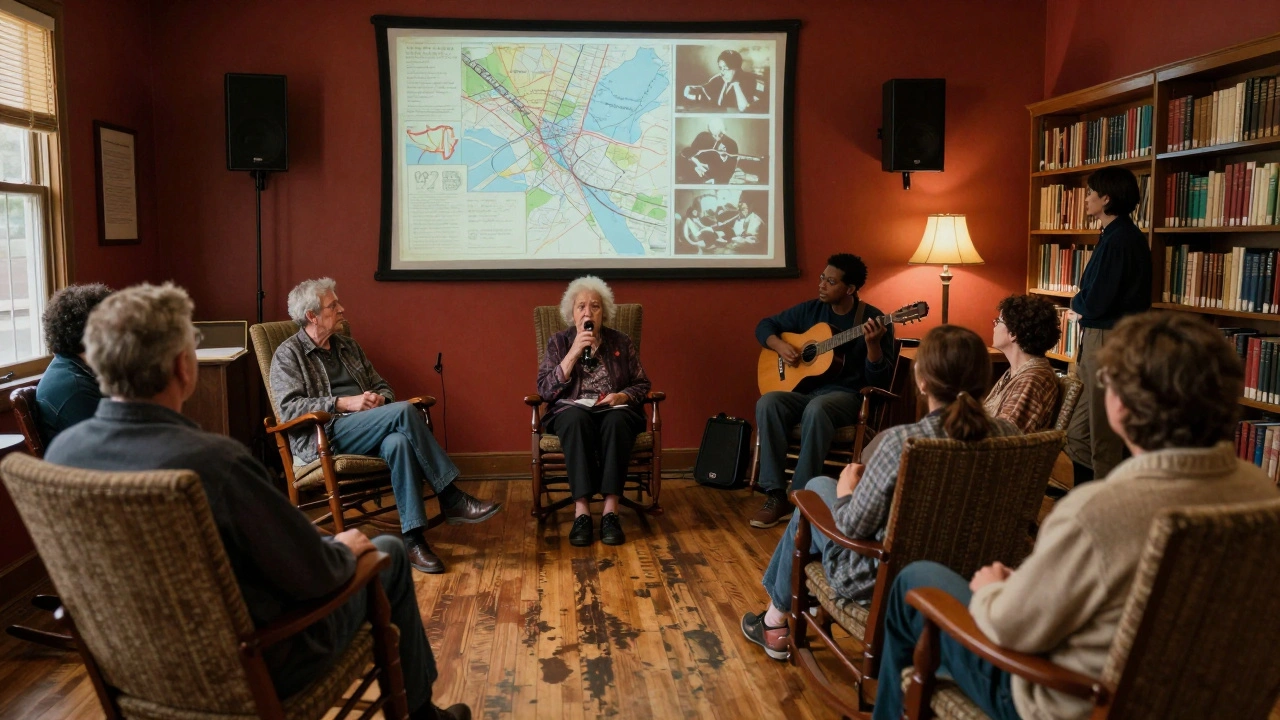
The Mississippi Delta Blues Film Festival is a nonprofit event in Clarksdale, Mississippi, that pairs short films with live blues performances and oral history sessions. Each year, they invite elders to share stories that have never been recorded. One 2023 film, The River That Sang, was made from audio recordings of a 94-year-old woman who remembered the last time the Mississippi flooded before the levees were built. The film had no visuals-just her voice, old photos, and a single slide of a 1927 map. It didn’t go viral. But it became part of the town’s official archive.
These festivals aren’t just showing films. They’re preserving languages, dialects, rituals, and ways of life that are disappearing.

The People Behind the Scenes
At Sundance, you’ll find PR teams, agents, and studio executives. At regional festivals, you’ll find volunteers who work full-time jobs and run the event on weekends.
The Copper Country Film Festival is a winter event in Houghton, Michigan, held in a former copper mine theater built in 1908. It’s run by a retired high school teacher, a local librarian, and a mechanic who fixes the projector himself. They raise money through bake sales, community raffles, and donations from families who’ve seen their kids’ films screened there.
There’s no submission fee. No fancy online portal. Just an email address and a promise: if you make something honest, we’ll show it.
These aren’t just events. They’re acts of resistance against a world that values scale over soul.
Why You Should Go-Even If You’re Not a Filmmaker
You don’t need to be in the industry to benefit from regional film festivals. You just need to be human.
Going to one is like stepping into a different kind of cinema. The screens are smaller. The sound isn’t perfect. Sometimes the projector jams. But the silence between scenes? That’s where the magic lives. People talk to each other afterward. They share stories about their own lives. Someone might say, “My dad used to fix tractors just like that.” Or, “I grew up in a town just like this.”
There’s no filter. No algorithm. No curated feed. Just real people, real stories, and real connection.
Try this: next time you’re driving through a small town, look for a flyer on a bulletin board. It might say something like “Local Films, Local Voices” or “Show Us Your Story.” Go. Sit in the back. Don’t bring your phone. Let the film do the talking.
How to Find These Festivals
They’re not on IMDb. You won’t find them on Google Ads. But here’s how to find them:
- Check your state’s arts council website-they often list grassroots events
- Search for “regional film festival” + your state or region
- Visit independent bookstores, libraries, and coffee shops-they usually have flyers
- Follow local filmmakers on Instagram or Facebook. They often post about upcoming screenings
- Ask a teacher, librarian, or community center worker-they know what’s happening
Some notable regional festivals in 2026:
- Appalachian Film Festival (Asheville, NC)
- Lumberjack Film Festival (Ely, MN)
- Mississippi Delta Blues Film Festival (Clarksdale, MS)
- Copper Country Film Festival (Houghton, MI)
- High Desert Film Collective (Durango, CO)
- Gulf Coast Short Film Series (Gulfport, MS)
- Borderlands Film Exchange (Laredo, TX)
Each one is different. Each one matters.
What Happens After the Festival Ends?
At big festivals, films get picked up. They go to streaming platforms. They win awards. They disappear into the machine.
At regional festivals, films stay.
They’re screened again at schools. They’re shown in nursing homes. They’re used in history classes. They’re archived by local libraries. One film from the Borderlands Film Exchange is a festival in Laredo, Texas, that focuses on stories from the U.S.-Mexico border region. in 2022 became part of the Texas State Archives. It’s now used to teach high school students about border culture-not through textbooks, but through a 15-minute film made by a 16-year-old girl who filmed her neighbor’s bakery.
These films don’t need to go global to matter. They just need to stay local.
Are regional film festivals worth attending if I’m not a filmmaker?
Absolutely. These festivals aren’t about networking or industry access. They’re about experience. You’ll see stories you’ve never heard, feel emotions you didn’t know were shared, and connect with people who live differently than you. It’s cinema as community-not commerce.
Can I submit my film to a regional festival if I’m not from that region?
Yes-many do. But the best submissions are ones that respect the region’s voice. A film about rural life in Maine should feel true to Maine, not a Hollywood version of it. Regional festivals want authenticity, not imitation. If your story connects with their community’s values or experiences, they’ll welcome it.
Do regional film festivals have prizes or awards?
Some do, but they’re rarely cash prizes. More often, winners get a handmade award, a screening at next year’s festival, or a donation to their next project from local donors. The real reward is being seen by the people who matter most-the audience that lives where the story came from.
Why don’t these festivals get more attention?
They don’t need it. They’re not built for mass audiences. They’re built for meaning. The media ignores them because they don’t fit the viral model. But that’s exactly why they’re so powerful. They operate outside the system-and that’s where the most honest art lives.
How can I support regional film festivals?
Go. Bring a friend. Buy a ticket. Donate to their local library or arts nonprofit. Share their films on social media. Volunteer. Even a $5 donation or an hour of helping set up chairs makes a difference. These festivals survive because people show up-not because they’re trendy.
Final Thought: The Future of Cinema Isn’t in Hollywood
The future of film isn’t in Silicon Valley algorithms or billion-dollar streaming deals. It’s in a dusty theater in rural Ohio, a community center in Louisiana, a converted grain silo in Montana. It’s in the hands of people who still believe stories matter more than views.
If you want to see what cinema can really be-go to a regional festival. Don’t go to find the next big thing. Go to remember what stories are for.