For years, everyone thought hand-drawn animation was dead. Studios shut down their ink-and-paint departments. Disney stopped making 2D features. Even Pixar, the king of 3D, seemed to say goodbye to the old ways. But something unexpected happened - audiences started asking for it back.
Why Hand-Drawn Animation Came Back
It wasn’t a marketing stunt. It wasn’t nostalgia for nostalgia’s sake. People started noticing how flat, motion-captured CGI characters felt cold. They missed the slight wobble in a character’s walk. The smudged pencil lines that gave a scene life. The imperfections that made you feel like someone had sat there for months, drawing every frame by hand.
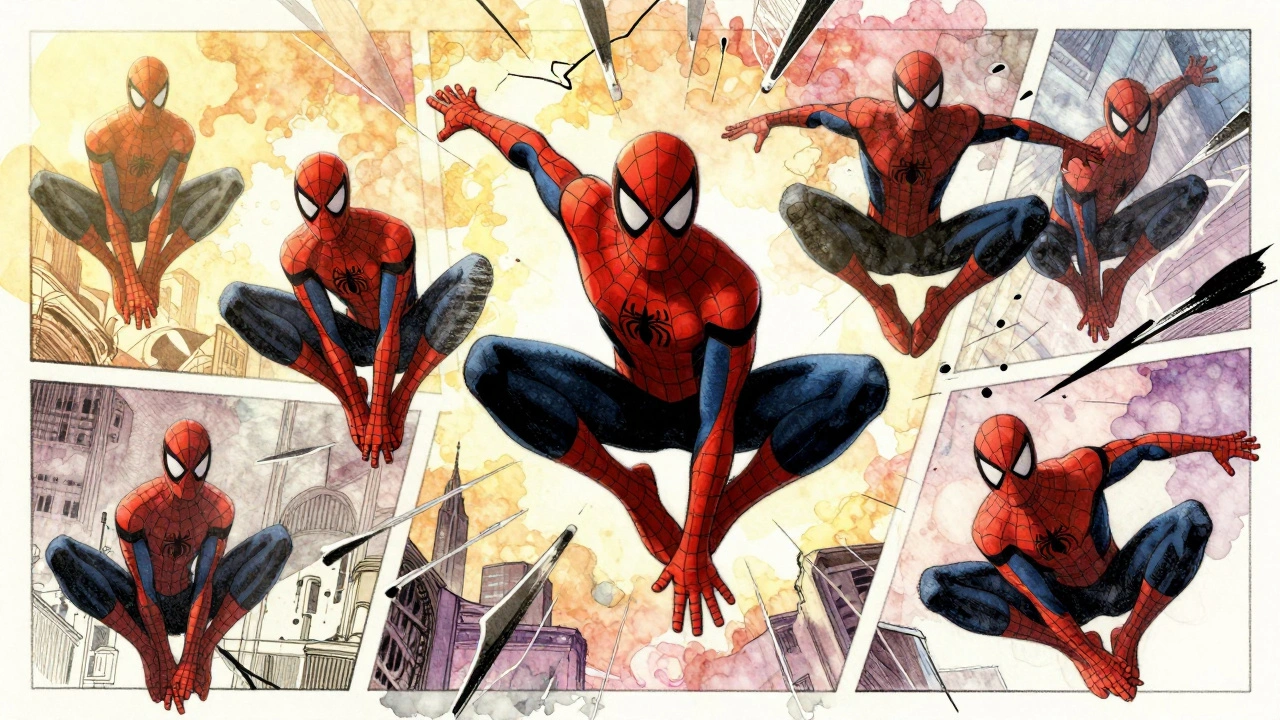
In 2023, Spider-Man: Across the Spider-Verse didn’t just use hand-drawn frames - it celebrated them. Every panel looked like a comic book come to life. Some scenes were drawn in crayon. Others mimicked ink washes from Japanese ukiyo-e prints. It wasn’t trying to be photorealistic. It was trying to be emotional. And it grossed over $700 million worldwide.
That success didn’t happen in a vacuum. In 2024, The Boy and the Heron by Hayao Miyazaki broke records in North America, becoming the highest-grossing anime film ever in the U.S. And guess what? Almost every frame was drawn by hand. No motion capture. No CGI enhancements. Just pencils, paper, and over 160,000 individual drawings.
The Artists Who Made It Happen
These films didn’t rise because of tech. They rose because of people. Young animators, many of whom grew up watching Disney classics, are now leading studios. They didn’t go to school to code. They went to learn how to draw.
At Cartoon Saloon in Ireland, animators still use pencils and paper for every project. Their 2023 film The Wild Robot blended hand-drawn textures with digital backgrounds - and won an Oscar nomination. In France, Studio Ghibli’s former assistants started their own studio, Le Petit Atelier, and released a 75-minute feature in 2025 using only traditional techniques. No computers touched the line art.
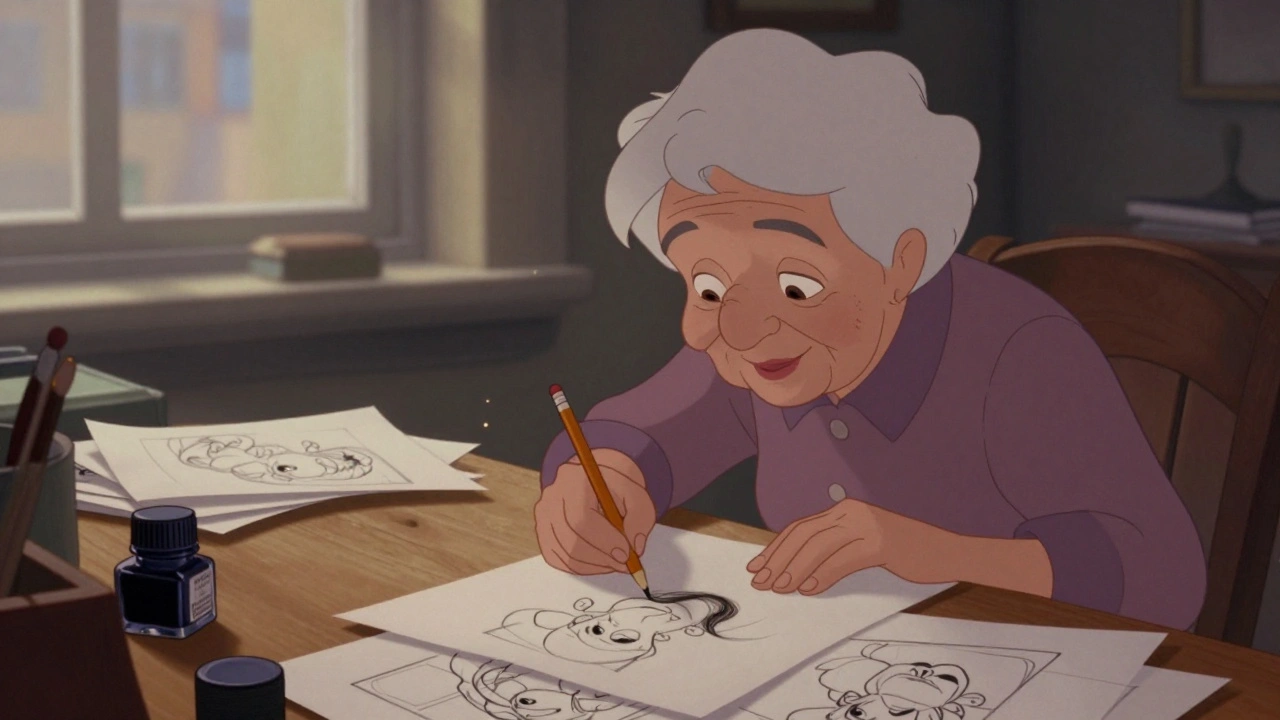
Even in Hollywood, studios are hiring back former ink-and-paint artists. One animator from Disney’s 1990s era, now in her 60s, was brought back to train new recruits at Warner Bros. Animation. She told a reporter, “I thought I’d retire drawing clouds. Instead, I’m teaching kids how to make a single hair move like it’s alive.”
How It’s Different Now
This isn’t 1994 all over again. Modern hand-drawn animation uses digital tools - but not to replace the hand. It uses them to preserve it.
Today’s animators scan their drawings into software like Toon Boom Harmony or Adobe Animate. But they still draw every frame by hand. They use tablets, yes - but not to trace or auto-smooth. They use them to correct shaky lines, add color, and layer effects - all while keeping the original stroke intact.
Compare this to the early 2010s, when studios tried to automate everything. You’d see CGI characters with hand-drawn eyes stuck on top. It looked like a glitch. Today’s films don’t mix styles to save time. They mix them to deepen emotion.
Take Wolfwalkers (2020). The human characters are drawn with thick, expressive lines. The wolves? Soft, smudged watercolor textures. The forest? A swirling, living mess of ink and charcoal. You don’t just watch it - you feel it.
Why It Works Emotionally
There’s a reason people cry during hand-drawn scenes. It’s not just the story. It’s the human presence behind it.
A 2025 study from the University of California, Berkeley, found that viewers rated hand-drawn characters as 37% more “authentic” than CGI ones - even when the stories were identical. Why? Because the slight variations in line weight, the uneven spacing of frames, the tiny smudges - they signal a human hand. Our brains recognize that. We feel connection.
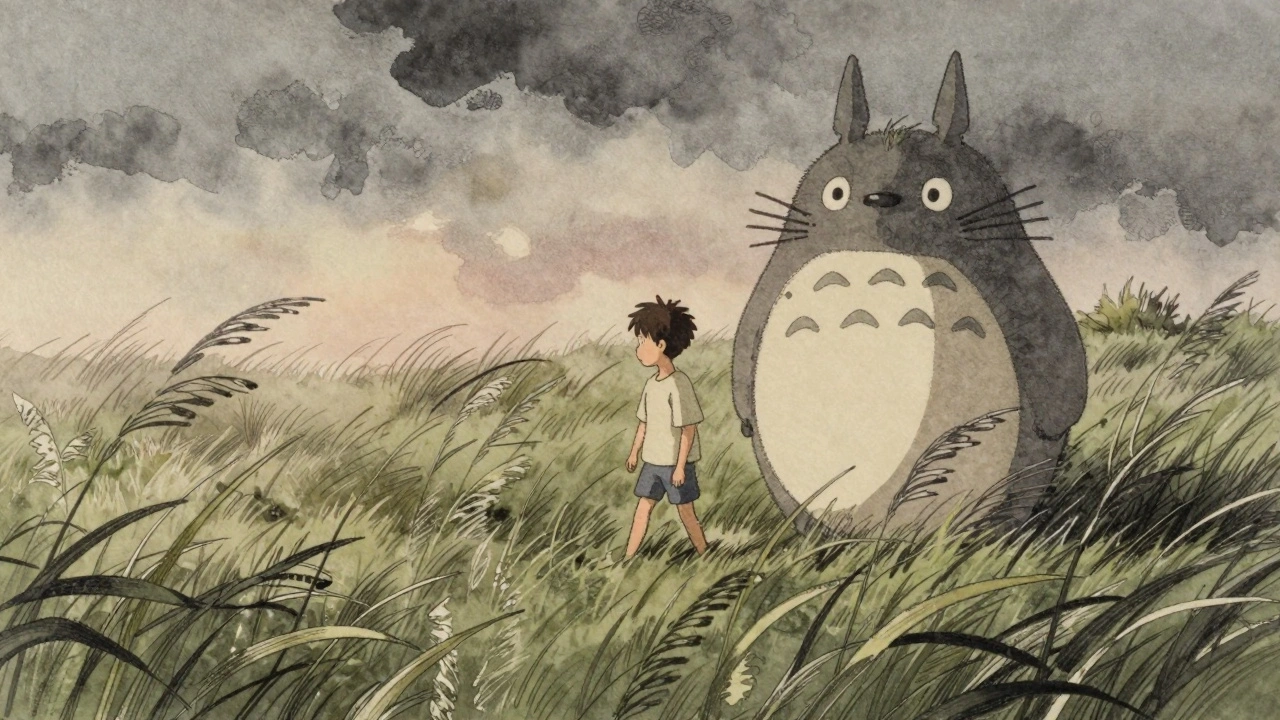
Think of the scene in The Boy and the Heron where the boy walks through a field of tall grass. Each blade moves differently. Some sway slow. Others twitch. No algorithm could simulate that randomness. Only a person watching the wind, studying how grass bends, could draw it right.
That’s why studios are spending more time on animators’ training now. One studio in Japan hired a former ballet dancer to teach movement. Another brought in a ceramicist to show how clay warps under pressure - so animators could draw characters that felt heavy, real, and alive.
The New Rules of Hand-Drawn Animation
If you’re wondering what it takes to make a modern hand-drawn film, here’s what’s changed:
- It’s not about speed. My Neighbor Totoro took 3 years. The Boy and the Heron took 7. Studios now accept long timelines - because quality matters more than quarterly earnings.
- It’s not about realism. The goal isn’t to look like a photo. It’s to feel like a memory. Even the most detailed scenes use stylized shapes - exaggerated eyes, simplified backgrounds, bold outlines.
- It’s not just for kids. The biggest box office hits are aimed at adults. Spider-Verse’s core audience? Ages 18-34. The Boy and the Heron’s top viewers? People over 40.
- It’s collaborative. Artists from different countries work together. A French line artist draws the hero. A Japanese background painter creates the sky. An American colorist adds mood. No single studio owns the style anymore.
What’s Next
By 2026, over 12 major studios are developing hand-drawn features. Netflix has greenlit five. Amazon is building a new 2D animation wing. Even Disney is quietly rehiring former 2D artists for a new project rumored to be a retelling of The Little Mermaid - but in the style of 1930s Disney, with watercolor textures and hand-painted backgrounds.
There’s no going back to the old system. But there’s also no going forward without it. Hand-drawn animation isn’t a throwback. It’s a rebirth. It’s proof that the most powerful technology isn’t a machine - it’s a human hand, willing to sit still for hours, drawing something beautiful just because it matters.
And audiences? They’re showing up. Not because it’s trendy. But because it’s true.



Comments(5)