The global movie landscape has shifted. For decades, Hollywood dominated the conversation, but today, a blockbuster's success is determined by how it performs in regional box office markets across the Middle East, Latin America, and Asia-Pacific. If you are tracking where money is actually flowing, these three regions are the pulse of the modern film industry. They don't just watch movies; they shape what gets made.
Understanding these zones isn't about memorizing numbers. It’s about recognizing distinct cultural rhythms, economic realities, and viewing habits that differ wildly from North America or Europe. Let’s break down what is actually happening on the ground in these critical territories.
Key Takeaways
- APAC remains the volume leader, driven by India’s massive ticket sales and China’s selective but high-value releases.
- LATAM is experiencing a renaissance with local productions outperforming imports in several key markets like Brazil and Mexico.
- MENA shows strong growth in premium screening experiences, with audience loyalty tied to exclusive content and luxury venues.
- Streaming services are no longer just competitors; they are co-producers and distributors in all three regions.
Asia-Pacific: The Engine of Volume and Value
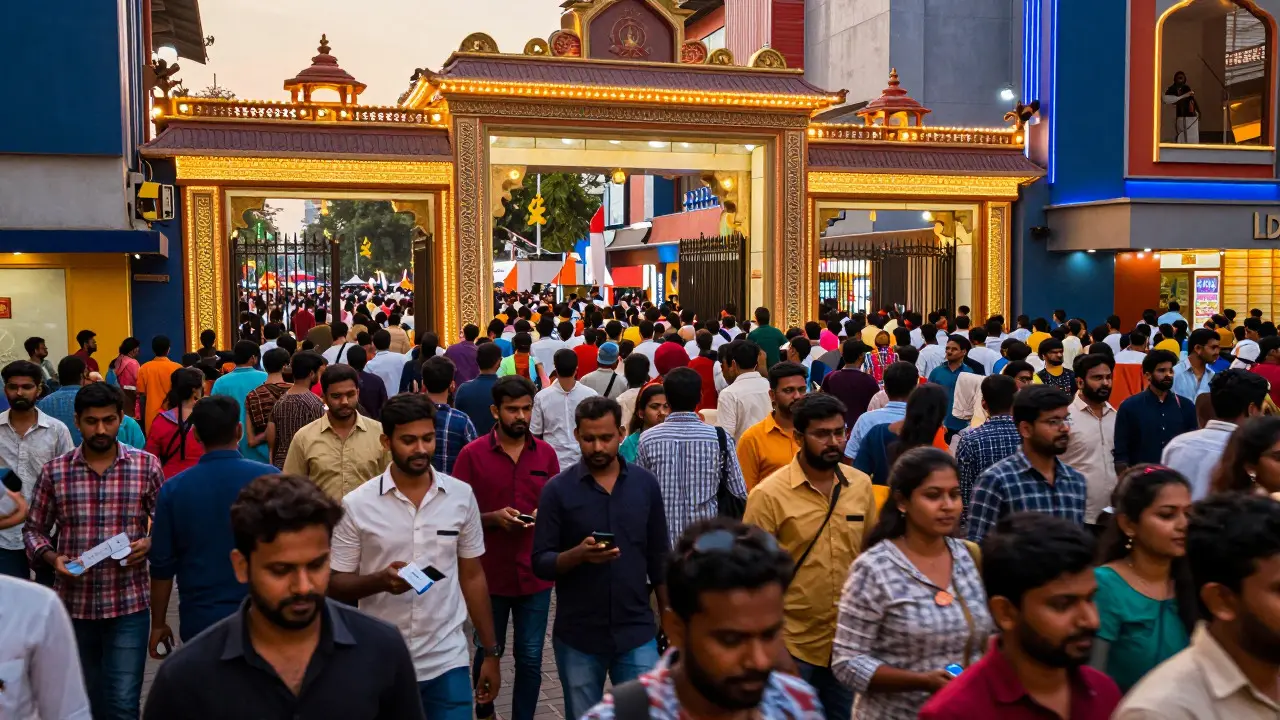
When people talk about international cinema, they usually mean Asia-Pacific (APAC). This region is not a monolith. It is a collection of distinct economies with different appetites for film. India is the undisputed king of ticket volume. With over 350 million tickets sold annually, it dwarfs every other single country outside the US. The magic here lies in the price point. A movie ticket in a rural Indian multiplex can cost less than $1, making cinema an accessible daily ritual rather than a weekly splurge.
China presents a different story. It is a high-barrier, high-reward market. Distribution quotas limit the number of foreign films allowed per year, which forces studios to pick their battles carefully. However, when a film does get through, the average ticket price is significantly higher than in India or Southeast Asia. This means fewer tickets sold, but higher revenue per seat. For global franchises, China is often the make-or-break territory.
Southeast Asia, particularly Indonesia and Vietnam, is emerging as a dark horse. Urbanization is driving the construction of new multiplexes in cities like Jakarta and Ho Chi Minh City. Audiences there are young, digital-native, and increasingly willing to pay for premium formats like IMAX and Dolby Cinema. The trend here is toward localized marketing campaigns that speak directly to local pop culture references, proving that a one-size-fits-all global trailer rarely works anymore.
Latin America: The Rise of Local Pride
For a long time, Latin America was seen as a secondary market for Hollywood blockbusters. That dynamic is flipping. In countries like Brazil and Mexico, local productions are now competing head-to-head with American imports. Why? Because the stories resonate. A Brazilian comedy or a Mexican drama speaks to specific social nuances that a generic action film misses.
Economic factors play a huge role here too. Inflation has been a challenge in parts of the region, leading to a bifurcation of the market. On one hand, you have premium urban centers in São Paulo, Buenos Aires, and Bogotá where audiences frequent upscale cinemas. On the other, you have mass-market theaters where price sensitivity is high. Studios are responding by releasing more mid-budget films that appeal to broad tastes without the massive marketing spend required for tentpole events.
Another critical factor is the language barrier. Unlike APAC, where English dubs are common in some areas, LATAM audiences overwhelmingly prefer Spanish or Portuguese. This creates a natural wall against low-effort dubbing. High-quality localization is non-negotiable. If the voice acting feels off, word-of-mouth kills the film fast. Social media in LATAM is incredibly vocal, and a bad dub can trend negatively within hours.

Middle East and North Africa: Premium Experiences and Religious Nuances
The MENA region is often misunderstood. People assume religious conservatism limits film consumption. While this played a role historically, the current reality is much more complex. Countries like the UAE, Saudi Arabia, and Egypt are seeing explosive growth in cinema infrastructure. Saudi Arabia, in particular, has opened its doors wide, aiming to become a major production hub. New mega-cities like NEOM are building state-of-the-art theater complexes from scratch.
Audience behavior in MENA is heavily skewed toward premium experiences. The average ticket price in Dubai or Riyadh is among the highest in the world. Viewers expect comfort, exclusivity, and top-tier technology. A standard 2D screening might not draw the same crowds as a VIP lounge experience with gourmet food and reclining seats. This pushes distributors to focus on the "event" aspect of moviegoing.
Content selection also requires nuance. While censorship has relaxed significantly in many Gulf states, cultural sensitivities still matter. Films dealing with romance, alcohol, or gender dynamics need careful marketing adjustments. However, animated films and superhero franchises tend to fly under the radar and perform exceptionally well because they offer universal escapism without triggering cultural debates.
Comparing the Three Regions: A Data Snapshot
| Region | Primary Driver | Avg Ticket Price Trend | Top Content Genre | Distribution Challenge |
|---|---|---|---|---|
| APAC | Volume (India) / Value (China) | Low in India, High in China | Action / Romance | Language fragmentation |
| LATAM | Local Production Growth | Moderate, sensitive to inflation | Drama / Comedy | Quality of Dubbing |
| MENA | Premium Infrastructure | High | Animation / Franchise | Cultural Sensitivity Marketing |

The Role of Streaming in Regional Strategy
You cannot discuss box office trends without mentioning streaming. In all three regions, Netflix, Amazon Prime, and local players like Disney+ Hotstar (in India) or Globoplay (in Brazil) are changing the release windows. The traditional 90-day theatrical window is dead. Many films now go to streamers after 45 days, or even simultaneously in some cases.
This impacts the box office in two ways. First, it extends the tail of a film's earnings. A movie that flops in its opening weekend might find a second life on a platform. Second, it changes consumer psychology. Audiences in APAC and LATAM are accustomed to waiting for the home release if the initial buzz isn't overwhelming. This means the first weekend is even more critical for recouping marketing costs. Distributors are now betting bigger on opening weekends, knowing that the subsequent weeks will be harder to sustain without strong word-of-mouth.
Practical Insights for Industry Professionals
If you are involved in distribution, marketing, or production, here is what you need to know to navigate these waters:
- Localize Beyond Language: Don't just translate the subtitles. Adapt the marketing imagery. A poster that works in New York might confuse or bore an audience in Mumbai or São Paulo. Use local celebrities or cultural touchstones in your ads.
- Watch the Pricing Power: In MENA, you have pricing power. In India, you do not. Adjust your budget expectations accordingly. A $100M franchise needs a different strategy in Riyadh versus Chennai.
- Invest in Premium Screens: The future of profitability in crowded markets is in premium large format (PLF) screens. These attract the segment of the population willing to pay more for an experience that streaming cannot replicate.
- Monitor Local Competitors: In LATAM, a strong local release can crush a global import. Check the local slate before locking in your release date. Avoid clashing with major national holidays or local premieres.
Frequently Asked Questions
Which region has the highest average ticket price?
The MENA region, specifically the Gulf Cooperation Council countries like the UAE and Saudi Arabia, typically has the highest average ticket prices due to the prevalence of premium and luxury cinema experiences. China also commands high prices, but MENA leads in per-seat value for premium formats.
Why is India so important for box office volume?
India has the largest number of cinema screens in the world and a very low average ticket price. This combination allows for massive ticket sales volumes. Even though each ticket generates less revenue, the sheer scale of the audience makes it a critical market for recouping global production costs.
How does streaming affect theatrical releases in LATAM?
Streaming shortens the theatrical window, making the opening weekend crucial. Since many viewers in LATAM are comfortable waiting for a home release, films must generate immediate buzz to justify the trip to the cinema. Simultaneous releases are becoming more common for mid-budget titles.
What types of films perform best in the MENA region?
Animated features and major franchise films (like Marvel or Star Wars) tend to perform very well because they offer universal appeal with minimal cultural friction. Action films also do well, provided the marketing highlights spectacle over controversial themes.
Is China still a difficult market to enter?
Yes. While the market is open, it operates under strict quota systems for foreign films. Getting a slot is competitive and often involves negotiation with local distributors. However, once a film is approved, the potential revenue is significant due to high ticket prices and a large urban population.