
Imagine you have the perfect script. The story is tight, the dialogue sings, and the visual style is locked in. But then you hit the casting couch-or rather, the Zoom audition link-and suddenly, everything feels off. You’ve seen hundreds of faces, heard thousands of lines, and still, that one role remains empty. This isn’t just about finding someone who looks the part. It’s about finding the human being who *is* the part.
As a director, your biggest mistake might not be in the shooting schedule or the budget. It happens long before the camera rolls. It happens when you cast based on resume prestige instead of character truth. Aligning actors with film characters is less like hiring an employee and more like matchmaking for a marriage that lasts three months but needs to feel like decades. If you get this wrong, no amount of editing or lighting can fix it. If you get it right, the audience stops watching the actor and starts believing the person.
Key Takeaways
- Subtext over text: Great acting lives in what is left unsaid; look for actors who communicate through silence and reaction.
- Chemistry is non-negotiable: Individual talent matters less than how two performers spark against each other.
- The 'Wrong' Choice Can Be Right: Sometimes breaking type-casting creates the most memorable, authentic performances.
- Audition for the arc, not the scene: Test if the actor can handle the emotional range required across the entire script, not just one monologue.
- Vulnerability signals readiness: Look for performers willing to fail and expose themselves during the reading process.
Decoding the Character Blueprint
Before you even read a headshot, you need to know exactly who you are looking for. Not physically, but psychologically. Most directors make the error of defining a character by their demographics: "a thirty-year-old accountant from Chicago." That’s data, not direction. Instead, define the character by their wound, their desire, and their obstacle.
Take the protagonist of a thriller. On paper, they might be described as "stoic" and "observant." But if you dig deeper, you realize this stoicism is actually a defense mechanism against trauma. You aren't looking for a quiet person; you're looking for someone whose nervous system is constantly scanning for danger. When you go into the audition room with this specific psychological profile, you stop listening to how well they pronounce words and start watching how they hold their body. Do they flinch? Do they maintain eye contact too long? These micro-behaviors tell you if the actor understands the internal engine of the role.
Create a Character Bible for each major role. Include not just the backstory, but the character's relationship to power, to intimacy, and to failure. Hand this to your casting director. It gives them a target. Without it, they’re just sending you pretty faces. With it, they’re sending you potential transformations.
The Art of the Audition Room
The traditional audition format-actor walks in, reads a page, leaves-is dying, and frankly, it was never very effective. It creates performance anxiety that masks true ability. Instead, create an environment where the actor feels safe enough to take risks. Safety breeds vulnerability, and vulnerability is the currency of great cinema.
Try the Scene Study approach. Don’t just ask them to read the scene. Ask them to play the moment before the scene. What happened five minutes ago? Let them improvise the entry. Watch how they transition from their real self into the character’s mindset. This reveals their process. Do they switch instantly? Do they struggle? Do they find a physical gesture that anchors them?
Also, consider using Self-Tapes strategically. Since 2020, self-tapes have become standard. Use them to filter for technical competence and basic interpretive skills, but never use them as the final decision point. A self-tape shows you how someone directs themselves. An in-person (or live video) audition shows you how they take direction. You need to see if they can pivot. Give them a note halfway through the reading: "Play it angrier," or "Play it like you’re hiding a secret." Watch their face. If they freeze, they might not be ready for the collaborative chaos of a set. If they adapt instantly, you’ve found a professional.
Chemistry Reads: The Spark Factor
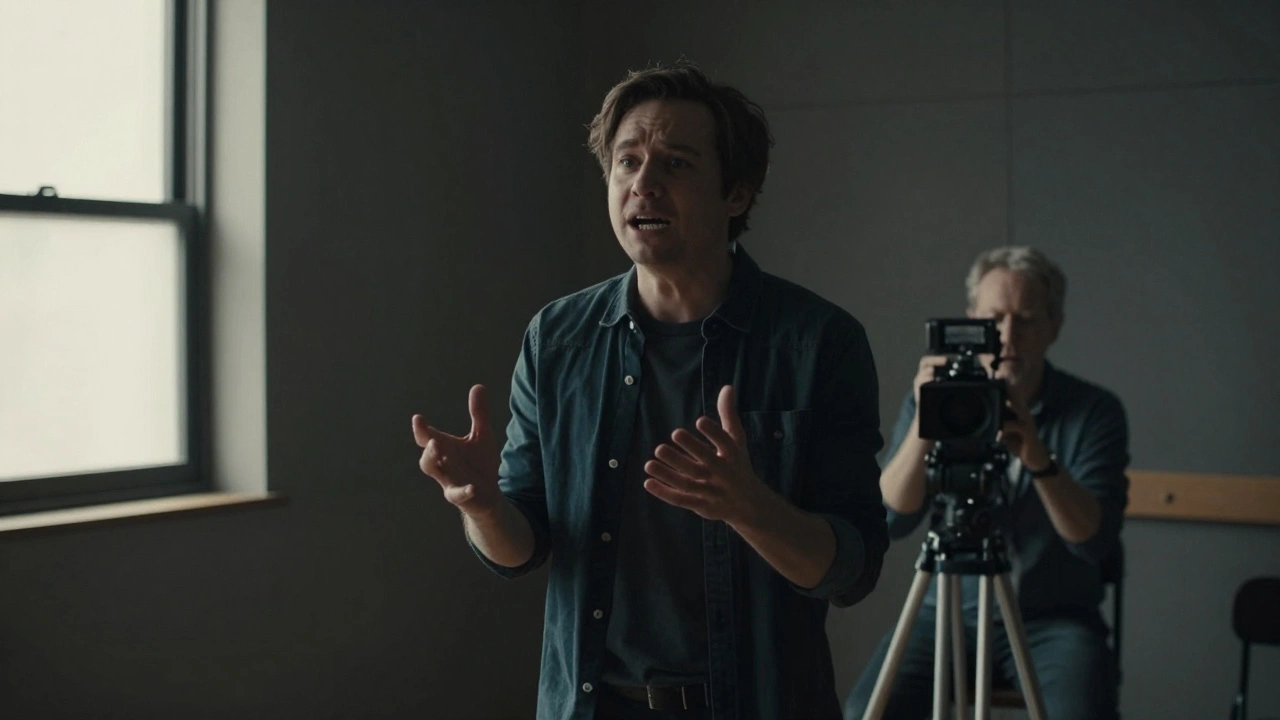
You can have two Oscar winners in a scene, and if there’s no chemistry, the audience will check out. Chemistry isn’t magic; it’s rhythm. It’s the push-and-pull of conversation. When casting romantic leads, friends, or enemies, you must conduct Chemistry Reads.
Don’t just read the scripted dialogue. Improvise a neutral scenario. Have them plan a vacation together, or argue about where to eat dinner. Strip away the plot pressure. See if their natural energies complement or clash in interesting ways. In a drama, you want complementary energies-one person might be high energy, the other grounded. In a comedy, you often want similar rhythms so the timing lands perfectly.
Pay attention to the space between them. Do they lean in? Do they mirror each other’s movements? Or do they seem to be occupying different rooms? I once cast a lead couple who had zero romantic history and seemed polite but distant in the first round. In the second round, we asked them to share a personal fear. Suddenly, the walls came down. They looked at each other with genuine care. That was the moment. We cast them. The resulting film felt intimate because the connection was real, not performed.
Breaking Type: The Power of Surprise
Typecasting is the enemy of depth. If your character is described as "intimidating," your instinct might be to hire a large, muscular man with a deep voice. But consider the alternative. What if the intimidation comes from intelligence? From stillness? From a smile that doesn’t reach the eyes? Casting against type forces the audience to engage differently. It prevents clichés.
Think about recent acclaimed films. Some of the most powerful villains were played by actors known for comedy. Some of the most tender lovers were played by actors known for action. This dissonance creates intrigue. It suggests complexity. When you break type, you also give the actor a challenge. They aren’t relying on their usual toolkit. They have to build something new. This often leads to the most award-worthy performances.
However, balance is key. You can’t cast a child actor in a role requiring heavy physical labor without practical considerations. You can’t cast someone who speaks only French in a period piece set in rural Ohio without a dialect coach budget. Break type within the realm of believability. The goal is surprise, not disbelief.

Technical Versatility vs. Emotional Truth
In the modern era, especially with streaming platforms demanding faster turnaround times, technical versatility is increasingly important. Can the actor hit their mark while delivering a line? Can they repeat an emotional breakdown three times in a row? These are practical concerns that cannot be ignored.
During auditions, test these skills subtly. Ask them to walk while talking. Ask them to pick up a prop while delivering a punchline. Watch if their focus breaks. Many talented stage actors struggle with the technical constraints of film. They forget the lens. They overplay because they think they need to project to the back row. Your job is to guide them to subtlety. If they resist guidance, they may be difficult to work with on set.
Conversely, don’t dismiss an actor who is technically rough but emotionally raw. Emotion can be coached. Technique can be learned. But the spark-the unique, unteachable quality that makes an actor compelling-is rare. Prioritize the spark, then trust your crew and yourself to shape the technique around it.
| Casting Factor | What to Look For | Red Flags |
|---|---|---|
| Emotional Range | Ability to shift tones quickly; depth in silence | One-note performance; inability to take notes |
| Chemistry | Natural rhythm; mutual respect; reactive listening | Competitive energy; ignoring scene partner |
| Technical Skill | Hitting marks; consistency across takes | Forgetting lines repeatedly; missing cues |
| Professionalism | Punctuality; preparation; humility | Lateness; blaming others; ego-driven behavior |
The Final Gut Check
Data, tests, and chemistry reads will get you 90% of the way there. The last 10% is intuition. After all the meetings, after the spreadsheets, sit with the footage. Who stays with you? Whose presence fills the frame even when they aren’t speaking? That’s your actor.
Trust your gut, but validate it with logic. Why does this actor feel right? Is it their eyes? Their voice? Their energy? Articulate this to your producers. You need to defend your choice. If you can’t explain why they fit beyond "I liked them," you might be falling for charm rather than craft. Charm fades in post-production. Craft endures.
Remember, casting is not just filling roles. It’s building the soul of your film. Every actor you choose adds a layer of texture, a shade of meaning. Choose wisely. Choose boldly. And above all, choose humans who are ready to disappear into the story.
How many auditions should I hold for a main role?
Typically, three rounds are ideal. The first round filters for basic suitability and interpretation. The second round focuses on chemistry and direction-taking. The final round is a callback with the top two or three candidates, often involving improvisation or a full scene read with the director present. This structure ensures you’ve tested both talent and collaboration skills.
Should I prioritize famous actors or unknowns?
It depends on your budget and marketing strategy. Famous actors bring built-in audiences and production value, which helps with financing and distribution. Unknown actors often bring fresh perspectives, greater flexibility, and a hunger to prove themselves. For indie films, unknowns can offer incredible value and authenticity. For commercial projects, stars may be necessary. Always prioritize the right fit for the character over fame.
What if my first choice actor declines the role?
Stay flexible. Have a shortlist of alternates prepared from earlier rounds. Sometimes, the second choice brings a different energy that improves the film. Re-evaluate the character requirements with your new candidate. Adjust your direction if needed. Casting is iterative; the best outcome isn’t always the first plan.
How do I handle typecasting concerns with producers?
Present evidence. Show clips of the actor in contrasting roles. Explain how breaking type adds depth and marketability. Use examples from successful films where unconventional casting worked. Producers care about risk mitigation; demonstrate that your choice is calculated, not reckless. Frame it as an artistic advantage that enhances storytelling.
Is it okay to cast friends or past collaborators?
Yes, but proceed with caution. Past collaborators know your working style, which can speed up production. However, ensure they are the best fit for the role, not just convenient. Avoid nepotism unless their talent genuinely matches the requirement. Transparency with your team is crucial to maintain morale and fairness.





Comments(8)