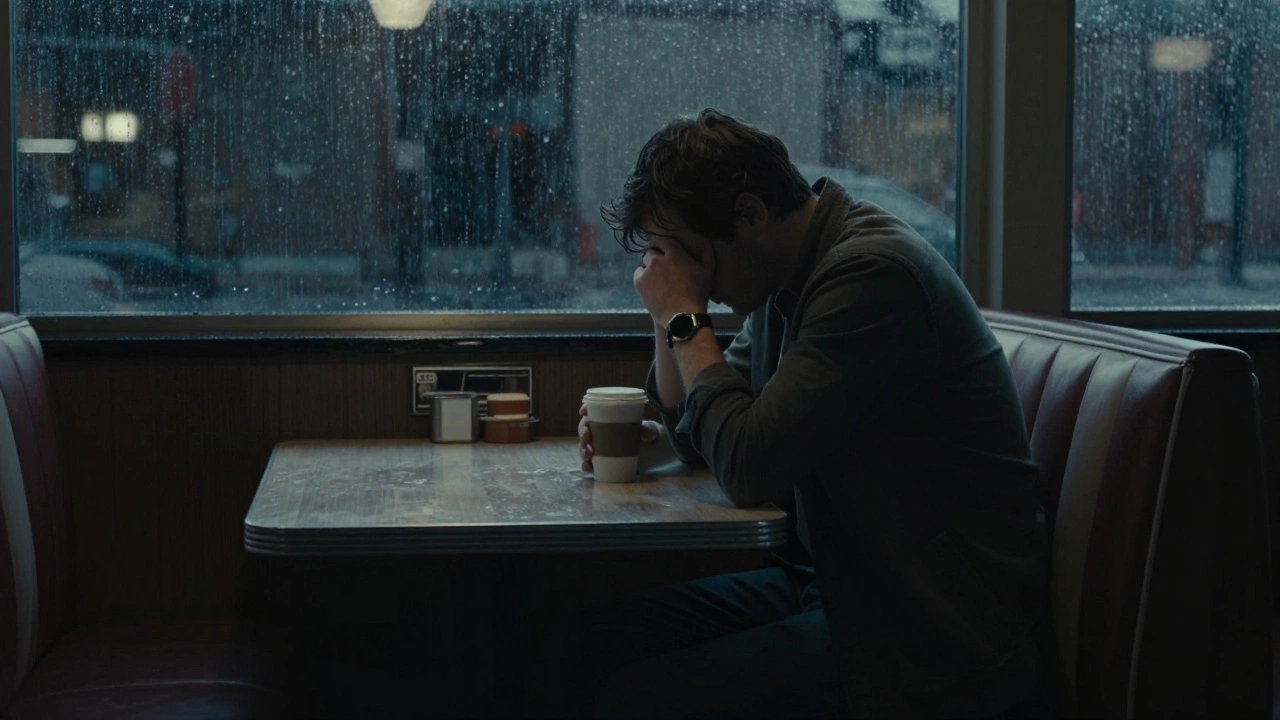
Drama films don’t just tell stories-they make you feel them. Unlike action-packed blockbusters or fast-paced comedies, these movies rely on emotion, character depth, and raw human moments to earn their place in history. Every year, a handful of dramas rise above the rest, not because of big budgets or star power, but because they connect in ways that linger long after the credits roll. These are the films that win Oscars, Golden Globes, and Cannes awards-not by accident, but by design.
What Makes a Drama Film Award-Winning?
Award-winning dramas share a few key traits. First, they focus on internal conflict over external action. Think of a character wrestling with guilt, grief, or identity-not a spaceship chase or a bomb defusal. Second, they demand performances that feel real, not polished. Actors don’t just play roles; they become them. Third, they often tackle difficult themes: loss, inequality, trauma, or moral ambiguity. These aren’t easy stories to tell, and that’s why they stand out.
Take Manchester by the Sea a 2016 American drama film directed by Kenneth Lonergan, about a man grappling with the death of his brother and the sudden responsibility of raising his nephew. It didn’t have a single explosion. No car chases. Just quiet moments: a man sitting alone in a diner, a letter left unread, a sob caught in a throat. Yet it earned six Oscar nominations and won Best Original Screenplay. Why? Because it made silence speak louder than any soundtrack.
Recent Award-Winning Drama Films (2020-2026)
Here are five drama films from the last few years that didn’t just get nominated-they dominated awards season:
- Everything Everywhere All At Once a 2022 American multigenre film blending science fiction, action, and family drama, directed by Daniel Kwan and Daniel Scheinert - Won 7 Oscars including Best Picture, Best Director, and Best Actress. It’s a family drama wrapped in a multiverse, where love is the only thing that makes sense amid chaos.
- Parasite a 2019 South Korean black comedy thriller directed by Bong Joon-ho, about class struggle between two families - The first non-English language film to win Best Picture at the Oscars. Its drama isn’t about war or romance-it’s about hunger, both literal and social.
- The Father a 2020 British drama film directed by Florian Zeller, about an elderly man struggling with dementia and his daughter’s attempts to care for him - Anthony Hopkins won Best Actor for a performance that made audiences feel the terror of losing your own mind.
- Oppenheimer a 2023 American biographical drama film directed by Christopher Nolan, about physicist J. Robert Oppenheimer and his role in developing the atomic bomb - Won 7 Oscars, including Best Picture and Best Actor. Its drama comes from moral weight, not explosions. The real bomb was the choice.
- Anatomy of a Fall a 2023 French courtroom drama film directed by Justine Triet, about a writer accused of her husband’s murder and the trial that exposes their marriage - Won Best Picture at Cannes and was nominated for four Oscars. It’s not about guilt or innocence-it’s about how stories change depending on who tells them.
Common Threads in Award-Winning Dramas
These films might seem different on the surface, but they all follow the same hidden rules:
- Character over plot - The story isn’t about what happens; it’s about how the person changes because of it.
- Authentic dialogue - No monologues that sound like movie lines. Real people stammer, interrupt, and say things they regret.
- Visual restraint - No flashy camera moves. Often, the camera just watches. Sometimes, it lingers too long, making you uncomfortable.
- Sound design as emotion - Silence, breathing, footsteps-these are the score. Music is rare. When it appears, it’s because the moment can’t be held without it.
- Ending without closure - These films rarely tie everything up neatly. Life doesn’t. Neither do these stories.

Why These Films Win Over Blockbusters
Blockbusters are made to entertain millions. Award-winning dramas are made to haunt a few. The Academy and other major award bodies don’t vote for spectacle-they vote for truth. A film like Oppenheimer doesn’t need to be the highest-grossing movie of the year. It just needs to make someone sit in silence after watching it, wondering what they would have done.
That’s why dramas like Marriage Story a 2019 American drama film directed by Noah Baumbach, about a couple going through a painful divorce win Best Picture even when they earn less than $50 million. It’s not about money. It’s about memory. Did it change how you see relationships? Did it make you think differently about forgiveness? That’s the real metric.
How to Spot a Future Award Winner
If you’re watching dramas and wondering which ones might win next year, look for these signs:
- The lead actor doesn’t look like they’re acting-they look like they’re living it.
- The script avoids clichés. No last-minute reconciliations, no heroic sacrifices.
- The director lets scenes breathe. If you feel the tension in the silence, you’re watching something special.
- It’s based on a true story, but doesn’t feel like a biopic. It digs deeper than facts.
- You leave the theater not with excitement, but with a heavy heart.
These aren’t tricks. They’re patterns. And they’ve held steady for decades. From One Flew Over the Cuckoo’s Nest a 1975 American drama film directed by Miloš Forman, about a criminal who feigns insanity to avoid prison and ends up in a psychiatric hospital in the 70s to The Shape of Water a 2017 American fantasy drama film directed by Guillermo del Toro, about a mute woman who forms a bond with a captured amphibious humanoid creature in the 2010s, the formula hasn’t changed. Depth wins. Honesty wins. Quiet wins.

Where to Start if You Want to Explore More
If you’ve only seen mainstream dramas and want to dive deeper, here are five essential films that shaped the genre:
- 8½ a 1963 Italian drama film directed by Federico Fellini, about a film director struggling with creative block - A masterpiece of self-reflection and surrealism.
- Requiem for a Dream a 2000 American drama film directed by Darren Aronofsky, about four individuals’ descent into addiction - Harrowing, relentless, and unforgettable.
- Shoplifters a 2018 Japanese drama film directed by Hirokazu Kore-eda, about a poor family living on the margins of society - Won the Palme d’Or. It’s about what family really means.
- Blue Valentine a 2010 American romantic drama film directed by Derek Cianfrance, about the breakdown of a marriage - Shot with handheld cameras, raw, and painfully real.
- The Pianist a 2002 biographical drama film directed by Roman Polanski, about the life of Polish-Jewish pianist Władysław Szpilman during the Holocaust - Won three Oscars. A story of survival told with chilling restraint.
Why Drama Still Matters
In a world of algorithms, influencers, and endless scrolling, drama films remind us that we’re still human. They don’t need likes. They don’t need to go viral. They just need to be seen-and felt. The best dramas don’t just win awards. They change how we see each other. And that’s worth more than any box office number.
What makes a drama film different from other genres?
Drama films focus on emotional depth, character development, and realistic human struggles rather than action, humor, or fantasy. While other genres rely on external events to drive the story, dramas use internal conflict-like grief, guilt, or moral dilemmas-to create tension and meaning.
Do all award-winning dramas have happy endings?
No. In fact, many of the most acclaimed dramas end ambiguously or sadly. Films like Manchester by the Sea and The Father don’t offer closure because real life rarely does. The power of these films lies in their honesty, not in tidy resolutions.
Why do dramas win Oscars more often than action movies?
Oscars reward performances, writing, and direction that showcase emotional complexity. Action films often rely on spectacle, while dramas demand subtlety and authenticity-qualities that voters consistently prioritize. There are exceptions, but the pattern has held for decades.
Can a foreign-language drama win Best Picture?
Yes. Parasite became the first non-English language film to win Best Picture in 2020. Since then, the Academy has increasingly recognized global storytelling, especially when the film’s themes are universally human-like class, family, or survival.
Are all award-winning dramas based on true stories?
No. While some, like The Pianist or Oppenheimer, are based on real people, others like Marriage Story or Blue Valentine are entirely fictional. What matters isn’t whether it’s true-it’s whether it feels true.
What to Watch Next
If you loved these films, try exploring directors who specialize in emotional storytelling: Hirokazu Kore-eda, Greta Gerwig, Kelly Reichardt, and Paweł Pawlikowski. Their films won’t always be loud, but they’ll stay with you longer than any blockbuster.







Comments(9)