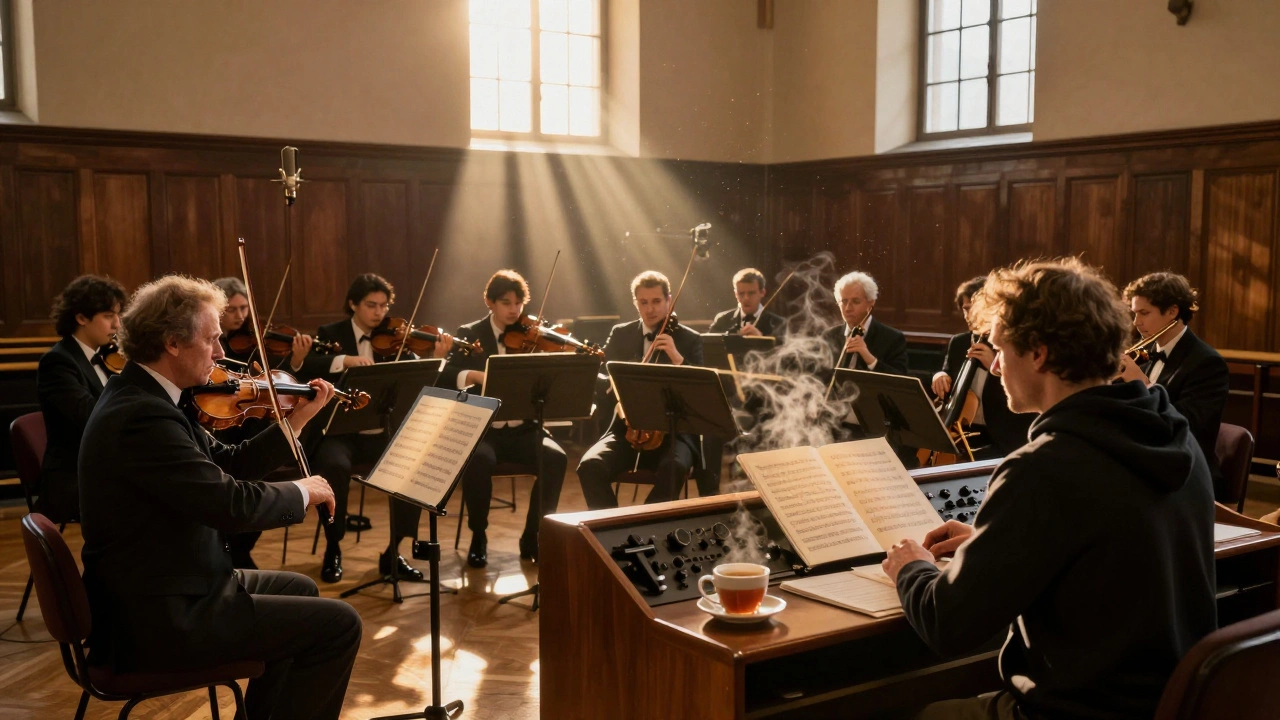
Recording a film score in a foreign country isn’t just about finding a nice studio with good acoustics. It’s about working with musicians who understand the emotional weight of a cue, navigating time zones and contracts, and dealing with logistics most composers never think about until they’re standing in a Budapest studio at 3 a.m. wondering why the French horn player just asked for a cup of tea and a cigarette. This isn’t Hollywood. This isn’t London. This is real, messy, beautiful, and sometimes chaotic work-and it’s becoming more common than ever.
Why Record Abroad?
Most big-budget films still record in Los Angeles, but studios are increasingly turning to Europe and Eastern Europe for one reason: cost without compromise. The Prague Film Orchestra, for example, can deliver the same lush string section as the London Symphony Orchestra at 40% less. The difference isn’t in talent-it’s in overhead. Salaries, union fees, studio rental rates, and even travel expenses for musicians are significantly lower in places like Prague, Budapest, Sofia, and Belgrade.
But it’s not just about money. Some directors want a specific sound. The haunting, slightly raw quality of a Romanian folk ensemble playing a score for a fantasy film. The crisp, precise attack of a Russian brass section in a war drama. These aren’t just accents-they’re textures. Composers like Hans Zimmer and John Williams have recorded in Prague for decades. More recently, Ludwig Göransson recorded the score for Oppenheimer in London, but brought in a Serbian choir for the final act to get that raw, ancient vocal tone. That’s not a gimmick. It’s intentional sonic architecture.
Top Studios for Film Scores Abroad
Not every studio in Europe is built for film scoring. You need space, isolation, and a control room that doesn’t pick up the sound of a passing tram. Here are the most trusted names right now:
- Abbey Road Studios (London) - Still the gold standard for orchestral recording. The Studio One hall has recorded over 1,200 film scores since 1980, including The Lord of the Rings trilogy. But it’s expensive. Expect $15,000-$25,000 per day for the hall alone.
- Elstree Studios (London) - Offers the same acoustics as Abbey Road but with more flexible scheduling. Used for Game of Thrones and Harry Potter scores. Often booked by composers who need longer sessions without union restrictions.
- Baron Studios (Prague) - Formerly the Czech Philharmonic’s home. Now a top choice for international composers. The main hall holds 100+ musicians. Rates start at $5,000/day. Many U.S. composers now use this as their go-to for scores under $1 million.
- Studio 1 at Synchron Stage Vienna - Known for its dry, modern sound and advanced microphone arrays. Used by Ramin Djawadi for Game of Thrones and Westworld. Ideal for hybrid scores mixing orchestra with synths.
- Studio 1 at The Bulgarian National Radio (Sofia) - A hidden gem. The hall has a warm, natural reverb that’s perfect for emotional cues. Costs less than $3,500/day. Used by indie composers for films like The Lighthouse and The Witch.
Each studio has its own personality. Prague’s sound is full and rounded. Vienna’s is precise and modern. Sofia’s is intimate and rich. London’s is legendary but stiff. Choosing the right one isn’t about prestige-it’s about matching the room’s character to the music’s soul.
Working With Foreign Orchestras
Most American composers assume European musicians will read music the same way they do. They don’t. In Prague, musicians expect to see a full score with detailed bowings and articulations. In Sofia, they’ll improvise phrasing if the notation is too rigid. In Budapest, they’ll play a passage twice-once as written, once with more emotion-then let you pick.
Communication is key. If you’re not fluent in the local language, hire a local music coordinator. They’re not just translators-they’re cultural bridges. They know which musicians are reliable, who can sight-read a 20-page cue in 15 minutes, and who needs coffee before the third take. In one case, a composer from Nashville lost two days of recording because he didn’t realize the Hungarian musicians took a 90-minute lunch break, not 30. The coordinator fixed it by arranging a snack table and a quick rehearsal after lunch.
Union rules vary wildly. In the UK, musicians are covered by the Musicians’ Union (MU), which mandates minimum pay, rest periods, and overtime. In Bulgaria, there’s no union. You can hire a 60-piece orchestra for $18,000 total, but you’re responsible for their travel, meals, and insurance. That’s a trade-off: lower cost, higher risk.
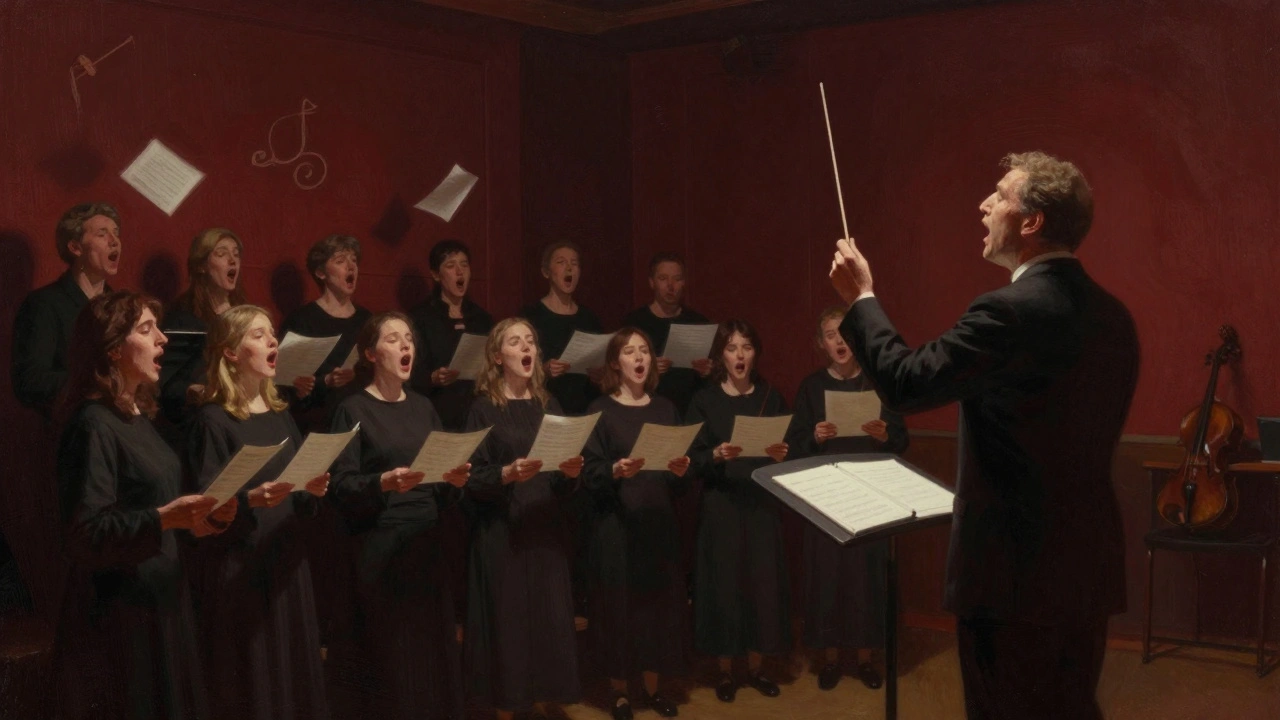
Logistics You Can’t Ignore
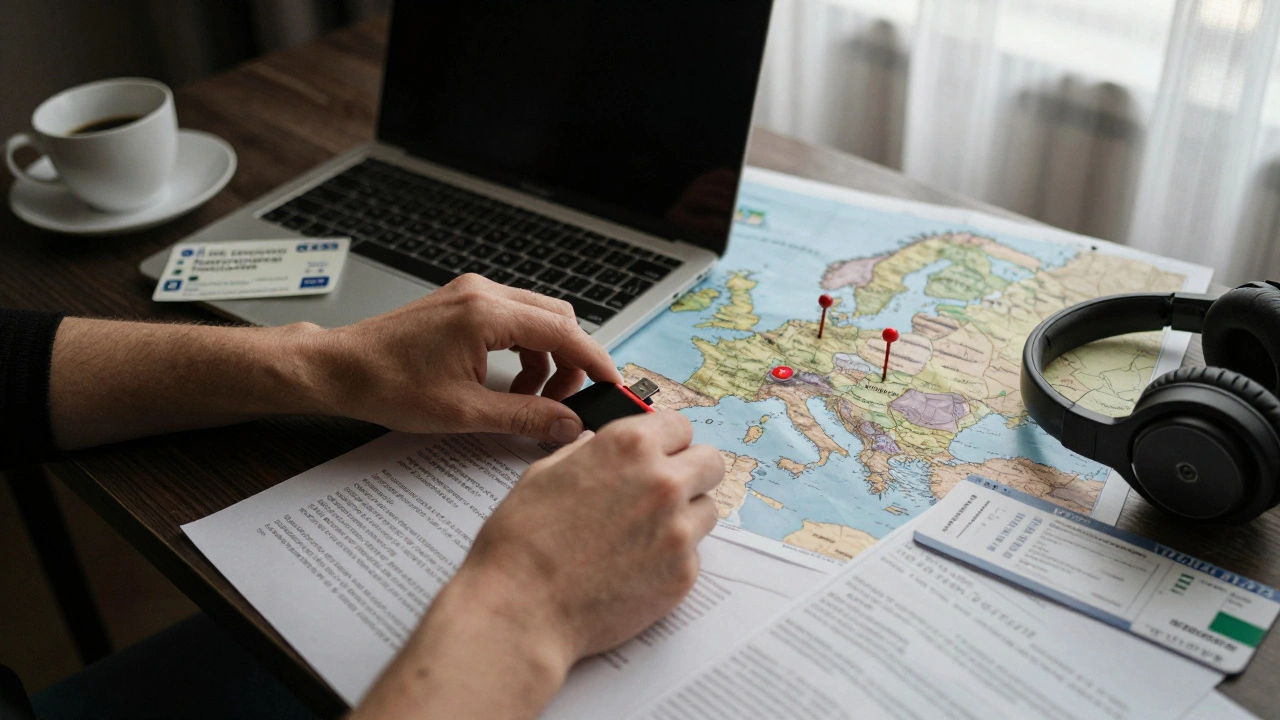
Recording abroad isn’t just about music. It’s about paperwork, visas, customs, and timing.
- Visas - Most composers enter on tourist visas, but that’s illegal if you’re being paid. You need a work permit or artist visa. In the EU, that often means applying through the studio’s local representative. Allow 6-8 weeks.
- Equipment - Bringing microphones, recorders, and laptops? Declare them at customs with a Carnet de Passages. Skip this and your gear might get stuck for weeks. One composer lost $40,000 in gear in Belgrade because he didn’t file paperwork.
- Time zones - If you’re in LA and recording in Prague, you’re 9 hours behind. That means your morning is their evening. Schedule sessions for their afternoon, your morning. Send notes ahead of time. Don’t expect quick revisions.
- Payment - Use wire transfers. Avoid PayPal or Venmo. Many European studios only accept EUR or CZK. Exchange rates matter. A $50,000 budget can become $54,000 if you wait too long to convert.
One composer recorded in Sofia and forgot to arrange for a local driver. The orchestra arrived 45 minutes late because they got lost. The session cost $2,000 an hour. That’s $1,500 wasted. Always hire a local fixer.
When It All Goes Right
There’s a moment in every overseas recording session when you realize you’re not just making music-you’re making history. In Prague, I once watched a 70-year-old violinist play a 12-second phrase six times. Each time, he changed the vibrato, the pressure, the breath. The third take was perfect. He didn’t say a word. Just nodded. The director in the booth cried.
That’s the magic. It’s not the studio. It’s not the price. It’s the people. The musicians who’ve played Tchaikovsky since they were 12. The engineers who’ve recorded 300 film scores and know exactly how much reverb a cello needs to sound like a heartbeat. The assistant who brings you coffee at 5 a.m. because she knows you’re nervous.
Recording abroad isn’t easier. It’s deeper. It forces you to slow down, listen more, and trust people you’ve never met. The result? Scores that feel alive-not just polished, but human.
What You Need to Start
If you’re thinking about recording overseas, here’s what you actually need-not just a budget, but a plan:
- Choose your destination based on sound, not cost. Prague for warmth. Vienna for precision. Sofia for intimacy.
- Hire a local music coordinator. Don’t try to do it yourself. They’re worth their weight in gold.
- Book the studio 6-8 months in advance. Top studios fill up fast.
- Prepare your score with detailed articulations, bowings, and dynamics. European musicians expect this.
- Arrange visas, customs paperwork, and insurance before you leave.
- Bring a backup hard drive and a second recorder. Always.
- Plan for one extra day of recording. Things go wrong. Always.
And if you’re on a tight budget? Start small. Record a 15-minute cue with a 20-piece string section in Sofia. It’ll cost less than $10,000. That’s your test run. If it works, you’ll know you can do it again.
Frequently Asked Questions
Is it cheaper to record a film score abroad than in the U.S.?
Yes, often by 30-60%. A full orchestra session in Los Angeles can cost $50,000-$100,000 for a week. The same session in Prague or Sofia costs $15,000-$30,000, including musicians, studio, and engineering. The quality is comparable or better.
Do I need to speak the local language?
No, but you need a local music coordinator who does. They handle communication with musicians, negotiate rates, arrange transport, and make sure everyone understands your direction. Most composers rely on them completely.
What’s the biggest mistake first-time composers make?
Trying to do everything themselves. Booking flights, handling visas, translating scores, managing musicians-it’s too much. Hiring a local fixer saves time, money, and sanity. It’s not a luxury. It’s a necessity.
Can I record a full orchestra in one day?
Not if you want good results. A 60-piece orchestra needs at least two full days for a 20-minute score. One day is only possible for a 5-minute cue with minimal revisions. Rushing leads to flat performances and wasted money.
Are there risks in recording abroad?
Yes. Delays, visa issues, equipment getting stuck at customs, musicians falling ill. That’s why you need insurance, backup plans, and a local team. The music will be worth it-but only if you plan for the mess.
Next Steps
If you’re a composer ready to try recording abroad, start by reaching out to one of the studios listed above. Ask for a sample rate sheet and a list of local coordinators. Don’t wait for the perfect budget. Start small. Record one cue. Learn the rhythm. Then scale up.
And if you’ve already recorded abroad? Share your story. The next composer trying this for the first time needs to know it’s possible-and worth it.


Comments(8)