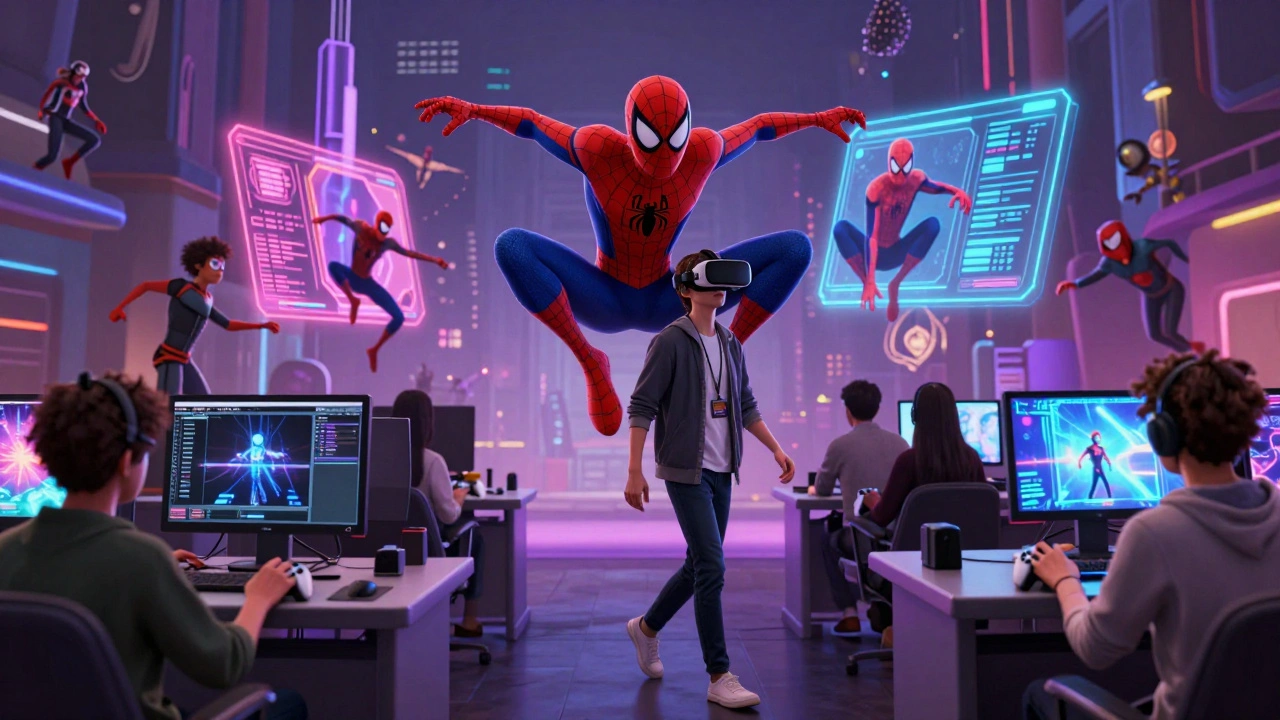
For decades, animation films were built frame by frame, with each shot taking days or weeks to render. That’s not how things work anymore. Today, studios are using the same tools that power AAA video games to make animated movies faster, cheaper, and more flexible. Game engines like Unreal Engine and a real-time 3D creation tool developed by Epic Games that allows artists to build interactive environments and animations with instant visual feedback are no longer just for games-they’re now the backbone of modern animated films.
Why Game Engines? The Shift from Offline to Real-Time
Traditional animation pipelines relied on render farms-massive server clusters that took hours, sometimes days, to render a single shot. If a character’s eye blinked wrong, or the lighting felt off, animators had to wait for the render to finish, then go back and fix it. Repeat. Over and over. This process was slow, expensive, and rigid.
Game engines changed that. Instead of rendering frames one at a time, they render everything in real time. That means as you move a camera, change a light, or tweak a character’s pose, you see the result instantly-just like playing a video game. This isn’t just a speed boost. It’s a complete rethink of how animation is made.
Take The Mandalorian’s virtual production techniques. While not fully animated, it used real-time engines to project backgrounds onto giant LED walls so actors could react to dynamic environments. Studios like Industrial Light & Magic and a visual effects company founded by George Lucas, known for pioneering digital effects in films like Star Wars quickly realized the same tech could work for fully animated films. Now, directors can walk through a scene in VR, adjust lighting on the fly, and even re-block a shot during a production meeting.
How It Works: From Game Tools to Film Pipeline
Game engines weren’t built for film, but they’re surprisingly well-suited for it. Here’s how studios adapt them:
- Real-time rendering: Engines like Unreal Engine and a real-time 3D creation tool developed by Epic Games that allows artists to build interactive environments and animations with instant visual feedback use ray tracing and global illumination to simulate lighting with cinematic quality-no waiting.
- Asset reuse: Characters, props, and environments built in Blender and a free and open-source 3D creation suite used for modeling, rigging, animation, and rendering can be imported directly into Unreal Engine without conversion. No more export/import nightmares.
- Live animation: Animators use motion capture data in real time. A performer wearing a suit moves, and the digital character moves with them-on screen, instantly. No need to wait for a render to see if the performance worked.
- Camera control: Directors use gamepad-style controllers to fly through scenes, adjust lens focal length, and frame shots like they’re on a real film set. This brings filmmaking intuition into digital spaces.
At Sony Pictures Imageworks and a visual effects studio known for animated films like Spider-Man: Into the Spider-Verse, teams now use Unreal Engine to create entire sequences before final asset polish. They call it “pre-visualization on steroids.”
Real Examples: Films Already Using This Tech
This isn’t theoretical. Real films are already being made this way.
- Spider-Man: Across the Spider-Verse (2023): Used Unreal Engine to manage complex multi-style sequences. Animators could switch between comic-book, anime, and 3D styles in real time, making sure transitions felt fluid.
- The Mitchells vs. The Machines (2021): Sony’s team rendered entire scenes in Unreal Engine for reference, then used them as guides for the final look. This cut down iteration time by 60%.
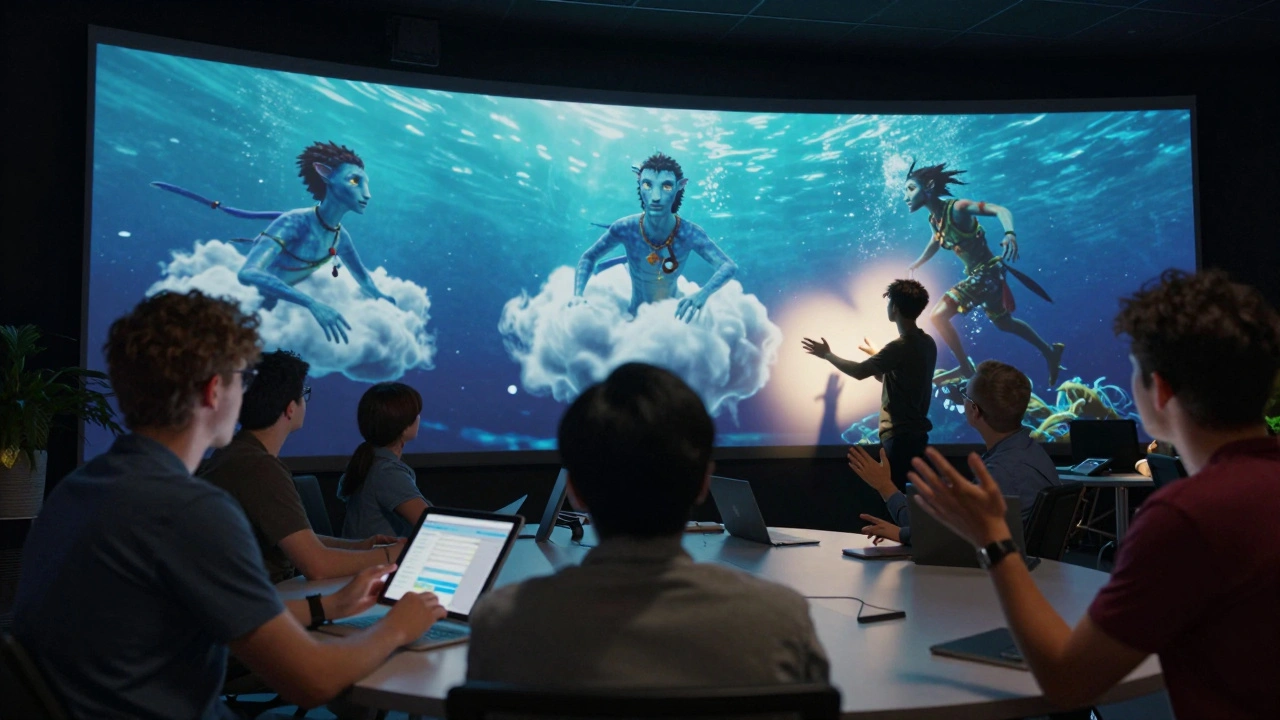
- Avatar: The Way of Water (2022): Though live-action, its underwater character animations were refined using real-time engines to test lighting and movement before final rendering.
- DC League of Super-Pets (2022): Warner Bros. used Unreal Engine to simulate camera moves and lighting for every shot before sending it to the render farm-cutting down review cycles from days to minutes.
These aren’t outliers. They’re the new normal. Studios that stick to old pipelines are falling behind.
The Hidden Benefits: Creativity, Collaboration, and Cost
Beyond speed, game engines unlock creative freedom.
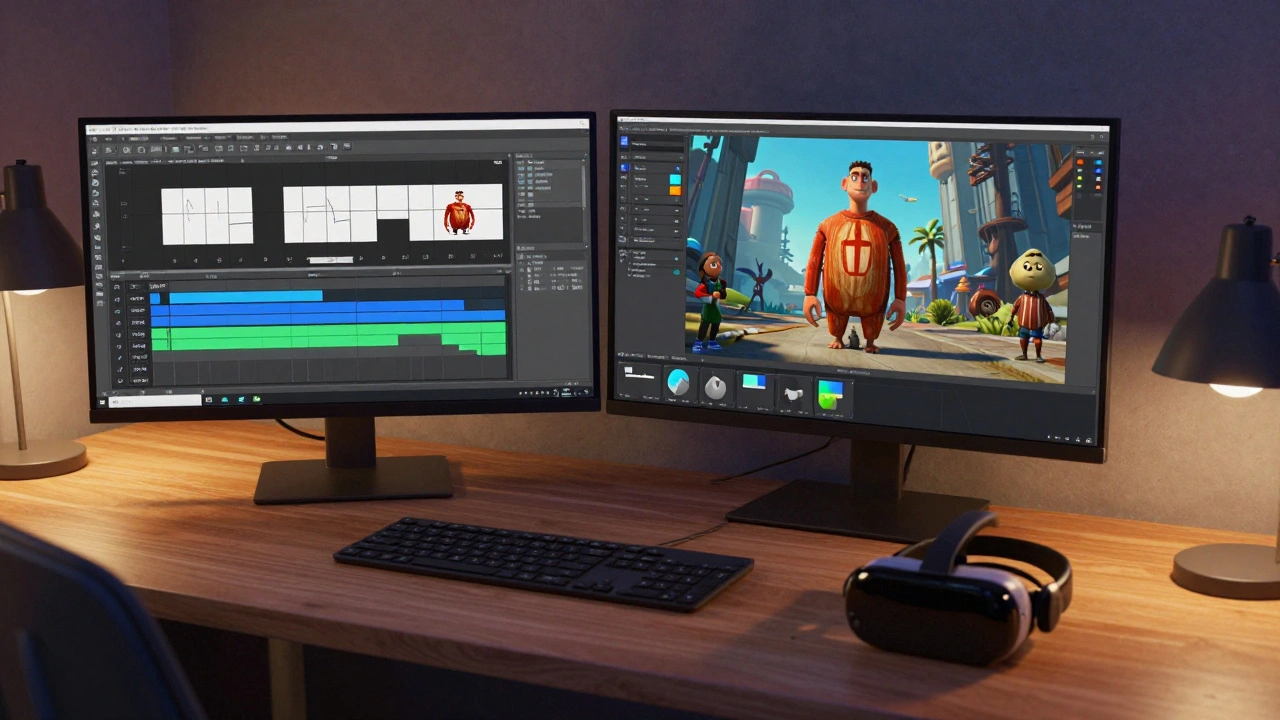
Before, a director had to choose between a static shot and a complex camera move-because the latter could take weeks to render. Now, they can try 20 different camera angles in an hour. A colorist can tweak the mood of a scene while the animator is still working on it. Artists from different departments sit around a single screen, making decisions together, instead of passing files back and forth.
Cost savings are massive. One studio reported cutting rendering time by 70% and reducing the number of artists needed for pre-visualization by half. That’s not just efficiency-it’s survival. Budgets are tighter, deadlines are faster, and audiences expect more.
And it’s not just big studios. Indie teams with as few as five people are now making animated shorts that look like Pixar films, using free versions of Unreal Engine and open-source assets.
Challenges and Limitations
It’s not all smooth sailing.
Game engines still struggle with ultra-high-fidelity details like subsurface scattering on skin or complex hair simulations. Film-grade rendering still needs offline renderers like RenderMan and a high-end rendering software developed by Pixar, used for photorealistic rendering in feature films for final frames. But the gap is closing fast.
Another issue: workflow integration. Not every studio’s pipeline was built for real-time tools. Some still rely on Maya, Houdini, and Nuke. Bridging those systems takes custom plugins and training. Studios that invested early in training their artists are winning. Those still clinging to legacy tools are struggling.
And then there’s the learning curve. Animators trained in traditional keyframe workflows need to relearn how to think. Instead of setting 100 keyframes, they now set physics, lighting, and camera behavior-and let the engine handle the rest.
What’s Next? The Future Is Live
The next frontier? Real-time animation that can be edited live during production.
Imagine a director watching a scene unfold, saying, “Make the clouds darker,” and the entire sky changes in real time. Or a voice actor recording lines, and the character’s lip movements update instantly to match. That’s already happening in test rooms.
Companies like NVIDIA and a technology company known for graphics processing units and AI-driven rendering tools are pushing real-time ray tracing to levels once thought impossible. With AI-assisted animation and neural rendering, we’re heading toward a future where animation is built, not rendered.
By 2026, more than 40% of animated features in production will use game engines as their core toolset. That number was under 5% just five years ago. The change isn’t coming. It’s already here.
Why This Matters for the Future of Film
Animation isn’t just becoming faster-it’s becoming more human.
When artists can see their work come to life instantly, they take more risks. They try wilder ideas. They collaborate better. The line between animator, director, and cinematographer is blurring-and that’s a good thing.
More studios are hiring game developers to work alongside traditional animators. Schools are adding real-time engine courses. The tools are open. The knowledge is shared. The barrier to entry is lower than ever.
And that means more voices, more styles, more stories. Not just the same polished Pixar look-but hand-drawn, pixel-art, glitchy, surreal, and experimental animations that could never have been made with old pipelines.
Can game engines fully replace traditional render farms in animation films?
Not yet, but they’re getting close. Game engines like Unreal Engine handle 80-90% of the animation process today-blocking, lighting, camera work, and even final frames for simpler scenes. However, for ultra-high-detail shots-like fur, water, or complex lighting-most studios still use offline renderers like RenderMan or Arnold for the final pass. The trend is clear: real-time engines are becoming the primary tool, with offline rendering used only for polishing.
Do you need to be a game developer to use Unreal Engine for animation?
No. While game developers built the tools, studios now hire animators and directors who learn the engine like they would learn Maya or Blender. Epic Games offers free training, templates, and plugins specifically for filmmakers. Many animators pick up Unreal Engine in under two weeks with focused practice. The interface is designed to be intuitive for artists, not just coders.
Is Unreal Engine free for animation films?
Yes, for most indie and small studios. Unreal Engine is free to use with no upfront cost. You only pay a 5% royalty on gross revenue after the first $1 million per project. For films that don’t make much money, this means zero fees. Even big studios like Sony and Disney use the free version for production, only paying if a film earns over $1 million.
How does real-time animation affect creative control?
It gives directors and artists way more control. Instead of waiting days to see if a shot works, they can tweak lighting, camera, or character motion on the spot. This leads to more experimentation-like trying a scene in a different art style or mood. It also means fewer compromises. If a director wants a shot to feel like a painting, they can make it happen immediately, not after a month of revisions.
Are indie animators using game engines too?
Absolutely. With free access to Unreal Engine, Blender, and open-source assets, small teams are making films that look like studio productions. One indie short, "The Last Light," was made by three people in six months using only Unreal Engine and free plugins. It got picked up by Netflix. The tools are democratizing animation like never before.





Comments(9)