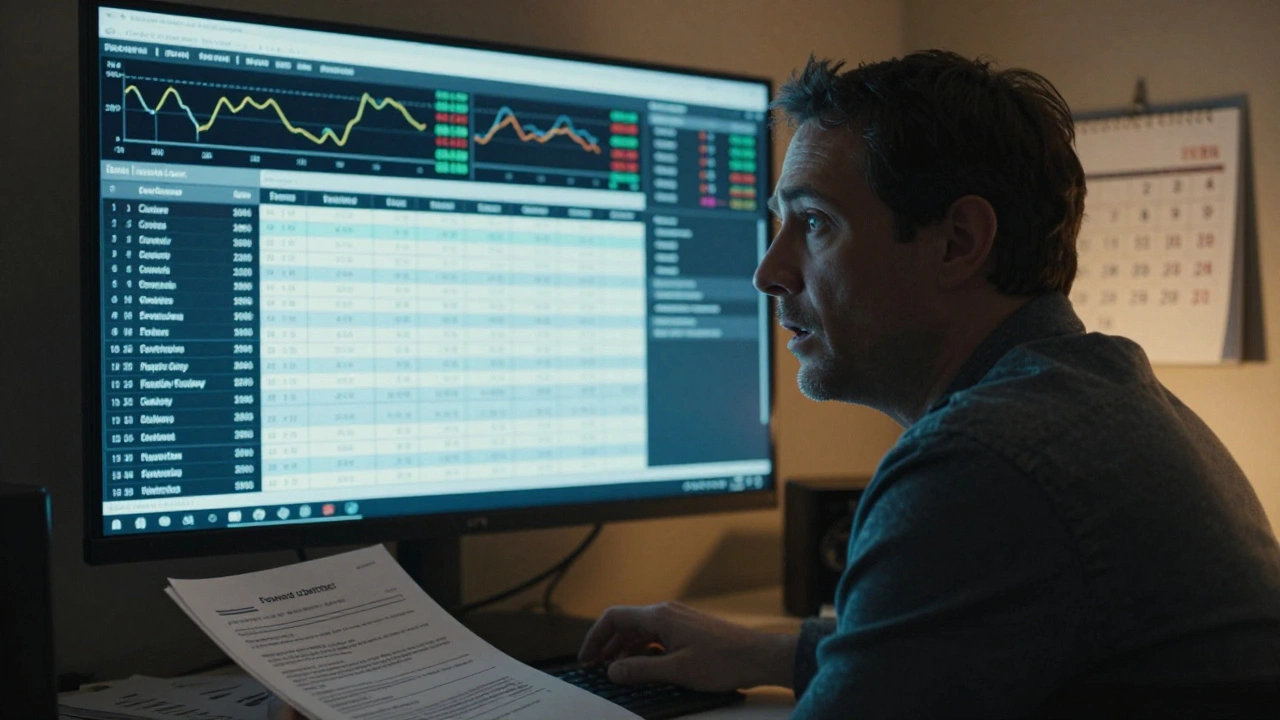
When you’re financing a film overseas, the biggest threat isn’t bad script notes or crew turnover-it’s the exchange rate. One day, your $10 million budget covers everything in Canada. The next, a 12% drop in the Canadian dollar eats up your post-production cash before you even start editing. This isn’t hypothetical. In 2023, a U.S.-backed indie film shot in Romania saw its budget balloon by $1.8 million overnight after the Romanian leu plunged against the dollar. No one saw it coming. No one had a plan.
Why Currency Risk Hits Film Financing Harder Than Other Industries
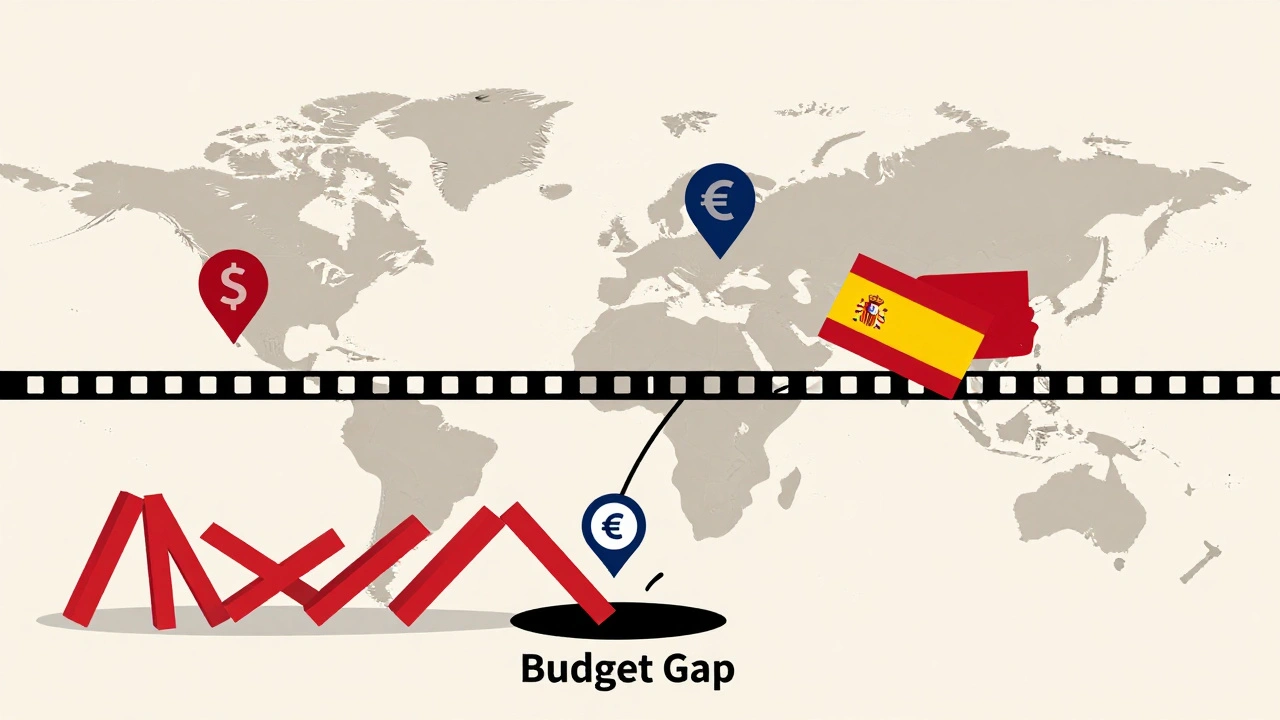
Most businesses deal with currency risk on a small scale-importing parts, paying overseas vendors, or selling to foreign customers. Films? They lock in costs months or years before revenue comes in. You sign a deal with a location manager in Spain for €500,000 in January. You don’t get paid back until the film hits streaming in October. If the euro falls 15% in that time, you’re out of pocket. And unlike a tech company that can adjust pricing, a film’s budget is frozen. You can’t just raise ticket prices because the pound dropped.
Plus, film financing is messy. You’ve got investors from Germany, tax credits from the UK, a distributor in Japan, and a post house in Australia. Each payment flows in a different currency. One small shift in exchange rates can cascade into a funding gap. A 2024 report from the Producers Guild of America found that 68% of international co-productions experienced budget overruns due to currency moves-not production delays or script rewrites.
How Currency Risk Actually Breaks a Film Budget
Let’s say you’re producing a low-budget thriller in Portugal. Your total budget is €2.1 million. You’ve got:
- €800,000 for cast and crew (paid in euros)
- €400,000 for equipment rental (paid in euros)
- €300,000 for location permits (paid in euros)
- €600,000 for post-production in the U.S. (paid in dollars)
You raise $2.3 million from U.S. investors, assuming a 1:1 exchange rate. Everything’s fine-until the euro surges to 1.15 against the dollar. Suddenly, your $2.3 million only buys €2 million. You’re short €100,000. But your U.S. post house still needs $600,000. That’s now €690,000. You’re now short €290,000. And you’re not even in theaters yet.
This isn’t a glitch. It’s standard. Most producers think they’re protected because they’ve got “enough” money. But currency risk doesn’t care about your confidence. It only cares about the number on the screen.
Five Proven Tactics to Lock in Your Budget
There are no magic fixes. But there are five tactics used by seasoned international producers to survive currency swings.
1. Forward Contracts: Buy Your Exchange Rate Today
Think of a forward contract like pre-buying gas before a road trip. You lock in today’s rate for a future date. If you know you’ll need $500,000 in U.S. dollars six months from now, you can pay your bank today to deliver that amount at a fixed rate. No surprises.
Most banks offer this to film producers. The catch? You’re stuck. If the dollar weakens after you lock in, you still pay the higher rate. But that’s the point-you’re not gambling. You’re insuring. This is the most common tool used by major studios. Independent producers use it too. Just don’t wait until the last minute. Rates change daily.
2. Currency Options: Pay for the Right, Not the Obligation
Options give you the right-but not the duty-to exchange currency at a set rate. You pay a premium (like an insurance deductible) upfront. If the rate moves against you, you use it. If it moves in your favor, you walk away and save money.
This is more expensive than forwards, but it gives you flexibility. A producer in Australia financing a shoot in Mexico might buy a put option on the peso. If the peso crashes, they cash in. If it rises? They lose only the premium. It’s a safety net, not a cage.
3. Local Currency Financing: Borrow Where You Shoot
Instead of bringing dollars into the country, borrow euros, pesos, or yen right where you’re filming. You pay back the loan in the same currency you’re spending. That means currency risk disappears. If the local currency drops, your loan repayment gets cheaper.
This works best in countries with stable banking systems and film incentives. Canada, the UK, Germany, and Australia all offer local financing programs for foreign producers. Some even offer low-interest loans tied to tax credit guarantees. In 2024, a U.S. documentary team secured a €1.2 million loan in France, backed by their eligibility for the French tax credit. They never touched a dollar.
4. Split Payments Across Currencies
Don’t put all your eggs in one basket. If you’re spending in three countries, raise money in three currencies. If you’re shooting in South Korea and paying talent in won, get some funding from Korean investors. If you’re editing in the UK, bring in British backers. Now your income and expenses are matched.
This is called natural hedging. It doesn’t eliminate risk-but it balances it. A film shot in Bulgaria and post-produced in India can have 60% of its budget funded in leva and rupees. That way, if one currency drops, the other might rise. It’s not perfect, but it’s smarter than betting everything on the dollar.
5. Contingency Funds in Hard Currencies
Every film needs a contingency fund. For international projects, that fund should be in U.S. dollars or euros-the most stable global currencies. Don’t just add 10% to your budget. Add 15-20%, and keep it in cash or short-term bonds denominated in hard currency.
That extra money isn’t for reshoots. It’s for exchange rate shocks. If the Brazilian real crashes and your post house needs $200,000 more, you don’t scramble. You pull from the contingency. You don’t cancel the film. You don’t beg investors for more. You just pay.
What Not to Do
Here’s what most first-time international producers get wrong:
- Waiting to act-Currency moves fast. If you wait until production starts to hedge, you’re already behind.
- Using freelance FX brokers-They offer better rates, but they’re not regulated. One scam in 2023 wiped out $3.4 million from a film fund in Eastern Europe.
- Ignoring tax credit currency-If your tax credit is paid in local currency, and you need dollars to repay investors, that’s a hidden risk. Factor it into your hedge.
- Assuming inflation = currency risk-Inflation affects prices. Currency risk affects conversion. They’re not the same. A film in Argentina might have high inflation but a stable exchange rate. Or vice versa.
Real-World Example: How a Micro-Budget Film Survived a 22% Currency Crash
In early 2024, a producer from Tennessee financed a horror film in Serbia. Budget: €1.1 million. Funding: $1.2 million from U.S. investors. Production started in March. By June, the Serbian dinar had fallen 22% against the dollar.
Instead of panicking, they’d already done three things:
- Locked in 70% of their euro-to-dollar needs with forward contracts six months early.
- Secured €200,000 in local financing from a Serbian film fund.
- Kept €150,000 in a U.S. dollar savings account as contingency.
When the dinar crashed, their local crew costs went up-but they’d already paid most of them in euros. Their contingency fund covered the rest. They finished the film on time. No investor lost money. The film later sold to a U.S. distributor for $1.8 million.
It wasn’t luck. It was planning.

What to Ask Your Financial Advisor
If you’re working with a bank or financial advisor on international film financing, ask these questions:
- Do you have experience working with film producers on currency hedging?
- Can you set up forward contracts or options with a 30-day lock-in window?
- What are the fees for currency hedging tools?
- Can you help me match local revenue streams (like tax credits) with local expenses?
- Do you offer multi-currency accounts where I can hold euros, pounds, and yen in one place?
If they say, “We don’t do that,” find someone who does. This isn’t niche anymore. It’s standard.
Final Rule: Treat Currency Like a Cast Member
You don’t hire an actor and hope they show up on set. You sign a contract. You pay them. You plan for delays. Currency is the same. It’s not a background detail. It’s a key player. If you ignore it, it will sabotage your film. If you plan for it, it becomes invisible. That’s the goal.
By the time your film hits streaming, no one will know you lost $200,000 to exchange rates. Because you made sure they never saw it coming.
What is the biggest mistake filmmakers make with currency risk?
Waiting until production starts to deal with exchange rates. Currency moves fast, and delays in hedging can cost hundreds of thousands. The best producers lock in rates months before shooting begins.
Can I use cryptocurrency to avoid currency risk?
No. Cryptocurrencies like Bitcoin or Ethereum are even more volatile than most foreign currencies. Using them adds uncertainty, not stability. Banks and tax authorities don’t treat crypto as a reliable medium for film financing. Stick to traditional hedging tools.
Do tax credits protect me from currency risk?
Only if they’re paid in the same currency you’re spending. If your tax credit is in pesos but your investors need dollars, you still face conversion risk. Always map your income and expenses in the same currency to avoid mismatches.
Is currency hedging expensive for indie films?
Not compared to losing your budget. Forward contracts typically cost 0.1%-0.5% of the amount hedged. Options cost more upfront but give flexibility. For a $2 million film, that’s $2,000-$10,000. That’s cheaper than reshooting one scene.
What if I’m filming in a country with unstable currency, like Argentina or Turkey?
Avoid paying local vendors in local currency if possible. Use forward contracts to lock in dollar rates for your local expenses. Or partner with a local production company that can pay in hard currency. Many have offshore accounts. You pay them in dollars. They pay their crew in pesos. You stay insulated.






Comments(8)