Turning a book into a screenplay isn’t just about cutting pages. It’s about rebuilding the story from the inside out. You can’t just slap dialogue over chapter summaries and call it a script. If you’ve ever watched a movie based on a novel and thought, "This doesn’t feel like the book," you’re not imagining it. The problem isn’t usually bad acting or direction-it’s a failure to understand how stories work in different mediums.
Why Books Don’t Translate Directly
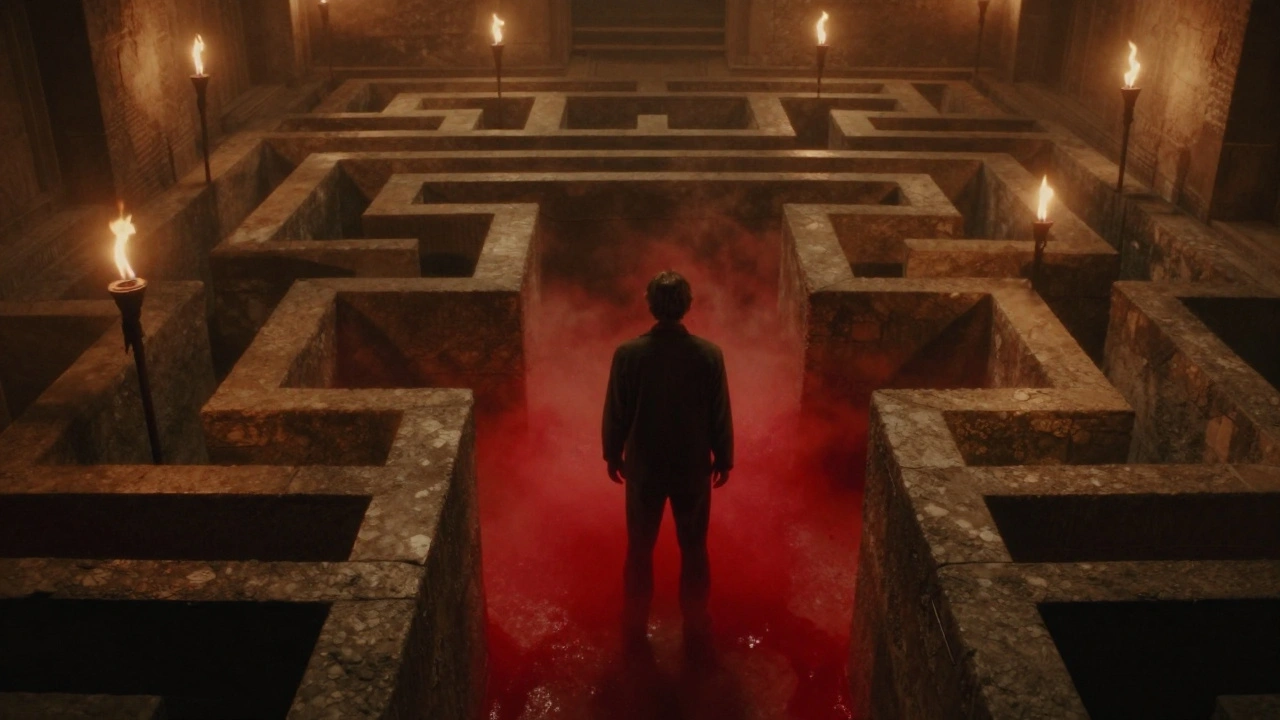
Books have room. They can spend three pages describing a character’s childhood trauma, or let a quiet moment stretch over a hundred words of internal monologue. Movies don’t have that luxury. A feature film runs about 90 to 120 minutes. That’s roughly 110 pages of script. Every line of dialogue, every visual beat, every cut must earn its place.Take Stephen King’s "The Shining". The novel is a slow-burn psychological horror that dives deep into Jack Torrance’s unraveling mind. The 1980 film by Stanley Kubrick cuts almost all of that. Instead of showing Jack’s inner turmoil through pages of thought, Kubrick used visuals: the maze, the blood elevator, the eerie repetition of "Here’s Johnny!" The movie works because it doesn’t try to be the book-it finds its own language.
That’s the rule: adaptation isn’t replication. It’s transformation.
The Core Differences Between Page and Screen
- Internal vs. External: Books use thoughts, memories, and narration. Films must show emotion through action, expression, or sound.
- Pacing: A novel can take 50 pages to build tension. A screenplay needs that tension in under five minutes.
- Structure: Novels often follow a loose, episodic structure. Screenplays demand three-act structure, turning points, and clear stakes by page 30.
- Character Depth: A book can introduce 15 minor characters with backstories. A film usually merges or cuts them to keep focus on 3-5 key players.
One of the biggest mistakes new adapters make is trying to include everything. They think faithful means comprehensive. It doesn’t. Faithful means capturing the essence-the emotional truth, the central conflict, the character arc.
Where to Start: The Three-Step Adaptation Process
- Identify the Core Story-What’s the one thing this book is really about? Is it redemption? Survival? Betrayal? Strip away all subplots that don’t serve that core. For example, in "Gone Girl" by Gillian Flynn, the book’s complex timeline and multiple perspectives were simplified into a tightly wound thriller where every twist serves the central mystery of Amy Dunne’s game.
- Find the Visual Heart-What moments in the book can be shown, not told? A character’s guilt might be described in 200 words in the novel. In the film, it’s a silent shot of them staring at a photo, then tearing it in half. Look for physical actions that carry emotional weight.
- Rebuild the Structure-Novels often have a prologue, epilogue, flashbacks, and digressions. Screenplays need a clear inciting incident by page 10, a midpoint twist by page 60, and a final confrontation by page 110. Use the three-act structure as your scaffold, not your cage.
What to Cut (And What to Keep)
Most adaptations fail because they hold on to the wrong things.
What to cut:
- Internal monologues (unless voiced over with purpose)
- Excessive backstory that doesn’t drive current action
- Minor characters with no impact on the main arc
- Long descriptions of settings, clothing, or weather-unless they’re symbolic
What to keep:
- The protagonist’s central change (arc)
- The emotional stakes (what happens if they fail?)
- Key symbols or motifs (e.g., a recurring object, color, or phrase)
- Dialogue that reveals character, not just plot
For example, in "The Lord of the Rings" film trilogy, Peter Jackson cut dozens of minor characters and side quests from Tolkien’s books. But he kept the core relationships: Frodo’s burden, Sam’s loyalty, Aragorn’s rise. He also kept the motif of the Ring’s corruption-shown visually through Gollum’s obsession, Boromir’s fall, and even the way the landscape darkens as the party nears Mordor.
How to Handle Flashbacks, Dreams, and Inner Worlds
Books use these freely. Films struggle with them. A flashback in a novel can be a paragraph. In a film, it’s a scene-costumes, locations, actors, lighting, music. That costs money and time.
Use flashbacks only if they’re essential. Ask: Does this moment change how the audience understands the character? If not, cut it.
For inner worlds, try these tricks:
- Visual metaphor: A character drowning in paperwork = feeling overwhelmed.
- Sound design: Echoes, muffled voices, or silence can represent isolation.
- Behavior: A person who never makes eye contact might be hiding guilt.
- Dialogue with a mirror: A character talking to their reflection can reveal inner conflict without voiceover.
Take "Fight Club" by Chuck Palahniuk. The novel’s narrator is unreliable, and his split identity is revealed through internal narration. The film shows it through visual clues: the same man appearing in different rooms, subtle lighting shifts, and the way the narrator’s body language changes. The twist lands because the audience sees it before they understand it.
When to Deviate-and When Not To
Some fans get angry when adaptations change the source material. But the best adaptations often change the most.
"The Handmaid’s Tale" TV series took Margaret Atwood’s 1985 novel and expanded it for a modern audience. It added new characters, updated timelines, and explored side stories the book barely touched. Why? Because the themes of control, silence, and resistance felt even more urgent in 2017. The adaptation didn’t betray the book-it deepened it.
But there’s a line. Don’t change:
- The protagonist’s core motivation
- The central theme
- The ending’s emotional truth
Changing the ending just because you think it’s "too sad"? That’s not adaptation. That’s cowardice.
Real-World Examples That Got It Right
- "The Godfather" (1972)**-Mario Puzo’s novel was dense with family history. The film cut 70% of the text but kept the soul: power, loyalty, corruption. The baptism scene? Pure cinema. No book could have delivered that.
- "The Shawshank Redemption" (1994)**-Stephen King’s novella "Rita Hayworth and Shawshank Redemption" is quiet and introspective. The film added the rain scene, the poster, the radio moment-all visual metaphors that didn’t exist in the text but made the story unforgettable.
- "The Great Gatsby" (2013)**-Despite criticism, the film captured the novel’s tone: the glitter, the emptiness, the illusion of the American Dream. It used color, music, and pacing to mirror the book’s rhythm.
What to Avoid at All Costs
- Adding a love interest just to make it "more commercial." If the book doesn’t need it, don’t force it.
- Turning a subtle character into a villain. Complexity gets lost in simplification.
- Using voiceover as a crutch. If you’re relying on narration to explain what should be shown, you haven’t solved the problem.
- Trying to please fans. If you’re writing to satisfy readers of the book, you’re writing for the wrong audience. Write for the movie.
Final Rule: Think Like a Filmmaker, Not a Writer
Screenwriting isn’t novel writing with fewer words. It’s a different art form. A screenplay is a blueprint for a movie-not a substitute for the book.
Ask yourself:
- What will the audience see?
- What will they hear?
- What will they feel in their bones?
If you can answer those questions without relying on the book’s text, you’ve started to adapt.
Can you adapt any book into a screenplay?
Technically, yes-but not all books are suited for film. Books with heavy internal monologue, complex timelines, or dozens of minor characters are harder to adapt. The best candidates have a strong central character arc, clear stakes, and moments that can be visualized. Novels like "The Hunger Games," "Harry Potter," or "The Girl on the Train" work because they’re built around action, emotion, and visual set pieces. Poetry collections or philosophical novels often don’t translate well unless reimagined as something new.
Do you need permission to adapt a book into a screenplay?
Yes. Unless the book is in the public domain (published before 1929 in the U.S.), you must secure the film rights from the author or their estate. This usually involves a contract that outlines how much you pay, for how long, and what changes you can make. Many screenwriters option rights for a year at a time while developing the script. Never start writing without legal clearance-your script could be useless if the rights aren’t secured.
How long should a book-to-screenplay adaptation be?
A standard feature screenplay is 90 to 120 pages, with one page roughly equaling one minute of screen time. For novels under 250 pages, you can usually fit the core story into 100 pages. Longer books often need to be split into multiple films or a limited series. For example, "A Song of Ice and Fire" became "Game of Thrones" because one movie couldn’t hold all the characters and plotlines.
What’s the most common mistake in book adaptations?
Trying to include everything. Writers often think faithful means faithful to every detail. But that’s impossible. The best adaptations distill the book’s soul into a new form. The mistake isn’t changing things-it’s changing the wrong things. Focus on the emotional truth, not the plot points.
Should I read the book while writing the screenplay?
Absolutely-but not while you’re drafting. Read it once to absorb the story. Then put it away. Write the screenplay as if it’s its own story. Go back to the book only when you’re stuck on a character’s motivation or need to check a detail. If you keep it open on your desk, you’ll end up writing a novel with dialogue.
Adapting a book isn’t about making a movie that matches the pages. It’s about making a movie that feels like the book-without ever copying it. The best adaptations aren’t faithful. They’re inspired.



Comments(10)