
Why old movies keep making money in theaters
It’s 2026. Streaming is everywhere. Yet, in small towns and big cities alike, people are lining up for anniversary screenings of movies that are 20, 30, even 40 years old. The Dark Knight came back to theaters in 2024 and made $18 million globally. Blade Runner 2049’s director’s cut re-release in 2023 pulled in $12 million in just six weeks. These aren’t flukes. They’re proof that re-releasing films is now a reliable revenue stream - one that studios barely had to think about a decade ago.
How anniversary screenings turn nostalgia into cash
Anniversary screenings aren’t just about showing an old movie again. They’re events. Fans buy tickets weeks in advance. They dress up. They bring props. They scream during iconic scenes. Theaters charge $18 to $25 a ticket - more than double the price of a regular showing. Some even sell limited-edition posters or collectible candy packs. In 2023, AMC reported that Star Wars: Episode IV’s 40th-anniversary run in 300 theaters grossed $7.2 million in 10 days. That’s $24,000 per screen. Compare that to a typical new release, which averages $10,000 per screen in its first week.
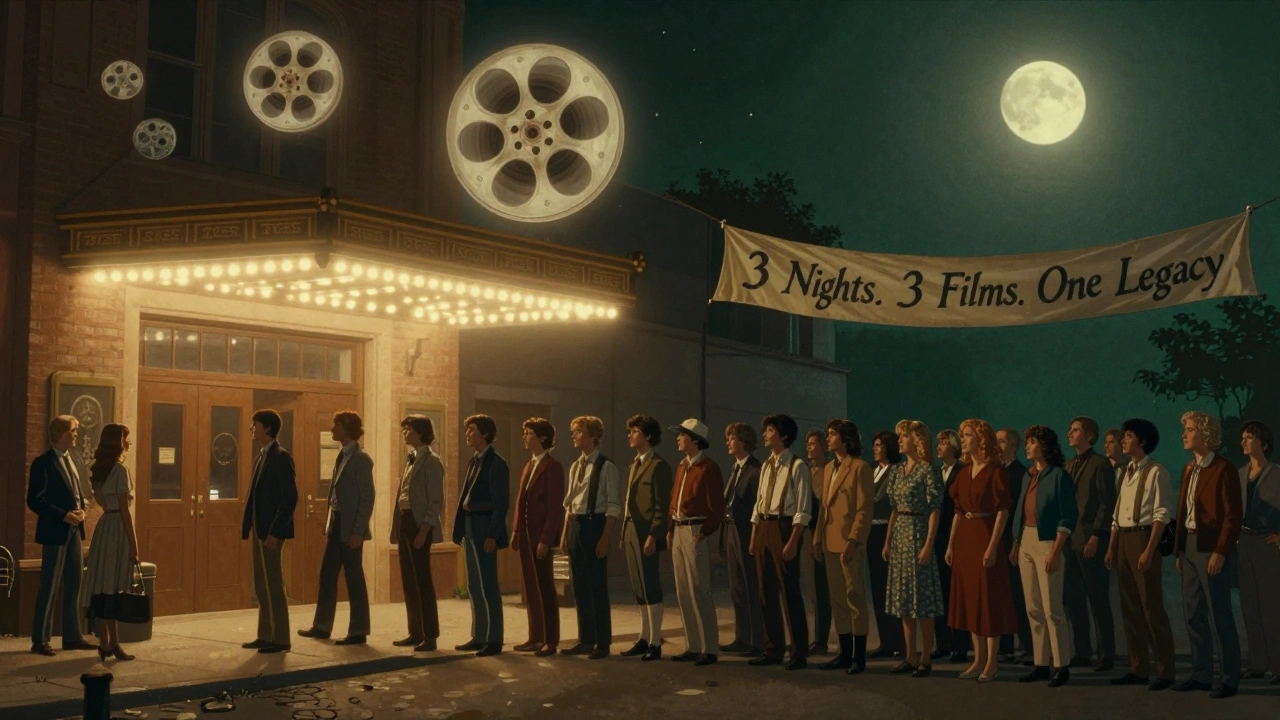
The secret? It’s not the movie itself. It’s the ritual. People don’t just want to watch Back to the Future. They want to relive their first time watching it. Or watch it with their kids like their parents did with them. Studios know this. They don’t just dust off the film - they package it like a concert tour. Special sound mixes. Restored 4K prints. Q&A sessions with surviving cast or crew. That’s why The Lord of the Rings trilogy returned in 2023 as a three-night event. It wasn’t a re-release. It was a pilgrimage.
Director’s cuts: when the filmmaker gets the final say - again
Not all re-releases are about nostalgia. Some are about correction. Directors who were forced to cut scenes for studio reasons are finally getting their versions back on screen. These are called director’s cuts. And they’re often more profitable than the original release.
Take Blade Runner. The 1982 version had a studio-mandated voiceover and a happy ending. Fans hated it. The 1992 director’s cut removed both. The 2007 Final Cut, fully approved by Ridley Scott, added new visuals and restored the original ending. When it hit theaters in 2023, it made $12 million. Why? Because fans had waited 30 years to see the version the director always meant to make. It wasn’t just a movie. It was justice.
Same thing happened with Alien. The 1979 version was trimmed for pacing. In 2024, the 4K director’s cut - with 17 minutes of restored footage - opened in 450 theaters and earned $8.1 million. That’s $18,000 per screen. The original release in 1979 made $104 million adjusted for inflation. The re-release didn’t beat that. But it didn’t need to. It cost almost nothing to distribute. No marketing budget. No new actors. Just a digital print and a tweet.
Why studios love this model
For studios, re-releases are the ultimate low-risk, high-reward play. No new production costs. No box office competition from new films. No streaming royalties to split. Everything is pure profit. A 4K restoration might cost $500,000. But a successful re-release can make $10 million in three weeks. That’s a 20x return. And it’s not just for blockbusters. Indie films like Stand by Me and My Neighbor Totoro have seen similar spikes.
Studios also use re-releases to test new markets. When Goodfellas returned in 2024, it opened in 150 theaters - mostly in cities where it never played before. It made $3.7 million. That’s data. That’s insight. Now they know where to target future marketing for new releases.
And here’s the kicker: re-releases help keep theaters alive. Many independent theaters can’t afford to book new releases every week. But they can book Ghostbusters on a Tuesday night. It fills seats. It brings in concessions. It keeps the lights on.
What works - and what doesn’t
Not every old movie should come back. The ones that do? They have three things in common:
- A cult following - fans who still talk about it, quote it, meme it
- A visual or audio upgrade - restored 4K, Dolby Atmos, new color grading
- A story that feels relevant again - Get Out re-released in 2023 after a surge in social justice discussions
On the flip side, movies that flop in re-release? Usually lack one of those three. Speed 2: Cruise Control tried a 25th-anniversary run in 2024. It made $120,000. It didn’t have fans. It didn’t have a director’s cut. It didn’t have meaning. It was just a movie that didn’t age well.

The future of theatrical re-releases
Re-releases are no longer a side hustle. They’re a core part of studio strategy. In 2025, Universal announced a 10-year plan to re-release 12 classic films annually. Disney is restoring its entire 1990s animated catalog for 4K theatrical runs. Even Netflix is getting in - they partnered with AMC to bring House of Cards and Stranger Things to theaters as special events.
What’s next? Imagine a Matrix re-release with interactive AR elements. Or a Star Wars marathon where you can choose your own path through the saga. The technology is already here. The audience is waiting. The only question is: which film will be next?
Why this matters for moviegoers
If you’ve ever wondered why your local theater is showing a 1999 movie on a Tuesday - now you know. It’s not because they ran out of new films. It’s because someone, somewhere, still loves this movie. And studios are finally listening. Re-releases are a reminder that cinema isn’t just a product. It’s a shared memory. And memories, when treated right, can still fill theaters.
How to find the next re-release
You don’t have to wait for a studio announcement. Check these sources:
- AMC Theatres’ ‘Classic Film Series’ calendar
- Fandango’s ‘Special Events’ section
- Reddit communities like r/ClassicFilm or r/Releases
- Director interviews - if a filmmaker says, ‘I’m working on a new cut,’ it’s coming soon
Set alerts. Talk to your local theater. If enough people ask, they’ll book it. That’s how Princess Mononoke got a 2024 re-release - fans started a petition. 12,000 signatures. Three months later, it was in theaters.






Comments(7)