
Buildings Don’t Just Sit There - They Speak
Think about the last time a building in a movie made your skin crawl, lifted your heart, or made you feel utterly alone. It wasn’t the actor. It wasn’t the music. It was the space itself - the way the light fell across a cracked hallway, how the stairs groaned under footsteps, or how a window framed a character like a cage. Architecture in film isn’t backdrop. It’s a silent actor. It breathes. It remembers. It reacts.
Take the Overlook Hotel in The Shining. Kubrick didn’t just shoot inside a real hotel. He turned the layout into a psychological trap. The endless hallways, the maze-like design, the symmetry that feels wrong - these aren’t set dressing. They’re the movie’s real antagonist. The hotel doesn’t need to move. It just has to be there, watching. And you feel it.
How Spaces Shape Emotion Without a Single Line of Dialogue
Every film director knows this: a room can make you feel claustrophobic, hopeful, nostalgic, or terrified - even if no one speaks. The architecture does the work. A narrow, low-ceilinged corridor in Hereditary doesn’t just lead to a bedroom. It leads to dread. The walls press in. The ceiling feels like it’s lowering. You don’t need a jump scare. The space itself is the scare.
Compare that to the open, sunlit interiors in The Grand Budapest Hotel. The pastel walls, the symmetrical doors, the candy-colored staircases - they don’t just look pretty. They tell you this world is artificial, controlled, almost too sweet. It’s a fairy tale built on lies. The architecture isn’t just decorative. It’s ironic. It’s a lie wrapped in lace.
Realism doesn’t mean boring. Even in a gritty drama like Manchester by the Sea, the cold, boxy houses, the cramped kitchens, the unadorned walls - they don’t just house characters. They reflect their grief. The house is frozen in time, just like Lee. No one redecorates. No one fixes the leaky faucet. The space holds onto pain like a museum holds a broken artifact.
The Rules of Filming Architecture Like a Co-Star
Most filmmakers treat buildings like props. But when you treat them as characters, you change how you shoot them. Here’s what works:
- Move the camera like a person walking through the space. Don’t just pan left to right. Let the camera feel the weight of a hallway. Let it hesitate at a doorway. Let it look up slowly at a ceiling that feels too high - or too low.
- Use light to reveal, not just illuminate. A single shaft of sunlight cutting through dust in an abandoned church tells you more than a hundred lines of exposition. Light doesn’t just show the space - it tells you its history.
- Let the space breathe. Hold a shot longer than you think you should. Let the audience sit in the silence of a room. The longer you stay, the more the architecture starts to feel alive.
- Shoot from inside the space, not above it. Avoid drone shots unless you’re showing isolation. Most emotional architecture is felt from the ground up - from the perspective of someone trapped, lost, or hiding.
Look at the opening of Blade Runner 2049. The camera doesn’t zoom over the city. It crawls through the ruins of a broken building, past rusted pipes and shattered glass, as if it’s searching for something - or someone. The architecture isn’t scenery. It’s the memory of a world that’s gone.
Architecture as Memory: When Buildings Hold the Past
Some films use buildings as archives. They don’t just show where people live - they show what they lost.
In Carol, the 1950s apartment isn’t just a setting. It’s a prison of silence. The thick curtains, the heavy drapes, the way the furniture is arranged to keep people apart - every detail reinforces the fear of being seen. The space doesn’t change, but the characters do. And that tension? That’s the architecture holding them back.
Same with Portrait of a Lady on Fire. The isolated villa on the coast isn’t just beautiful. It’s a sanctuary. The walls are thick. The windows are small. The rooms are quiet. The space becomes a cocoon - a place where love can exist outside the rules of the world. When the characters leave, the house doesn’t vanish. It stays, holding their secret.
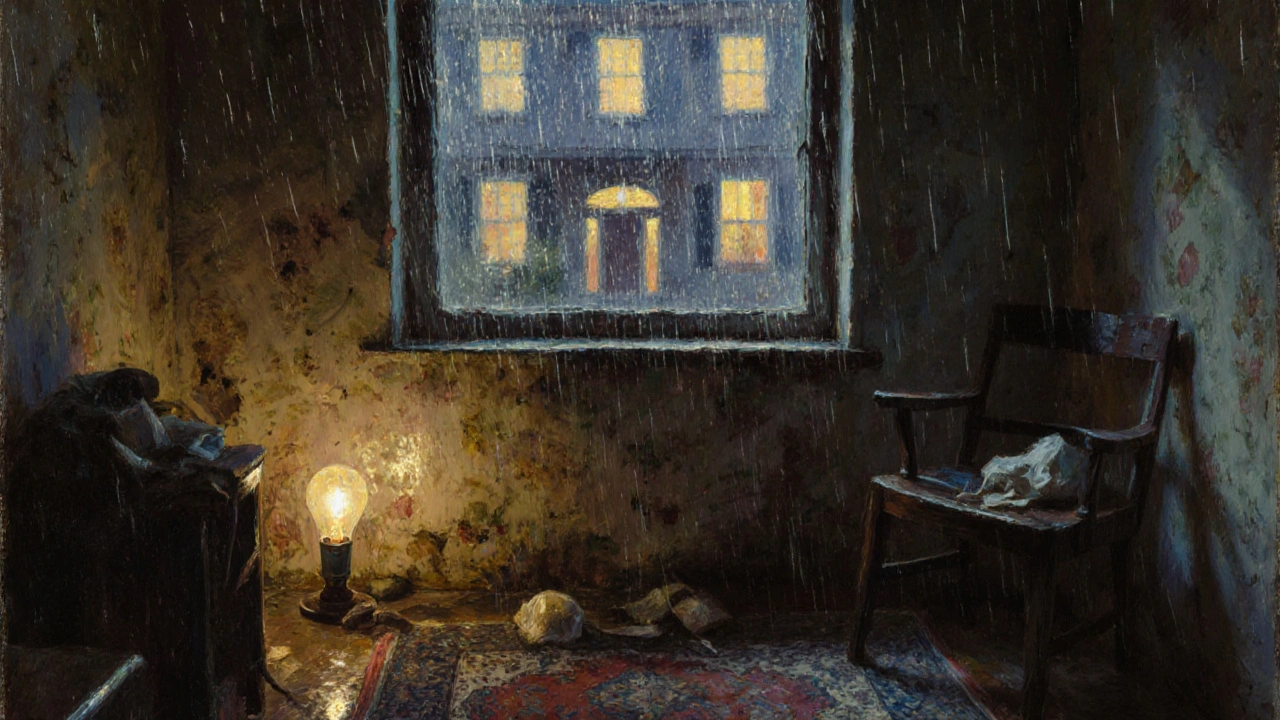
Architecture doesn’t need to be grand to be powerful. A single room with a cracked window, a stained rug, a chair that never gets moved - that’s enough. It’s the accumulation of small, quiet details that make a space feel real. And when it feels real, it feels alive.
Why Some Buildings Work - and Others Fall Flat on Screen
Not every old house, modern tower, or abandoned factory becomes a character. Here’s why some fail:
- Too clean. A perfectly polished floor or spotless walls scream "set." Real spaces have wear. Dust. Scuffs. Faded paint. Let the building show its age.
- Too symmetrical. Perfect symmetry feels staged. Real buildings have asymmetry - a crooked door, a leaning staircase, a window that doesn’t match the others. That’s where humanity hides.
- Too loud. If every wall is painted bold colors or every corner has a prop, the space becomes noise. Silence is more powerful. Let the architecture whisper.
- Too generic. A "typical suburban home" doesn’t mean anything. But a home with a rusted swing in the yard, a porch light that never works, and a garage full of boxes from 1998? That’s a story.
Think of the house in Get Out. It looks like a normal colonial. But the way the light hits the hallway at dusk, the way the portraits stare just a little too long, the way the floorboards creak in patterns - that’s not accident. That’s design. The house is watching. And it’s been waiting.
Real Places, Real Stories: When Filmmakers Use Actual Buildings
Some of the most powerful architectural performances come from real places - not sets.
The abandoned psychiatric hospital in The Others was a real building in Spain. The crew didn’t add fake mold or broken glass. They just turned off the lights and let the natural decay take over. The building had its own history - and that history bled into the film.
Same with 1917. The trench systems weren’t built from scratch. The production team found a real, overgrown field near a WWI memorial and rebuilt the trenches exactly as they were. The mud wasn’t fake. The rats weren’t CGI. The fear wasn’t acted. It was real - because the space was real.
When you film a real building, you’re not just shooting a location. You’re borrowing its soul. The cracks in the wall? They’ve seen storms. The broken window? It’s been patched a dozen times. The stairs? They’ve carried footsteps for generations. That weight? You can’t fake it.
What Happens When Architecture Breaks the Rules
Some films don’t just use architecture - they bend it.
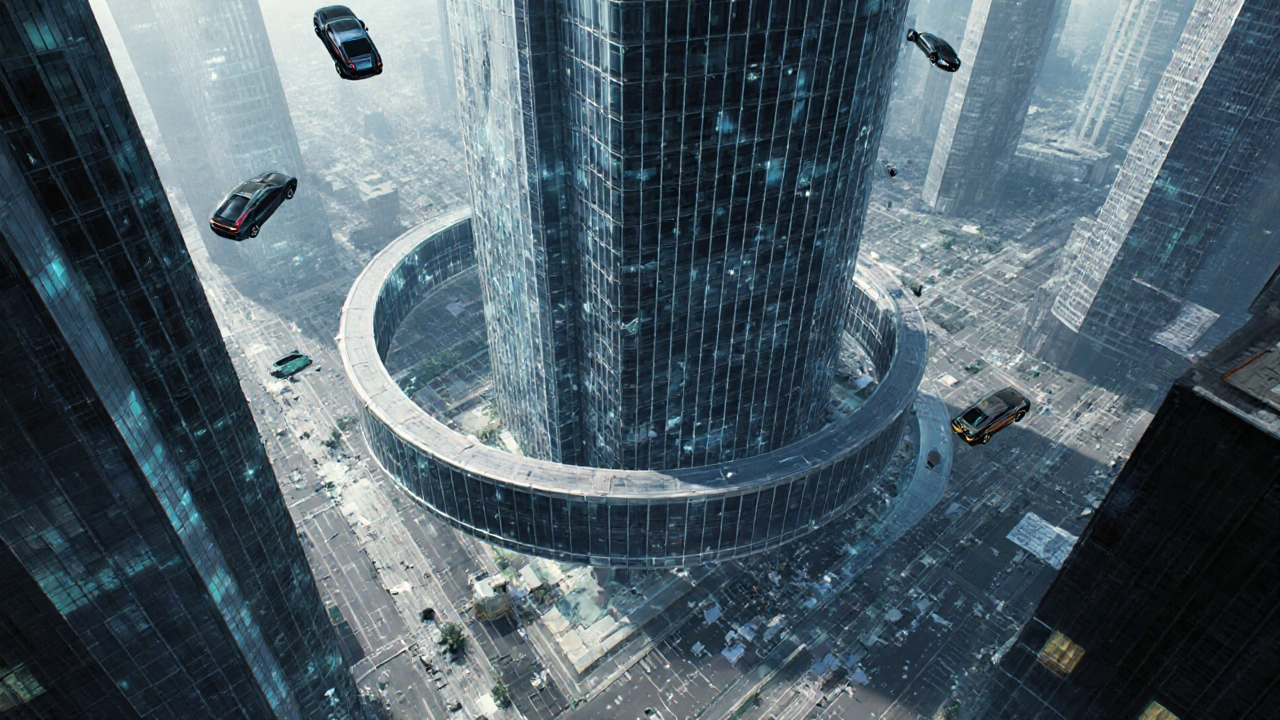
In Inception, the city folds in on itself. Streets twist into spirals. Gravity flips. The building isn’t just a setting - it’s a puzzle. The architecture becomes a metaphor for the mind. It’s not about realism. It’s about feeling.
Same with Prisoners. The house is a maze. Doors lead nowhere. Hallways dead-end. The architecture isn’t just trapping the characters - it’s trapping the audience. You feel the same confusion. The same helplessness. The building becomes a mirror of the mind.
These aren’t just special effects. They’re emotional tools. When architecture defies logic, it doesn’t confuse - it reveals. It shows what’s hidden: guilt, trauma, obsession.
How to Start Seeing Architecture Like a Filmmaker
You don’t need a camera to practice this. Just walk through a building - any building - and ask:
- What does this space want to say?
- Who used to live here? What did they leave behind?
- How does the light change at 4 p.m.?
- Where are the cracks? The stains? The forgotten corners?
- If this room could speak, what would it say about the people who passed through?
Go to an old library. Notice how the high ceilings make you whisper. Go to a subway station at midnight. Feel how the echo turns footsteps into ghosts. Walk through a shopping mall after hours. The silence isn’t empty - it’s heavy.
Architecture is always telling a story. You just have to know how to listen.
Final Thought: The Best Buildings Are the Ones That Stay With You
Years after you forget the plot, after the actors fade from memory, the space remains. The house in Psycho. The hotel in The Shining. The apartment in Parasite. They don’t just exist in the film. They live in you.
That’s the power of architecture on camera. It doesn’t need to move. It doesn’t need to speak. It just needs to be there - real, quiet, and full of secrets.
Can any building become a character in film?
Yes - but only if it has history, texture, and emotional weight. A generic new apartment won’t work. But a house with peeling wallpaper, a creaky floorboard, or a window that always leaks? That’s a character. It’s not about size or style - it’s about what it holds. The more it feels lived-in, the more it feels alive.
Do I need expensive equipment to film architecture effectively?
No. A smartphone with manual focus and a tripod can capture powerful architectural shots. What matters is time - staying still, waiting for the right light, noticing the small details. A slow dolly move through a hallway, filmed with natural light, often hits harder than a drone shot over a city.
Why do some modern buildings feel cold in films?
Modern buildings often lack imperfections. Glass, steel, and clean lines feel sterile because they’re designed to be neutral. To make them feel alive, filmmakers add contrast - a single cracked window, a pile of clothes on a chair, a plant dying in the corner. The humanity comes from the mess - not the design.
How do you avoid making architecture look like a postcard?
Don’t shoot for beauty. Shoot for truth. A postcard shows a perfect view. A film shows what’s behind the view - the mold in the corner, the flickering bulb, the handprint on the doorframe. Let the space be imperfect. Let it breathe. Let it be real.
Can interior spaces be more powerful than exteriors?
Absolutely. Interior spaces are where emotions live. A wide shot of a skyscraper tells you it’s tall. A close-up of a hand touching a cold doorknob in an empty hallway tells you someone is afraid. The inside is where the story hides - in the dust, the shadows, the silence.
Next time you watch a film, pause it. Look at the walls. Look at the floor. Look at the light. Ask yourself: what is this space telling me? You might be surprised what it says.




Comments(10)