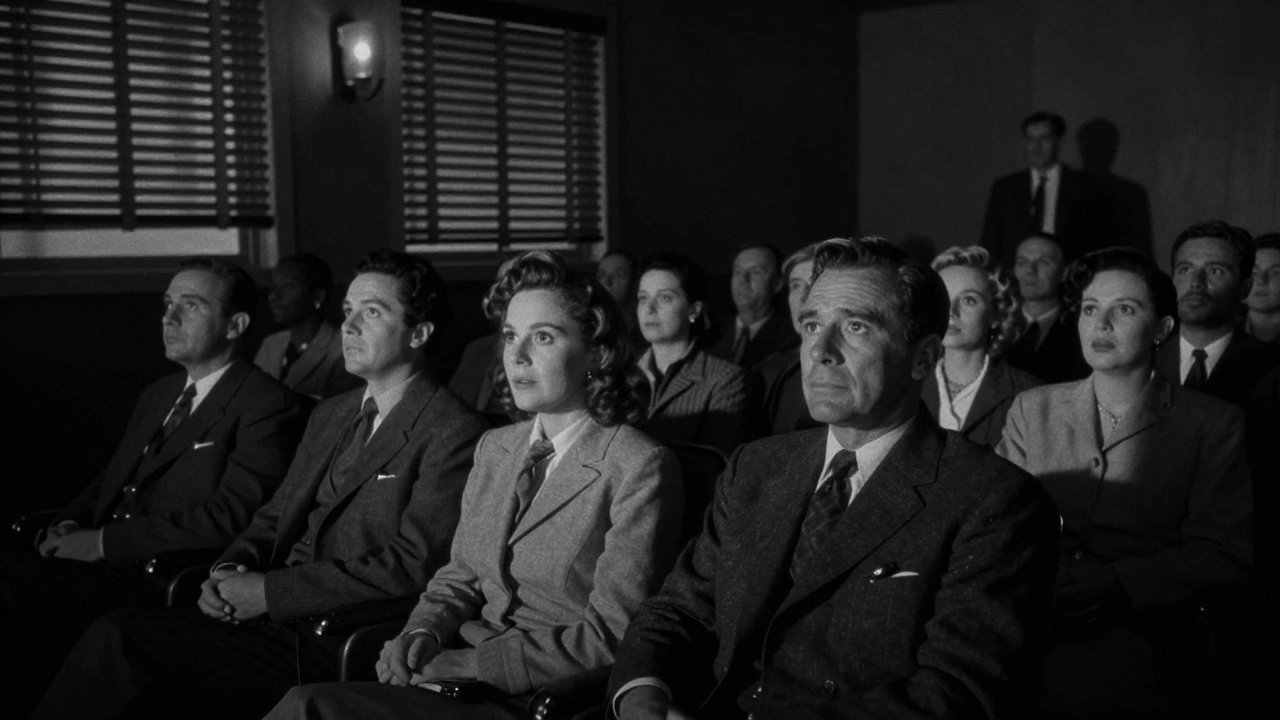
Before the Stonewall Riots of 1969 changed everything, if you wanted to see a same-sex relationship on screen, you couldn’t just ask for it. You had to look for it. You had to squint at the shadows, listen to the double entendres, and read between the lines. For decades, queer stories didn’t disappear from cinema; they went underground. They survived by wearing masks, hiding in plain sight, and relying on an audience smart enough to decode them.
This era of coded queer cinema isn't just about what was forbidden. It’s about how filmmakers used every trick in the book-lighting, costume, dialogue, and genre conventions-to tell stories that censors couldn’t legally ban. Understanding this history changes how we watch old movies. It turns a standard melodrama into a secret love letter and a thriller into a metaphor for survival.
The Hays Code: The Wall That Forced Creativity
To understand why queer stories were coded, you have to understand the wall standing in their way: the Hays Code, also known as the Motion Picture Production Code. Enforced strictly from 1934 until the mid-1960s, this set of moral guidelines dictated exactly what could and could not appear in American films.
The Code was blunt. It stated clearly that "the sympathy of the public must be against unnatural or perverted relationships." There was no room for nuance. If a character was openly gay or lesbian, the narrative had to punish them. Death, madness, or exile were the only acceptable endings. This forced writers and directors into a corner. They couldn’t show the act, so they had to show the emotion. They couldn’t name the desire, so they had to dramatize the longing.
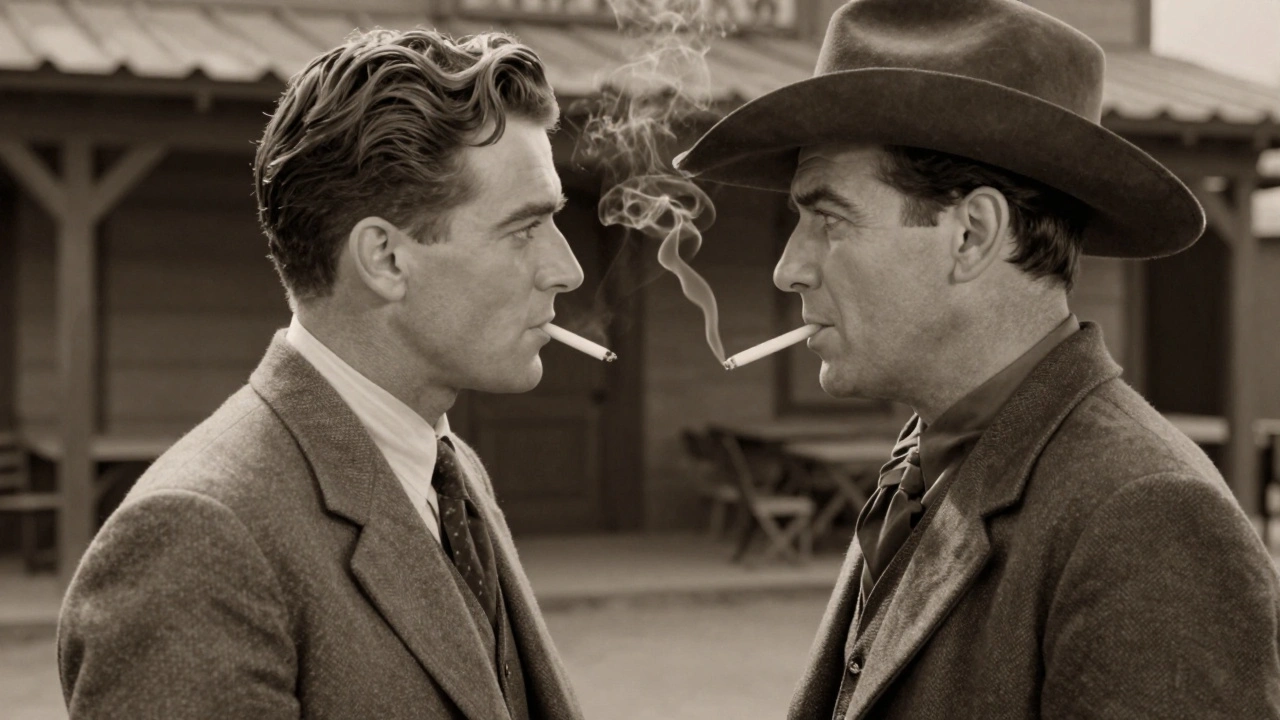
Paradoxically, this censorship birthed a visual language. Because explicit text was banned, filmmakers turned to symbolism. A lingering glance became more powerful than a kiss. A shared cigarette became an intimacy rivaling sex scenes. The constraint didn’t kill queer storytelling; it distilled it into its purest, most potent form. Audiences learned to speak this language fluently. When two men stood too close in a frame, or when a woman’s wardrobe shifted from masculine suits to feminine dresses, the crowd knew exactly what was happening.
Masculinity in Crisis: Gay Coding in Male Roles
In the Golden Age of Hollywood, male stars often carried heavy queer coding, even if they were heterosexual in real life. The studio system cultivated a specific type of beauty-one that was elegant, sensitive, and slightly effeminate by the rugged standards of the time. Actors like Rudolph Valentino in the silent era or Marlon Brando later on played with gender norms that unsettled conservative audiences but thrilled others.
Consider the buddy film genre. Movies like Butch Cassidy and the Sundance Kid (though post-Hays, the trope started earlier) or The Adventures of Robin Hood feature intense emotional bonds between men that exclude women entirely. In pre-1960s cinema, these partnerships were often framed with romantic intensity. The camera would linger on their faces during arguments, capturing vulnerability and tenderness that society reserved for wives. This wasn’t necessarily intentional propaganda; it was a safe harbor. By labeling the relationship as "friendship," studios could explore deep emotional intimacy without violating the Code.
Villains were another common vessel for queer coding. The sinister, flamboyant antagonist in noir films often displayed mannerisms associated with homosexuality-high-pitched voices, affected gestures, and an obsession with aesthetics. While this reinforced negative stereotypes, it also acknowledged the presence of queer identities in the cultural subconscious. The villain was the closet bursting open, feared and fascinated by the straight world.
Femininity and Female Bonding: Lesbian Subtext
If male coding relied on tension and villainy, female coding often relied on isolation and sisterhood. Women’s films, or "women’s pictures," provided a space where intense emotional connections between women could be explored under the guise of platonic support. However, the line between friendship and romance was frequently blurred.
One of the most famous examples is Carmen Jones (1954). The character of Carmen, played by Dorothy Dandridge, displays a fluid sexuality that challenges the rigid gender roles of the 1950s. Her interactions with other women are charged with a dominance and allure that goes beyond simple camaraderie. Similarly, in Written on the Wind (1956), the relationship between Marylee and Kookie is fraught with psychological complexity that many critics interpret as having strong lesbian undertones, masked by hysteria and mental instability-a common trope used to "explain away" non-normative desires.
Costume design played a huge role here. When a female character wore trousers, tailored jackets, or short hair, it signaled a rejection of traditional femininity. This visual cue was a shorthand for independence and, often, sexual autonomy. Studios would sometimes dress actresses in menswear to suggest a character was "different," allowing the audience to project their own interpretations onto the screen.
Key Films That Defined the Era
Some films stand out as masterclasses in coded storytelling. These aren’t just accidental subtexts; they are deliberate artistic choices made by directors who understood the power of implication.
| Movie Title | Year | Director | Type of Coding |
|---|---|---|---|
| King Vidor's The Crowd | 1928 | King Vidor | Silent era ambiguity; intimate male bonding |
| Waterloo Bridge | 1940 | Mervyn LeRoy | Intense female solidarity and emotional dependency |
| Spellbound | 1945 | Alfred Hitchcock | Freudian subtext; dream sequences revealing repressed desire |
| Johnny Guitar | 1954 | Nicholas Ray | Gender-bending roles; violent female rivalry masking attraction |
| Advise & Consent | 1962 | Otto Preminger | Political blackmail based on homosexuality; one of the first explicit mentions |
Johnny Guitar is particularly fascinating. Directed by Nicholas Ray, a filmmaker known for his own personal complexities, the film features a cast of characters who defy gender expectations. Joan Crawford plays a tough, gun-toting saloon owner, while Sterling Hayden plays a vulnerable, almost passive figure. The power dynamics flip traditional Western tropes, creating a narrative that feels distinctly queer in its structure, even if the plot doesn’t explicitly state it.
As the 1960s approached, the code began to crack. Films like Advise & Consent dared to mention homosexuality in dialogue, albeit as a political weapon. This marked the transition from pure subtext to overt, though still stigmatized, text. The stage was being set for the explosion of visibility that would follow Stonewall.
How to Spot the Code Today
Watching these films today requires a different lens. You aren’t looking for labels; you’re looking for patterns. Here is a quick checklist for identifying queer coding in classic cinema:
- The Isolated Pair: Two characters who share a private world, excluding everyone else, especially potential romantic partners of the opposite sex.
- Costume Shifts: Characters who adopt clothing traditionally associated with the opposite gender, signaling a break from societal norms.
- The Punishment Trope: If a character exhibits "deviant" behavior, do they die or go mad? If yes, the subtext is likely queer.
- Lingering Camera Work: Shots that hold on faces, hands, or bodies longer than necessary, suggesting unspoken desire.
- Double Entendres: Dialogue that can be interpreted innocently by censors but carries a clear meaning for knowledgeable audiences.
For example, in It’s a Wonderful Life, the relationship between George Bailey and Uncle Billy has been analyzed for years. Their financial entanglement and emotional reliance on each other create a bond that mirrors marital devotion. While likely intended as familial, the cinematic language used to depict their connection resonates with queer themes of loyalty and sacrifice.
Why This History Matters Now
You might wonder why we still talk about coded stories when modern cinema offers explicit representation. The answer lies in resilience. These films prove that queer existence cannot be erased, even under strict authoritarian control. Filmmakers found ways to speak truth to power using metaphors, symbols, and silence.
Moreover, understanding coded history enriches our appreciation of current films. Many contemporary directors reference these classics intentionally. Ryan Murphy’s Hollywood series or Todd Haynes’ Carol directly engage with the visual language of the past. Knowing the original codes allows you to see the homage and the critique simultaneously.
Finally, it humanizes the struggle. Behind every coded scene was a person living in fear, hiding their identity, yet finding joy and connection in the small moments allowed to them. These films are not just artifacts; they are testaments to survival. They remind us that visibility is a privilege fought for over decades, not a given right.
What is the difference between queer coding and explicit representation?
Queer coding uses subtle hints, symbols, and subtext to imply a character's sexuality without stating it outright, often due to censorship. Explicit representation clearly identifies a character as LGBTQ+ through dialogue, actions, or narrative context. Coding relies on the audience's interpretation, while explicit representation leaves little room for ambiguity.
Why did the Hays Code ban "unnatural relationships"?
The Hays Code reflected the moral conservatism of the 1930s-1950s United States. It aimed to protect "traditional values" and prevent films from influencing youth negatively. Homosexuality was widely stigmatized and illegal in many jurisdictions, so depicting it sympathetically was seen as morally corrupting.
Are all intense friendships in old movies considered queer coded?
Not necessarily. Context matters. Historically, physical affection between friends of the same sex was more socially accepted than it is today. To identify coding, look for additional elements like gender-bending costumes, exclusion of opposite-sex partners, or tragic endings linked to the character's nature.
When did the Hays Code end?
The Hays Code effectively collapsed in the mid-1960s, replaced by the MPAA film rating system in 1968. This shift allowed filmmakers to depict adult themes, including homosexuality, more openly, although stigma persisted for several more years.
Can you give an example of a film with positive queer coding?
While most coded characters faced punishment, some films portrayed queer-coded figures with dignity. For instance, in Rebel Without a Cause, Sal Mineo’s character Jim Stark is sensitive and vulnerable, challenging toxic masculinity. Though not explicitly gay, his portrayal offered a nuanced view of male emotionality that resonated with queer audiences.