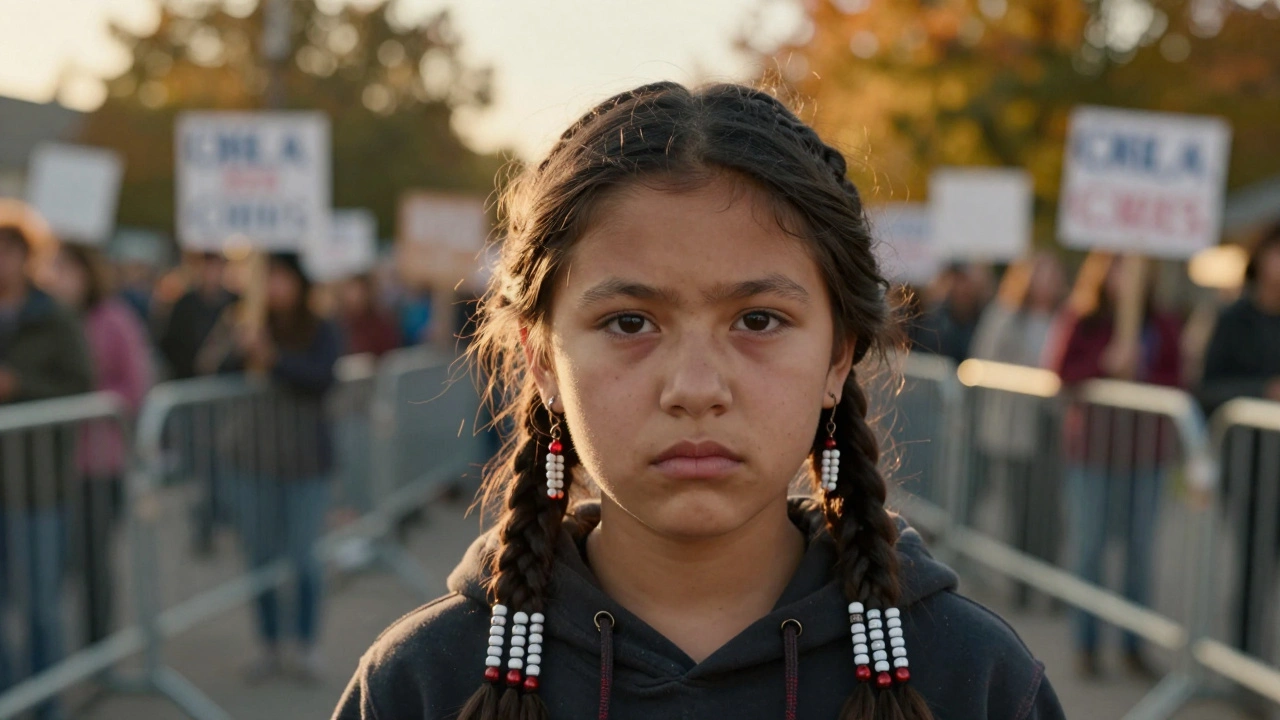
For too long, Indigenous stories in film were told by outsiders-non-Indigenous filmmakers who reduced complex cultures to stereotypes: feathered headdresses, mystical wisdom, or tragic endings. But that’s changing. Today, Indigenous filmmakers are taking back the camera, telling their own stories on their own terms. This isn’t just about diversity. It’s about sovereignty.
What Sovereign Storytelling Really Means
Sovereign storytelling isn’t just having Indigenous actors in front of the camera. It’s about who controls every part of the process: who writes the script, who funds the project, who decides what gets cut, and who owns the final product. When the Haudenosaunee filmmaker Alanis Obomsawin made Is the Crown Worth It? in 2018, she didn’t just document a protest-she built the entire film around Haudenosaunee law, language, and worldview. No outside producer edited her message. No studio demanded a happier ending.
This is the core of sovereignty: autonomy. It means telling stories that don’t need to be explained to non-Indigenous audiences. It means showing grief without turning it into a spectacle. It means showing joy without making it exotic.
Breaking the Hollywood Mold
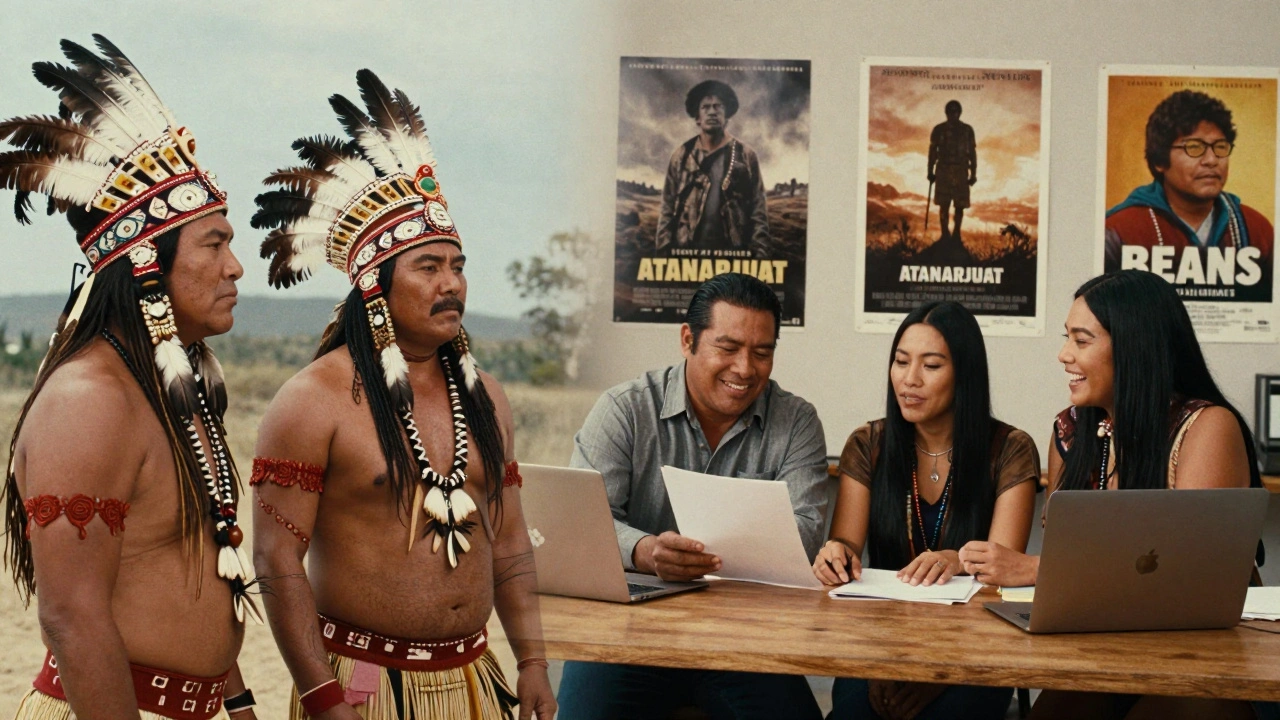
Hollywood’s idea of Indigenous representation used to be a single character-the wise elder, the noble savage, or the tragic victim. Films like Little Big Man or Dances with Wolves were praised as "progressive," but they still centered white protagonists. Indigenous people were props in someone else’s story.
Now, films like The Body Remembers When the World Broke Open (2019) by Kathleen Hepburn and Elle-Máijá Tailfeathers, or Beans (2020) by Kawennáhere Devery Jacobs, flip that script. In Beans, the lead character is a 13-year-old Mohawk girl during the Oka Crisis. The film doesn’t pause to explain the conflict to non-Indigenous viewers. It assumes you’re either with her-or you’re not. That’s a radical shift.
These films don’t ask for permission. They don’t apologize for being too "cultural." They don’t soften their truths to make them more palatable.
The Rise of Indigenous Production Houses
You can’t have sovereign storytelling without infrastructure. That’s why Indigenous production companies are growing fast. First Peoples’ Fund in the U.S. has funded over 300 Indigenous media projects since 2000. In Canada, National Film Board’s Indigenous Screen Office has invested over $40 million since 2018. In Australia, Aboriginal Media Association runs training programs that have led to 120+ Indigenous-made documentaries in the last decade.
These aren’t charity projects. They’re studios. They hire editors, sound designers, and cinematographers who are Indigenous. They fund films that might never get greenlit by mainstream studios because they don’t fit the "universal" mold.
Take the 2023 short film Washoe’s Song, made entirely by the Washoe Tribe in Nevada. It’s a 12-minute film in the Washoe language, with no subtitles. The director didn’t want to translate it. She wanted viewers to sit with the feeling of not understanding-and to respect that some stories aren’t meant for everyone.
Language as Resistance
Language isn’t just dialogue in these films-it’s a political act. Over 70% of Indigenous languages in North America are endangered. But filmmakers are using the camera to keep them alive.
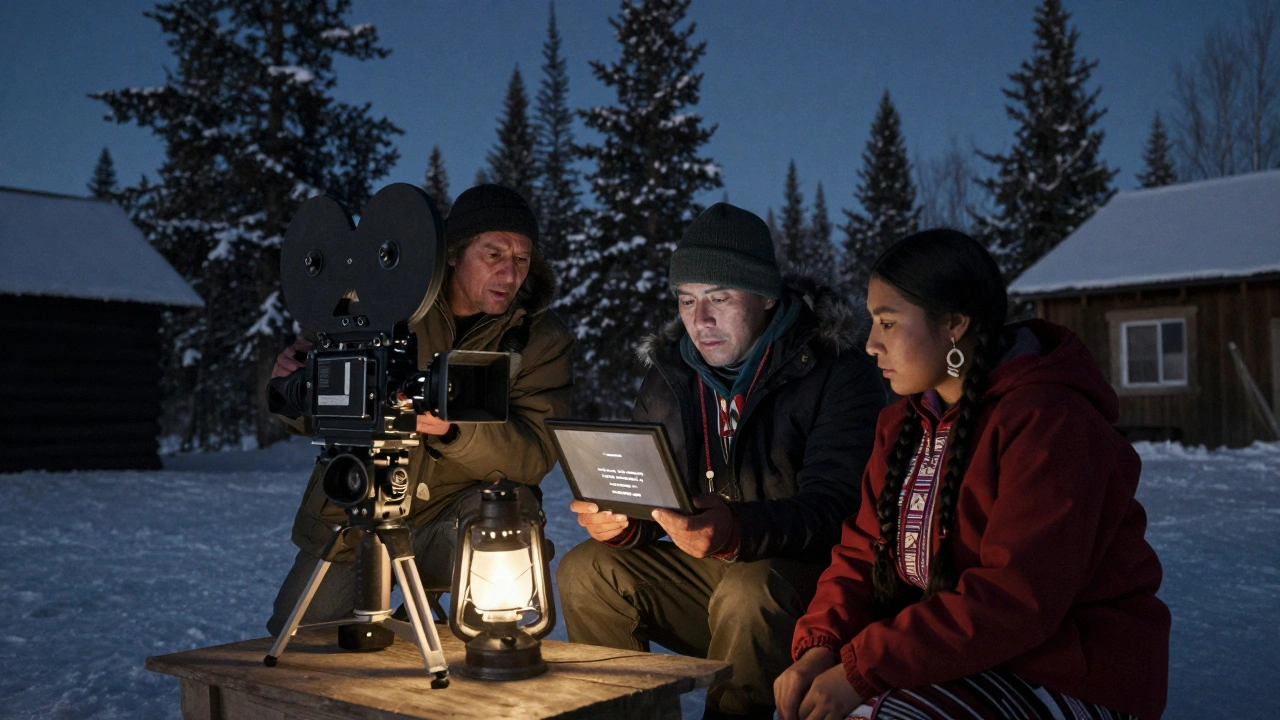
In Atanarjuat: The Fast Runner (2001), the first feature film made entirely in Inuktitut, every line of dialogue was spoken by native speakers. The crew didn’t use translators. They didn’t dub it. They recorded the sounds as they were spoken, even if the grammar didn’t match Western film norms. The result? A film that feels alive, not staged.
Today, films like Thunderheart (2024) by Cherokee filmmaker Tanya Saracho use Cherokee, Lakota, and Ojibwe as core parts of the narrative. The subtitles aren’t there to help the audience-they’re there to remind viewers that these languages were never meant to be erased.
Why Representation Isn’t Enough
Some people think having an Indigenous actor in a Netflix show counts as progress. But representation without control is just performance.
Look at the difference between Reservation Dogs and a show like Longmire. In Reservation Dogs, every writer, director, and producer is Indigenous. The humor, the pacing, the silence between lines-all of it comes from lived experience. In Longmire, Native characters were played by non-Native actors, written by outsiders, and often reduced to plot devices.
True representation means Indigenous people own the means of production. It means they control the budget, the distribution, and the copyright. It means they can say no to a studio that wants to turn their grandmother’s story into a romantic comedy.
The Audience’s Role
Indigenous filmmakers aren’t asking for pity. They’re asking for accountability. If you want to support sovereign storytelling, don’t just watch the films. Support them.
- Watch on platforms that pay Indigenous creators directly-like Indigenous Media Network or First Peoples’ Radio.
- Don’t wait for Netflix to "discover" them. Buy tickets to indie screenings. Donate to crowdfunding campaigns.
- Ask theaters to screen Indigenous films. Demand they show them during Native American Heritage Month-and beyond.
- Don’t praise a film for being "surprisingly authentic." That’s a backhanded compliment. Say instead: "This is powerful because it’s true."
When you support these films, you’re not just watching a story. You’re helping to rebuild a culture that was almost erased.
What’s Next?
The next generation of Indigenous filmmakers is already here. In 2025, the Sundance Film Festival featured 47 Indigenous-made films-more than ever before. A Navajo teenager just won a national youth film prize for a 10-minute short about her grandmother’s fight to keep her land. A Māori collective in New Zealand launched a VR experience that lets users walk through a pre-colonial village, guided by ancestral voices.
This isn’t a trend. It’s a movement. And it’s not about fixing a broken system. It’s about building a new one-one where stories are told by the people who live them.
Indigenous filmmaking isn’t asking to be included in the conversation. It’s already leading it.
What makes Indigenous filmmaking different from mainstream cinema?
Indigenous filmmaking centers autonomy. It’s not just about who appears on screen-it’s about who controls the camera, the script, the funding, and the distribution. Indigenous filmmakers often tell stories without explaining cultural context to outsiders, use native languages without subtitles, and refuse to conform to Western narrative structures. This is sovereignty in action.
Are Indigenous films only for Indigenous audiences?
No. Indigenous films are for anyone willing to listen without expecting to be taught. Many Indigenous filmmakers don’t make films to educate outsiders-they make them to honor their communities. That doesn’t mean outsiders shouldn’t watch. It means they should watch with humility, not curiosity. The goal isn’t to understand everything-it’s to respect the right of these stories to exist as they are.
Why don’t more Indigenous films get wide releases?
Mainstream distributors often see Indigenous stories as "too niche" or "too difficult." But the real issue is control. Many Indigenous filmmakers refuse distribution deals that demand edits, translations, or changes to the cultural core of their work. They choose independence over visibility. That’s why platforms like the Indigenous Media Network and local film co-ops are so important-they let these films reach audiences on their own terms.
How can non-Indigenous people support Indigenous filmmakers?
Stop waiting for Hollywood to "fix" representation. Support Indigenous creators directly: buy tickets to their screenings, donate to their crowdfunding campaigns, follow them on social media, and ask your local theater to screen their work. Don’t praise films for being "surprisingly authentic." Instead, say: "This is powerful because it’s true." And most importantly-don’t speak over Indigenous voices. Listen.
Is Indigenous filmmaking only happening in the U.S. and Canada?
No. Indigenous filmmaking is global. In Australia, the Yolŋu people have produced over 80 films since the 1980s. In Aotearoa (New Zealand), Māori filmmakers have won international awards for films in te reo Māori. In Greenland, Inuit directors are making documentaries about climate change from the perspective of coastal communities. These are not isolated efforts-they’re part of a worldwide movement to reclaim storytelling.



Comments(5)