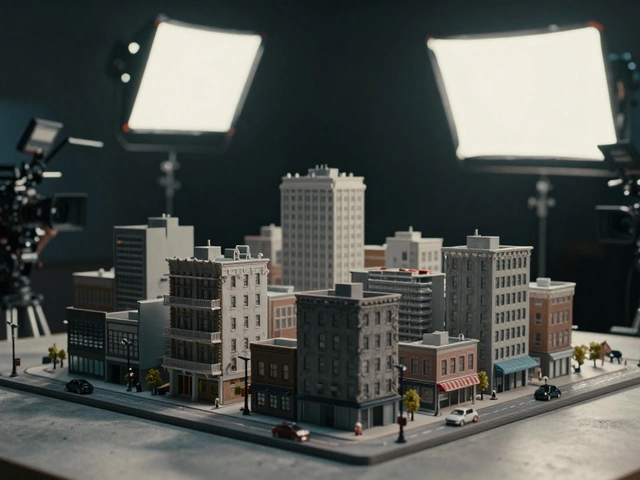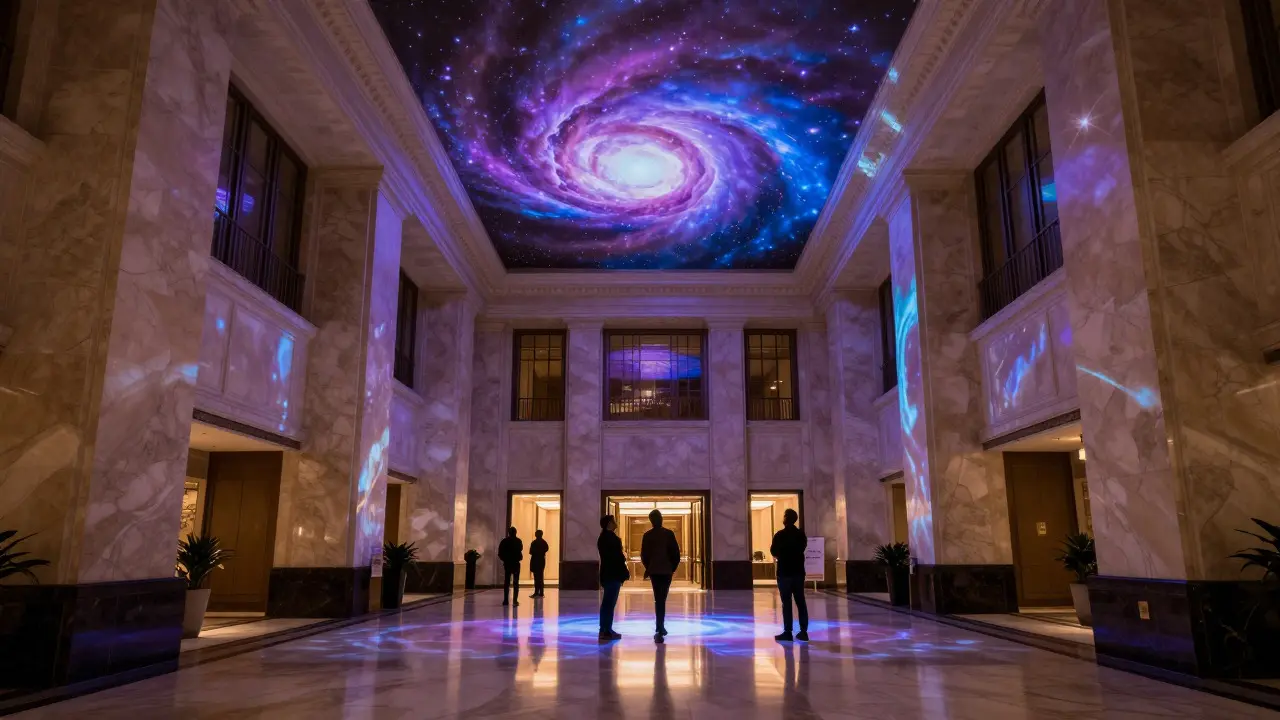
Walk into a standard hotel lobby in midtown Manhattan or a conference center in Las Vegas, and you’ll likely see beige walls, generic artwork, and a reception desk. But step into the right projection mapping event is a specialized use of video projection technology that transforms static architectural surfaces into dynamic, interactive visual canvases., and the experience shifts completely. Suddenly, the marble columns seem to breathe, the ceiling turns into a starry sky from a sci-fi blockbuster, and the floor becomes a shallow pool reflecting the hero’s journey. This isn’t just decoration; it’s a high-stakes marketing strategy used by major studios to plant seeds of anticipation long before a movie hits theaters.
For exhibitors, the lobby is no longer just a waiting room. It’s the first touchpoint with the audience. In an era where social media clips dominate discovery, physical immersion offers something digital screens can’t: presence. When a fan stands inside a projected scene from their favorite franchise, they don’t just watch the marketing; they live it. This article breaks down how these events work, why they outperform traditional billboards, and what technical elements make them succeed.
The Shift from Passive Viewing to Active Participation
Traditional film marketing relies on trailers, posters, and digital ads. These are passive experiences. You see them, maybe you remember them, but you rarely feel them. Immersive marketing is a strategy that engages multiple senses to create a memorable brand experience that encourages sharing and emotional connection. flips this script. By using projection mapping, brands turn architecture into a storytelling medium. The key difference lies in agency. A viewer in a lobby isn’t stuck in a seat; they can move around, look up, and interact with the space. This movement triggers different parts of the brain associated with memory and emotion, making the campaign stickier than a 30-second spot on TV.
Consider the launch of a massive superhero film. Instead of a static poster, the lobby walls display the cityscape being destroyed in real-time. As visitors walk through, sound effects follow them via directional audio speakers. The result? People stop, take photos, and post them online with location tags. The lobby becomes a content generator, not just a consumption point. This user-generated content (UGC) often reaches more people than the studio’s own paid social media campaigns because it feels authentic and unfiltered.
Technical Components Behind the Illusion
Making a wall look like it’s exploding requires more than just a bright projector. It’s a complex integration of hardware and software. The core components include high-lumen projectors, edge-blending processors, and motion capture systems.
- Projectors: Modern short-throw laser projectors are essential. They need enough brightness (often 20,000+ lumens) to overcome ambient light in lobbies. Short-throw lenses allow the equipment to be mounted close to the surface, reducing shadows cast by walking attendees.
- Edge Blending: Most large-scale installations use multiple projectors overlapping each other. Software blends the edges so the image appears seamless across the entire wall or ceiling. If done poorly, you see distinct lines; if done well, the boundary disappears.
- Content Creation: The visuals are designed specifically for the architecture. Artists map the content to the physical features-pillars, windows, doors-so the projection interacts with the real world. A pillar might become a tree trunk, or a window frame might become a spaceship porthole.
- Interactive Sensors: Many setups use infrared cameras or LiDAR sensors to track movement. If a person walks toward a projected fire, the flames might flare up. This interactivity keeps engagement high and prevents boredom during long waits.
The latency must be near-zero. If a visitor touches a virtual object and the reaction takes two seconds, the magic breaks. High-performance computing rigs handle the rendering in real-time, ensuring smooth 60fps playback even with complex particle effects.
Case Studies: Where Lobby Walls Tell Stories
To understand the impact, let’s look at specific scenarios where this technology has been deployed effectively.
The Sci-Fi Blockbuster Launch: Imagine a new space opera film releasing next month. The exhibitor partners with a chain of luxury hotels in major cities. For one week, the lobby ceilings transform into deep space. Stars twinkle, nebulae swirl, and occasionally, a ship flies across the view. The soundtrack plays subtly in the background. Guests check in feeling like they’ve stepped onto a starship. The cost per impression is higher than a billboard, but the dwell time is significantly longer. A guest spends five minutes in the lobby versus three seconds looking at a street sign.
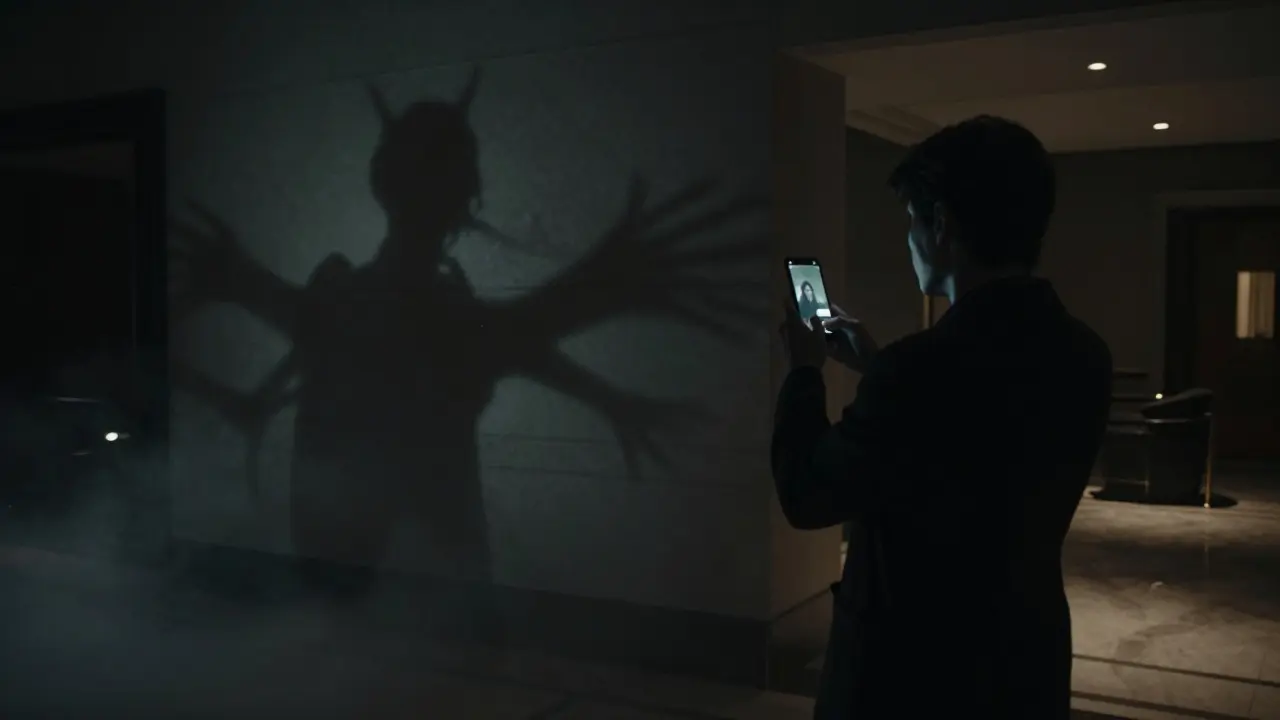
The Horror Movie Teaser: For a horror release, the approach is subtler but more effective. The lobby remains normal until nightfall. Then, shadows start moving independently of the lights. Whispers play from hidden speakers. Projection mapping creates subtle distortions on the walls, hinting at unseen entities. This creates a buzz among early adopters who share videos of the "haunted" lobby on TikTok. The fear factor drives curiosity, which converts to ticket sales.
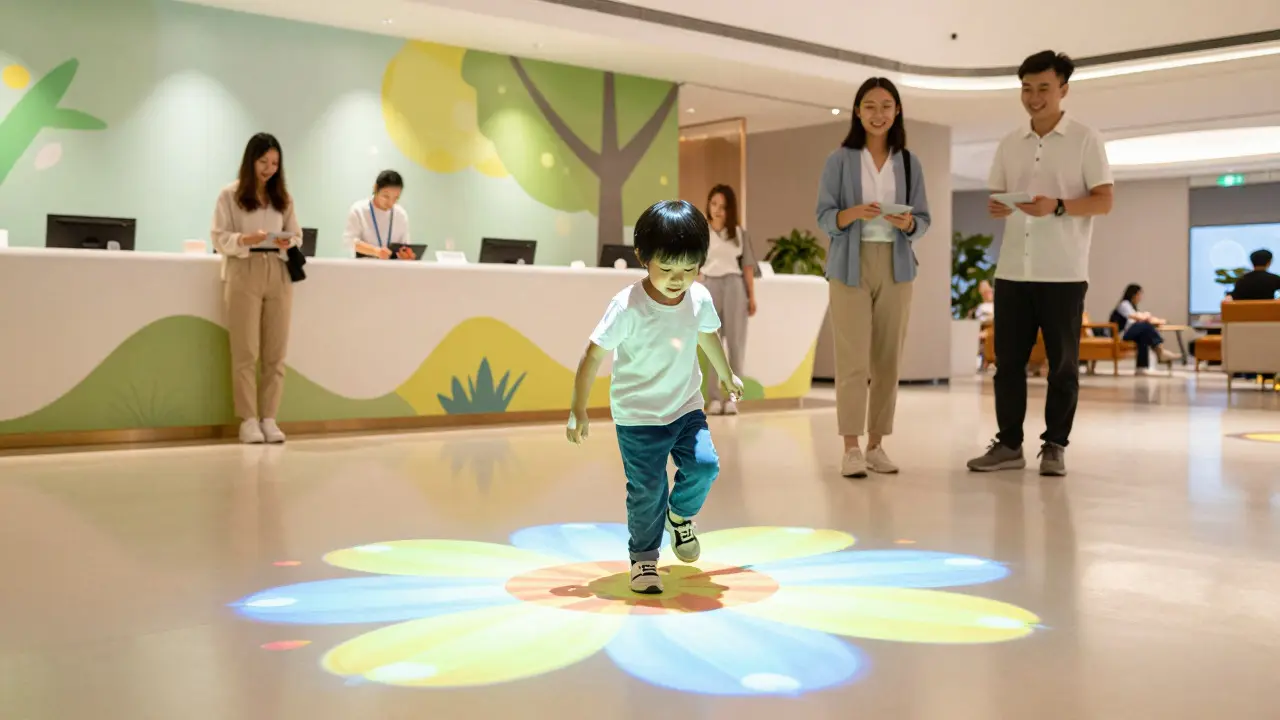
The Family Adventure Feature: For family films, the lobby becomes a playground. Interactive floors allow kids to stomp on projected flowers to make them bloom. Parents watch while checking in, and the positive association with the brand (the studio logo) gets embedded in a happy memory. This demographic targeting ensures the message reaches the decision-makers (parents) and the influencers (kids) simultaneously.
Measuring Success: Beyond Eye-Candy
How do marketers know if a $50,000 projection setup was worth it? You can’t just guess. You need data. Key performance indicators (KPIs) for these events include:
- Dwell Time: How long do people stay in the lobby compared to baseline averages? An increase of 2-3 minutes indicates high engagement.
- Social Reach: Track unique hashtags and geotags. If 1,000 posts mention the lobby experience, calculate the total impressions generated by those posts.
- Ticket Pre-Sales: Correlate the event dates with spikes in pre-sale tickets in the local market. A 15% lift during the event week suggests a direct causal link.
- Brand Recall: Conduct quick surveys with attendees. Ask if they remember the film title and tagline after leaving the lobby. Higher recall rates indicate stronger messaging.
Compared to digital advertising, where click-through rates might hover around 0.5%, immersive events often achieve much higher engagement metrics because the interaction is voluntary and enjoyable. The cost per engaged user is typically lower when you account for the organic social spread.
| Feature | Traditional Poster/Billboard | Projection Mapping Event |
|---|---|---|
| User Interaction | Passive viewing | Active participation/movement |
| Dwell Time | < 5 seconds | 2 - 5 minutes |
| Content Sharing | Rarely shared | High frequency of UGC (photos/videos) |
| Setup Cost | Low ($100 - $500) | High ($10,000 - $50,000+) |
| Scalability | Easy to replicate globally | Complex, requires local customization |
| Emotional Impact | Low to Moderate | High (Surprise/Delight/Fear) |
Challenges and Pitfalls to Avoid
While impressive, projection mapping events aren’t without risks. The biggest challenge is environmental control. Lobbies are busy, noisy, and lit by various sources. If the lighting isn’t dimmed properly, the projection washes out. If foot traffic is too heavy, people block the view or cast shadows that disrupt the illusion.
Another pitfall is overcomplication. If the interaction requires instructions ("Stand here to trigger the effect"), engagement drops. The best experiences are intuitive. You see something cool, you move, and something happens. No manuals needed.
Finally, there’s the maintenance issue. Projectors generate heat and dust. In a public lobby, cables can get tripped over, and lenses can get smudged. Having a technician on-site during peak hours is non-negotiable. A dead projector in the middle of a lobby ruins the vibe instantly and reflects poorly on the brand.
Future Trends: AI and Personalization
Where is this going? The next frontier is personalization powered by AI. Imagine a system that recognizes returning guests via facial recognition (with consent) and changes the projection to feature their name or favorite character from the film. Or, using weather data, the lobby projection could reflect the actual outside conditions-rainy outside, rainy in the lobby; sunny outside, sunny in the lobby. This level of contextual relevance makes the marketing feel less like an ad and more like a service.
Additionally, hybrid experiences are emerging. Combining AR glasses with projection mapping allows users to see additional layers of content invisible to the naked eye. This creates a tiered experience: casual observers see the base layer, while tech-savvy fans unlock deeper lore with their devices. This gamification keeps audiences coming back to explore every corner of the lobby.
Implementing Your Own Strategy
If you’re an exhibitor considering this route, start small. Don’t try to take over a whole building. Pick one high-traffic lobby in a target city. Partner with a venue manager who understands the value of enhanced guest experiences. Offer them a revenue share or free premium amenities in exchange for screen time and space.
Focus on one clear message. Don’t try to show the entire movie plot. Show one iconic moment or one strong emotion. Keep the duration short (30-60 second loops) to accommodate flow. Test the content with a focus group before the big launch. Ensure the audio doesn’t disturb the check-in process. And always have a fallback plan: if the tech fails, have a beautiful static backdrop ready so the space still looks intentional.
Ultimately, the goal isn’t just to show off technology. It’s to create a moment of wonder. In a world saturated with notifications, a moment of genuine surprise in a physical space is rare. That rarity is what makes projection mapping such a powerful tool for film marketing. It turns a commute stop into a destination, and a stranger into a fan.
How much does a typical projection mapping event cost?
Costs vary widely based on scale and duration. A basic single-wall installation might range from $10,000 to $20,000 including equipment rental and content creation. Large-scale, multi-surface, interactive installations in high-end venues can exceed $50,000. Ongoing costs include technician labor and potential electricity surcharges.
What kind of surfaces work best for projection mapping?
Flat, matte, and light-colored surfaces work best. White or light gray walls provide the highest contrast. Textured surfaces like brick or stone can work but require more precise mapping and higher brightness. Glass and highly reflective surfaces are difficult due to glare and transparency issues unless treated with special coatings.
Can projection mapping work in daylight?
Yes, but it requires very high-lumen projectors (20,000+ lumens). Daylight kills most standard projections. To maximize visibility, position the projection away from direct sunlight and use dark-themed content to maintain contrast against the brighter ambient light.
How long does it take to set up a lobby projection event?
A simple setup can be installed in 1-2 days. Complex interactive systems with sensors and custom content may take 3-5 days for calibration and testing. It’s crucial to schedule installation during low-traffic hours (early morning or late night) to minimize disruption to the venue’s operations.
Is projection mapping suitable for all types of movies?
Most genres benefit, but visual-heavy genres like sci-fi, fantasy, and action yield the most dramatic results. Subtler genres like drama or romance might use projection for atmospheric mood-setting rather than flashy effects. The key is matching the tone of the projection to the tone of the film to avoid confusing the audience.