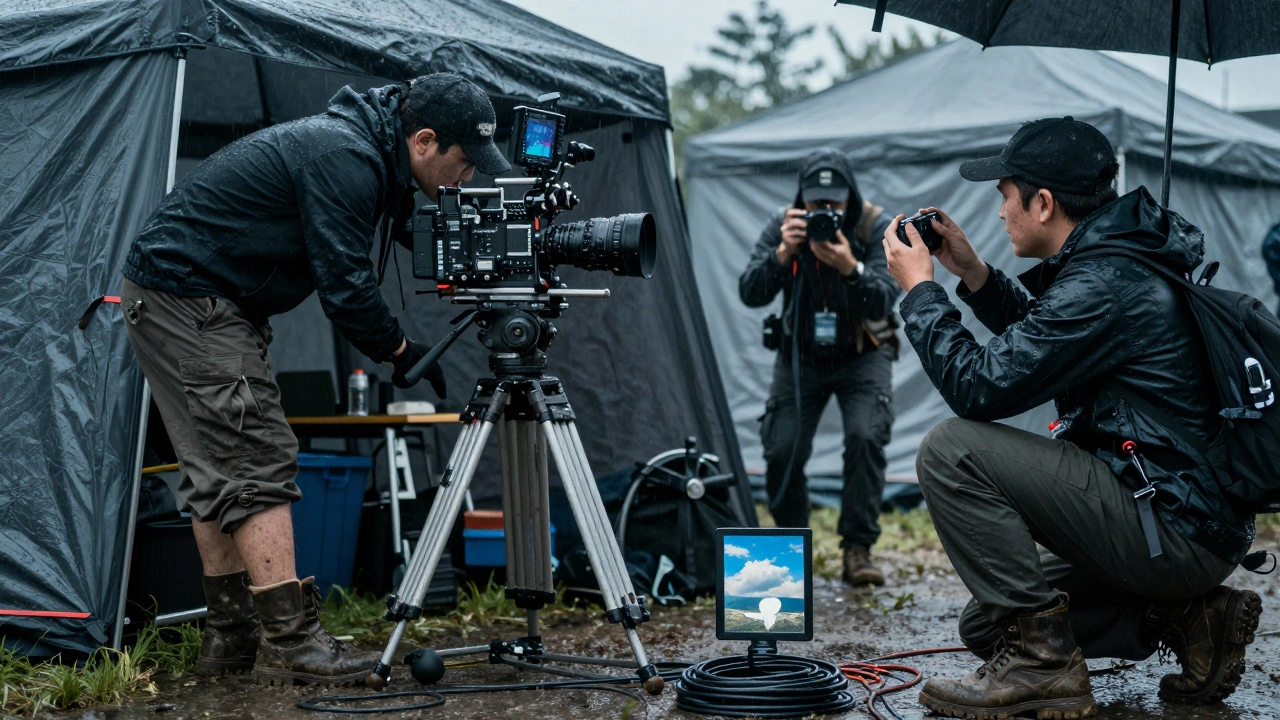
Indie films live on thin margins. One broken camera, a sudden weather delay, or an actor’s injury can wipe out your entire budget. That’s why production insurance isn’t just a formality-it’s your lifeline. But here’s the harsh truth: production insurance claims for indie films get denied more often than you think. Not because the policy is flawed. Not because the studio is greedy. But because most filmmakers file claims wrong.
Why Indie Film Insurance Claims Get Denied
Most indie filmmakers buy insurance because they’re told to. They sign the paperwork, pay the premium, and assume they’re covered. Then something goes wrong. The location falls through. The lead actor breaks their wrist. A storm floods your set. You file the claim-and get a letter saying ‘not covered.’ Denials happen for three main reasons:- You didn’t document everything before the incident
- You didn’t follow the policy’s notice requirements
- You assumed coverage for something that wasn’t listed
What Production Insurance Actually Covers
Not all insurance is the same. Indie films usually carry a package policy with these core coverages:- Cast Insurance: Pays if a lead actor can’t work due to illness or injury. Must be named in the policy.
- Equipment Insurance: Covers cameras, lights, sound gear. Only if listed by serial number.
- Location Insurance: Pays for delays or cancellations due to weather, permits denied, or property damage.
- Completion Bond: Not insurance, but often required by distributors. Guarantees the film finishes even if you go over budget.
- Liability Insurance: Covers injuries to crew or third parties on set.
How to Avoid Denial: The 5-Step Checklist
You can’t control rain or injuries. But you can control how you file a claim. Here’s what actually works:- Inventory everything before day one-cameras, lenses, tripods, even cables. Take photos. Write down serial numbers. Use a spreadsheet. Email it to your insurer. This isn’t optional. It’s your proof.
- Update your schedule daily-if you add a new crew member, rent a new light, or change locations, notify your broker within 24 hours. Most policies require immediate updates.
- Document everything the moment something breaks-take videos of damaged equipment, get signed statements from witnesses, log weather reports. Don’t wait until the end of the shoot. Memory fades. Photos get deleted.
- Notify your insurer within 48 hours-most policies have a strict window. Miss it, and your claim is dead. Even if it’s a small issue. Say your grip slips and cracks a lens. Call your broker. Send an email. Get a confirmation number.
- Don’t fix or replace anything without approval-I’ve seen filmmakers buy a new camera because they were in a hurry. Then the insurer says, ‘We would’ve repaired yours for $800. You spent $3,200. We’re only paying $800.’
Common Myths That Cost Indie Filmmakers Money
There are a lot of myths floating around indie film sets. Here are the ones that cause the most damage:- Myth: ‘My general liability policy covers everything.’ Truth: General liability covers injuries, not equipment loss or delays.
- Myth: ‘If I’m filming on public land, I don’t need location insurance.’ Truth: Cities can charge you for cleanup, lost revenue, or permit violations. Only location insurance covers that.
- Myth: ‘My cast insurance covers any actor who gets sick.’ Truth: Only named cast members are covered. If you hired a last-minute extra and they got hurt, no payout.
- Myth: ‘I can file a claim after the film is done.’ Truth: Most policies require claims to be filed within 30 days of the incident. Waiting until post-production is too late.
What to Do When Your Claim Is Denied
If you get a denial letter, don’t panic. Don’t accept it. Don’t just give up. First, read the letter. It should say exactly why. Common phrases: ‘failure to provide documentation,’ ‘excluded peril,’ ‘late notice.’ Then, gather everything you have:- Your original policy document
- Your inventory logs
- Photos and videos from the day of the incident
- Communication with your insurer (emails, call logs)
- Receipts, repair estimates, crew statements
- What happened
- When it happened
- What you submitted
- Why you believe it meets policy terms
How to Pick the Right Insurance Provider
Not all insurers understand indie film. Some treat you like a corporate studio. Others don’t know what a ‘grip’ is. Look for brokers who specialize in film. Ask:- ‘How many indie films have you insured in the last year?’
- ‘Can you walk me through a claim you handled?’
- ‘Do you have a 24/7 claims hotline for production emergencies?’
- Entertainment Insurance Services (EIS) - known for fast claim processing
- Production Insurance Group (PIG) - specializes in micro-budget films under $250K
- Chubb Entertainment - better for films with distribution deals
Avoid companies that don’t have film-specific underwriters. They’ll use standard commercial templates. And those templates will leave you exposed.
Final Tip: Build Your Insurance Habit
Insurance isn’t a one-time task. It’s a habit. Start every shoot day with a 10-minute checklist:- Is the equipment inventory updated?
- Are all new crew members listed?
- Did we get the weather report?
- Is the location permit still valid?
What happens if I don’t have production insurance for my indie film?
Without production insurance, you’re personally liable for every accident, delay, or equipment loss. If your camera breaks, you pay for it. If your lead actor gets hurt, you cover medical bills. If a location is damaged, you pay for repairs. Most indie filmmakers don’t have the cash reserves to handle these costs. Many projects die because of one uninsured incident.
Can I get production insurance after filming has started?
Yes, but it’s risky. Most insurers won’t cover incidents that already happened or were foreseeable. If your camera was already acting up before you bought the policy, they won’t pay for its failure. You can still get coverage for future events, but you’ll pay a higher premium and face stricter terms.
Does production insurance cover creative delays, like script rewrites?
No. Production insurance only covers physical disruptions: weather, injuries, equipment failure, location issues. Creative delays-like rewriting scenes, casting changes, or director’s vision shifts-are considered business risks. They’re not insurable. That’s why completion bonds exist: to cover budget overruns from these types of delays, but only if you have one.
How much does production insurance cost for a low-budget indie film?
For a film under $250,000, expect to pay between 5% and 8% of your total budget. That means a $100,000 film costs roughly $5,000 to $8,000. The price depends on location risk, cast health, equipment value, and whether you’re filming in a high-risk area like a city with frequent permit issues. Some brokers offer payment plans.
Do I need insurance if I’m filming with just a smartphone and a few friends?
If you’re not hiring anyone, using your own gear, and filming on private property with permission, you may not need formal production insurance. But you still need liability coverage. Most homeowner’s or renter’s insurance won’t cover film production. A basic $1 million general liability policy for indie filmmakers can cost as little as $300. It’s cheap protection against one lawsuit.


Comments(9)