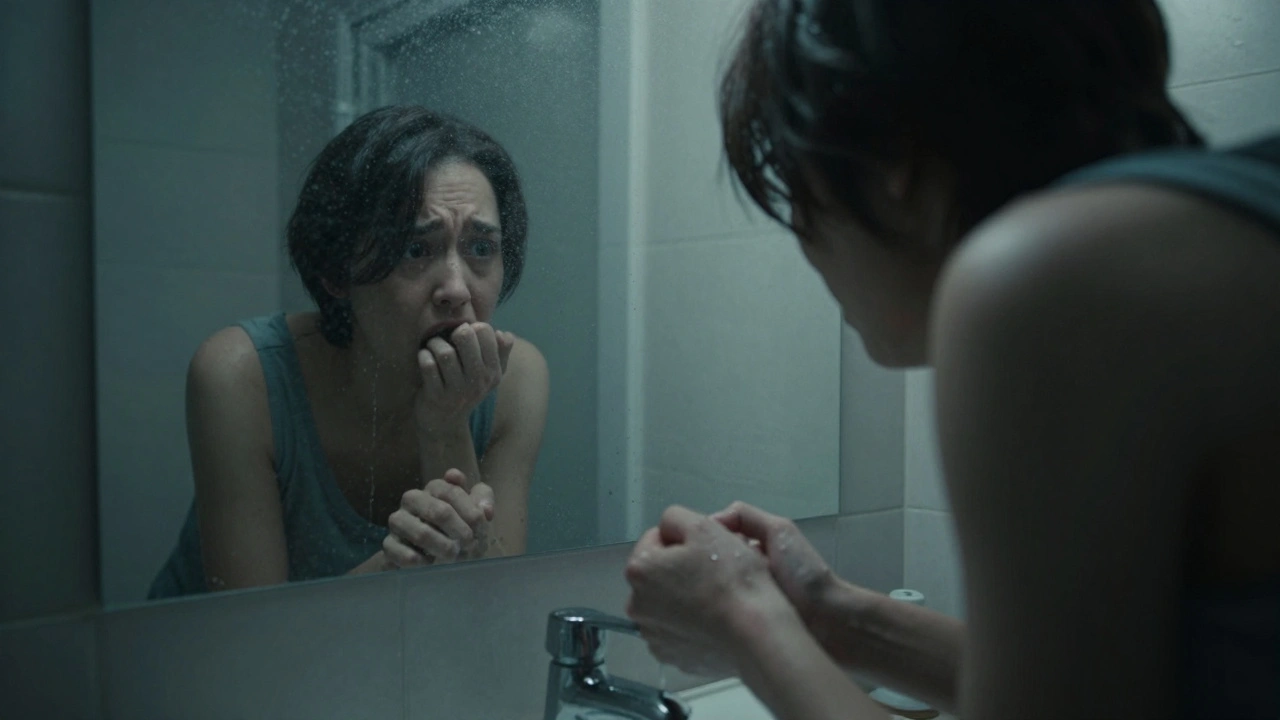
Have you ever watched a movie and felt like you were inside the character’s head? Not just seeing what they saw, but feeling their panic, their fear, their quiet obsession? That’s not magic. It’s the POV camera at work.
What Exactly Is a POV Shot?
A POV shot, or point-of-view shot, shows exactly what a character sees. The camera becomes their eyes. It’s not just about framing the scene from their angle-it’s about making the audience feel like they’re living the moment. When the character looks down at a trembling hand, you see it. When they turn suddenly and spot something terrifying, you turn with them. No voiceover. No narrator. Just the raw, unfiltered experience of being that person.
This technique isn’t new. Hitchcock used it in Psycho when Marion Crane looks into the bathroom mirror after stealing the money. The camera doesn’t show her face-it shows her reflection, then slowly pushes in as her guilt sinks in. You don’t just watch her feel it. You feel it with her.
Subjective Camera: More Than Just Sight
POV is often confused with the subjective camera, but they’re not the same thing. A subjective camera goes further. It doesn’t just show what the character sees-it shows how they experience it. Distorted vision. Blurry edges. Shaky hands. The world tilting as they panic. The sound muffling as they go into shock.
In Black Swan, when Nina’s mental state fractures, the camera doesn’t just follow her. It becomes her. The walls breathe. Her reflection moves on its own. The camera shakes with her breath. You don’t just see her hallucinate-you feel your own heartbeat speed up. That’s the power of subjective cinematography.
It’s not about being fancy. It’s about truth. If a character is drunk, the camera wobbles. If they’re exhausted, the focus drifts. If they’re in love, the background melts into soft light. These aren’t effects. They’re emotional translations.
Why POV Works Better Than Exposition
Think about how most movies explain emotion. A character says, “I’m terrified.” Cut to their wide eyes. Cut to a jump scare. Done. It’s efficient, but it’s distant. You’re told how to feel.
POV removes that buffer. In The Blair Witch Project, the entire film is shot handheld from the characters’ perspective. No score. No cuts. Just shaky footage, muffled breathing, and the sound of leaves crunching underfoot. You don’t need a villain to be scared. You’re already there, lost in the woods, running out of batteries, wondering if the thing behind you is real.
Compare that to a traditional horror movie where the monster is shown in full view. You’re watching a threat. With POV, you’re part of the threat. Your brain fills in the gaps. And that’s scarier.
When POV Goes Wrong
POV isn’t magic. It’s a tool. And like any tool, it can break the story if used carelessly.
First, don’t overuse it. If every scene is from one character’s eyes, you lose context. You forget who else is in the room. You stop caring about anyone else. In Hardcore Henry, the entire film is shot as if you’re the main character. It’s technically impressive, but after 90 minutes, you’re exhausted. You never get to see the protagonist’s face. You never feel connected to them as a person. You’re just a camera on a helmet.
Second, don’t let the camera lie. If a character is blind, and you show them seeing a bright light, you break immersion. The audience will notice. They’ll feel tricked. In The Sound of Metal, when the protagonist loses his hearing, the sound doesn’t just fade-it distorts. Muffled voices become robotic. Silence becomes a physical presence. The camera doesn’t show him hearing-it shows him losing it. That’s honest filmmaking.

How to Use POV Without Losing the Audience
Great POV shots don’t trap you in a single perspective-they guide you through it. Here’s how:
- Start with a clear reason. Why is this character’s view important? Is it to hide their identity? To show their isolation? To make the audience complicit in their actions?
- Use it in bursts. A 15-second POV sequence during a chase is intense. A 5-minute POV sequence with no cuts is disorienting. Know when to pull back.
- Anchor the viewer. Even in a POV shot, show a hand holding a weapon, a foot stepping on gravel, a reflection in a window. These small details remind the audience they’re still watching a story.
- Let the character look away. If they’re staring at something, let them turn their head. Show their reaction. Let the audience see the emotion on their face after the POV moment ends.
In Requiem for a Dream, the drug-induced hallucinations use POV-but they’re always followed by a cut to the character’s face, twisted in agony. That contrast makes the experience more devastating. You don’t just see the high. You see the cost.
POV in Modern Film and TV
Today, POV isn’t just for horror or indie films. It’s everywhere.
In Stranger Things, when Eleven uses her powers, the camera glitches and flickers like her mind is overloading. In 1917, the entire film is shot as one continuous take from the soldiers’ perspective. You’re not watching a war movie-you’re marching through mud with them, hearing every gunshot, smelling the rot.
Even in comedy, it works. In Superbad, when Seth is drunk, the camera blurs, colors bleed, and voices echo. You don’t need a line like “I’m so drunk.” You just feel it.
Streaming has made POV even more common. Shows like Dark and The Queen’s Gambit use it to build tension without dialogue. In The Queen’s Gambit, when Beth stares at the ceiling during a chess match, the camera doesn’t cut to the board. It stays on her face. Then slowly, the pieces on the board begin to move in her mind-visible only to her. You’re not watching her play chess. You’re inside her thoughts.
The Emotional Cost of Immersion
POV isn’t just a technique. It’s a trade-off. When you put the audience inside a character’s head, you’re asking them to carry their pain, their fear, their guilt. You’re asking them to live the story, not just watch it.
That’s why the best POV moments stick with you long after the credits roll. Not because they were flashy. But because they made you feel something you didn’t want to feel.
That’s the power of subjective cinema. It doesn’t show you a story. It makes you part of it.

What Makes POV Different From Other Camera Styles?
Let’s break it down:
| Style | How It Works | Emotional Effect | Best For |
|---|---|---|---|
| POV / Subjective | Camera = character’s eyes. What they see, you see. | Immersion, empathy, unease | Horror, psychological thrillers, first-person narratives |
| Over-the-Shoulder | Camera behind one character, showing another in frame. | Connection, tension, dialogue focus | Conversations, dramas, sitcoms |
| Wide Shot | Shows the full environment, character small in frame. | Isolation, scale, context | Westerns, epic scenes, establishing shots |
| Close-Up | Focus on face or object, background blurred. | Intimacy, emotion, detail | Reactions, key moments, character reveals |
| Third-Person Omniscient | Camera observes from outside, no character bias. | Objectivity, distance, storytelling | Documentaries, traditional narratives |
POV doesn’t just show you the world. It forces you to see it through someone else’s senses. That’s why it’s so powerful-and so risky.
What You Should Avoid When Using POV
If you’re trying to use POV in your own work, here’s what to skip:
- Don’t use it to hide plot holes. If the audience can’t see what’s happening, they’ll feel cheated.
- Don’t make it too long. More than 2 minutes of pure POV without relief usually loses people.
- Don’t forget sound. POV isn’t just visual. The muffled footsteps, the ringing ears, the distant scream-those are just as important.
- Don’t use it if the character isn’t compelling. If no one cares about them, why should anyone care what they see?
POV works best when the character is already interesting. Then, the camera doesn’t create emotion-it amplifies it.
Final Thought: The Camera Is a Mirror
The most unforgettable POV shots aren’t the ones that show the most. They’re the ones that show the least-but make you feel everything.
That’s the secret. You don’t need to show the monster. You just need to show the character’s face as they realize it’s behind them.
And then-silence.
What’s the difference between POV and subjective camera?
POV (point-of-view) shows exactly what a character sees-like looking through their eyes. Subjective camera goes further: it shows how the character experiences the moment, including physical reactions like shaking, blurring, or distorted sound. POV is visual. Subjective is sensory and emotional.
Is POV only used in horror movies?
No. While horror uses POV heavily to build fear, it’s also common in psychological dramas, war films, and even comedies. The Queen’s Gambit uses it to show a character’s mental chess games. 1917 uses it to make you feel like you’re marching through war. Any story that wants you to live inside a character’s head can use POV.
Why do POV shots sometimes make viewers feel sick?
Shaky, fast-moving, or disorienting POV shots can trigger motion sickness because your brain expects your body to move with what you’re seeing. If your eyes say you’re running, but your body stays still, it creates a conflict. That’s why filmmakers use controlled shakes, not random jerks. It’s about realism, not chaos.
Can POV be used in long scenes without losing the audience?
Yes, but only if you give the viewer anchors. Show a character’s hand gripping something, a reflection in a window, or a sound cue that reminds them where they are. In 1917, the camera stays in POV for nearly two hours-but every few minutes, you see a character’s face, hear a name called, or feel the ground shift underfoot. These moments reconnect you to the story.
Do you need special equipment to shoot POV?
Not necessarily. Many POV shots are done with a small camera mounted on a helmet, chest rig, or handheld. The key isn’t the gear-it’s the intention. A phone strapped to a forehead can create a powerful POV if the movement and framing match the character’s emotional state. What matters is whether the camera feels like it belongs to the person, not the device.


Comments(9)