Most independent filmmakers think getting their movie made is the hardest part. But the real challenge? Getting it seen. That’s where producer reps come in - the unsung connectors between your film and the people who actually buy it.
Think of a producer rep as your film’s sales agent at major markets like Sundance, Cannes, or the American Film Market. They don’t make your movie. They don’t fund it. But they know who’s looking for what, when, and why. And if you’re an indie filmmaker without a studio backing, they’re often the only bridge between your film and real distribution.
What Exactly Does a Producer Rep Do?
A producer rep handles the business side of your film’s release. They pitch your movie to buyers - streaming platforms, foreign distributors, theatrical exhibitors, and acquisition companies. They negotiate deals, manage contracts, and sometimes even help set release strategies.
They don’t work for free. Most take 10% to 15% of any deal they secure. But unlike traditional sales agents who often require upfront fees, many producer reps work on a success-only basis. That means they only get paid if your film sells.
Here’s what they actually do on the ground:
- Prepare a sales kit: trailer, poster, one-sheet, press materials
- Book meetings at film markets with buyers
- Present your film in person or via digital screenings
- Negotiate advance payments, territory rights, and revenue splits
- Follow up with buyers after the market closes
One filmmaker in Asheville told me his documentary about Appalachian coal miners sat on a hard drive for two years. Then he hired a rep who took it to the American Film Market. Within three weeks, a streaming platform picked it up for $75,000. The rep got $11,250. The filmmaker got a distribution deal - and a chance to reach audiences who cared.
Where Do Film Buyers Actually Look?
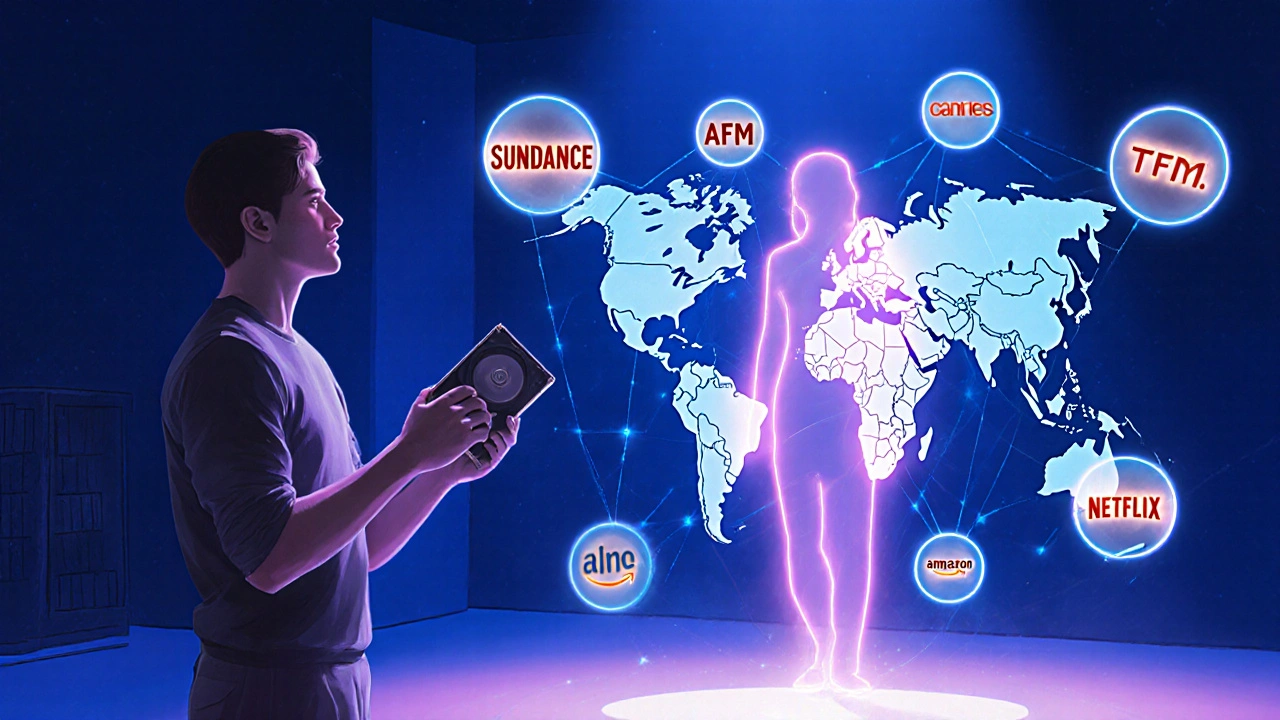
Buyers don’t sit around waiting for emails. They go where the films are. That means major film markets - and only a few really matter for indie films.
Sundance Film Festival (January, Park City, Utah)
It’s not just about prestige. Buyers from Netflix, Amazon, Apple, and smaller indies like IFC Films and Neon show up here looking for breakout titles. If your film has emotional weight, strong characters, or a fresh voice, Sundance is still the most reliable launchpad for U.S. acquisition.
American Film Market (AFM) (November, Santa Monica, California)
This is the biggest commercial film market in the world. Over 7,000 industry professionals attend. Buyers here aren’t looking for Oscar bait - they’re buying movies they can sell in Germany, Brazil, or Southeast Asia. If your film has genre elements - horror, thriller, action - AFM is where you want to be.
Cannes Film Festival (May, Cannes, France)
For international sales, Cannes is king. Buyers from Europe, Asia, and Latin America gather here. If your film is in French, Spanish, or has global themes, this is your stage. But Cannes is expensive. You need a strong rep and a polished presentation.
Toronto International Film Festival (TIFF) (September, Toronto, Canada)
TIFF is where U.S. distributors scout for films that might have awards potential. It’s less about direct sales and more about buzz. A strong reception here can lead to offers from major streamers or specialty distributors.
Don’t waste time on smaller markets unless you’re targeting a very specific region. Focus on these four. They’re where the deals happen.
How to Choose the Right Producer Rep
Not all reps are created equal. Some are seasoned veterans with decades of deals under their belt. Others are new, eager, and desperate for clients. You need someone who’s got the right connections - and the right track record.
Here’s how to vet them:
- Ask for a list of films they’ve sold in the last two years. Look them up. Did they actually get distribution? Or did they just get a “letter of intent” that went nowhere?
- Check if they’ve worked with buyers you care about. If you want Netflix, did they place films there before?
- Ask about their market strategy. Do they focus on AFM? Sundance? Both? Do they have a plan for your film’s genre and budget?
- Ask for references. Talk to other filmmakers they’ve worked with. Ask: Did they follow up? Did they communicate clearly? Did they deliver?
- Never pay upfront fees. A reputable rep works on commission only. If they ask for $5,000 to “cover marketing costs,” walk away.
One filmmaker I spoke with hired a rep who claimed to have “strong relationships” with buyers. Turns out, the rep had never sold a film before. They spent $3,000 on a fancy trailer and a booth at AFM - and got zero offers. The rep disappeared. The filmmaker lost money and time.
Don’t be fooled by flashy websites or big titles. Look at results.
What Buyers Are Looking For Right Now (2025)
Buyers aren’t just buying movies - they’re buying audiences. Here’s what’s actually selling in 2025:
- Authentic regional stories - Films set in Appalachia, the Rust Belt, the Southwest, or rural Midwest are getting attention. Streamers want stories that feel real, not manufactured.
- Low-budget horror and thrillers - With production costs under $500,000 and clear hooks, these films have high ROI. Think The Babadook or Hereditary - not big effects, but strong tension.
- Documentaries with built-in audiences - If your doc is about a trending topic (climate justice, mental health, local history), buyers will pay. Especially if you have access to a social media following.
- International co-productions - Films made with partners in Canada, the UK, or Mexico often get better financing and broader distribution rights.
- Short-form content adapted into features - If your film started as a viral YouTube or TikTok series, buyers are more likely to take notice.
Buyers don’t care if your film won a festival award. They care if it can make money. Your film needs a clear hook, a defined audience, and a realistic path to profit.
What to Bring to the Market
Going to a film market without the right materials is like showing up to a job interview naked. You need:
- A 90-second trailer (no longer). It must grab attention in the first 10 seconds.
- A one-sheet (one-page PDF with title, logline, key cast, director, and stills).
- A press kit with reviews, festival selections, and bios.
- A digital screener link (Vimeo or password-protected YouTube). No physical DVDs.
- A clear budget and financing statement. Buyers want to know if you’re legally clear to sell.
One filmmaker forgot to include a financing statement. A buyer offered $100,000 - then backed out when they found out the film’s music rights weren’t cleared. That’s how deals die.
What Happens After the Market?
Markets are fast. Deals are slow. Don’t expect a check the day after AFM closes.
Buyers take weeks - sometimes months - to make decisions. Your rep should send follow-ups every 7-10 days. You should check in once a month. Too often, filmmakers disappear after the market, and their rep loses momentum.
If you get an offer, ask:
- What territories are included? (North America? Worldwide? Just streaming?)
- Is it an advance? Or a revenue share?
- What’s the minimum guarantee? What’s the royalty rate?
- How long is the license term? (5 years? 10? Forever?)
- Can you retain rights to festivals or educational use?
Don’t sign anything without reading the contract. Even if your rep says it’s standard. Get a lawyer who specializes in entertainment law. It’s worth the $1,000.
Alternatives to Producer Reps
If you can’t afford a rep - or don’t trust one - here are other paths:
- Self-distribution - Use platforms like Vimeo On Demand, Seed&Spark, or Tugg. You keep 80-90% of revenue, but you handle all marketing.
- Festival-only release - Focus on getting into 5-10 key festivals. Build buzz. Then pitch directly to buyers later.
- Hybrid model - Hire a rep for one market only. Use the exposure to pitch directly afterward.
One filmmaker in North Carolina released her film on Vimeo after playing at Slamdance. She spent $2,000 on targeted Facebook ads. She made $45,000 in 90 days. No rep. No distributor. Just a clear audience and a good trailer.
Final Reality Check
Let’s be honest: Most indie films never sell. That’s the truth. But the ones that do? They had a clear strategy, the right materials, and someone who knew how to get them in front of the right people.
A producer rep isn’t magic. But they’re the best tool most indie filmmakers have to turn their movie into something real - not just a file on a hard drive.
If you’re serious about distribution, don’t wait until your film is done. Start building relationships with reps six months before your premiere. Research markets. Prepare your materials. Know what buyers want.
Your film deserves to be seen. But it won’t find its audience by accident.
How much does a producer rep cost?
Most producer reps work on commission - typically 10% to 15% of any deal they secure. You should never pay them upfront fees. If someone asks for money before a sale, it’s a red flag.
Do I need a producer rep if I’m only targeting streaming platforms?
Not always. Some streamers accept direct submissions, especially if you have a strong festival pedigree or social media following. But reps have direct access to acquisition teams and know exactly what each platform is looking for. They increase your chances significantly.
Can I hire a rep after my film is already in festivals?
Yes. Many reps specialize in post-festival sales. If your film got strong reviews or buzz, you’re in a better position to attract interest. A rep can help you leverage that momentum into a distribution deal.
What if my film doesn’t sell at the market?
It happens. Many films don’t sell at their first market. That doesn’t mean they’re unsellable. Use the feedback to tweak your pitch, trailer, or marketing materials. Try again at the next market. Or consider self-distribution. Persistence matters more than one bad market.
How long does it take to get paid after a deal is signed?
It can take 3 to 9 months. Buyers often pay in installments - upfront advance, then royalties after the film launches. Your rep should provide a clear payment schedule. If they can’t, that’s a warning sign.