Getting a role in a film isn’t about luck. It’s about preparation, persistence, and knowing exactly what happens between the time you sign up for an audition and when they call you back for the part. If you’ve ever wondered why some actors land roles while others don’t-even when they seem equally talented-the answer isn’t mystery. It’s process. And here’s how it actually works.
Step One: Finding the Right Audition
It starts long before you walk into a room. Most professional actors don’t wait for their agent to call. They check casting platforms like Backstage is a leading online casting service for film, TV, and theater auditions. Also known as Backstage.com, it has been used by over 1 million performers since 1960., Casting Networks is a digital casting platform that connects talent with filmmakers and producers across North America., or Stage 32 is an online community and casting hub for independent filmmakers and actors.. These sites list everything from big studio films to micro-budget indie projects. You filter by location, role type, budget, and deadline. A lead role in a Netflix film might have 300 submissions. A short film in rural Georgia might get 20. Knowing where to look-and when to apply-makes a huge difference.Step Two: Preparing the Material
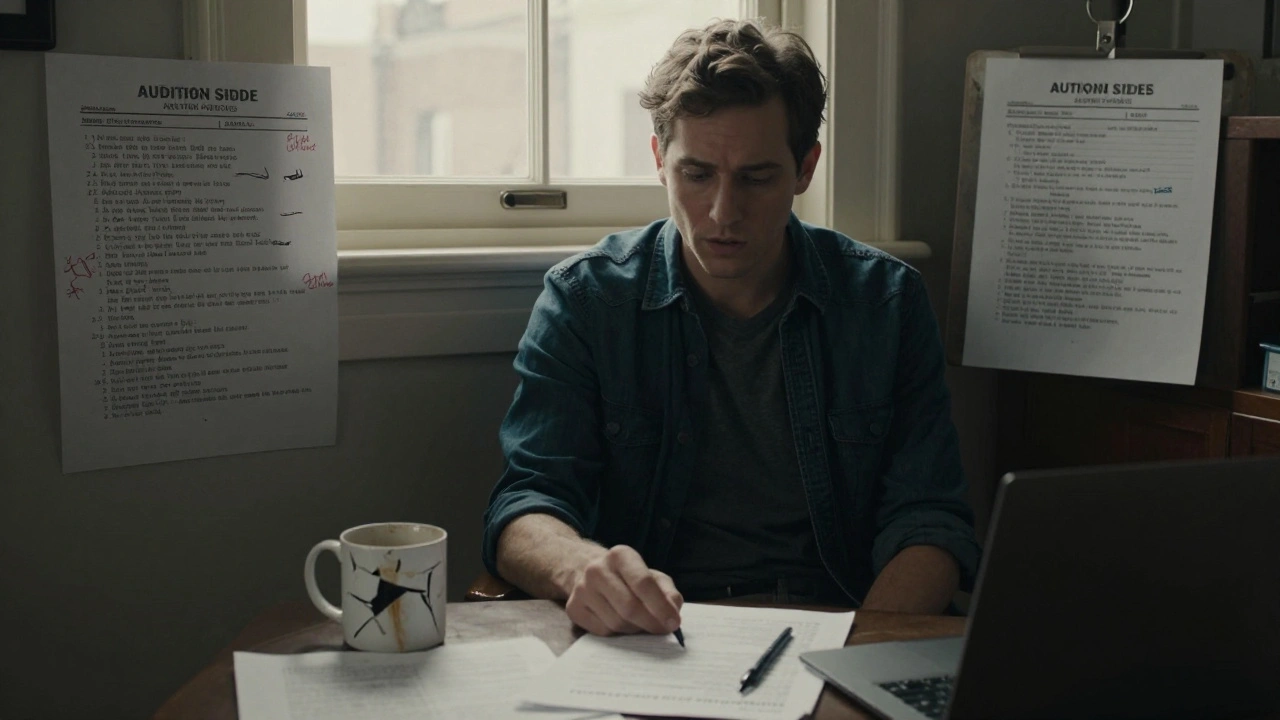
Once you find an audition, you don’t just read the sides. You dissect them. The sides are the pages of script they send you-usually 1-3 scenes. Most actors make the mistake of memorizing lines and calling it done. But the best ones ask: Who is this character? What do they want right now? What are they hiding? They research the director’s past work. They watch similar films. They find the emotional truth beneath the words.For example, if you’re auditioning for a scene where your character lies to their spouse while holding a coffee cup, you don’t just say the lines. You think: Is the coffee cold because they made it in a hurry? Are they nervously stirring it because they’re lying? Is the cup cracked-like their relationship? These details aren’t in the script. But they’re why casting directors remember you.
Step Three: The Audition Room
You walk in. There’s a casting director, maybe a producer, sometimes the director. No audience. No cameras. Just a table and a chair. You’re not there to impress them. You’re there to prove you can be trusted with the role.Most actors panic when they’re asked to do a second take. But that’s normal. The casting team wants to see how flexible you are. Did you nail the first take? Good. Now, what if you played it quieter? What if you were angrier? What if you were crying but didn’t say a word?
One actor I know auditioned for a supporting role in a Sundance film. He was told to try it "with more silence." So he sat down, looked at the other actor, and didn’t speak for 17 seconds. He didn’t blink. He didn’t shift. He just held the tension. They cast him on the spot. Sometimes, what you don’t do matters more than what you say.

Step Four: Callbacks and Chemistry Reads
If you make it past the first round, you’ll get a callback. This is where things get real. You might be asked to read with another actor-the person they’re considering for the lead. This is called a chemistry read. It’s not about who’s the better actor. It’s about whether you spark something together.There’s no script for chemistry. You can’t fake it. I’ve seen two brilliant actors bomb a chemistry read because they were both trying too hard to be the center of attention. I’ve seen a lesser-known actor land a lead role because they listened more than they spoke. They let the other person shine. And that made the scene feel real.
Some callbacks include improvisation. You might be given a scenario: "Your character just found out their partner is leaving. You’re packing their suitcase." No lines. Just emotion. That’s when you show who you are underneath the performance.
Step Five: The Wait
After the last audition, you wait. Days. Weeks. Sometimes months. And during that time, you keep working. You take classes. You do theater. You film self-tapes for other projects. You don’t sit around hoping for a call. Because if you do, you’re already losing.Here’s the truth: casting directors don’t forget you. They remember the ones who showed up prepared, stayed professional, and didn’t beg for the role. They remember the ones who sent a thank-you note-not a LinkedIn message, not a text, but a handwritten card. They remember the ones who kept showing up, even when they didn’t get the part.
What Gets You Cast? The Real Factors
It’s not just talent. It’s not just looks. It’s not even connections (though those help). Here’s what actually moves the needle:- Reliability - Do you show up on time? Are you easy to work with? Directors hire people they know won’t break down on set.
- Specificity - You don’t just play "sad." You play "someone who’s grieving but still trying to make breakfast for their kid."
- Adaptability - Can you take direction? Can you change your performance on a dime? The best actors are like clay-moldable, but still holding shape.
- Presence - When you’re on screen, do people notice you? Not because you’re loud, but because you’re real.
There’s a reason why actors like Viola Davis is an Academy Award-winning actress known for her emotionally grounded performances in film and television. or Paul Mescal is an Irish actor who rose to prominence through subtle, nuanced performances in indie films and television. keep getting cast. They don’t perform. They become.

What Most Actors Get Wrong
Here are the three biggest mistakes I see:- Trying to be "perfect." Casting directors aren’t looking for flawless performances. They’re looking for truth. A shaky voice, a pause too long, a tear that doesn’t come on cue-that’s human. That’s real.
- Ignoring the script’s subtext. What’s not said is often more important than what is. If your character says, "I’m fine," but their hands are shaking, that’s the real line.
- Thinking one audition changes everything. One audition doesn’t get you a role. Ten auditions do. One role leads to another. The industry runs on repetition, not one big break.
What to Do After You Get the Role
Getting the part is just the beginning. Now you have to show up on set ready to collaborate. You’ll get notes from the director. You’ll be asked to change your performance. You’ll be told to do something you didn’t expect. That’s normal. The actors who thrive aren’t the ones who knew all the lines. They’re the ones who stayed curious.On set, your job isn’t to be the star. It’s to serve the story. That’s the secret most newcomers don’t understand. The best performances aren’t about you. They’re about the character. And the character isn’t you. It’s someone else entirely.
Final Thought: It’s a Marathon, Not a Sprint
There’s no magic trick. No shortcut. No secret society. Just hard work, deep preparation, and the willingness to keep showing up-even when you don’t get the part. The people who make it aren’t the most talented. They’re the ones who never stopped learning, never stopped trying, and never stopped believing in the process.How long does the film audition process usually take?
The audition process can take anywhere from a few days to several months. For major studio films, casting can last 6-12 weeks. Indie films often move faster-sometimes just 2-4 weeks. But don’t assume a long wait means you’re not getting the part. Often, the casting team is still testing options, reviewing tapes, or waiting for final approvals from producers.
Do I need an agent to audition for films?
No, you don’t need an agent to audition, but it helps. Many auditions are open to self-submissions, especially for indie films, student projects, and commercials. However, agents get access to exclusive casting calls, negotiate contracts, and protect your interests. If you’re serious about film acting, getting representation is a smart next step-but not a requirement to start.
What should I wear to a film audition?
Wear something that fits the character-not what you think the director wants to see. If you’re auditioning as a construction worker, wear jeans and a work shirt. If you’re playing a corporate lawyer, wear a blazer. But avoid costumes, heavy makeup, or flashy accessories. The goal is to look like you could walk into that character’s life tomorrow. Clean, simple, and authentic works best.
Can I get cast without prior experience?
Absolutely. Many breakout roles go to first-time actors. Films like Manchester by the Sea and The Florida Project cast non-professionals because they wanted authenticity over polish. If you have presence, emotional honesty, and the ability to take direction, you can land a role-even with no résumé. Focus on nailing the audition, not your credits.
How do I handle rejection after an audition?
Rejection isn’t personal-it’s logistical. Maybe they needed someone taller. Maybe they wanted someone with a different accent. Maybe they already had someone in mind. Don’t take it as a judgment on your talent. Instead, ask for feedback if possible. Then move on. The most successful actors treat each audition as practice, not a pass-or-fail test. Keep going. The next one could be the one.




Comments(8)