When you think of private equity, you probably picture boardrooms, leveraged buyouts, or tech startups. But behind the scenes of your favorite movies - the blockbusters, the indie darlings, even the flops - there’s a different kind of player: private equity firms. These aren’t just funding films. They’re treating them like assets. And that changes everything.
Why Private Equity Is Jumping Into Film
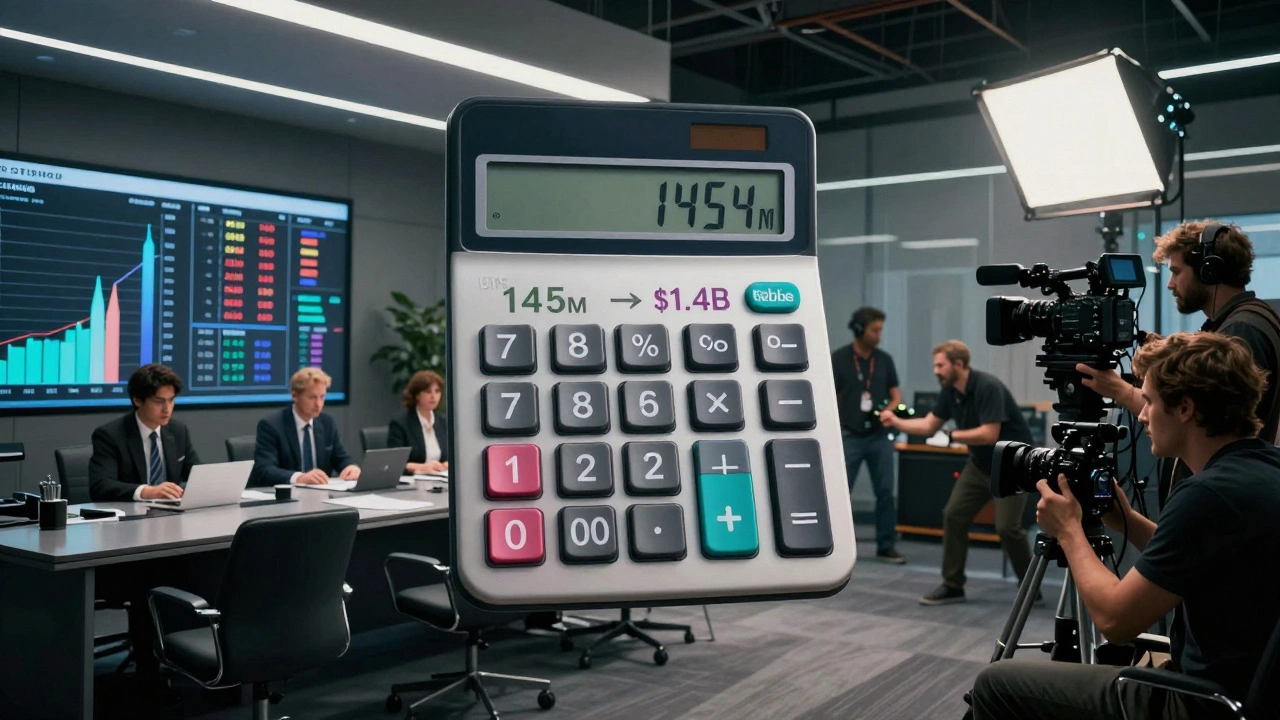
For years, Hollywood relied on studios, banks, or wealthy individuals to finance movies. Now, private equity firms are stepping in with billions. Why? Because films, despite their volatility, can deliver returns no other asset class touches. Take Barbie - made for $145 million, it grossed over $1.4 billion. That’s a 900% return. Even modest hits like The Whale or Everything Everywhere All at Once pulled in 10x their budgets. Private equity sees that potential. They’re not chasing art. They’re chasing ROI.
But here’s the catch: most films don’t make money. About 60% of theatrical releases lose money. That’s why private equity firms don’t bet on one movie. They build portfolios. Think of it like a hedge fund: 10 films, maybe one hits big, two break even, seven lose. But if the big one clears $500 million, the whole fund turns profitable. It’s math, not magic.
The Risk: Why Most Film Investments Fail
Private equity isn’t immune to Hollywood’s chaos. A film can have the best script, the biggest star, and perfect marketing - and still flop. Why? Because audience taste is unpredictable. A movie that tests well in focus groups might bomb on opening weekend. Or worse, it gets buried by a competing release. In 2023, three films with $100+ million budgets - The Marvels, John Wick: Chapter 4 (initially), and Twisters - underperformed despite massive hype.
Then there’s the supply chain. A delay in post-production? A union strike? A streaming platform pulling out of a deal? These aren’t theoretical risks. In 2023, the SAG-AFTRA strike alone caused 20+ films to miss release windows. Private equity firms that didn’t build buffer time into their models got burned. One firm, which had committed $400 million to 12 films in 2022, saw three get pushed into 2024 - and lost their window for theatrical dominance. Box office windows are shrinking. If a film doesn’t open strong in its first 10 days, it’s dead.
And don’t forget ancillary markets. A film might make $200 million globally, but if the streaming rights were sold too early - say, for $30 million - the investor never sees the real upside. That’s a classic trap. Firms that don’t control distribution rights get locked into bad deals before the film even shoots.

The Reward: How PE Firms Win Big
Successful private equity players in film don’t rely on luck. They build systems. Here’s how:
- They own the IP - not just the distribution. Firms like Blackstone and Apollo have started acquiring rights to book adaptations, comic book characters, and even original screenplays. Owning the IP means they control sequels, merchandising, and streaming licensing for decades.
- They bundle films - not just finance them. Instead of funding one movie, they fund a slate of five. That spreads risk. If one film flops, the others can carry it. One firm, TPG Capital, funded a slate of 8 films in 2021. Four lost money. Three broke even. One - The Menu - made $120 million on a $12 million budget. The whole slate returned 3.2x.
- They partner with distributors - not just studios. Firms now negotiate direct deals with Netflix, Amazon, and Apple. These deals often include guaranteed minimums plus backend participation. That’s safer than betting on theatrical performance alone.
- They use data - not gut feelings. Top firms now use AI models to predict audience demand. They analyze social media buzz, actor popularity trends, genre performance in international markets, and even weather patterns (yes, rain on opening weekend affects turnout). One firm in 2023 predicted a horror film would outperform in Southeast Asia based on TikTok trends - and it did, making 40% of its revenue from Indonesia and Thailand.
Due Diligence: What Private Equity Firms Actually Check
If you think private equity firms just look at the director’s resume, you’re wrong. Their due diligence is brutal. Here’s what they dig into:
- Cast and crew track records - Not just box office. They look at cost-to-revenue ratios. Did the lead actor’s last film break even? Was the producer known for going over budget? One firm tracked 300+ past productions to build a predictive model.
- Completion bonds - These are insurance policies that guarantee a film gets finished. If a production goes over budget or gets delayed, the bond company steps in. Firms won’t invest without one. It’s non-negotiable.
- Foreign pre-sales - Before a film shoots, they sell rights to distributors in Germany, Japan, Brazil, etc. If they’ve locked in $80 million in pre-sales, the risk drops dramatically. That’s cash in hand before a single frame is shot.
- Streaming and VOD rights - They don’t just sell to Netflix. They structure deals that give them a percentage of revenue for 10+ years. That’s where long-term value lives.
- Legal clearances - Did they get the rights to the music? The book? The real-life story? One film in 2022 got sued for $15 million because they didn’t clear a character’s likeness. The investor lost $8 million.
One firm, led by a former studio executive, even created a 147-point checklist. It includes things like: “Is the script written in Final Draft 13?” (software compatibility matters for post-production). “Does the director have a history of finishing on time?” “Are the VFX vendors vetted for past delays?” It’s not Hollywood. It’s Wall Street with a camera.

Who Should Invest - And Who Should Walk Away
Private equity in film isn’t for everyone. Here’s who thrives:
- Investors with patience - Films take 2-4 years to fully monetize. If you need returns in 12 months, don’t touch this.
- Those with access to distribution networks - Without global partners, you’re stuck with one-shot theatrical releases. That’s a death sentence.
- Teams with film industry insiders - You need people who know how to read a budget, negotiate a completion bond, or spot a toxic production.
And here’s who should stay out:
- First-time investors - Without experience, you won’t know if a $50 million budget is realistic. One investor thought a $25 million budget for a sci-fi epic was “modest.” The final cost? $92 million.
- Those who believe in “the next big hit” - There’s no such thing as a sure thing. Even Spielberg’s first film lost money.
- Anyone without a portfolio strategy - Betting everything on one film is gambling. Not investing.
The New Reality: Film as a Financial Asset
Private equity isn’t killing cinema - it’s reshaping it. The days of studios greenlighting films based on passion are fading. Now, it’s about metrics: cost-per-viewer, international revenue potential, IP longevity, and return on capital. Films are becoming more like software: developed, tested, scaled, and monetized.
That means fewer risky, experimental films. But it also means more consistent quality. When a firm invests $100 million across five films, they don’t just throw money at a director. They demand structure. They demand accountability. They demand results.
And for audiences? The movies might feel more polished, more calculated. But if the film works - if it moves you, shocks you, makes you laugh - then the numbers don’t matter. The art still wins. Even when the balance sheet doesn’t.
Can private equity firms really make money from movies?
Yes - but only if they treat films like a portfolio, not a gamble. Top firms achieve returns of 2x to 5x over 3-5 years by funding 5-10 films at once. One hit can cover all losses. But if they invest in just one movie, the odds of losing money are over 60%.
What’s the biggest mistake private equity firms make in film?
The biggest mistake is assuming a film’s success depends on marketing or star power alone. The real killers are delays, budget overruns, and losing control of distribution rights. One firm lost $120 million because they sold streaming rights too early - and missed out on the film’s viral second life on social media.
Do private equity firms only fund big-budget films?
No. Many focus on mid-budget films ($20M-$50M) because they’re cheaper to produce and easier to turn a profit on. A $30 million horror film that makes $150 million is a better return than a $200 million action movie that barely breaks even. Smaller films also have lower risk and faster turnaround.
How do private equity firms handle union strikes or production delays?
They build buffers into their timelines - usually 6-9 months. They also use completion bonds, which cover extra costs if production halts. Firms that don’t plan for delays often lose their window for theatrical release, which tanks revenue. In 2023, firms with buffer time still hit their targets; those without did not.
Is private equity making Hollywood more corporate and less creative?
In some ways, yes. Creative risks are fewer because investors demand proven formulas: sequels, adaptations, recognizable IPs. But it’s also led to higher production values, better budgets, and more reliable releases. The trade-off is fewer wild experiments - but more films that actually get seen.





Comments(8)