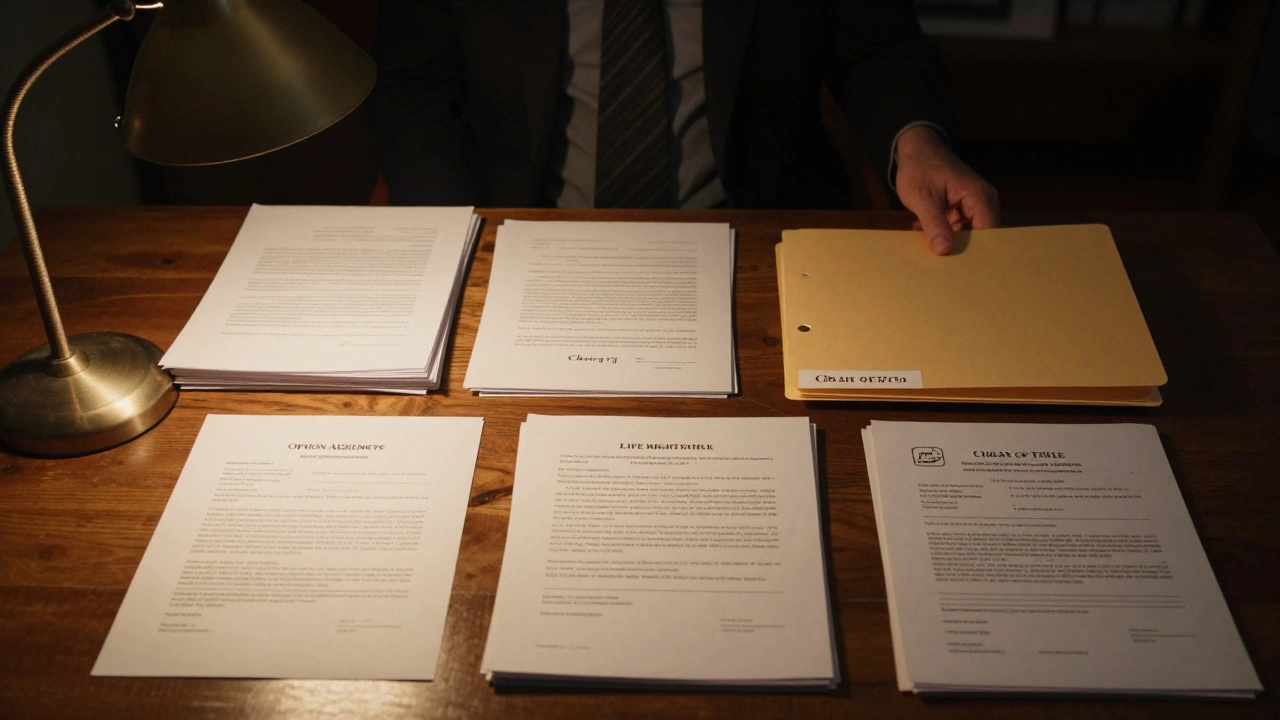
If you’re trying to get a film funded or sold to a distributor, no one will look at your script, pitch, or trailer until they know one thing: chain of title is clean. It’s not just paperwork. It’s the legal backbone of your project. Without it, banks won’t lend money. Streaming platforms won’t license it. Insurance won’t cover you. And worst of all - you could be sued.
What Exactly Is Chain of Title?
Chain of title is the documented history of ownership for every piece of intellectual property used in your film. That includes the screenplay, the underlying book or article it’s based on, music, trademarks, real-life stories, even stock footage. Each link in the chain proves someone legally had the right to give you permission to use it.
Think of it like a family tree - but instead of ancestors, you’re tracing who owned the rights to the story, who sold those rights, who adapted them, and who passed them on to you. If one link is missing, broken, or unclear, the whole thing collapses.
For example: You write a screenplay based on a true story you read in a magazine. The magazine article was written by a freelance journalist. That journalist got the story from an interview with a subject who later claims you misrepresented them. Now you’ve got a lawsuit brewing - and no one will touch your film because the chain of title doesn’t prove you had the right to tell that version of the story.
Why Clean IP Rights Are Non-Negotiable for Financing
Independent films rarely get funded by studio wallets. Most rely on private investors, tax credits, or bank loans secured by the film’s future revenue. But lenders don’t care about your director’s vision or your lead actor’s Instagram following. They care about risk.
Here’s how chain of title affects financing:
- **Banks require title insurance** before releasing funds. Title insurers won’t issue a policy unless every copyright, option agreement, and assignment is properly recorded and unambiguous.
- **Investors walk away** if they see gaps. One missing signature on a rights transfer form can mean the difference between a $2 million investment and a cold shoulder.
- **Tax credit programs** like those in Georgia or New Mexico require proof of clear ownership before releasing funds. No clean chain? No money.
A 2023 survey of 120 independent producers showed that 41% lost financing deals because of unresolved chain of title issues - not because their film was bad, but because their paperwork was messy.
What Happens If You Skip the Chain of Title?
It’s tempting to think: “I’ll fix it later.” But later is too late.
Take the case of the 2020 indie film Truth Be Told. It screened at three festivals, got great reviews, and was picked up by a major streaming service. Then, a woman came forward claiming the main character was based on her life - without her permission. She sued for $15 million. The distributor pulled the film. The streaming deal vanished. The producer had no insurance. The film was pulled from all platforms and sat in a vault for 18 months while lawyers fought over whether the original script’s option agreement even covered biographical rights.
That film had no clear chain of title for the real-life subject’s story. No written consent. No release form. No documentation. And now, it’s essentially dead.
Even if you avoid lawsuits, distributors will still reject you. Companies like Netflix, Amazon, and Apple have legal teams that audit chain of title before signing any deal. If they find one unverified link - a signed release missing from a crew member’s music cue, a screenplay option that wasn’t properly assigned - they’ll demand you fix it before closing. Sometimes that means delaying release by months. Sometimes it means paying $100,000 to clear a single song.
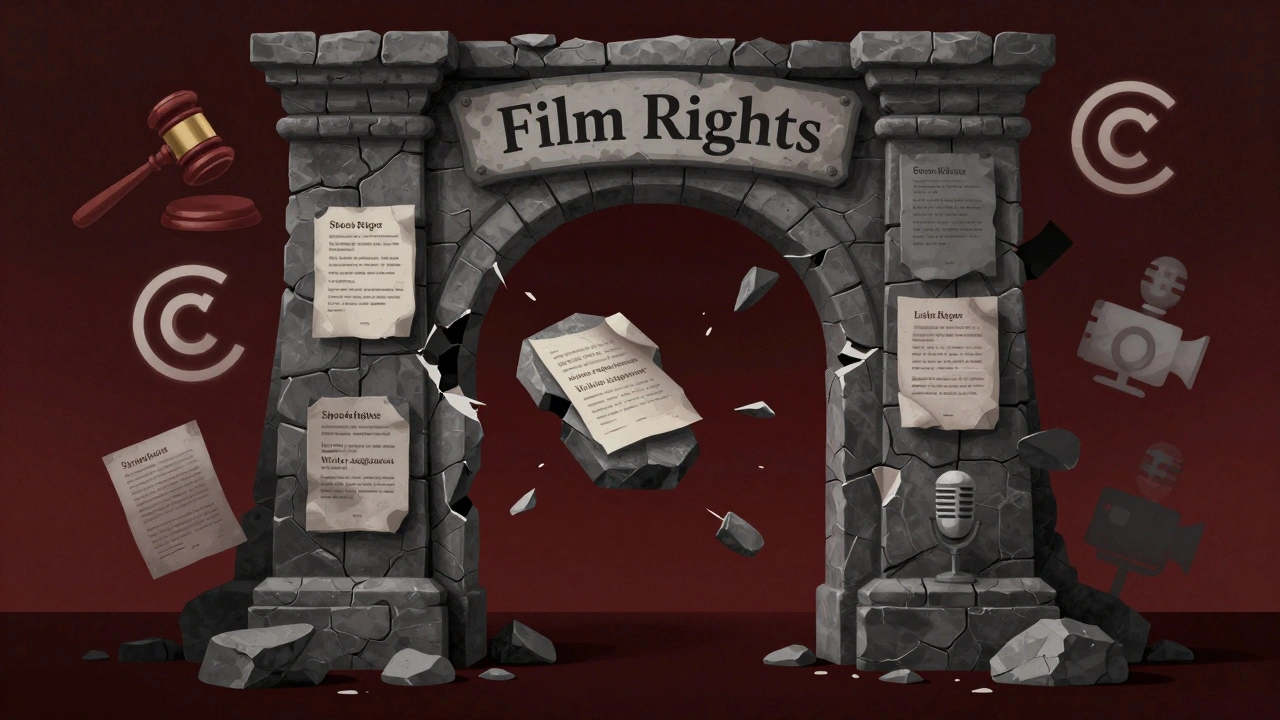
The Core Documents You Need
Clean chain of title isn’t about having a lot of documents - it’s about having the right ones. Here’s what you must have:
- Copyright registration for your screenplay (U.S. Copyright Office, Form TX). Not just a timestamped email - an official registration.
- Option agreement and assignment for any underlying material (book, article, play). Must include: parties, rights granted (film, TV, streaming), duration, consideration, and signatures.
- Life rights releases for real people portrayed. Even if you change names, if someone can be recognized, you need a signed release.
- Writer agreements - if you hired someone to rewrite your script, they must assign all rights to you in writing.
- Music clearances - both master recording rights and publishing rights. This includes background music, theme songs, even 10-second clips.
- Location releases - if you filmed on private property or used identifiable landmarks, you need written permission.
- Cast and crew releases - every actor, stunt performer, and even extras need a release granting you rights to their image and performance.
Each document should be dated, signed, notarized if required, and stored in a single, organized folder - digital and physical. No Google Docs in a shared folder labeled “Final Drafts.”
Common Chain of Title Pitfalls (And How to Avoid Them)
Even experienced filmmakers mess this up. Here are the top five mistakes:
- Assuming “public domain” means free to use - Just because a book is old doesn’t mean the adaptation rights are clear. If a 1920s novel was later rewritten by someone else, you need permission from the modern rights holder.
- Using unlicensed stock footage - Sites like Shutterstock require you to verify the chain of title for every person, logo, or artwork in the clip. Many filmmakers get caught using footage with trademarks or recognizable faces.
- Oral agreements - “I told him I’d give him 5% if the film sells.” That’s not a contract. It’s a lawsuit waiting to happen.
- Missing signatures - A co-writer didn’t sign the assignment? The producer’s spouse had to sign because the rights were community property? These are real scenarios that break chains.
- Waiting until post-production - Clearing music or rights after filming is like putting out a fire with a water pistol. It’s expensive, slow, and often impossible.
Fix this early. Budget $5,000-$15,000 for legal clearance work - it’s not an expense. It’s insurance.
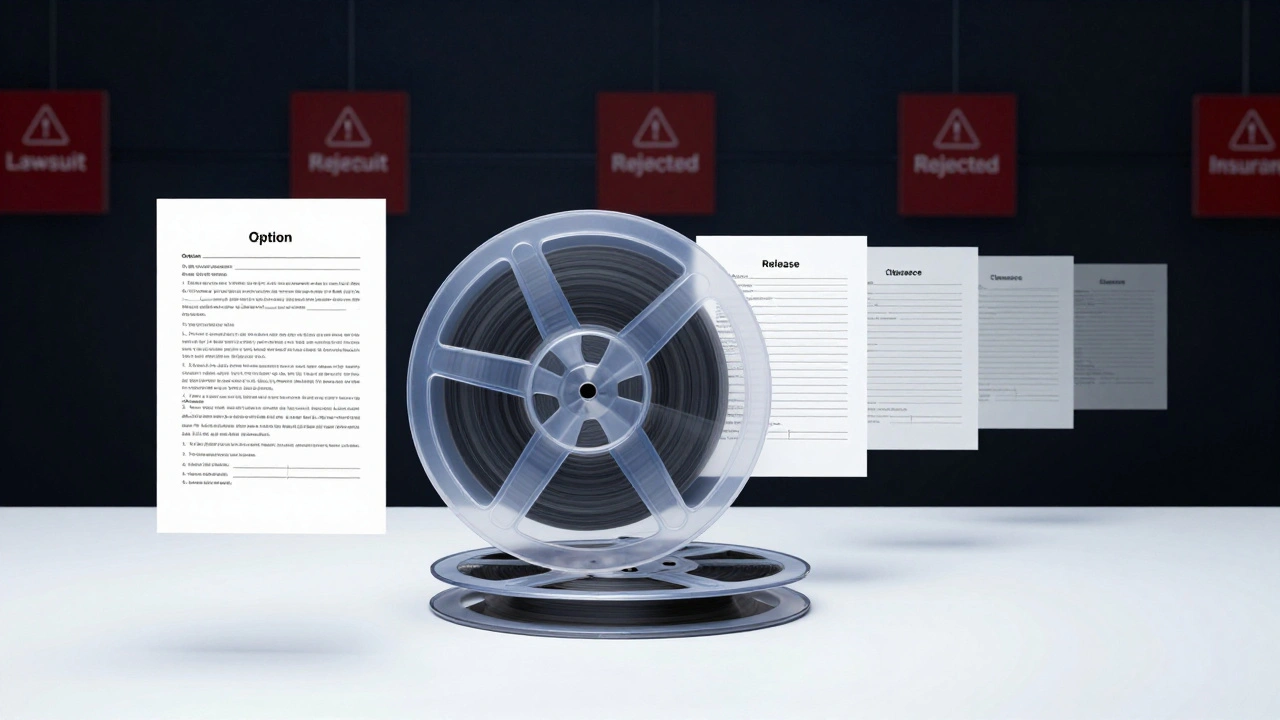
How Distribution Deals Depend on Chain of Title
Distributors don’t just want your film - they want to own the right to sell it everywhere, forever. That’s called “worldwide rights in all media.” But they won’t take that unless they know you actually own it.
Here’s what they check:
- Can you grant them exclusive rights? Or are there co-owners you didn’t tell them about?
- Is the screenplay based on a true story? Do you have written releases from everyone involved?
- Are there any unresolved claims? Even one pending lawsuit can kill a deal.
- Is the music cleared for global streaming? Many indie films get rejected because they only cleared music for theatrical use.
A distributor in 2025 won’t sign a deal unless you can hand them a PDF with every document, signed and dated, in order. They’ll have their lawyer review it. If you can’t deliver, you’re out.
What to Do If Your Chain Is Broken
It’s not the end of the world - but it’s expensive and time-consuming.
If you’re missing a signature:
- Track down the person. Send a certified letter. Offer a small payment or credit.
- If they’re unreachable or deceased, you may need to petition a court for a “declaration of ownership.” That costs $10,000+ and takes 6-12 months.
If you used unlicensed music:
- Replace it. Use royalty-free libraries like Artlist or Epidemic Sound - but verify their chain of title too.
- If the song is critical, contact the rights holder directly. Sometimes they’ll accept a percentage of revenue instead of an upfront fee.
Bottom line: Fixing a broken chain is harder than building a clean one from day one.
Final Checklist: Before You Submit Your Film
Run through this before you send your film to any investor, festival, or distributor:
- ☐ All scripts are registered with the U.S. Copyright Office
- ☐ All underlying rights (books, articles, plays) have signed option and assignment agreements
- ☐ All real people portrayed have signed life rights releases
- ☐ All music (master and publishing) is cleared for worldwide digital distribution
- ☐ All locations have written permission
- ☐ All cast and crew have signed releases
- ☐ All documents are dated, signed, and organized in one folder
- ☐ You’ve consulted a production attorney (not just a friend who took a law class)
If you checked every box - you’re ready. If even one is missing - stop. Fix it.
Chain of title isn’t glamorous. No one talks about it at film festivals. But every successful indie film - from Parasite to Get Out - had it. Without it, your film doesn’t just sit on a hard drive. It sits on a legal time bomb.
What happens if I don’t have a chain of title for my film?
Without a clean chain of title, you won’t get financing, distribution deals, or insurance. Distributors will reject your film, banks won’t lend money, and you could face lawsuits from writers, subjects, or copyright holders. Even if your film is critically acclaimed, it can be pulled from all platforms if rights are disputed.
Do I need to register my screenplay with the U.S. Copyright Office?
Yes. While copyright exists the moment you write it, registration is required to sue for infringement in the U.S. and is mandatory for most film financing and insurance. It costs $45-$65 and takes 3-6 months. Don’t skip it.
Can I use a real person’s story without their permission?
You can if the story is factual and doesn’t portray them in a false or damaging light. But if they’re recognizable - even with changed names - you risk defamation or invasion of privacy claims. Most distributors require a signed life rights release to avoid legal exposure.
How much does chain of title clearance cost?
For a low-budget indie film, expect $5,000-$15,000. This includes legal review, music clearances, release forms, and filing. For films with complex rights (based on books, true stories, or lots of music), it can go up to $30,000. It’s not optional - it’s part of your production budget.
Is a chain of title the same as film insurance?
No. Chain of title is the documentation proving you own the rights. Film insurance (like Errors & Omissions insurance) protects you if someone sues you over those rights. But insurers won’t give you coverage unless your chain of title is clean. One supports the other.





Comments(10)