Quick Takeaways for Distributors
- PVOD pricing typically ranges from $14.99 to $24.99 depending on the film's scale and prestige.
- Performance is measured by 'ARPU' (Average Revenue Per User) and the conversion rate from theatrical awareness.
- The ideal window for PVOD is often 17 to 45 days after the premiere, though "day-and-date" remains a niche high-risk strategy.
- Revenue shares typically favor the studio, with platforms taking a 20% to 30% cut.
Decoding the PVOD Pricing Tier
Pricing isn't random. It's based on a perceived value hierarchy. If you're releasing a mid-budget indie, charging $24.99 might alienate your core audience, while a tentpole blockbuster might actually underprice itself at $14.99. Most studios now use a tiered system based on the film's "theatrical footprint."
For a major studio release with a massive marketing budget, the price point usually sits at the top end. They aren't just selling a movie; they're selling the exclusive right to see it before the general public catches up on SVOD (Subscription VOD) services. For smaller, prestige films-think Oscar contenders-the pricing is often slightly lower to encourage a wider digital reach, aiming for a volume play rather than a high-margin-per-user play.
| Film Tier | Price Point | Target Window | Performance Goal (Conversion) |
|---|---|---|---|
| Tentpole / Blockbuster | $19.99 - $24.99 | 17-30 Days | 5-10% of theatrical admissions |
| Mid-Budget / Genre | $14.99 - $19.99 | 30-45 Days | 8-12% of theatrical admissions |
| Indie / Prestige | $9.99 - $14.99 | 45+ Days | 15%+ of theatrical admissions |
Understanding the Distribution Window Shift
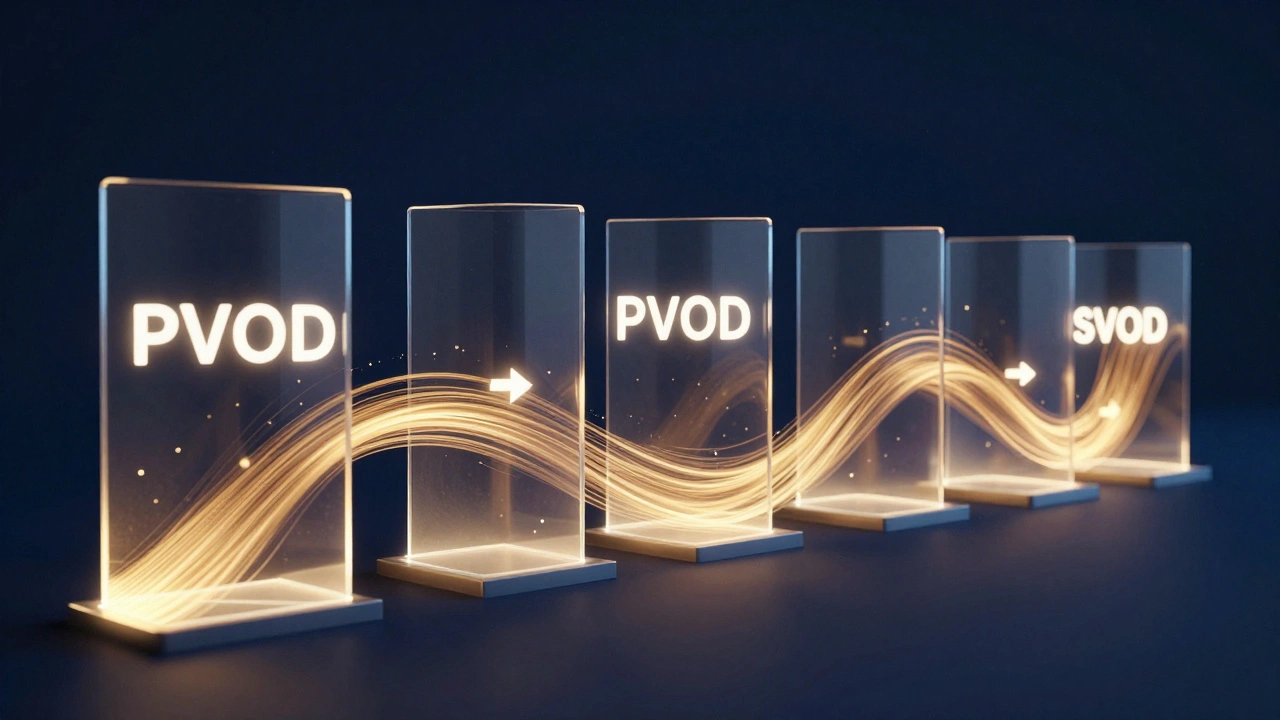
The Distribution Window is the period of time a movie is available exclusively in one medium before moving to the next. In the old days, this was a rigid sequence: Theaters → DVD/Blu-ray → Pay TV → Network TV. Now, it's a fluid ecosystem. The move toward PVOD allows studios to monetize a film while the marketing spend is still fresh in the viewer's mind.
When a film moves into PVOD, it creates a second peak in the revenue curve. If you wait 90 days, the conversation around the film has often died down. By shortening that gap to 30 days, the studio leverages the residual heat from the cinema run. This doesn't necessarily cannibalize ticket sales; in many cases, it actually boosts them. People see a trailer, see it's available for a premium fee, and decide they'd rather see it on a big screen first.
Performance Benchmarks: What Defines Success?
How do you know if your PVOD run actually worked? You can't just look at the total gross. You have to look at the conversion rate. A successful PVOD release is typically measured by how many people who *didn't* see the movie in theaters decided to pay the premium fee at home.
For instance, if a movie had 1 million theatrical admissions and then generated 100,000 PVOD rentals, that's a 10% conversion. In the current 2026 market, a 10% conversion for a mid-budget film is considered a win. High-performance benchmarks also include the "long tail"-how the film performs as it transitions from PVOD (rental) to TVOD (transactional purchase) and eventually to a subscription model.
Another key metric is the Churn Rate for those using a bundled service. If a studio owns the platform (like Disney+ or HBO Max), they track whether the PVOD release of a major film reduces the number of people canceling their monthly subscriptions. Often, a high-priced PVOD event acts as a "tentpole" that keeps users paying their monthly fee.
The Platform Power Struggle: Revenue Splits
The money doesn't all go to the filmmakers. The Digital Storefronts like Apple TV, Amazon Prime Video, and Google Play act as the gatekeepers. These platforms generally take a percentage of the rental fee, usually around 30%. This is significantly lower than the 50% or more that traditional cinema chains take from ticket sales.
This shift in revenue splits is why many independent producers are leaning harder into PVOD. They get a larger piece of the pie and more control over the data. When you sell a ticket at a theater, you don't know who bought it. When someone rents a film on a digital platform, the distributor gets a wealth of data on demographics, viewing habits, and drop-off points (where people stopped watching), which is gold for planning the next project.

Common Pitfalls in PVOD Strategy
The biggest mistake is the "Price Shock." If a film is marketed as a low-budget indie but is priced at $24.99, the audience feels cheated. The price must align with the brand of the film. Another trap is the "Window Clash," where a film is released on PVOD too close to a major theatrical competitor, causing the digital rental to be overshadowed by the new cinema hype.
Some studios also fail by ignoring the Electronic Sell-Through (EST) option. PVOD is usually a rental. If you don't provide a clear path for the user to buy the movie permanently at a higher price (usually $19.99 - $29.99), you're leaving a massive amount of money on the table from the most loyal fans who want to own the digital asset.
The Future of Premium Access
We are seeing a move toward "dynamic pricing." Much like airlines, some platforms are experimenting with pricing that fluctuates based on demand. If a film is trending on social media on a Tuesday, the price might tick up by $2. This is still controversial and risky for brand loyalty, but it's where the tech is heading.
Furthermore, the integration of Ad-supported VOD (AVOD) is creating a hybrid model. A user might pay a smaller premium fee for a PVOD release if they agree to watch two minutes of ads during the film. This lowers the barrier to entry while maintaining a high ARPU for the studio.
What is the main difference between PVOD and TVOD?
TVOD (Transactional Video On Demand) is the general category of paying for content per view. PVOD (Premium VOD) is a specific subset of TVOD where the content is available at a higher-than-normal price point, usually because it is still in its theatrical window or very recently released. Think of TVOD as a standard rental and PVOD as a "premium' access ticket.
Does PVOD hurt cinema ticket sales?
Not necessarily. Data suggests that PVOD creates a "secondary market." Many viewers who cannot visit a theater or prefer a home environment are more likely to pay a premium fee if they know the movie is a hit. In some cases, the digital availability keeps the conversation alive, actually driving more people to the cinema to see it "the right way."
How much does a studio typically make from a $19.99 PVOD rental?
After the platform (e.g., Apple or Amazon) takes its typical 30% cut, the studio is left with roughly $14.00. From that amount, the studio still has to pay out any agreed-upon residuals or profit-participation fees to the talent, but the overhead is significantly lower than physical media distribution.
What is a 'Day-and-Date' release?
A day-and-date release is when a film premieres in theaters and on a PVOD platform on the exact same day. While this maximizes immediate revenue, it is often criticized by theater owners and can potentially lower the perceived prestige of the film.
Which pricing model is best for independent films?
For indie films, a lower-priced PVOD window ($9.99 to $14.99) combined with a slightly longer theatrical window (45+ days) usually works best. This allows the film to build critical acclaim and word-of-mouth, which justifies the rental fee to a wider, less "fanatical" audience.
Next Steps for Producers
If you're planning your next release, start by analyzing your audience's digital habits. Are they primarily on iOS (Apple TV) or Android (Google Play)? This determines where you should focus your marketing spend. Next, set your price point based on the "Comparable Film" method-look at 3-5 films of similar genre and budget from the last 12 months and see where their PVOD pricing sat.
Finally, don't ignore the transition. Plan your move from PVOD to SVOD carefully. If you move a film to a subscription service too quickly, you kill your TVOD (purchase) sales. If you wait too long, the audience forgets the movie exists. The sweet spot is usually a 3-to-6 month gap between the premium rental window and the subscription debut.



Comments(9)