
Every year, dozens of young filmmakers show up at film festivals with a camera, a story, and no one to show them how to turn it into something real. They’ve watched every indie film on Netflix, studied every shot list on YouTube, and saved every dollar for a 4K camera. But when it comes to actually making a film that gets seen - not just screened at a basement theater - they hit a wall. That’s where the mentors come in.
Real Directors, Real Time
It’s not enough to say, ‘Follow your passion.’ You need someone who’s been through the trenches. Directors like Ava DuVernay, Barry Jenkins, and Chloé Zhao don’t just make Oscar-winning films - they spend months each year sitting with first-time filmmakers in fellowship programs, reading scripts, watching dailies, and telling them what’s working and what’s not. These aren’t guest lectures. These are year-long relationships.
Take the Sundance Institute’s Directing Fellowship. In 2024, eight emerging directors were selected from over 1,200 applicants. Each got $25,000 in funding, access to industry professionals, and - most importantly - weekly one-on-one sessions with established filmmakers. One fellow, a 26-year-old from Detroit, spent six months rewriting her script with guidance from a director who had just finished a Netflix series. By the end, her film premiered at Tribeca and was picked up by a streaming platform. That didn’t happen because she had a good idea. It happened because someone with real clout took the time to show her how to build it.
What These Fellowships Actually Do
Most film schools teach technique. Fellowships teach survival.
Here’s what happens in a typical mentorship cycle:
- The filmmaker submits a short film or script sample - not a polished product, but something raw that shows potential.
- Selected applicants are matched with a director who has made at least two feature films and has a track record of supporting new voices.
- Over 6 to 12 months, the mentor reviews every draft, attends early shoots, gives notes on editing, and opens doors to producers or distributors.
- At the end, the filmmaker gets a public screening, industry exposure, and often funding for their next project.
It’s not about giving feedback. It’s about giving access. Mentors introduce fellows to cinematographers who work on indie films, editors who’ve won Sundance awards, and sound designers who’ve worked on award contenders. These aren’t contacts you can find on LinkedIn. These are people who only work with trusted referrals.
Who Gets Chosen - And Why
There’s a myth that fellowships pick the ‘most talented.’ That’s not true. They pick the most ready.
A 2023 study by the Independent Filmmaker Project tracked 142 fellowship recipients over five years. The ones who went on to make feature films had one thing in common: they had already made something - even if it was a 12-minute film shot on a smartphone. They weren’t waiting for permission. They’d already proven they could get things done.
Directors mentoring them look for three things:
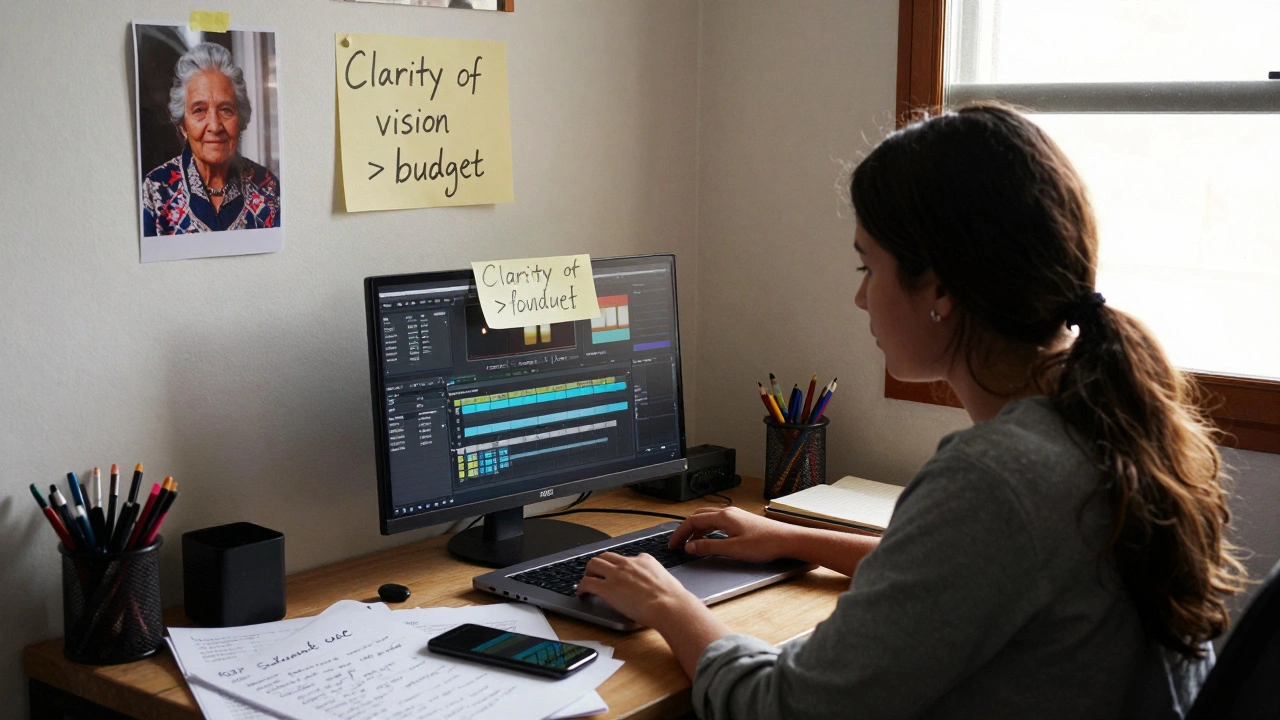
- Clarity of vision - Can they explain their story in one sentence? Not just ‘it’s about love,’ but ‘it’s about a single mom who steals a car to get her kid to a specialist in another state.’
- Work ethic - Did they edit their own film? Did they raise $3,000 on a GoFundMe to pay for location permits? Mentors want doers, not dreamers.
- Openness to feedback - The best applicants don’t argue. They listen. They revise. They come back with better versions.
One 2024 fellow from Colombia had no film school background. She worked as a translator and shot her short film on weekends with friends. Her mentor, a director who’d worked with Pedro Almodóvar, told her: ‘You don’t need a big budget. You need a clear point of view. And you’ve got that.’ She got funding. She made her feature. It’s now streaming on MUBI.
The Hidden Cost of Not Having a Mentor
Without mentorship, most first-time filmmakers burn out within two years.
They spend months on a script that no one understands. They shoot a film that looks amateurish because they didn’t know how to light a scene properly. They submit to festivals and get rejected - not because their story wasn’t good, but because the technical execution made it feel unprofessional. They start to believe they’re not cut out for this.
That’s the silent epidemic in independent film. Talent isn’t the problem. Access is.
Directors who mentor aren’t just giving advice. They’re breaking cycles. A filmmaker from a low-income neighborhood who gets picked for a fellowship doesn’t just make a film - they become proof that someone like them can make it. That ripple effect is what changes the industry.
How to Get Into a Fellowship - Even If You’re Starting From Zero
You don’t need a film degree. You don’t need fancy gear. You need three things:
- A short film - even if it’s five minutes. Shoot it with your phone. Use friends. Tell a story that matters to you. Edit it yourself. Upload it to Vimeo. Make sure it’s public.
- A one-page letter. Not a resume. Not a bio. Just a letter to the director who runs the program. Tell them why you’re making films. What story are you trying to tell? Why now? Be honest. Be specific.
- A plan for what you’ll do with the mentorship. Don’t say, ‘I want to learn.’ Say, ‘I want to make a film about my grandmother’s immigration story, and I need help structuring the emotional arc.’
Apply to programs like:
- Sundance Institute Directing Fellowship
- Film Independent Spirit Awards Fellowship
- Black List Labs
- Asian American Film Lab
- Women in Film Mentorship Program
Deadlines are usually in January and August. Start now. Don’t wait for ‘the perfect time.’ There isn’t one.
Why This Matters Beyond the Screen
Film isn’t just entertainment. It’s culture. And culture is shaped by who gets to tell stories.
For decades, the industry was dominated by a narrow group of voices. Now, thanks to mentorship-driven fellowships, we’re seeing films about rural Appalachia, queer elders in Texas, deaf teenagers in Chicago, and immigrant families in the Midwest - stories that used to be invisible.
Directors mentoring these filmmakers aren’t just helping individuals. They’re rebuilding the pipeline. One story at a time.
And if you’re watching these films and thinking, ‘I wish I could make something like that’ - you can. You just need someone to show you how. And that someone is already out there, waiting to say yes.
Do you need a film degree to get into a director mentoring fellowship?
No. Most fellowship programs don’t require a film degree. In fact, many successful applicants have no formal training at all. What matters is having made a short film, showing clear storytelling ability, and being open to feedback. Programs like Sundance and Film Independent prioritize raw talent and initiative over credentials.
How much funding do these fellowships typically offer?
Funding varies by program. The Sundance Directing Fellowship offers $25,000, while others like the Black List Labs provide $10,000-$15,000. Some programs also include free equipment access, editing software licenses, and travel stipends for festivals. The real value, though, is in the mentorship and industry connections - not just the money.
Can international filmmakers apply to U.S.-based fellowships?
Yes. Many U.S.-based fellowships accept international applicants, especially those focused on diversity and global voices. Programs like Film Independent and the Asian American Film Lab have included filmmakers from over 40 countries. You may need a visa to attend in-person sessions, but many mentorship components happen remotely. Always check the specific program’s eligibility requirements.
How long do these mentorship programs last?
Most last between 6 and 12 months. Some, like the Sundance Institute program, run year-round with monthly check-ins, workshops, and screenings. Others are more intensive, with a 3-month core period followed by ongoing support. The key is consistency - the best outcomes happen when mentors and mentees stay engaged over time.
What if I don’t get selected the first time?
Don’t give up. Most successful filmmakers applied multiple times. Use the feedback if it’s given. Make a new short film that shows growth. Improve your storytelling, tighten your script, or refine your editing. Many directors who eventually got in had submitted two or three times before being chosen. Persistence matters more than perfection.





Comments(8)