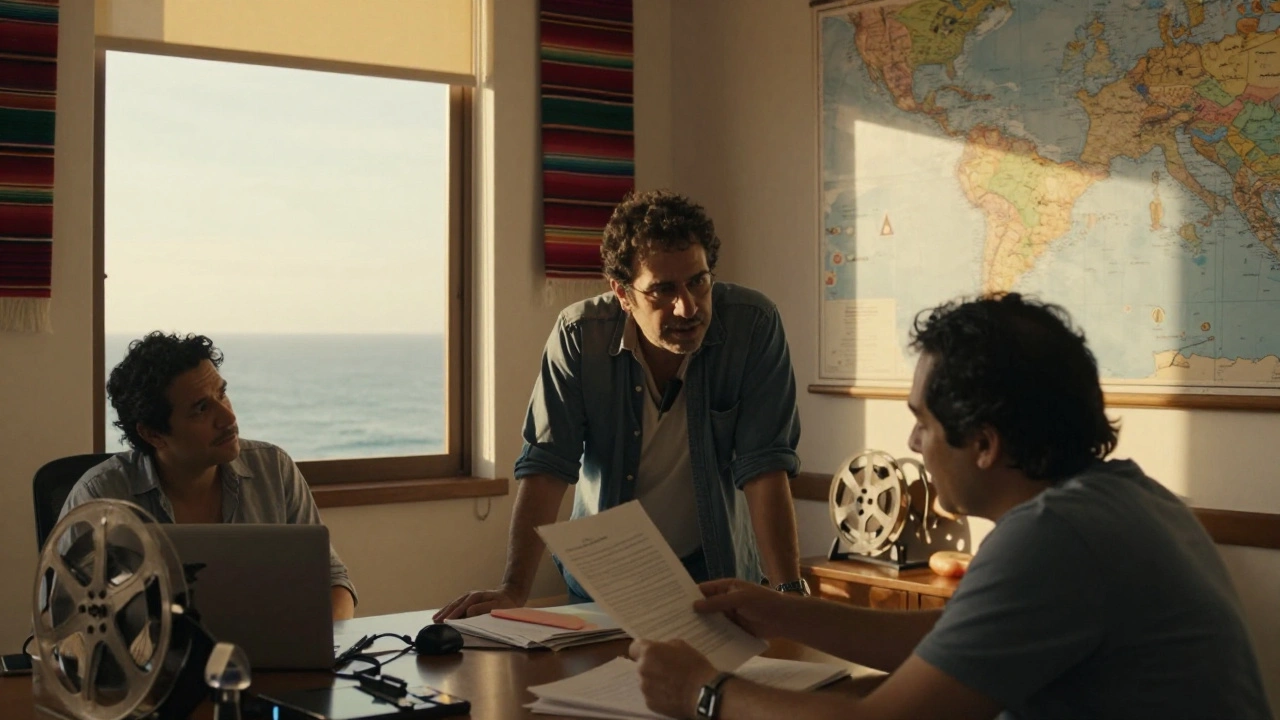
When a Mexican director teams up with a Spanish producer, and a Brazilian actor joins a Portuguese crew to shoot a drama set in the Andes but funded by EU cultural grants, something bigger than a movie is happening. It’s a quiet revolution in storytelling - one that’s reshaping who watches what, and why. Iberophone co-productions between Latin America and Europe aren’t just about splitting budgets. They’re about building bridges through language, culture, and shared history that no streaming algorithm could ever replicate.
Why Spanish and Portuguese Are the Secret Glue
It’s not just about speaking the same language. It’s about shared rhythms, humor, family dynamics, and even the way silence works in a scene. Spanish and Portuguese are the only two languages spoken across both Latin America and Europe with deep cultural roots on both sides of the Atlantic. That’s why a film made in Colombia with funding from Spain and post-production in Portugal feels familiar to audiences in Madrid, Mexico City, and São Paulo - not because it’s generic, but because it’s specific in ways that transcend borders.
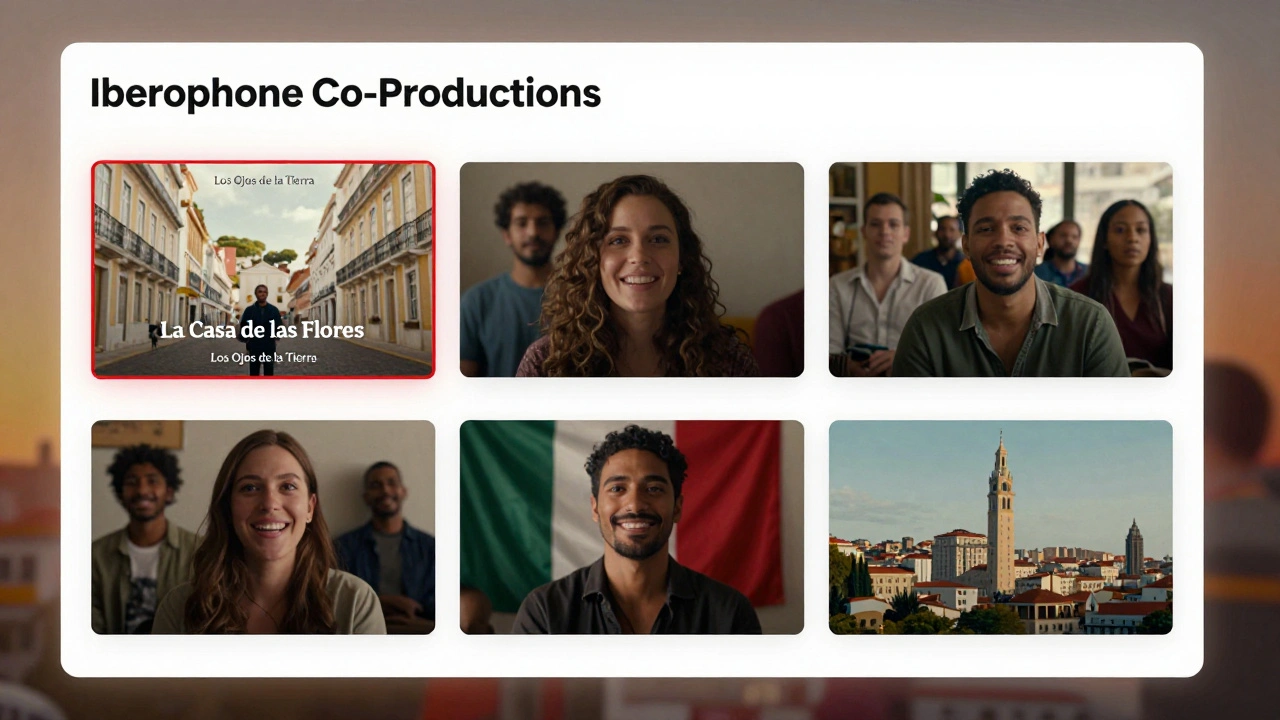
Take La Casa de las Flores. It was produced by a Mexican team, financed partly by Spain’s ICAA, and streamed globally by Netflix. But its biggest surprise? It found a cult following in Portugal. Why? Because the family drama, the over-the-top emotional moments, the way characters express love through yelling - it all mirrored Portuguese telenovelas more than American sitcoms. That’s not coincidence. It’s cultural DNA.
According to Eurimages data from 2024, over 60% of co-productions between Latin America and Europe involved at least one Iberophone country. And 78% of those films reached audiences in both regions - something monolingual productions rarely do. The language isn’t just a tool. It’s a passport.
How Funding Works: It’s Not Just Grants
Most people think international co-productions are about rich European studios bankrolling risky Latin American projects. That’s outdated. Today, it’s a two-way street.
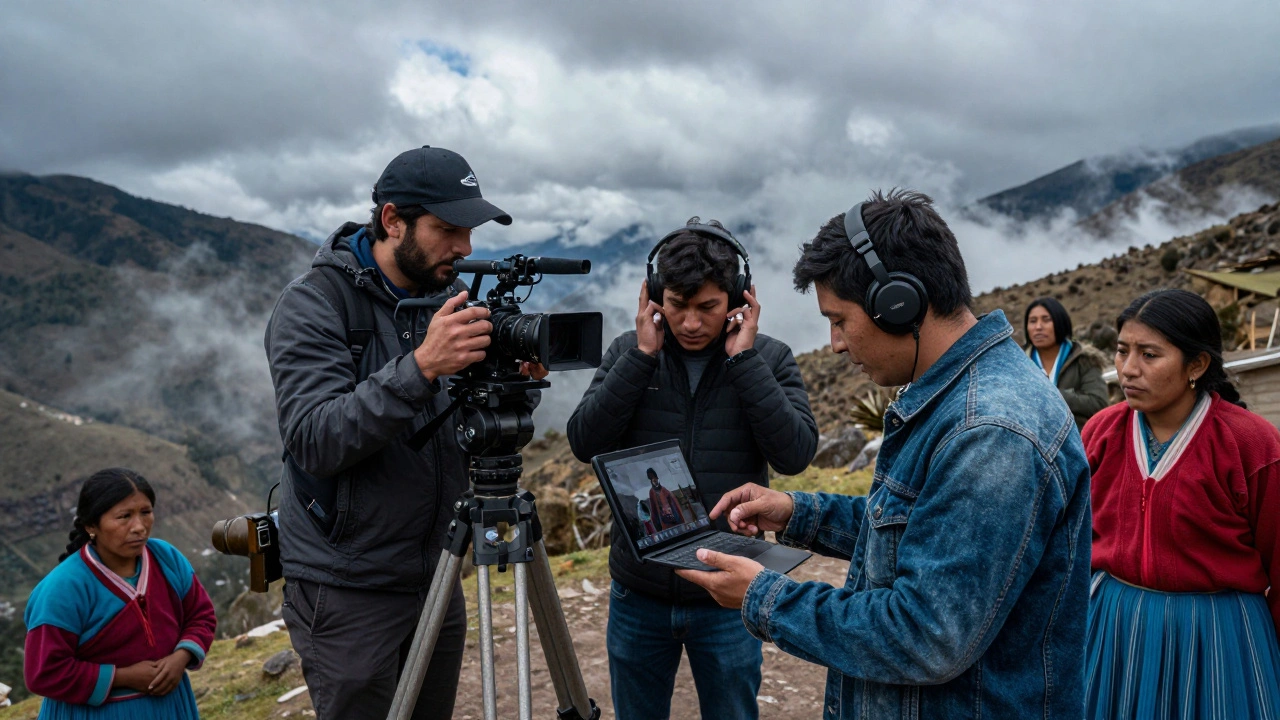
Spain’s ICAA, Portugal’s Instituto do Cinema e do Audiovisual, and Mexico’s FOPROCINE all have matching funds for co-productions. But here’s the real trick: many Latin American producers now apply for European funding first - not because they need the money, but because it unlocks distribution rights across 27 EU countries. A film funded by Spain gets automatic access to broadcasters in France, Germany, and Poland. That’s a market of over 450 million people.
And it’s not just governments. Private funds like the Ibero-American Audiovisual Fund (FIA) and the Luso-Brazilian Co-Production Fund now require projects to have both a Latin American and a European partner to qualify. That means a Peruvian writer can’t just pitch to a Brazilian studio. They need a Spanish producer on board. That forces collaboration from day one - not as an afterthought, but as the foundation.
One 2023 film, El Río, was made with 40% funding from Portugal, 30% from Colombia, and 30% from private investors in Argentina. It didn’t just get screened in Lisbon and Bogotá. It was picked up by Arte in France and TV Cultura in Brazil. That kind of reach only happens when funding structures are designed to demand shared ownership.
Shared Audiences Don’t Happen by Accident
Streaming platforms love global content - but they push what’s easy to algorithmically categorize. A Spanish-language thriller gets tagged as “foreign” and buried under hundreds of others. But when a film is co-produced, it gets treated differently.
Netflix and Amazon Prime now have dedicated sections for “Iberophone Co-Productions.” Not because they’re being charitable, but because data shows these films have 3x higher completion rates than other foreign-language titles. Why? Audiences trust them. They feel like they’re watching something made for people like them - even if they’re in a different country.
In 2024, a Chilean-Portuguese film called Los Ojos de la Tierra became the top-watched foreign film in Portugal for two months. Not because it was dubbed. Not because it was marketed heavily. But because its lead actress was from Brazil, the director was from Chile, and the cinematographer was from Portugal. Viewers in Porto recognized the lighting style from their own indie films. Viewers in Santiago saw the same political tension they’d seen in their own documentaries. It wasn’t just watched. It was recognized.
That’s the power of shared authorship. When a film has roots in both continents, it doesn’t feel like a foreign import. It feels like a family reunion.
What Makes These Films Different From Other International Co-Productions?
Not all cross-border films are the same. A French-Japanese co-production might blend aesthetics, but the cultural gaps are wide. A U.S.-Canada co-production shares a border and similar media habits. But Iberophone co-productions? They’re different because they’re built on history, not just logistics.
There’s a legacy of colonialism, migration, and cultural exchange that’s baked into the language. That’s why a scene where a grandmother scolds her grandchild in Spanish feels the same in Quito and Seville. The tone, the gestures, the rhythm - it’s identical. That’s not something you can fake with subtitles or casting.
Compare that to a German-Indian co-production. Even if both films are about grief, the way silence is used, the role of religion, the structure of family - they’re worlds apart. Iberophone co-productions don’t need to explain their culture. They just live it.
That’s why these films often win awards in both regions. In 2023, La Voz del Silencio, a co-production between Argentina and Spain, won Best Film at the Goya Awards (Spain) and the Ariel Awards (Mexico) in the same year. No other category of international film has done that in the last decade.
Who’s Leading the Way - And What’s Next?
The biggest players aren’t Hollywood studios. They’re small, passionate teams. In Spain, companies like La Coruña Films and Cineuropa are building pipelines with producers in Colombia, Peru, and Brazil. In Latin America, firms like Mexico’s Cine Taller and Brazil’s O2 Filmes are actively seeking European partners before they even write the script.
And the next wave? Documentaries. A new wave of Iberophone co-productions is focusing on climate change in the Amazon and the legacy of dictatorship in the Southern Cone. These aren’t just films. They’re shared historical records. One 2025 project, funded by the EU’s Creative Europe program, brings together survivors from Chile, Argentina, and Portugal to tell stories of repression - with footage shot in all three countries.
Education is also shifting. Film schools in Madrid, São Paulo, and Monterrey now have joint exchange programs. Students spend semesters in each other’s countries. They don’t just learn filmmaking. They learn how to speak to each other’s audiences.
Why This Matters for the Future of Film
The global film industry is stuck in a loop: Hollywood dominates, indie films get lost, and non-English content is treated as niche. Iberophone co-productions are breaking that cycle. They’re proving that audiences don’t need to speak the same language to feel the same emotions - but they do need to share the same cultural context.
This isn’t about replacing Hollywood. It’s about creating space where stories from the Global South don’t have to be simplified to be understood. It’s about letting a Colombian filmmaker tell a story about rural poverty without turning it into a tragedy porn spectacle for Western viewers. It’s about letting a Portuguese director explore migration without making it a refugee crisis trope.
When you co-produce, you co-author. And when you co-author, you create something that belongs to both sides. That’s the future of film - not just more content, but more meaning.
What makes Iberophone co-productions different from other international film partnerships?
Iberophone co-productions are built on shared language - Spanish and Portuguese - and centuries of cultural overlap between Latin America and Europe. Unlike other cross-border films that may blend styles or share funding, these projects share history, emotional tone, and storytelling rhythms. A scene of family conflict in Mexico feels familiar in Spain not because it’s generic, but because the gestures, pacing, and social norms are nearly identical. This deep cultural alignment makes these films more authentic and relatable to audiences on both sides of the Atlantic.
How do funding models for Iberophone co-productions work?
Funding is typically split between Latin American and European public agencies like Spain’s ICAA, Portugal’s ICA, and Mexico’s FOPROCINE. These agencies require both partners to be involved from the script stage. The key benefit isn’t just money - it’s access. A film funded by a European agency automatically qualifies for broadcast and distribution rights across the EU, opening up markets of over 450 million viewers. Many Latin American producers now seek European funding first not because they need it, but because it unlocks wider distribution.
Why do these films perform better on streaming platforms?
Streaming platforms like Netflix and Amazon Prime have found that Iberophone co-productions have 3x higher completion rates than other foreign-language films. Audiences recognize the cultural cues - the humor, the family dynamics, the emotional expression - even if they’re not from the same country. These films feel familiar, not foreign. That’s why a Chilean-Portuguese film became the top-watched foreign title in Portugal in 2024: viewers saw themselves in it, not as outsiders, but as part of the same cultural conversation.
Can non-Iberophone countries join these co-productions?
Yes, but they’re usually secondary partners. Most official funds require at least one Iberophone country from Latin America and one from Europe to be the primary producers. Non-Iberophone countries like Germany or Canada can contribute funding or technical support, but they don’t qualify for the same distribution perks. The core identity of these projects hinges on the Spanish or Portuguese language and cultural ties. Adding a third partner often dilutes that connection unless it’s deeply integrated into the story.
Are there any upcoming trends in Iberophone co-productions?
The biggest trend is the rise of documentary co-productions focused on shared history - like colonial legacies, political repression, and climate change in the Amazon. Projects funded by the EU’s Creative Europe program are now requiring teams to include historians, activists, and community members from both regions. Additionally, film schools in Madrid, São Paulo, and Monterrey are launching joint programs, training the next generation to think transnationally from day one. This isn’t just about making films anymore - it’s about building a shared cinematic identity.






Comments(8)