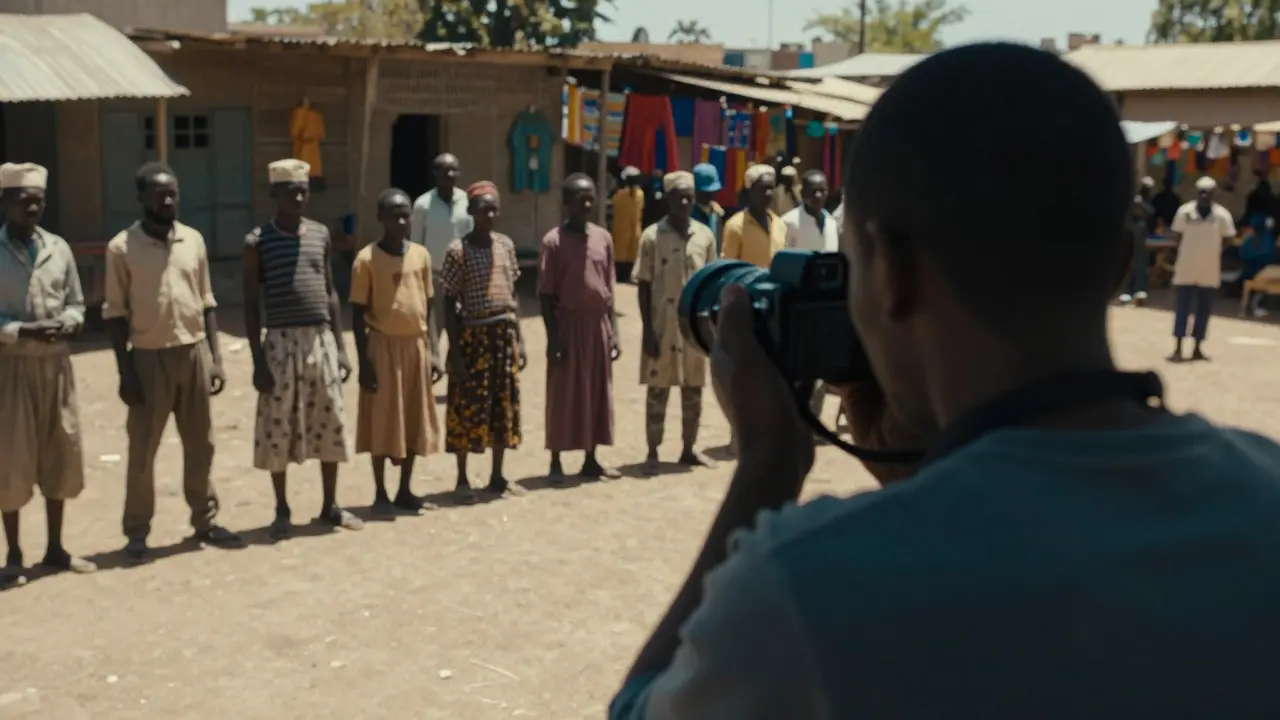
When you watch a film set in the Global South, who holds the camera? More importantly, who gets to decide how their story is told? For decades, Postcolonial Film is a critical framework that examines how cinema reflects, challenges, or reinforces the power dynamics left behind by colonial empires. It’s not just about movies made in former colonies; it’s about the invisible structures of Cultural Hegemony that shape what we see on screen. If you’ve ever felt that a character from a non-Western background was written as a stereotype rather than a human being, you’re already thinking like a postcolonial critic. This guide breaks down how to analyze these layers of meaning, moving beyond plot summaries to uncover the politics of gaze, language, and history.
Understanding the Core Framework
To analyze a film through this lens, you first need to understand the historical weight it carries. Colonialism refers to the practice of acquiring full or partial political control over another country, occupying it with settlers, and exploiting it economically. When that system collapses, the cultural habits don’t disappear overnight. They linger in our media. Postcolonial theory, heavily influenced by thinkers like Edward Said, who introduced the concept of Orientalism, which describes the Western academic and artistic tradition of depicting Eastern cultures as exotic, backward, or mysterious.
In film, this manifests in two main ways. First, there is the "gaze." The Western Gaze often positions the colonized subject as an object to be looked at, judged, or saved, rather than a subject with agency. Second, there is the issue of language. Who speaks English? Who speaks a local dialect? And does the audience require subtitles for the "local" voice but not for the "global" one? These are not trivial details; they are structural choices that dictate whose perspective is considered normal and whose is considered other.
The Politics of the Gaze and Narrative Structure
Narrative structure is where power is most visible. In traditional Hollywood storytelling, the protagonist usually drives the plot forward through individual action. In many postcolonial films, the narrative might be fragmented, circular, or collective. Why? Because linear time often mirrors the colonial logic of progress and modernity. By breaking that linearity, directors like Ousmane Sembène, known as the father of African cinema, challenge the viewer’s expectation of a neat resolution.
Consider the concept of the "White Savior" trope. This is a common narrative device where a white character enters a marginalized community and solves its problems through superior knowledge or resources. To analyze this, look at the dialogue. Does the local expert get interrupted? Does the savior’s solution ignore local context? If the film ends with the savior leaving, taking credit, or remaining unchanged while the locals remain static, the narrative reinforces colonial dependency rather than dismantling it.
Key Elements to Analyze in Visual Language
Visuals speak louder than scripts sometimes. When analyzing narrative analysis in this context, pay close attention to lighting, framing, and setting. Is the "foreign" environment shown as chaotic, dark, or dangerous? Is the "Western" environment shown as clean, bright, and orderly? These visual codes assign moral value to spaces.
- Framing: Are local characters shot from above (making them look small/subordinate) or eye-level (implying equality)?
- Sound Design: Is the local music used as background noise or given thematic weight? Is the silence around local voices emphasized?
- Casting: Who plays the lead? Who plays the villain? Is the villain always the "other," or is the conflict internal to the community?
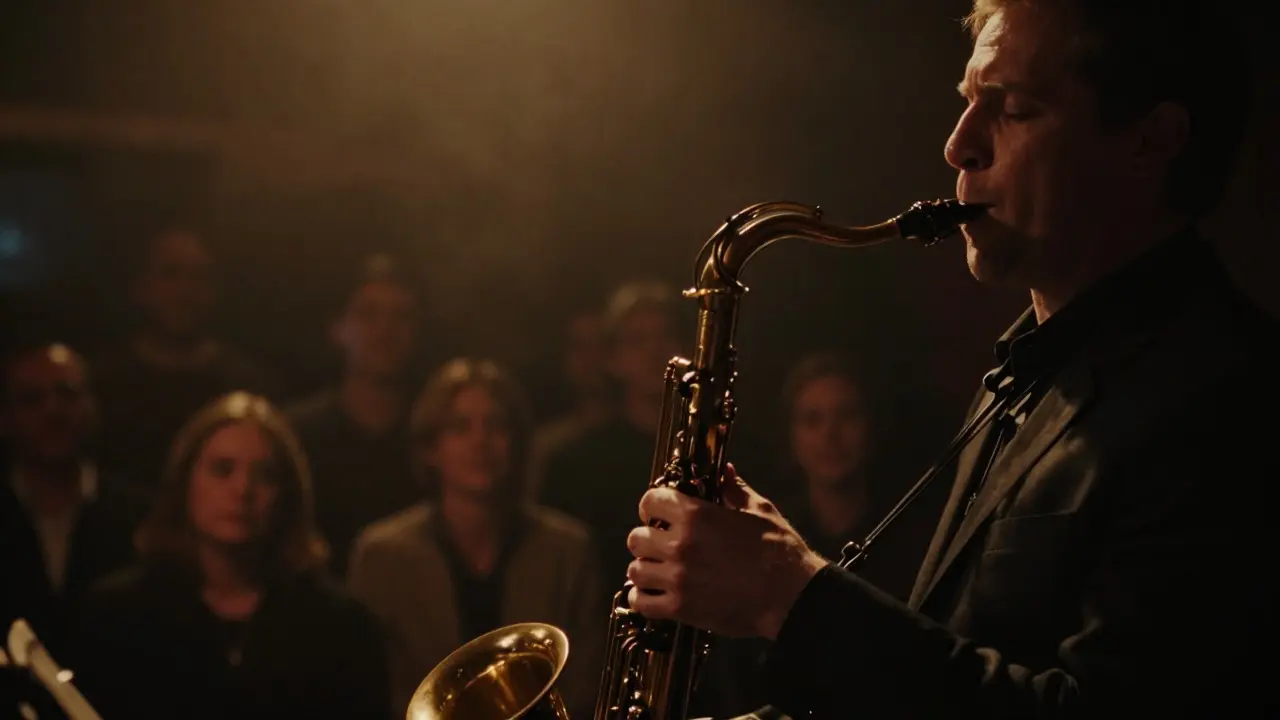
For example, in the film Brown Sugar (1996), the use of jazz and blues isn't just aesthetic; it’s a historical record of Black American experience. The music connects the present to the past, asserting a continuity that colonial narratives often try to erase.

Comparing Colonial and Postcolonial Narratives
To sharpen your analytical skills, it helps to compare how different eras handle the same themes. Below is a comparison of typical narrative features in colonial-era cinema versus contemporary postcolonial works.
| Feature | Colonial Era Films | Postcolonial Films |
|---|---|---|
| Protagonist Agency | Often passive, waiting for rescue | Active, driving change, complex motivations |
| Historical Context | History is static or pre-modern | History is contested, layered, and relevant to now |
| Language | Local languages are decorative | Local languages carry subtext and power |
| Conflict Source | External threat (nature, savagery) | Internal systemic issues, identity, memory |
Case Study: Identity and Diaspora
A huge part of postcolonial analysis involves the diaspora-people living away from their homeland due to migration, trade, or forced displacement. Films by directors like Spike Lee or Steve McQueen often explore how identity is fractured when you belong to two worlds simultaneously.
Take Straight Out of Compton (2015). While it’s a biopic, it functions as a postcolonial text because it reclaims a narrative that had been distorted by mainstream media. The N.W.A members aren’t just musicians; they are historians using hip-hop to document police brutality and economic neglect. The film analyzes how art becomes a tool for survival and resistance. When you analyze this, look at how the soundtrack interacts with the visuals. The music doesn’t just accompany the action; it provides the emotional and intellectual context that the visuals alone can’t convey.
Practical Steps for Your Own Analysis
Ready to apply this? Here is a simple workflow you can use for any film.
- Identify the Hierarchy: Who has the most screen time? Who has the most dialogue? Map out the power dynamics visually.
- Check the Credits: Who directed? Who wrote the script? Who funded the film? Funding sources often influence narrative outcomes.
- Listen to the Silence: What isn’t said? What history is omitted? Omission is a powerful form of control.
- Trace the Gaze: Whose eyes are we following? Do we sympathize with the oppressor or the oppressed? Or do we feel alienated from both?
Remember, there is no single "correct" reading. Postcolonial analysis is about asking better questions. It’s about recognizing that every frame is a choice, and every choice has a political consequence.
Common Pitfalls to Avoid
Don’t fall into the trap of essentialism. Just because a film is made in a former colony doesn’t mean it’s automatically postcolonial. It could still reinforce stereotypes. Conversely, a film made in London or New York can be deeply postcolonial if it deals with immigration, memory, and hybrid identity. The location of production matters less than the content of the message. Also, avoid judging films solely by their "authenticity." Authenticity is a tricky concept. Who defines it? Let the film speak for itself, then ask how it engages with the broader global context.
What is the difference between postcolonial and decolonial film?
Postcolonial film often deals with the aftermath of colonialism, focusing on identity and culture. Decolonial film goes further, actively seeking to dismantle the epistemological frameworks (ways of knowing) established by colonialism. Decolonial works often prioritize indigenous methodologies and reject Western cinematic grammar entirely.
Can a Western director make a valid postcolonial film?
Yes, but it requires deep collaboration and self-awareness. The key is whether the film centers the voices of the subjects rather than speaking for them. If the director acts as a listener and amplifier rather than an authority, the film can be effective. However, skepticism is healthy when a Western gaze dominates the editing and narrative structure.
Why is language such a big deal in postcolonial analysis?
Language is the primary carrier of culture and power. If a film forces characters to speak the colonizer's language to be understood, it reinforces linguistic hierarchy. Subtitles can create distance. Using code-switching (mixing languages) can show the complexity of hybrid identities. How characters speak reveals their social standing and internal conflicts.
What are some key theorists I should read?
Start with Edward Said for Orientalism, Homi Bhabha for hybridity and mimicry, and Gayatri Chakravorty Spivak for the question "Can the Subaltern Speak?" For film-specific theory, look at works by Mary Louise Pratt on contact zones and Jameson on the political unconscious.
How does digital streaming affect postcolonial cinema?
Streaming platforms have democratized access, allowing audiences to discover films from Nigeria, India, or Brazil without going to specialized festivals. However, algorithms can also create echo chambers. The challenge now is ensuring that distribution doesn't dilute the message. Direct-to-consumer models allow filmmakers to retain more control over how their work is presented and contextualized.



Comments(8)