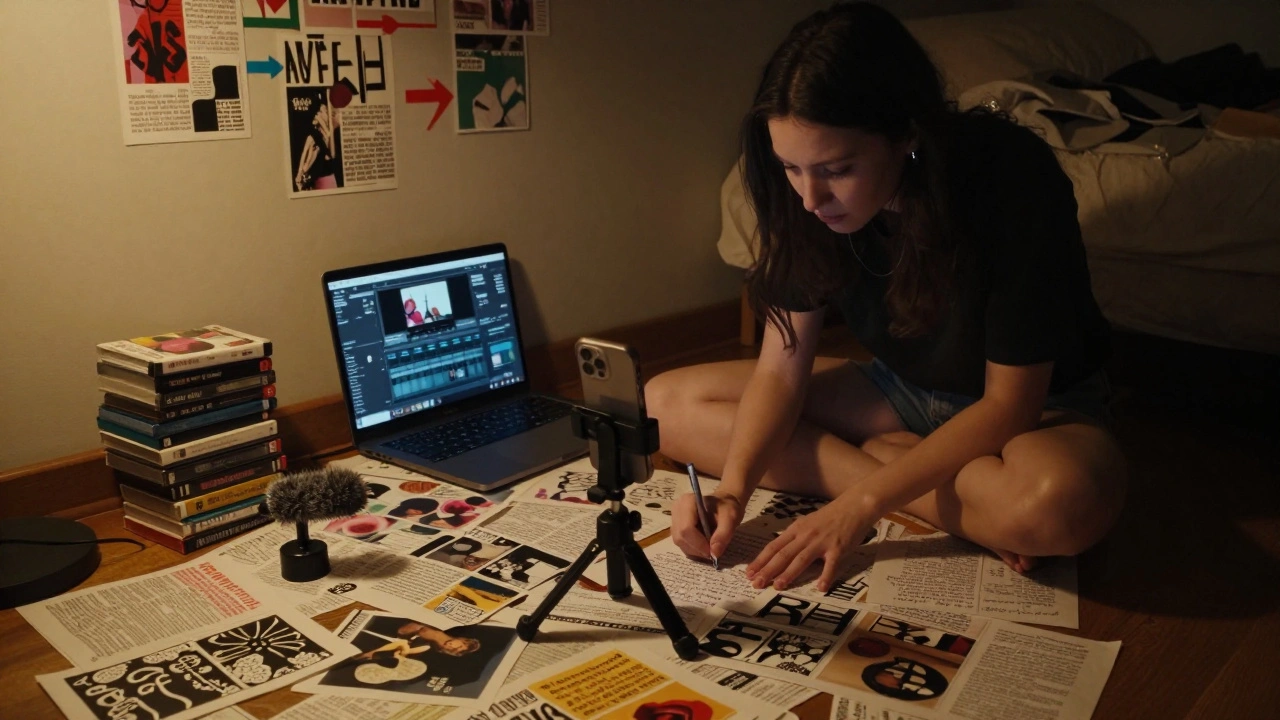
Back in 2019, a 19-year-old college student in Portland named Marisol Torres turned her handwritten zine about alien librarians into a 12-minute short film. She shot it on her iPhone, cast friends from the local punk house, and edited it on a free version of DaVinci Resolve. No studio. No funding. Just a stack of photocopied pages, a borrowed camera, and a stubborn belief that stories from the margins deserved to be seen. That film went viral on Vimeo. Within a year, it screened at six underground festivals. Today, it’s taught in film schools as a case study in raw, unfiltered storytelling. This isn’t an anomaly. It’s a movement.
The Zine That Started It All
Zines have been around since the 1930s, but their real cultural power exploded in the 1970s with punk rock. Hand-stapled, Xeroxed, and passed around in record stores, zines were the original social media-personal, chaotic, and completely unfiltered. They covered everything: queer identity, anarchist manifestos, weird dreams, bad breakup poems, and fictional universes no publisher would touch. These weren’t polished. They were alive.Fast forward to 2025, and those same zines are showing up in film festivals-not as curiosities, but as source material. Filmmakers aren’t just adapting zines into movies. They’re using the zine’s DNA: the raw voice, the fragmented structure, the refusal to conform. The result? Films that feel like they were scribbled in the dark and then lit up on screen.
Why Zines Work as Film Blueprints
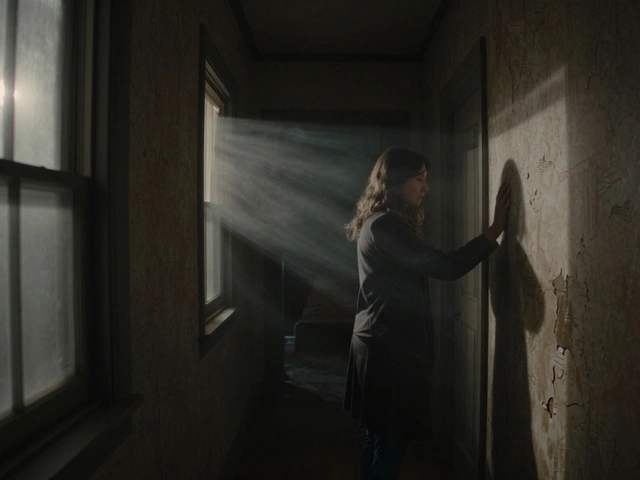
Most Hollywood scripts follow a three-act structure. Zines? They follow no structure. A zine might jump from a poem about vending machine ghosts to a collage of bus tickets from a cross-country trip, then to a hand-drawn map of a fictional city. That messiness? It’s perfect for indie film.Take “The Last Library of Salt Lake”, a 2024 feature directed by Ravi Patel. The film was built from 17 different zines collected over five years from underground book fairs. Each zine became a character. One, titled “I Talk to the Ceiling,” inspired the film’s narrator-a woman who believes the walls remember everything. Another, “How to Disappear Without a Trace,” became the plot device for the film’s third act. The script had no dialogue outline. Instead, it had photocopies taped to the wall, with arrows connecting themes, not scenes.
This approach rejects traditional narrative logic. It doesn’t need to. Zine-based films thrive on mood, texture, and emotional resonance. They don’t ask you to follow the plot. They ask you to feel it.
Tools of the Trade: Low-Tech, High Heart
You don’t need a $50,000 camera to make a zine-to-film project. Most creators use what’s already in their hands:- Smartphones: iPhone and Android cameras now shoot in 4K with cinematic color profiles. Many filmmakers shoot entirely on phones and use apps like LumaFusion for editing.
- Free software: DaVinci Resolve, Shotcut, and Olive Video Editor are all free and powerful enough for feature-length work.
- DIY sound: A $20 lavalier mic and a quiet room can beat a studio setup if you’re smart about acoustics.
- Found footage: Old VHS tapes, home videos from thrift stores, and public domain archives add texture no CGI can replicate.
One filmmaker in Austin, Lena Chen, made her entire debut film using only footage from her grandmother’s 1987 camcorder and pages from a 1992 zine called “Notes from a Ghost.” She didn’t add music. Instead, she recorded ambient sounds from her neighborhood-laundry lines clattering, a distant train, a neighbor yelling at their cat-and layered them as the score. The film won Best Sound Design at the Brooklyn Underground Film Festival.
Who’s Making This Happen?
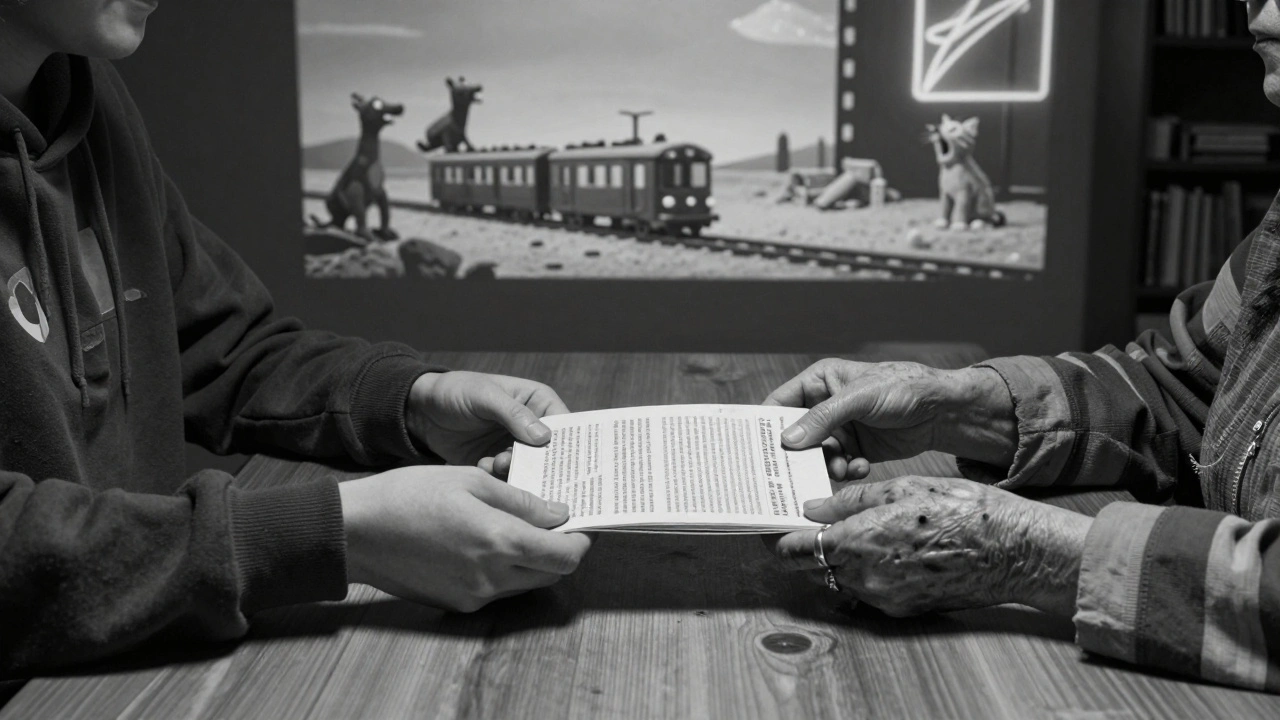
This isn’t a trend led by film schools. It’s led by people who never thought they’d be filmmakers:- Teenagers in rural towns: In Ohio, a 16-year-old turned her zine about talking animals into a stop-motion short using clay she molded from Play-Doh.
- Retired librarians: In Portland, a group of former librarians started a collective called “The Archive of Lost Voices,” where they adapt zines written by people who died alone.
- Prisoners serving long sentences: A program in New Mexico pairs incarcerated writers with volunteer filmmakers. Their zines, written in ballpoint pen on lined notebook paper, have been turned into 14 short films screened at prison film nights.
These aren’t hobbyists. They’re auteurs working outside the system. And they’re getting noticed. In 2025, the Sundance Film Festival added a new category: “Zine Adaptations.” Five of the 12 films in that category were funded entirely through GoFundMe campaigns under $1,000.
The Aesthetic: Grain, Glitch, and Grit
Zine-to-film projects don’t aim for polish. They chase authenticity. That means:- Grainy film stock: Many shoot on 8mm or 16mm film, then scan it to digital. The scratches? Kept.
- Handwritten subtitles: No clean Helvetica. Text is scanned from real zine pages, sometimes smudged or torn.
- Non-linear editing: Scenes don’t follow chronology. They follow emotion. A memory might appear twice, in different tones, to show how it changed over time.
- Collage sound design: A scene might include a snippet of a 1980s radio ad, a child laughing, and a recording of rain-all layered without transition.
This aesthetic isn’t just a style. It’s a statement. In a world of algorithm-driven content, these films scream: This was made by hand. It was meant to be felt, not consumed.
How to Start Your Own Zine-to-Film Project
You don’t need permission. You don’t need a degree. You just need a zine and a willingness to break rules. Here’s how:- Find your zine: Look in local libraries, thrift stores, or online archives like the Zine Archive and Publishing Project. Choose one that moves you-not because it’s famous, but because it feels personal.
- Identify the heartbeat: What’s the emotion beneath the words? Loneliness? Rage? Wonder? That’s your film’s core.
- Use the zine as a script: Don’t rewrite it. Adapt it. Let the layout guide your shots. A poem on the left page? Make it a close-up of hands. A collage on the right? Turn it into a montage.
- Cast real people: Friends. Family. Strangers you meet at open mics. No actors. No auditions. Just authenticity.
- Shoot on location: The place where you found the zine. The coffee shop where you read it. The park where you cried reading it. Location isn’t a backdrop-it’s part of the story.
- Release it for free: Upload it to YouTube or Vimeo. No paywall. No ads. Let it spread the way zines used to-passed hand to hand.
Why This Matters Now
In 2026, AI-generated content is everywhere. Algorithms predict what you’ll like before you even click. But zine-to-film projects? They’re unpredictable. They’re human. They’re made by people who didn’t wait for permission-they just started.These films remind us that storytelling doesn’t need a budget. It just needs truth. And the most powerful stories are still the ones written in pencil, folded in half, and left on a park bench for someone else to find.
Can I turn any zine into a film?
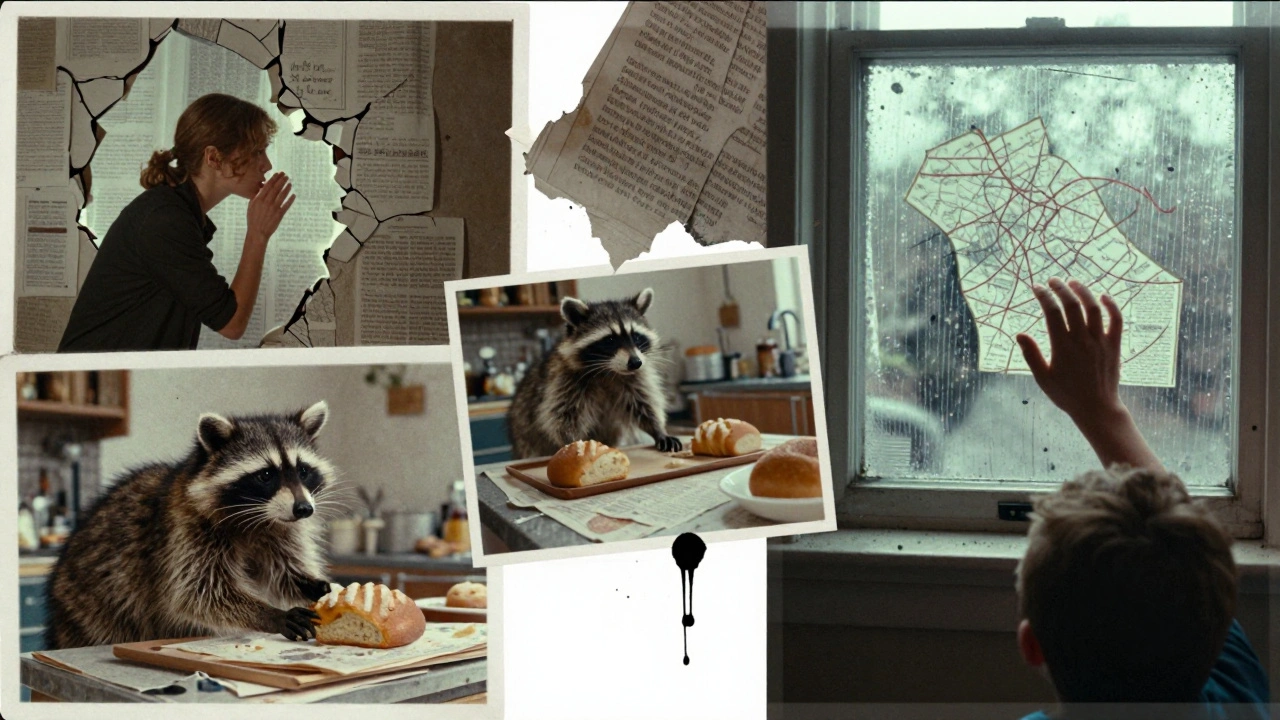
Yes-but not every zine is right for adaptation. Look for ones with strong emotional core, visual potential, and personal voice. Avoid zines that are purely political rants or overly abstract without narrative anchors. The best ones have characters, even if they’re imaginary. A zine about a talking raccoon who runs a bakery is easier to adapt than one with 30 pages of handwritten philosophy.
Do I need to own the rights to the zine?
If the zine was self-published and you can’t find the creator, it’s likely in the public domain. Most zines from the 1980s-2000s were distributed with no copyright claims. Still, if you can track down the author, ask. A simple email saying, “I want to turn your zine into a film. Can I?” often leads to enthusiastic permission. Many zine creators are thrilled to see their work come to life.
Are zine-to-film projects only for short films?
No. While most are short, feature-length adaptations are growing. In 2025, a film called “The Ghosts of Greenpoint” was adapted from 43 zines collected over 12 years. It ran 97 minutes and was funded entirely through $5 donations from 1,800 readers. It’s now streaming on MUBI. Length isn’t the barrier-commitment is.
Where can I find zines to adapt?
Start locally: public libraries often have zine collections. Check out the Zine Archive and Publishing Project (ZAPP) online. Also try zine fairs like the one in Oakland or the annual New York Zine Fair. Reddit’s r/zines has a thriving community. Many creators will send you digital scans for free if you explain your project.
Is this just a trend, or is it here to stay?
It’s not a trend. It’s a return. Before Hollywood, stories were passed hand to hand-through letters, oral tales, and zines. This movement is a rebellion against the idea that stories need approval to matter. As long as people have something to say and a way to say it, zine-to-film projects will keep growing. The tools are cheaper than ever. The world is hungry for real voices. And that’s not going away.
If you’ve ever written something no one else would understand-something too weird, too raw, too personal-this is your invitation. Don’t wait for a studio. Don’t wait for funding. Pick up a camera. Find a zine. Start filming. The next great film might be sitting on a shelf in a thrift store, waiting for you to notice it.



Comments(10)