After the pandemic, movie theaters didn’t just reopen-they had to reinvent themselves. In 2020, box office revenue dropped by nearly 80% globally. By 2023, it had recovered to about 70% of pre-pandemic levels. But here’s the thing: that 70% isn’t evenly spread. Some movies are crushing it. Others are barely breaking even. And the audience? They’re not the same people they were before.
People Aren’t Going Back the Same Way
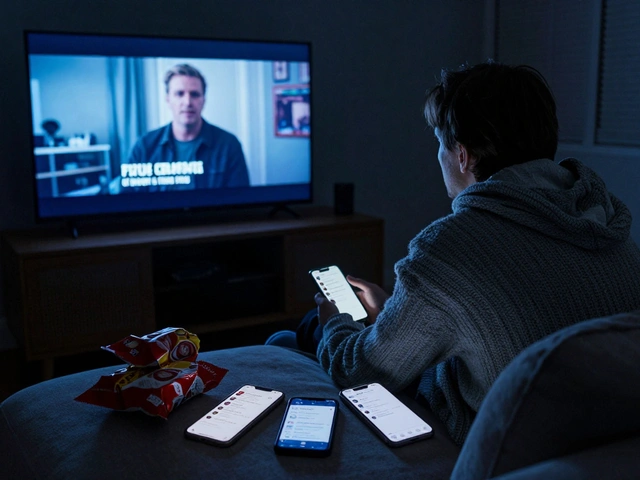
Before 2020, going to the movies was a habit. Friday night. Popcorn. Friends. Now, it’s a decision. A cost-benefit analysis. You’re paying $18 for a ticket, $12 for soda and candy, and another $15 for parking. Meanwhile, your streaming subscription costs $15 a month and gives you everything from new releases to classics, all on your couch.
Real data from the Motion Picture Association shows that in 2024, the average U.S. moviegoer went to the theater 2.3 times a year. That’s down from 4.1 times in 2019. But here’s the twist: the top 10% of moviegoers-people who go six or more times a year-are now responsible for nearly half of all ticket sales. The rest? They’re watching at home.
It’s not just about price. It’s about time. Parents with young kids don’t have the bandwidth to deal with theater lines, loud toddlers, and the 20-minute wait for the lights to dim. Younger audiences are choosing TikTok, YouTube, or gaming over a two-hour movie. And older viewers? Many still go, but only for the big ones-the ones they can’t wait to see on the biggest screen possible.
Blockbusters Still Work. But Only the Right Ones
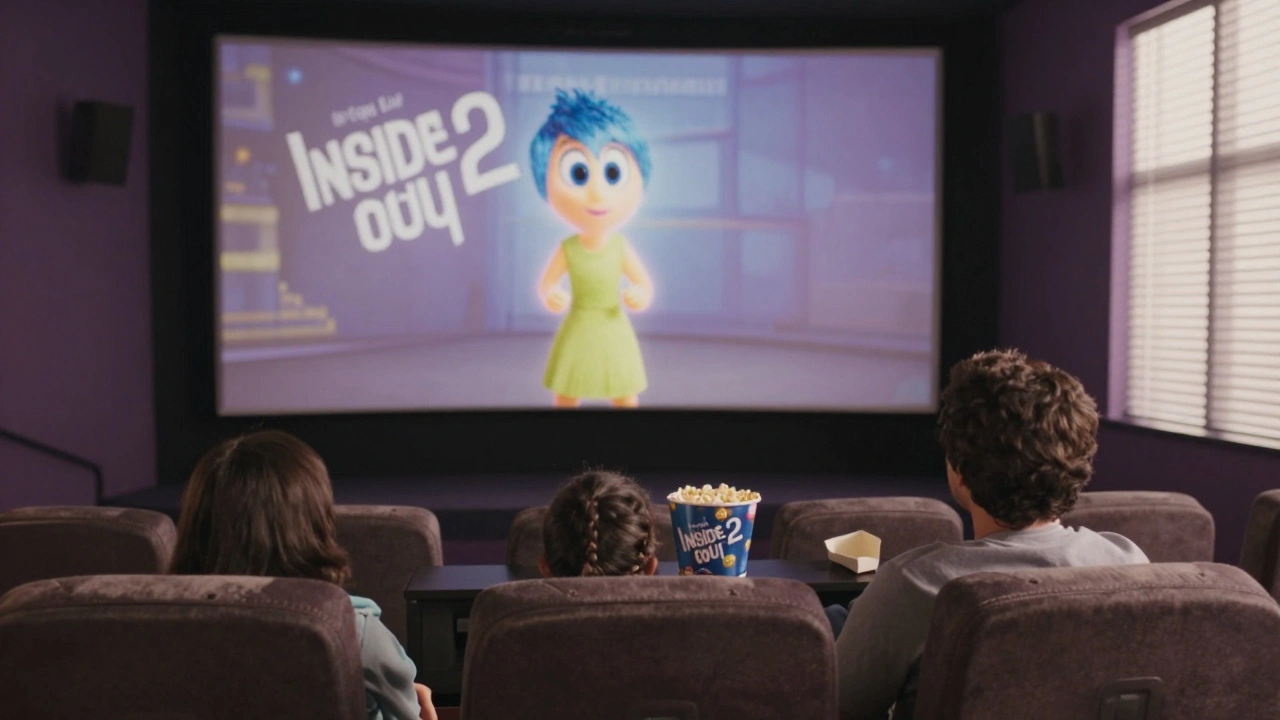
Not all movies are struggling. In 2024, six films made over $700 million globally. All of them shared one thing: they were built for theaters. Mad Max: Fury Road wasn’t a box office hit. But Mad Max: Fury Road was a pre-pandemic film. The real winners now? Inside Out 2, The Marvels, Deadpool & Wolverine, Twisters, Joker: Folie à Deux, and Mission: Impossible - Dead Reckoning Part One.
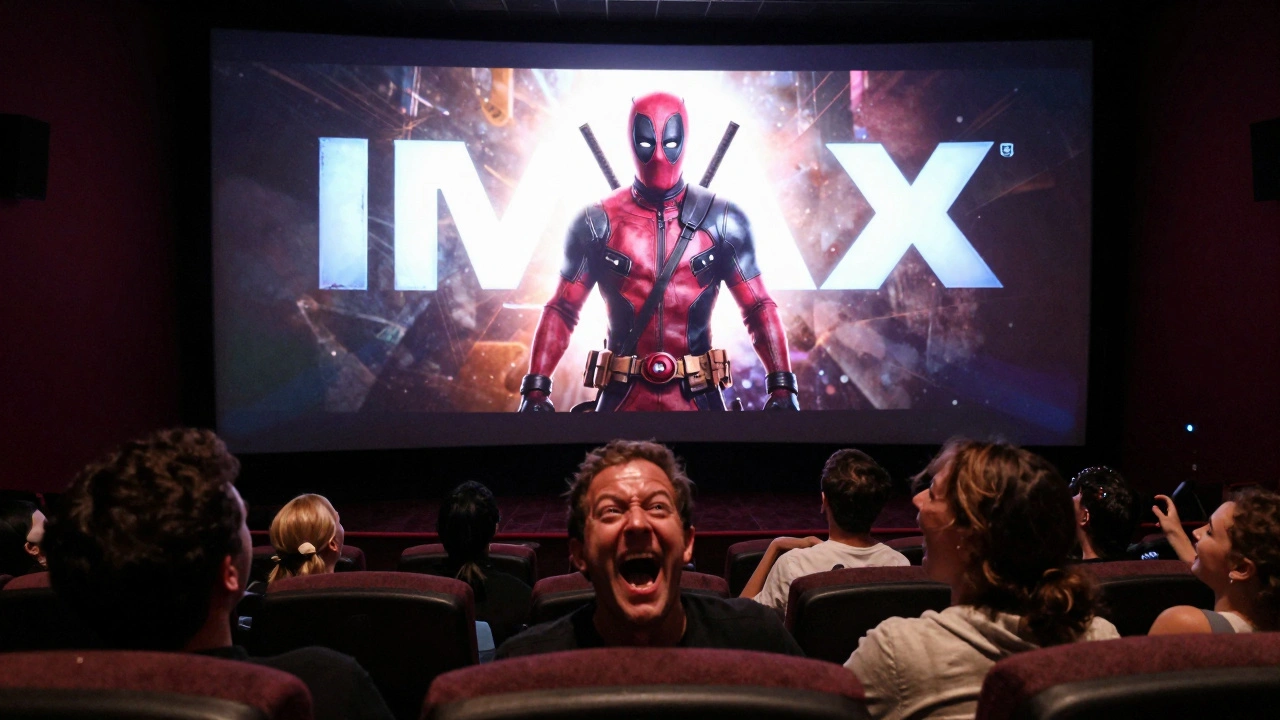
What do these have in common? They’re not just sequels. They’re sensory experiences. Huge action sequences. Immersive sound. Visuals you can’t replicate on a 55-inch TV. They’re made to be seen with a crowd. When the audience in Deadpool & Wolverine laughed at the same joke at the same time? That’s the magic theaters still offer.
But look at the flops. Rebel Moon: Part Two cost $200 million to make and market. It made $180 million worldwide. The Marvels made $1.2 billion, but its marketing budget was half of Rebel Moon’s. Why? Because audiences knew what they were getting. They’d seen the trailers. They’d seen the memes. They trusted the brand. That’s the new rule: if you need a $100 million ad campaign to convince people to come, you’ve already lost.
Streaming Changed the Release Game Forever
Before the pandemic, studios followed a 90-day window: theaters first, then home release. That was sacred. Now? It’s dead.
In 2024, 68% of major studio releases hit streaming platforms within 45 days of their theatrical debut. Some, like Wicked and The Marvels, went digital in just 17 days. Why? Because studios realized: if you wait too long, people just wait at home. And if they wait at home, they never go to the theater.
But here’s the catch: releasing too early kills box office potential. Barbie stayed in theaters for 100 days. It made $1.4 billion. Oppenheimer stayed for 120 days. It made $950 million. Both had word-of-mouth momentum. They didn’t need to rush to streaming. They let the buzz build.
Now, studios are testing hybrid windows. Some release in theaters for 14 days, then go to premium video-on-demand for $20. Others do a 30-day exclusive run, then drop on streaming. The goal isn’t to maximize one revenue stream. It’s to capture both-without cannibalizing the other.
Theater Chains Are Betting on Experience
AMC, Regal, and Cinemark didn’t just upgrade their screens. They rebuilt their whole business model.
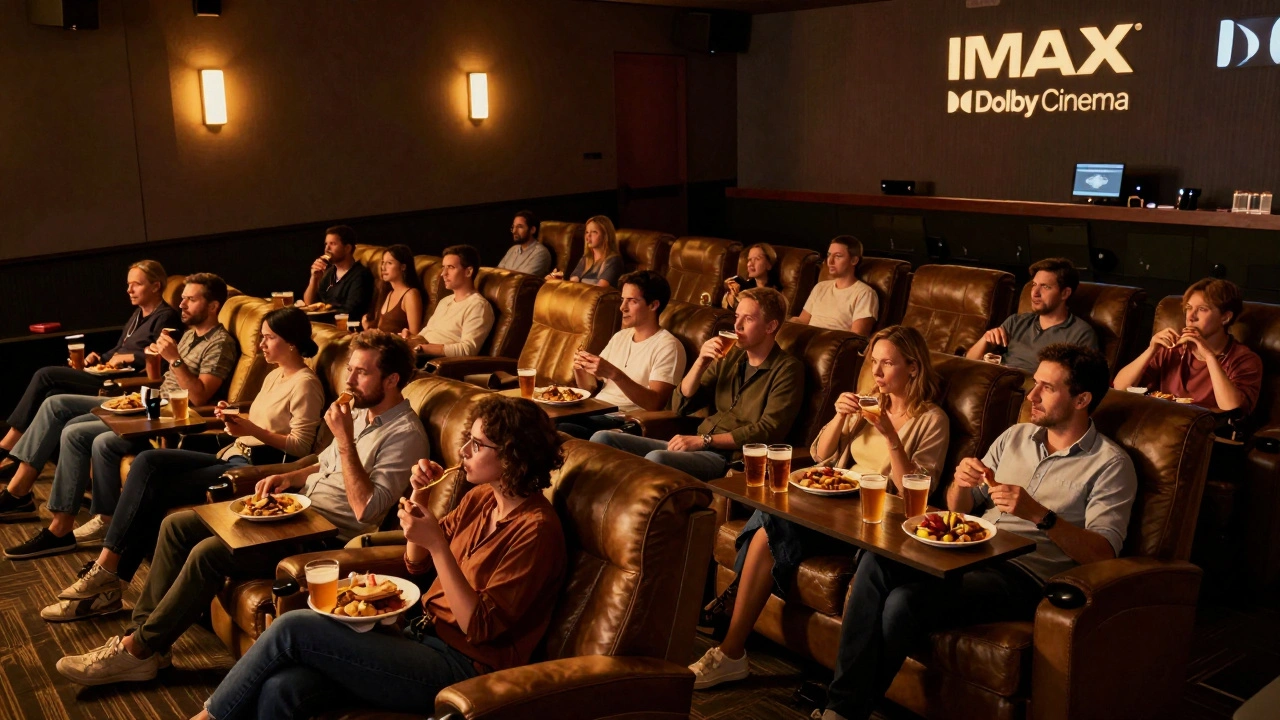
AMC now offers reserved recliners in 90% of its U.S. theaters. They’ve added full-service dining with table service. You can order a burger and a craft beer before the movie starts. They’ve even introduced “silent theaters” for people who want to watch without noise. And in 2024, AMC’s premium formats-like IMAX, Dolby Cinema, and 4DX-accounted for 38% of all ticket sales, up from 22% in 2019.
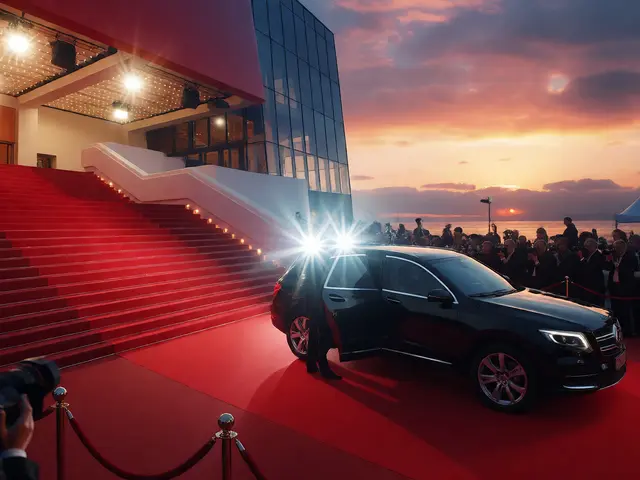
Regal partnered with Starbucks to bring coffee bars into lobbies. Cinemark launched “Movie Nights” with live DJs and themed snacks. These aren’t just perks. They’re reasons to leave the house.
And it’s working. In 2024, the average spending per theater visit rose to $16.80-up from $12.50 in 2019. People aren’t just buying tickets. They’re buying an experience. Theaters are no longer just places to watch movies. They’re entertainment destinations.
Independent Films Are Finding New Life
Big studios are chasing blockbusters. But indie films? They’re thriving in the cracks.
Look at A Good Person. Made for $5 million. It opened in 320 theaters. Made $18 million. No superhero. No CGI. Just a powerful story and a performance by Florence Pugh that got people talking. The Holdovers made $67 million on a $20 million budget. Past Lives made $15 million with no marketing budget beyond word of mouth.
How? They’re using targeted releases. A film like Past Lives opens in just five cities-New York, Los Angeles, Chicago, Austin, and Seattle. It runs for six weeks. Critics rave. Audiences tell their friends. Then it expands. No mass advertising. Just slow, steady growth.
And streaming platforms are now funding these films. Netflix, Apple TV+, and Amazon have all increased their indie budgets. Why? Because they need award contenders. And award contenders drive subscriptions. So indie films get the money. Theaters get the buzz. Everyone wins.
What’s Next? The Data Tells the Story
The post-pandemic box office isn’t broken. It’s just different. Here’s what the numbers show:
- Moviegoers under 25 are 40% less likely to go to theaters than those over 50.
- Weekend ticket sales are up 12% since 2022, but weekday sales are still 30% below pre-pandemic levels.
- Matinees are making a comeback-especially on Sundays. Families are choosing afternoon shows to avoid crowds.
- Foreign markets are now driving 60% of global box office revenue. China, South Korea, and India are growing fast.
- Movie tickets sold in the U.S. in 2024: 1.1 billion. That’s 72% of 2019’s 1.5 billion.
What’s clear? Theaters aren’t dying. They’re evolving. The movies that win now are the ones that give people a reason to leave home. Not just entertainment. An event. A memory. A moment you can’t get anywhere else.
What Does This Mean for Moviegoers?
If you’re wondering whether it’s still worth going to the theater-the answer is yes. But only if you pick the right movie.
Go for the ones that demand the big screen: action, sci-fi, horror, animation, and epic dramas. Skip the quiet dramas or comedies unless they’ve got buzz. Check Rotten Tomatoes and audience scores before you buy a ticket. And if you’re going with kids? Look for theaters with kid-friendly showings-earlier start times, lower volume, and no ads.
And if you’re not going? That’s fine too. The movies are still there. You just don’t need to pay $18 to see them anymore.
Are movie theaters dying after the pandemic?
No, they’re not dying-they’re changing. Theater attendance is still below pre-pandemic levels, but it’s stabilized. Premium formats like IMAX and Dolby Cinema are growing. People are spending more per visit because theaters now offer dining, recliners, and events. Theaters that focus on experience, not just screenings, are surviving-and even thriving.
Why are some movies making money and others flopping?
It’s about expectations. Movies that make money now are either massive franchises with built-in audiences (like Marvel or Mission: Impossible) or high-concept experiences designed for theaters (like Twisters or Inside Out 2). Flops usually have one thing in common: they don’t give people a reason to leave home. If a movie feels like it could just as easily stream on a phone, people will wait.
Is it better to watch a movie in theaters or at home?
It depends on the movie. For big action films, animated features, or immersive dramas, theaters win. The sound, the screen, the crowd-it adds something you can’t replicate. But for indie films, comedies, or anything you can watch casually, home is better. Save your money and your time unless the movie demands the big screen.
Why are studios releasing movies on streaming so fast now?
Because audiences won’t wait. If a movie doesn’t hit streaming within 30 to 45 days, people start pirating it or just forget about it. Studios learned from Barbie and Oppenheimer-wait too long, and you lose momentum. Release too early, and you kill ticket sales. Now they’re testing 17- to 45-day windows to balance both.
Are independent films still viable in today’s market?
Yes, and they’re doing better than ever. Studios aren’t investing in them for big profits-they’re investing for awards and streaming exclusivity. Films like Past Lives and The Holdovers prove you don’t need a $100 million budget. You need a great story, strong performances, and smart, targeted releases in key cities. They’re becoming the new art-house hits.




Comments(9)