When a film drops on a streaming platform, the real work doesn’t start until the credits roll. Unlike theaters, where box office numbers roll in within days, streaming platforms don’t hand you a clear win or loss. There’s no ticket count. No midnight showings. No popcorn sales. Instead, you’re left with data-lots of it-and figuring out what it really means is the difference between a hit and a footnote.
What Success Looks Like on Streaming Platforms
Success on streaming platforms isn’t just about how many people watched. It’s about how long they watched, how often they came back, and whether they told someone else to watch it. Platforms like Netflix, Amazon Prime, and Apple TV+ track hundreds of signals, but only a few matter for real decision-making.
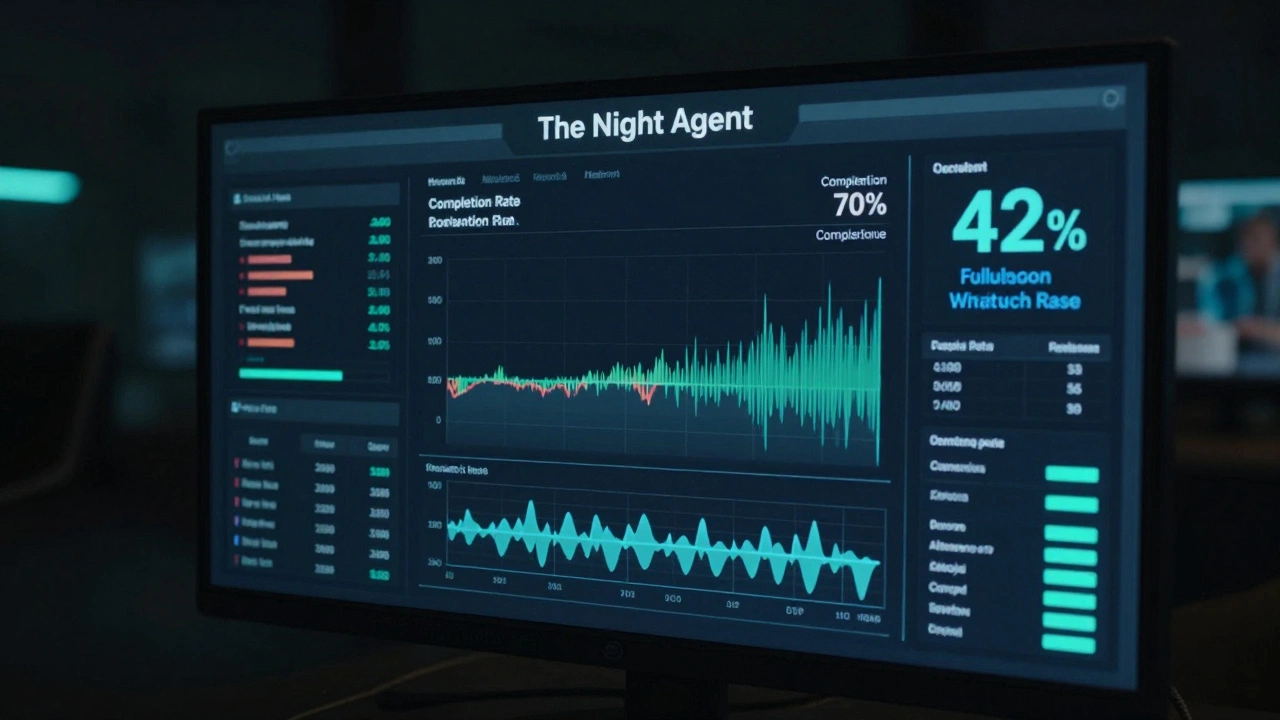
Take "The Night Agent" on Netflix. It didn’t break records for total views in its first week. But here’s what it did: 70% of viewers finished the entire season within 10 days. 42% of those who started the first episode watched all six. And 18% of those viewers rewatched at least one episode. That’s not just popularity-it’s engagement. That’s why Netflix renewed it before the finale even dropped.
On the flip side, a film might hit 10 million views in its first week but drop off completely by week three. No rewatching. No social buzz. No search spikes. That’s a ghost. It looked big, but it didn’t stick.
Key Metrics That Actually Matter
Forget total views. Here’s what studios and platforms dig into when they’re deciding whether to greenlight a sequel, a spin-off, or just bury the project:
- Completion Rate: The percentage of viewers who watched 90% or more of the film. If less than 50% finish, the story likely dragged. If over 70%, the pacing and payoff worked.
- Replay Rate: How many people watched it more than once? High replay rates mean emotional resonance-think Everything Everywhere All At Once or Parasite.
- Drop-off Points: Where did viewers quit? If 30% leave at the 22-minute mark, maybe the opening is too slow. If they quit right after the twist, the payoff didn’t land.
- Session Duration: Average time spent watching per session. A film with 45-minute average sessions is doing better than one with 18 minutes, even if the total views are lower.
- Discovery Source: Did people find it because of a recommendation, a trending list, or a social post? Organic discovery is a stronger signal than paid ads.
- Search Lift: Did searches for the film’s title, actors, or key phrases spike after launch? Google Trends and platform search data show real cultural traction.
These aren’t vanity metrics. They’re survival metrics. A film with 8 million views and a 65% completion rate is more valuable than one with 15 million views and a 30% completion rate. Why? Because the first one is likely to get sequels, merch, and international deals. The second one? It’s a one-time rental.
How Platforms Measure Engagement Beyond Viewership
Streaming services don’t just track watching. They track behavior.
For example, if a viewer pauses a film at a specific scene, rewinds to rewatch a line, or skips ahead to the credits, that’s data. If they immediately start another film in the same genre, that’s a pattern. If they add it to their watchlist and never return, that’s a red flag.
Platforms use this to build engagement profiles. These are models that predict whether a viewer will binge, rewatch, or recommend. A film that triggers high engagement scores across multiple user segments is more likely to get marketing budget boosts, placement on homepage banners, and algorithmic recommendations.
Take "The Last of Us"-even though it’s a series, the same logic applies. Viewers who watched the first episode and then watched the second within 24 hours were 4x more likely to finish the season. That behavior was used to target similar viewers with ads and recommendations. That’s not luck. That’s data-driven storytelling.

Comparing Platforms: What Works Where
Not all platforms measure success the same way. Here’s how they differ:
| Platform | Primary Metric | Secondary Metric | What They Ignore |
|---|---|---|---|
| Netflix | Completion Rate | Replay Rate + Search Lift | Total Viewership in First 48 Hours |
| Amazon Prime Video | Session Duration | Discovery Source (Organic vs. Paid) | Number of Unique Viewers |
| Apple TV+ | Engagement Score (Combined Behavior) | International Watch Time | View Count by Country |
| Hulu | Retention Rate (Week 2) | Ad Completion Rate (for ad-supported tier) | Replay Rate |
| Disney+ | Franchise Tie-In Viewership | Parent-Child Viewing Patterns | Non-Franchise Film Performance |
Netflix cares about whether you finished it. Amazon cares if you stayed in the app. Apple cares about global reach. Hulu cares about ad revenue. Disney cares if it’s connected to a franchise. You can’t use one metric across all platforms. A film that flops on Disney+ might be a breakout on Netflix if it’s standalone and emotionally gripping.
What Happens When the Data Doesn’t Add Up
Not every film gets a second chance. Sometimes, the numbers tell a story no one wants to hear.
Take "The Lost City of Z", a 2025 Amazon original. It had 6.2 million views in its first week. That sounds good. But here’s what the data showed: 61% of viewers dropped off by the 30-minute mark. Only 12% watched past the halfway point. And 94% of those who finished didn’t watch anything else on Prime Video afterward. No rewatch. No searches. No social shares.
Amazon quietly buried it. No marketing push. No international rollout. No sequel talks. The film wasn’t "bad." It just didn’t connect. The data told them it was a one-time rental, not a cultural moment.
On the other hand, "The Quiet Ones" on Apple TV+ had only 1.8 million views. But 78% finished it. 41% rewatched. 27% of viewers watched another Apple original within a week. Apple doubled the marketing budget for its next film. Why? Because the data showed it was a gateway film-people who watched it became loyal viewers.

How Filmmakers Can Use This Data
Even if you’re not a studio exec, this data matters. If you’re an indie filmmaker, knowing what works helps you pitch better.
Here’s what to do:
- Ask for completion rates, not total views. If a platform won’t share it, walk away.
- Track drop-off points. If viewers quit at the same moment in every film you make, fix the pacing.
- Use search lift to guide marketing. If your film’s title isn’t trending, maybe your title needs work.
- Look for replay signals. If people rewatched, you made something they loved-not just liked.
- Compare your film to similar ones on the same platform. What did they do differently?
One indie director in Asheville used this approach after her film "The Porch" launched on VOD. She noticed 80% of viewers watched it in one sitting, mostly after 9 p.m. She then targeted late-night social ads with the tagline: "Watch it with your coffee, not your popcorn." Viewership in week two jumped 300%.
The Hidden Truth: Data Doesn’t Tell You Why
Analytics tell you what happened. They don’t tell you why.
That’s why the best studios pair data with qualitative feedback. They run post-viewing surveys. They analyze Reddit threads. They listen to TikTok reactions. They read comments. One film might have a 60% completion rate, but if 70% of viewers say "I cried," that’s worth more than a 90% completion rate with no emotional response.
Numbers are your compass. They show direction. But you still need to feel the wind to know if you’re heading toward something real-or just spinning in circles.
How long should I wait before judging a film’s success on streaming?
Don’t judge in the first 48 hours. Most platforms look at the full 30-day window. Completion rates and replay behavior stabilize around day 14. If a film hasn’t gained traction by day 21, it’s unlikely to break out. But if it’s quietly building momentum-especially through organic discovery-it might still become a sleeper hit.
Do international viewership numbers matter more than U.S. numbers?
It depends. For Netflix and Apple TV+, global watch time is critical. A film with strong performance in Brazil, India, or South Korea can get a global marketing push even if U.S. numbers are average. For Amazon and Hulu, U.S. performance still carries more weight. But if a film gains traction in three or more non-U.S. countries, platforms often greenlight localized sequels or spin-offs.
Can a film be a success even if it has low view counts?
Yes. A film with 800,000 views but a 75% completion rate, 35% replay rate, and high search lift can be more valuable than one with 10 million views and a 25% completion rate. High engagement means viewers become loyal to the platform, and loyal viewers are worth more than one-time watchers. Studios often use these films as "gateway titles" to attract niche audiences.
What’s the biggest mistake filmmakers make when analyzing their film’s performance?
Focusing only on total views. Many assume high views = success. But if 80% of viewers quit after 10 minutes, you didn’t make a hit-you made a trailer. The real signal is in completion, replay, and discovery patterns. A film with low views but high engagement often leads to sequels, merch, and festival buzz.
Is there a "perfect" completion rate?
There’s no universal number, but benchmarks exist. For dramas and thrillers, 65%+ is strong. For comedies, 55%+ is acceptable. Documentaries often hover around 50%. Anything below 40% is a warning sign. The real goal isn’t perfection-it’s consistency. If your completion rate is higher than similar films on the same platform, you’re doing better than most.







Comments(5)