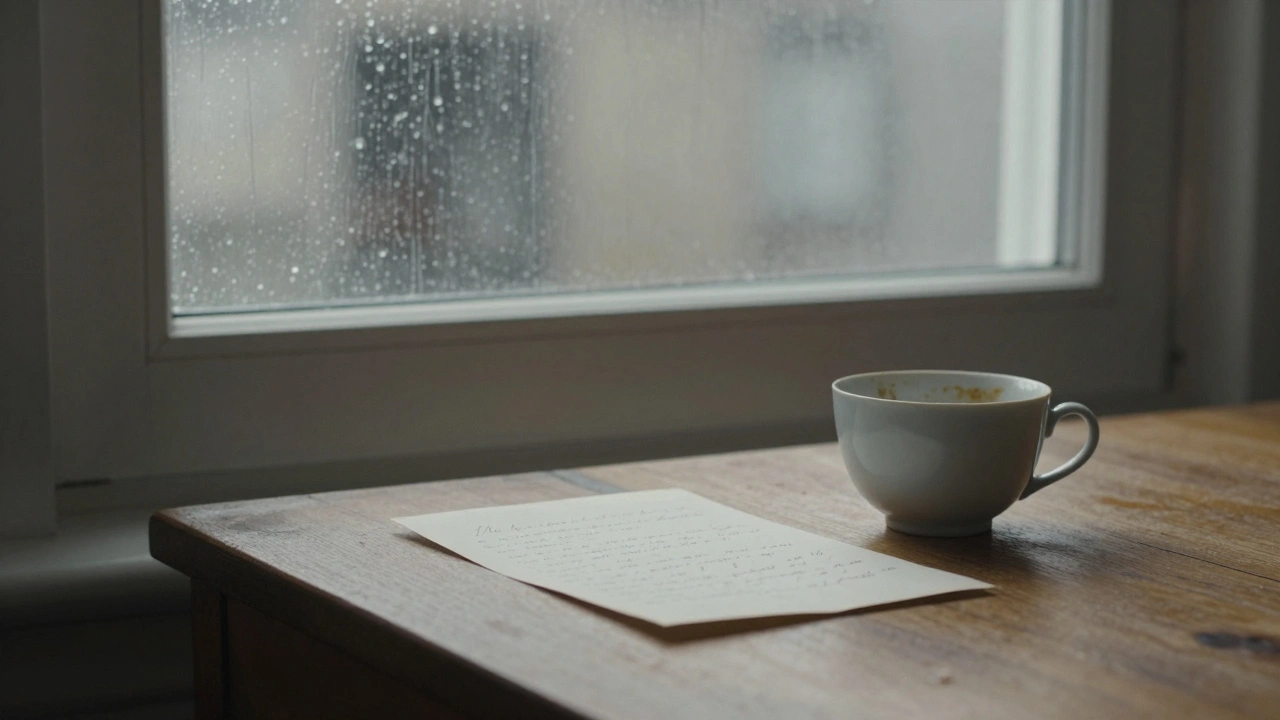
Think about the last time you read a poem that made you feel something deep - a quiet ache, a sudden rush of joy, a memory you didn’t know you were holding. Now imagine that poem coming alive on screen. Not just spoken by an actor, but woven into the rhythm of the camera, the silence between words, the light on a rainy window. That’s what poet biographies in cinema do. They don’t just tell the story of a poet’s life. They make you feel the weight of their words the way the poet felt them.
Why Poets Belong on Screen
Poets live in language. Their lives are shaped by solitude, obsession, grief, and moments of startling clarity. These aren’t easy things to show in a conventional biopic. Most films about artists focus on drama: affairs, breakdowns, public scandals. But poets? Their battles happen inside. The fight to find the right word. The silence after a line is written. The way a single image - a dead sparrow, a cracked teacup - can hold an entire universe.
That’s why so many poet biopics fail. They turn Rainer Maria Rilke into a brooding romantic, or Sylvia Plath into a tragic victim. But the best ones? They understand that poetry isn’t about what happened - it’s about how it was felt. And film, when it’s done right, can show feeling without saying a word.
How Film Translates Poetic Language
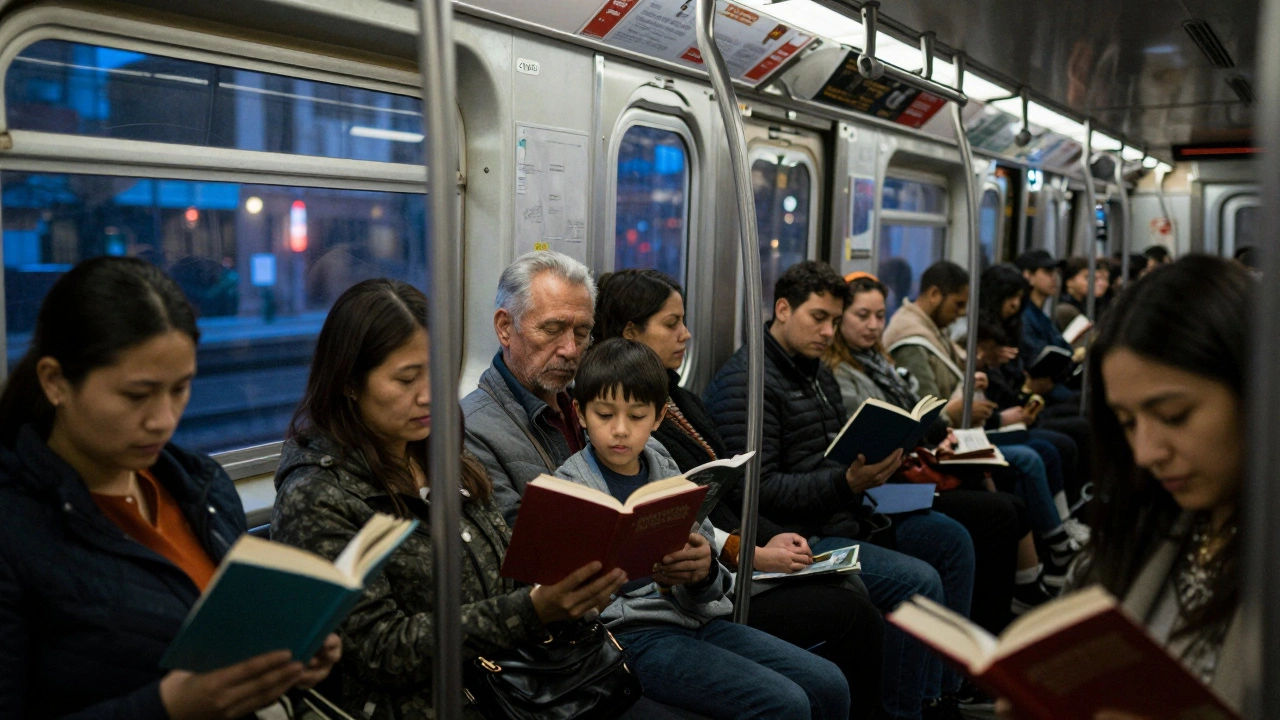
Take Walt Whitman is an American poet whose work broke traditional forms and celebrated the body, democracy, and the everyday. Also known as the father of free verse, he was first published in 1855 and became a symbol of American individualism. In the 2019 film Whitman, the director didn’t cast an actor to play him. Instead, they used real people - commuters on a Brooklyn subway, farmers in Iowa, veterans in VA hospitals - reading lines from Leaves of Grass in their own voices. The camera didn’t cut to Whitman. It cut to the quiet of a child listening. The sound of a train whistle. The echo of a voice in an empty room. That’s not biography. That’s embodiment.
Similarly, Sylvia Plath is an American poet and novelist whose confessional style and intense imagery redefined 20th-century poetry. Her work, especially "Daddy" and "Ariel", explores trauma, identity, and female rage. The 2003 film Sylvia focused on her relationship with Ted Hughes. But the most haunting scenes? The ones where she sits alone, staring at a blank page, and the camera lingers as her breath slows. No dialogue. Just the scratch of a pen. The flicker of a candle. The weight of a poem being born.
These films don’t explain poetry. They let you live inside it.
Key Poets Brought to Life on Screen
Some poet biopics stick to the facts. Others chase the spirit. Here are a few that got it right:
- Rainer Maria Rilke - The 2021 film Letters to a Young Poet used no actors. Instead, it showed empty rooms, handwritten letters drifting in wind, and voiceovers of readers from 12 countries reading his letters. The film’s runtime? 78 minutes. No music. Just silence and breath.
- Langston Hughes - In The Dream Keeper (2020), the director layered jazz recordings of Hughes reading his own poems over black-and-white footage of Harlem in the 1920s. The camera moved like a saxophone - smooth, unpredictable, full of rhythm.
- Fernando Pessoa - The 2022 Portuguese film The Book of Disquiet split the story across 12 characters, each playing a different heteronym of Pessoa. One was a clerk, another a sailor, another a philosopher. The film never said which was "real." It let the poetry speak for itself.
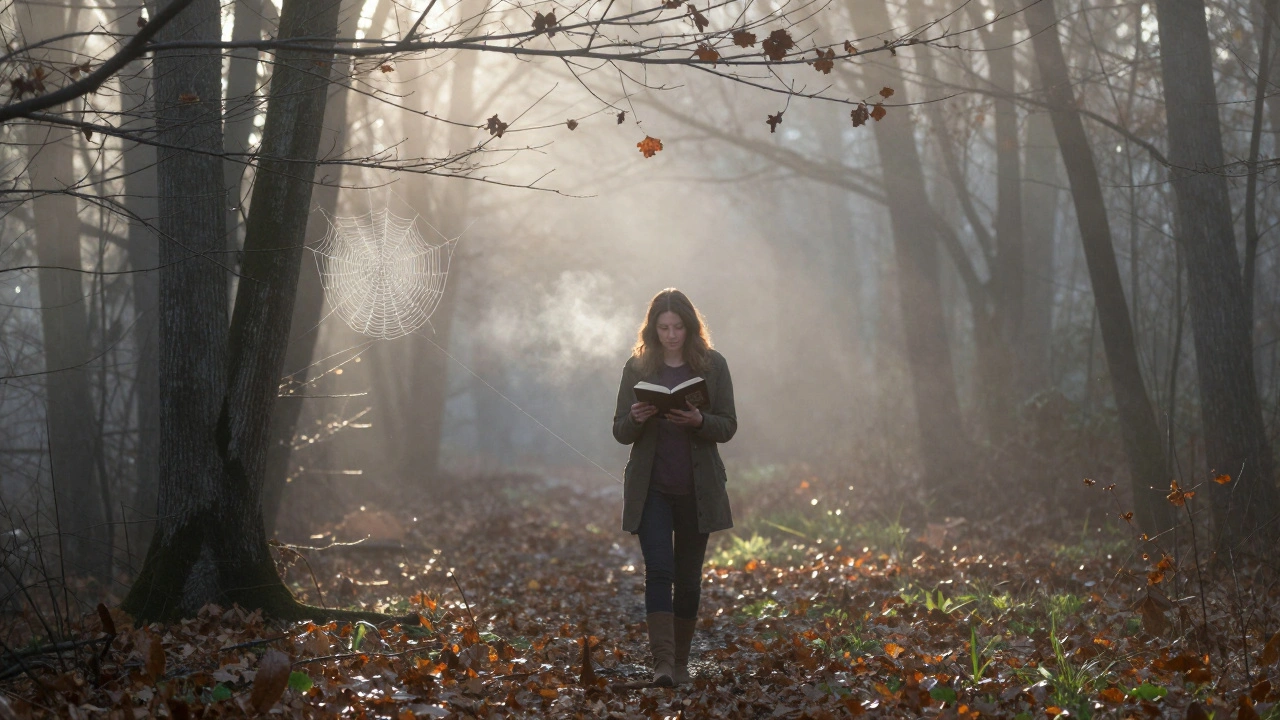
- Mary Oliver - Wild Geese (2023) followed a woman walking alone through the North Carolina woods, reading Oliver’s poems aloud to no one. The film captured her footsteps, the rustle of leaves, the way light hit a spiderweb. No narration. No interviews. Just the words and the world.
The Tools Poet Biopics Use
These films don’t rely on dialogue-heavy scripts. They use film language to mirror poetic form:
- Long takes - A single shot that lasts 90 seconds, letting the viewer sit with a moment the way a poem lets you sit with a line.
- Sound design - The rustle of paper, the drip of rain, the breath before a word is spoken. These aren’t background noise. They’re the poem’s rhythm.
- Visual metaphor - A wilted flower, a half-empty bottle, a window with no view. These aren’t just props. They’re images pulled straight from the poet’s work.
- Non-linear structure - Poems don’t follow chronology. Neither do these films. A scene from childhood might cut to a deathbed. A memory of a lover might appear as a snowfall. Time bends.
- Use of silence - In poetry, the pause between lines matters. In film, the pause between shots matters even more.
What Makes These Films Different
Most biopics want you to admire the person. These films want you to become the poem.
They don’t show the poet winning awards or giving speeches. They show them staring at a wall for three hours. They show them writing on napkins in diners. They show them crying over a line they can’t fix. That’s the truth of poetic creation - it’s not glamorous. It’s quiet. It’s lonely. It’s human.
And that’s why they resonate. You don’t watch these films to learn about a poet. You watch them to remember what it feels like to be alive - to feel the ache of a single moment, to hold it in your hands, and to know, for a second, that someone else felt it too.
The Future of Poetry on Screen
More poets are turning to film now - not as subjects, but as creators. In 2025, a group of poets in Portland, Oregon, launched a project called Verse in Motion. They wrote 30-second poems and paired them with 10-second video clips shot on phones. No editing. No music. Just the poem and the image. Within six months, over 2 million people watched them. One clip - a woman whispering, "I loved you like a storm," over footage of a broken umbrella in the rain - went viral. No one knew who wrote it. No one cared. They felt it.
That’s where poetry in cinema is headed. Not toward big budgets or Oscar campaigns. Toward intimacy. Toward quiet. Toward moments that don’t need explaining.
Where to Start
If you want to feel what these films do, start here:
- Watch Letters to a Young Poet (2021) - silent, slow, haunting.
- Listen to Langston Hughes read his own poems - his voice is the rhythm.
- Find Wild Geese (2023) on streaming - it’s only 42 minutes long.
- Read Mary Oliver’s "Wild Geese" while walking outside. Let the wind carry the words.
You don’t need to understand poetry to feel it. You just need to be still long enough to hear it.
Why are poet biopics so different from other artist films?
Poet biopics avoid drama and spectacle because poetry itself isn’t loud. While films about painters might show brushstrokes in slow motion or musicians in concert halls, poet films focus on silence, solitude, and the weight of a single word. The drama isn’t in the public eye - it’s in the private act of creation. These films use visual rhythm, sound design, and stillness to mirror how poetry works - not through plot, but through feeling.
Do these films accurately portray the poets’ lives?
Some do, some don’t. Films like Letters to a Young Poet avoid biographical detail entirely to focus on emotional truth. Others, like Sylvia, take creative liberties with relationships and events. But accuracy isn’t the goal. The goal is resonance. These films aren’t documentaries - they’re emotional translations. They ask: "What did this poet feel?" not "What did this poet do?"
Are there any poet biopics made by poets themselves?
Yes. In 2024, the Iranian poet Forough Farrokhzad’s estate released a restored version of her 1972 experimental film The House Is Black, which she made about a leper colony. She didn’t narrate it. She let images - cracked walls, children’s hands, sunlight on a hospital floor - speak. The film is now taught in film schools as a masterpiece of poetic cinema. Poets who make films don’t tell stories. They build atmospheres.
Why do these films often feel slow or boring?
Because they’re not made for distraction. Most modern films rush to fill every second with action, music, or dialogue. Poet films do the opposite. They give space - for silence, for breath, for thought. If you’re used to fast cuts and plot twists, these films will feel empty. But if you sit with them, they fill you. The slowness isn’t a flaw - it’s the point. It’s how poetry works: one line, one breath, one moment at a time.
Can you make a poet biopic without showing the poet?
Absolutely. The 2021 film Letters to a Young Poet never showed Rilke. It showed his letters being read by strangers - a nurse in Tokyo, a fisherman in Iceland, a child in rural Mexico. The poet became a presence through others. That’s the heart of poetic cinema: the work lives in the space between the words and the world. The poet doesn’t need to be seen. The poem needs to be felt.


Comments(8)