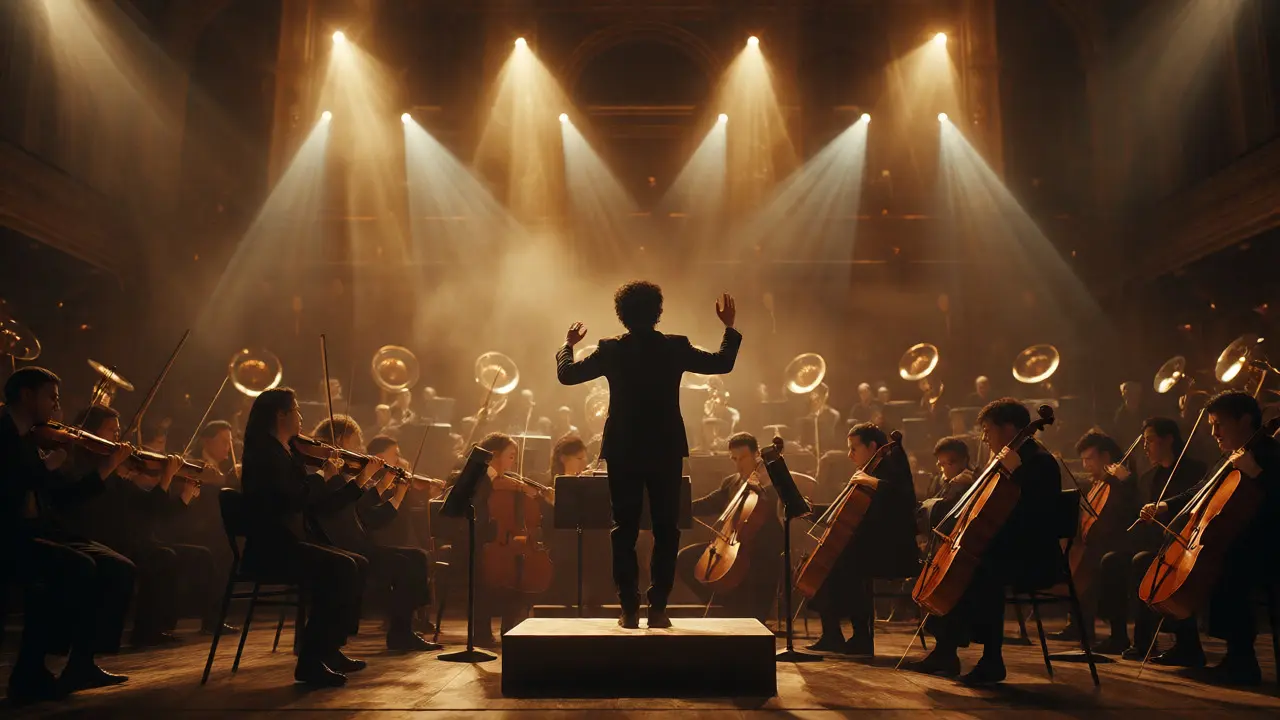
You know that feeling when the strings swell, the brass hits, and suddenly your heart is pounding even though nothing on screen has exploded? That’s not magic. It’s engineering. And for nearly a century, the Academy Award for Best Original Score has been trying to quantify exactly how much emotion a few minutes of audio can pack into a two-hour movie.
But here’s the thing about Oscar-winning film scores: they’re rarely just "good music." They are narrative tools. They tell you who to trust before a character speaks. They signal danger when the visuals look calm. If you’ve ever wondered why certain movies stick with you long after the credits roll, it’s often because the composer did their job so well you forgot they were doing it at all.
| Attribute | Description | Impact on Viewer |
|---|---|---|
| Leitmotif | A recurring musical phrase associated with a specific character or idea. | Creates subconscious connection and memory anchors. |
| Diegetic vs. Non-Diegetic | Music heard by characters (diegetic) vs. background score (non-diegetic). | Controls realism and emotional distance. |
| Orchestration | The choice of instruments used in the composition. | Sets the historical period and tone. |
The Evolution of the Award
Back in 1935, the Academy didn’t have one category for music. They had two: one for adapted scores (taking existing classical pieces and fitting them to film) and one for original scores. This split caused chaos for decades. Composers like John Williams would dominate the original category, while others fought over adaptations. It wasn’t until 2000 that the Academy finally merged these into a single, streamlined award for Best Original Score. Why does this matter to you? Because it changed what counted as "winning." Suddenly, hybrid scores-mixing electronic synths with traditional orchestras-became viable contenders.
Think about Hans Zimmer. He didn’t win an Oscar for The Lion King initially because the rules favored traditional orchestral work. But his approach-using massive percussion, minimal melodic lines, and heavy sound design-eventually forced the industry to rethink what a "score" could be. When he finally took home the gold for Dune in 2022, it wasn’t just a personal victory; it was a validation of modern cinematic soundscapes over classical tradition.
Why Some Masterpieces Get Snubbed
If you look closely at the list of winners, you’ll notice glaring omissions. Where is Ennio Morricone’s score for Cinema Paradiso? It’s iconic. Yet, he lost multiple times before finally winning for The Hateful Eight in 2016. Why? The Academy voters often prioritize technical complexity and thematic development over pure emotional resonance.
Voters are human, and they get tired of the same sounds. If three nominees in a year use similar piano-heavy motifs, the most unique entry usually wins, even if it’s less popular with audiences. Take Ludwig Göransson’s win for Black Panther. He blended West African drumming with hip-hop production and full orchestra. It was technically dense and culturally distinct. Compare that to a straightforward romantic drama score from the same year, and you see why voters lean toward innovation.
Anatomy of a Winning Score
What do the judges actually listen for? It’s not just "does it make me cry?" There are specific criteria that separate a good soundtrack from an Oscar winner:
- Thematic Cohesion: Does the music evolve with the story? A static loop won’t cut it. In Jaws, John Williams uses two notes to build terror. As the shark gets closer, the tempo increases and the key shifts. That progression is the score telling the story.
- Integration: Does the music fight the dialogue or support it? Bad scores talk over actors. Great scores leave sonic space for speech. Christopher Nolan’s films often suffer from loud scores that drown out dialogue, which sometimes hurts their chances despite strong compositions.
- Originality: With the rise of temp tracks (placeholder music editors use during editing), composers risk sounding too much like famous precedents. If your score sounds too close to Gladiator, you might lose points unless you add a fresh twist.
The Modern Era: Synthesizers and Silence
We are living in the golden age of experimental scoring. Traditional orchestras are still huge, but they’re no longer the only game in town. Trent Reznor and Atticus Ross brought industrial electronic textures to mainstream cinema with The Social Network. Their win signaled that cold, digital anxiety could be as powerful as warm, acoustic hope.
Then there’s the trend of silence. Sometimes, the best score is no score at all. Films like No Country for Old Men famously rejected a traditional score, using only ambient noise and tension-building sound effects. While this doesn’t win "Best Original Score" awards directly (since there isn’t one), it influences how future scores are judged. Voters now appreciate restraint. A composer who knows when not to write music often beats one who fills every second with notes.
How to Listen Like a Judge
You don’t need a degree in music theory to spot Oscar-caliber work. Next time you watch a nominated film, try this checklist:
- Mute Test: Watch a scene without sound. Then unmute. How much does the meaning change? If the scene feels empty without music, the score is carrying heavy narrative weight.
- Theme Tracking: Can you hum the main theme? If yes, it’s memorable. Now, find where that theme appears again later. Is it played faster? Slower? On a different instrument? That variation shows compositional skill.
- Instrument Spotting: Try to identify unusual instruments. Did you hear a hurdy-gurdy? A glass harmonica? Unique timbres help a score stand out in a crowded field.
Understanding these elements helps you appreciate why certain films win. It’s not just about popularity; it’s about craftsmanship. The Academy rewards those who push the medium forward while serving the story.
Can a song win Best Original Score?
No. The Academy separates Best Original Song (for songs with lyrics) from Best Original Score (instrumental background music). However, a composer can include a vocal motif within the score, but it must serve the narrative rather than function as a standalone pop hit.
Who has won the most Oscars for Best Original Score?
Alfred Newman holds the record for the most nominations, but John Williams leads in total wins with five. However, if you count all music categories (including adapted scores and songs), many other composers have higher totals. For strictly Original Score, John Williams is the dominant figure.
Do video game scores qualify for the Oscar?
Generally, no. The Academy requires the score to be written specifically for a theatrical feature film. However, some composers cross over between games and films, bringing techniques from interactive media into cinema, such as dynamic layering that changes based on action intensity.
What happens if a score relies heavily on classical music?
If a film uses pre-existing classical pieces, it competes in the "Adapted Score" category (when it existed) or may be disqualified from Original Score if the new material is insufficient. To win Original Score today, the majority of the music must be newly composed for the film.
Is electronic music eligible for Best Original Score?
Yes, absolutely. Since the merger of the adapted and original categories, electronic and hybrid scores have become increasingly common winners. Trent Reznor, Atticus Ross, and Ludwig Göransson are prime examples of electronic-influenced composers taking home the award.


Comments(7)