
Imagine you have a script that studios love, but the bank won't touch it. You’ve secured presales from international distributors in France and Germany, covering maybe 40% of your budget. You have some private investors chipping in another 20%. But there’s still a massive hole in the middle. That missing chunk? That’s where gap financing comes in. It is the financial bridge that keeps independent films alive when traditional studio backing isn’t on the table.
Most people think movie money comes from two places: big studios or rich friends. The reality is much messier. For mid-budget features (think $10 million to $30 million), the industry relies heavily on a complex web of debt, pre-sales, and deferred payments. If you get this wrong, your film doesn’t just lose money; it loses control. Understanding how to structure this "gap" is the difference between finishing your movie and watching it stall in post-production.
What Exactly Is Gap Financing?
Gap Financing is a type of loan used to cover the shortfall between available funds (like presales and initial equity) and the total production budget. Unlike a standard commercial loan, gap financing is usually non-recourse. This means if the film flops, the lender can only take the film’s assets, not your personal house or car. It is essentially the final piece of the puzzle that allows production to start.
This instrument sits in a specific niche. It is not the first money raised, nor is it the last. It arrives after you have proven the project has market value through presales and committed equity. Lenders look at the gap as a risk-weighted bet. They aren't lending against your credit score; they are lending against the projected cash flow of the film itself.
The Anatomy of a Film's Funding Stack
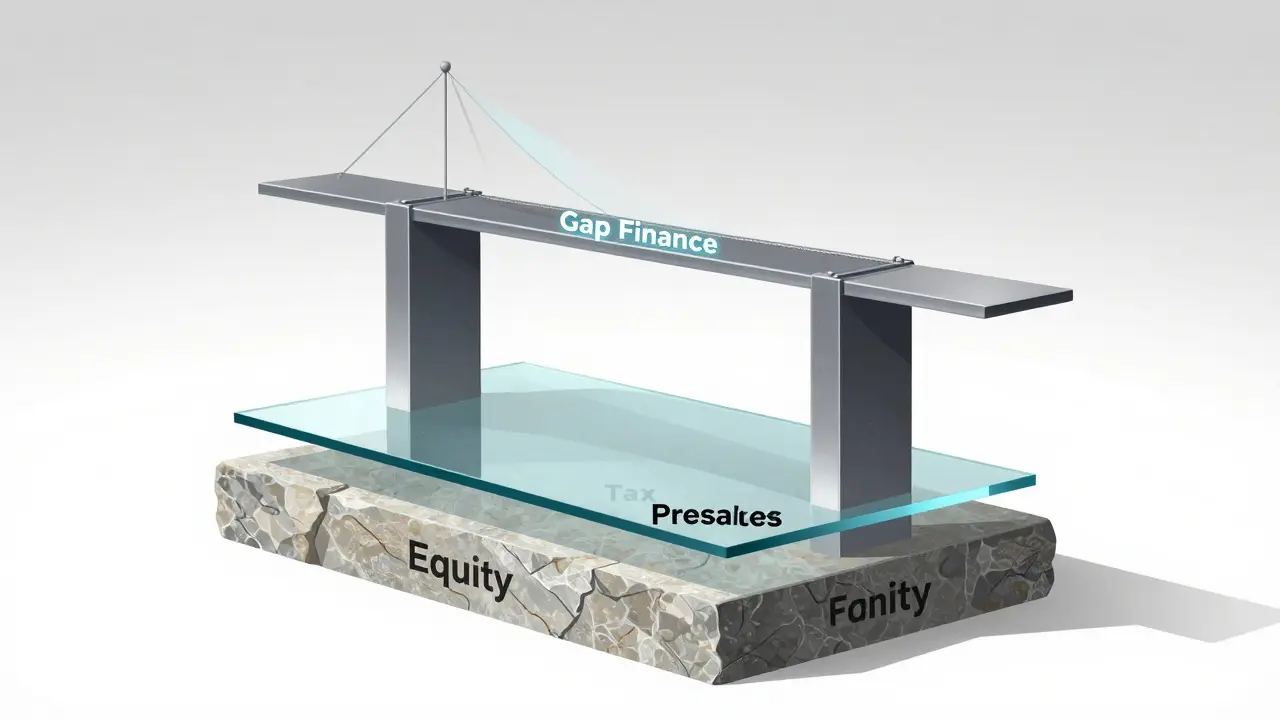
To understand the gap, you have to see the whole stack. A typical independent feature budget is built in layers. Each layer carries different risks and returns.
- Equity: Investors who put up capital for a share of profits. This is the highest risk, highest reward tier.
- Presales: Money from foreign distributors who buy rights before the film is finished. This validates the story internationally.
- Tax Credits: Government incentives (like those in Georgia or Louisiana) that reduce net costs.
- Gap Finance: The loan that covers the remaining amount needed to reach the greenlight threshold.
If you skip presales, your gap loan becomes much more expensive because the lender sees higher risk. If you have too little equity, the gap loan grows larger, increasing interest costs. The goal is to minimize the size of the gap by maximizing presales and securing tax credits early.
| Funding Source | Risk Level | Typical Cost | Priority in Repayment |
|---|---|---|---|
| Equity | High | Profit Share (15-30%) | Last |
| Presales | Medium | Upfront Cash (No Interest) | First (Recoupment) |
| Gap Finance | Low-Medium | Interest Rate (8-12%) | Before Equity |
How Lenders Calculate the Gap
Lenders don't just guess what the gap is. They use a strict formula based on the "Greenlight Threshold." This is the point where the sum of all committed funds equals the total production budget plus contingency.
- Total Budget: Let’s say your film costs $15 million to make.
- Committed Presales: You have signed deals for $6 million.
- Committed Equity: Your producers have raised $4 million.
- Tax Credits: You are eligible for a $1.5 million rebate.
- The Calculation: $15M - ($6M + $4M + $1.5M) = $3.5 Million.
That $3.5 million is your gap. However, lenders often require a "cushion." They might only lend up to 70-80% of the calculated gap to protect themselves against cost overruns. So, you might actually need to raise an additional $1 million in equity to satisfy the lender's comfort zone. This is why having flexible equity partners is crucial.
Structuring the Deal: Key Terms to Watch
When negotiating with a gap financier, three terms will define your future stress levels. Get these wrong, and you’ll be fighting for control during post-production.
1. Non-Recourse vs. Limited Recourse
True non-recourse loans mean the lender can only seize the film's negative and distribution rights if you default. Limited recourse adds a "bad boy" clause. If you blow the budget without permission, the loan becomes personally guaranteed. Always aim for full non-recourse unless you are confident in your budget management.
2. Interest Rates and Fees
Gap finance rates typically range from 8% to 12% per annum. But the real cost is in the fees. Expect upfront arrangement fees of 1-2% of the loan amount. These fees are capitalized into the loan, meaning you pay interest on the fees too. Over a 12-month production cycle, this can add hundreds of thousands to your final cost.
3. Covenants and Reporting
Lenders want visibility. You will likely need monthly budget reports and approval for any line-item changes exceeding a certain percentage (usually 10%). While this feels bureaucratic, it protects you. If you try to switch directors or shoot in a new location without approval, you risk technical default, which can freeze your funding.
Common Pitfalls That Kill Deals
Many projects die not because they lack a good story, but because the financial structure was fragile. Here are the most common traps.
- Over-reliance on one distributor: If 80% of your presales come from one country, the lender sees concentration risk. Diversify your sales agents.
- Inflated budgets: Lenders compare your budget to similar recent films. If your director fee is 3x the market rate, they will cut it out of the approved budget, widening your gap unexpectedly.
- Ignoring completion bonds: Most gap lenders require a Completion Bond. This insurance guarantees the film will be finished on time and on budget. Without it, the interest rate jumps significantly.
A smart producer treats the budget not as a wish list, but as a negotiation document. Every dollar spent must justify its return to the lender.

Case Study: The Indie Drama That Almost Failed
Consider a hypothetical $12 million drama set in Asheville. The producers had strong presales from Europe but underestimated the cost of local talent. Their initial gap calculation showed a $2 million need. However, the lender reviewed the budget and flagged the casting fees as high. They reduced the approved budget by $500,000. Suddenly, the gap wasn't $2 million; it was $2.5 million. The producers had to scramble to find an additional $500,000 in equity within two weeks. Because they had a backup investor ready, they closed the deal. Had they not, the film would have been delayed six months, losing valuable tax credit windows.
Alternatives to Traditional Gap Finance
Sometimes, a bank loan isn't the right tool. Depending on your profile, other structures might work better.
- Mezzanine Financing: Sits between senior debt and equity. Higher interest than gap finance, but more flexible terms.
- Convertible Notes: Start as debt, convert to equity if the film hits certain milestones. Good for early-stage projects with less presale data.
- Platform Company Structure: Creating a separate entity for each film can isolate risk, making lenders more comfortable with smaller gaps.
For very small films (under $5 million), gap finance might be overkill. In those cases, straight equity or crowd-funding platforms like Kickstarter often fill the void more efficiently.
Next Steps for Producers
If you are currently in development, here is your action plan.
- Audit your budget: Have a third-party accountant review your numbers against industry standards.
- Secure presales early: Start pitching to foreign markets as soon as you have a script and attached talent.
- Identify potential lenders: Research banks and specialized film finance firms that handle your genre and budget size.
- Negotiate the covenant package: Aim for loose reporting requirements to maintain creative freedom.
Gap financing is not just about money; it’s about control. The right structure gives you the runway to tell your story without looking over your shoulder. The wrong structure turns every decision into a legal negotiation. Choose your partners carefully, keep your budget honest, and the bridge will hold.
Is gap financing expensive compared to other options?
Yes, it is generally more expensive than equity because it carries lower risk for the lender. Interest rates typically range from 8% to 12%, plus upfront fees. However, it is cheaper than mezzanine financing or high-yield bonds. The key is to minimize the amount borrowed by maximizing presales.
Can I use gap financing for a short film?
Rarely. Short films usually rely on grants, equity, or crowdfunding. The administrative cost of setting up a gap loan often exceeds the benefit for budgets under $500,000. For shorts, focus on grant applications and platform-specific funding.
What happens if the film goes over budget?
If the overrun is minor and within the contingency reserve, nothing happens. If it exceeds the contingency, you may need to negotiate a loan amendment or inject additional equity. Major unauthorized overruns can trigger a technical default, giving the lender the right to seize assets.
Do I need a completion bond for gap financing?
Almost always. Lenders view a completion bond as essential protection. It guarantees the film will be delivered on time and on budget. Without it, expect higher interest rates or stricter covenants. The cost of the bond is usually a small percentage of the budget.
How long does it take to close a gap financing deal?
Typically 8 to 12 weeks from term sheet to closing. This period involves due diligence, legal review, and finalizing presale contracts. Starting this process early in the development phase ensures you don't delay your production schedule.