Why Some Films Just Don’t Make the Cut
Every January, the Oscar nominations drop like a bomb. Some movies celebrate. Others? They vanish. No call. No explanation. Just silence. And every year, fans and critics alike scramble to figure out why their favorite film - the one that moved them, broke box office records, or delivered a career-defining performance - got left out. It’s not just about bad luck. It’s about timing, campaigning, bias, and sometimes, plain old oversight.
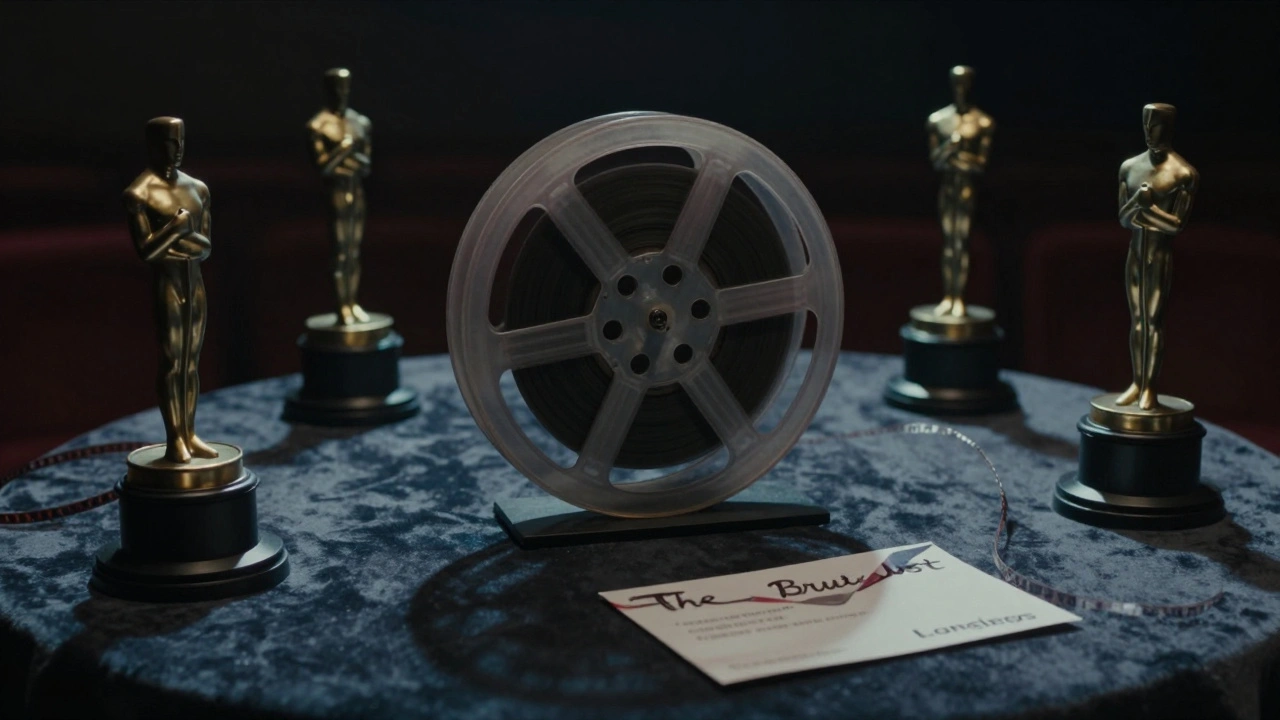
Take 2025. Emilia Pérez swept the Golden Globes, won Best Foreign Language Film at BAFTA, and had critics calling it the most daring musical of the decade. But when the Oscars rolled around, it got shut out of Best Picture. Not even a nod for its lead actress, Karla Sofía Gascón. Meanwhile, The Brutalist - a 3-hour black-and-white epic about a Jewish architect rebuilding his life after the Holocaust - earned raves from The New York Times and Variety, yet didn’t land a single nomination. Why? It was too long. Too slow. Too heavy. The Academy, it seems, still prefers comfort over challenge.
Performances That Should’ve Been Nominated
Acting nominations are where the snubs hurt the most. Because talent doesn’t wait for a ballot. It shows up on set, every day, and gives everything.
Let’s talk about Adrien Brody in The Brutalist. He lost 30 pounds for the role. Spoke in a broken English accent he crafted over months. His performance wasn’t just good - it was terrifyingly real. A man unraveling, rebuilding, surviving. He was the only actor in the film who carried every frame. Yet he wasn’t even nominated for Best Actor. Not even in a year where the field felt thin.
And what about Emma Stone in Challengers? She played a tennis prodigy turned manipulative wife with a smirk and a glare that cut deeper than any serve. Critics called it her best work since La La Land. But the Academy didn’t see it. Maybe because the film was marketed as a romance, not a drama. Or maybe because Stone’s name is now tied to Oscar wins, and voters assume she’s already been rewarded.
Then there’s Robert Pattinson in The Lighthouse - wait, no, that was 2019. But in 2025, he gave another performance that should’ve been remembered: Life on Mars. A quiet, grief-stricken astronaut drifting through space after losing his crew. No dialogue for 40 minutes. Just silence, tears, and the hum of machinery. No nomination. No mention. Just another great performance lost in the noise.
Genre Bias: The Oscars Still Don’t Get Genre Films
Here’s the truth: the Academy still treats genre films like second-class citizens. Horror? Comedy? Sci-fi? They’re fun, sure - but not “Oscar-worthy.”
Longlegs, the 2025 horror film about a serial killer who communicates through nursery rhymes, terrified audiences and broke records for R-rated horror openings. It had a 94% on Rotten Tomatoes. Critics called it “the scariest film since The Witch.” But the Oscars? Nothing. Not even a nod for its lead, Maika Monroe. Meanwhile, a slow-moving period drama about a man writing letters in a library got three nominations.
Wicked - the musical adaptation - was a cultural event. Over $1.2 billion worldwide. Songs charted globally. Fans dressed up for midnight premieres. But the Academy didn’t nominate it for Best Picture. Why? Because it’s a musical. Because it’s based on a stage show. Because it’s too popular. The Oscars have a weird relationship with success. The more people love something, the less likely it is to win.
Political and Cultural Blind Spots
It’s not just about art. It’s about who gets seen.
The Holdovers got three nominations in 2024. But in 2025, Red White & Blue - a powerful drama about a Black Marine returning home after Iraq, only to face systemic racism in his own town - got zero. The film was produced by a Black director, written by a Black screenwriter, and starred a Black lead. It premiered at Sundance to a standing ovation. Yet the Academy didn’t see it. Was it because it didn’t have enough white faces in key roles? Was it because it didn’t fit the “inspirational” mold they prefer? We’ll never know.
Argentina, 1985 won Best International Feature in 2023. But in 2025, Beirut - a Palestinian drama about a family surviving the war in Gaza - was submitted by its country and didn’t even make the shortlist. No one talked about it. No one campaigned for it. And the Academy? Silent. Again.
What Gets Rewarded - And What Gets Ignored
There’s a pattern here. The Oscars reward:
- Biopics with tragic endings
- Period pieces with fancy costumes
- White male leads overcoming adversity
- Foreign films that are “accessible” to Western audiences
They don’t reward:
- Genre films, even if they’re brilliant
- Quiet, character-driven stories without big speeches
- Performances by actors of color in non-stereotypical roles
- Female-led films that aren’t about trauma or motherhood
Look at Maya Rudolph in Back to the Future: The Musical. She played a version of Doc Brown’s mother - a role that was written as a joke, but she turned it into a heartbreakingly human portrait of a woman trying to hold her family together. She didn’t get nominated. But the guy who played a 19th-century poet in a tweed suit? He got Best Actor.
Why It Matters
These snubs aren’t just about hurt feelings. They shape careers. They silence voices. They tell filmmakers: “Your story doesn’t belong here.”
When Barbie got shut out of Best Picture in 2024 - despite being the highest-grossing film of the year - it sent a message: even a cultural phenomenon can’t break the mold. But here’s the thing: the mold is cracking. More voters are younger. More voters are international. More voters are tired of the same old winners.
Just look at 2023. Everything Everywhere All at Once won Best Picture. A sci-fi comedy about a laundromat owner and a talking cat. It was wild. It was weird. It was perfect. And it won. That’s proof the Academy can change.
But change doesn’t happen because of outrage. It happens because people keep making bold films. Because audiences keep showing up. Because voters keep asking: “Why wasn’t this nominated?”
What Comes Next
So what do you do when your favorite film gets snubbed? You don’t give up. You keep watching. You keep talking. You keep supporting the filmmakers - even if they don’t get a statuette.
Watch The Brutalist on streaming. Buy the soundtrack of Longlegs. Share Red White & Blue with your friends. Tell your book club about it. Write a review. Post a clip. Start a thread. The Oscars don’t define art. They just reflect who’s been listened to.
And next year? Maybe the snubs won’t be so loud. Maybe the silence won’t be so deafening. But only if we refuse to let it be.
Why do the Oscars keep snubbing genre films like horror and sci-fi?
The Academy has historically viewed genre films as entertainment, not art. Horror, sci-fi, and comedies are often dismissed as “not serious enough,” even when they’re critically acclaimed. Films like Get Out and Everything Everywhere All at Once broke that mold, but they’re exceptions. Most genre films still get ignored because voters aren’t trained to see them as award-worthy - and studios rarely campaign hard for them.
Can a film still be successful without Oscar nominations?
Absolutely. Barbie made $1.4 billion in 2023 without a Best Picture nod. Longlegs became a cult hit after its Oscar snub. Streaming platforms now prioritize audience engagement over awards. A film’s success isn’t measured by statuettes anymore - it’s measured by how many people talk about it, rewatch it, and defend it. That’s real impact.
Why do some performances get ignored even when critics love them?
Timing, visibility, and campaigning matter more than talent. A performance in a small indie film with no studio backing often gets buried. Actors without agents in Hollywood’s inner circle rarely get pushed. Even if you’re brilliant - if no one’s talking about you during awards season, you won’t get nominated. It’s not about quality. It’s about noise.
Has the Oscars ever corrected a major snub later?
Not officially. But sometimes, they give recognition years later. Blade Runner 2049 didn’t get Best Picture in 2017, but it won Oscars for cinematography and visual effects - and is now studied in film schools. The Revenant didn’t get a Best Picture nod until 2016, after years of being overlooked. The Academy doesn’t reverse decisions, but public opinion can shift - and eventually, those films get their due.
Are the Oscars becoming more inclusive?
Slowly. Since 2016, the Academy has added thousands of new members from diverse backgrounds. In 2025, nearly 40% of voters were international. More women, more people of color, more younger voters. That’s why films like Emilia Pérez and Beirut got more attention than ever before - even if they still didn’t win. Change isn’t overnight, but it’s happening. The question is whether it’s fast enough.
Final Thoughts
The Oscars are a mirror. They don’t create greatness - they reflect it. And sometimes, they miss what’s right in front of them. But the films that get snubbed? They live on. In homes. In classrooms. In conversations late at night. The statuettes don’t define legacy. The people do.