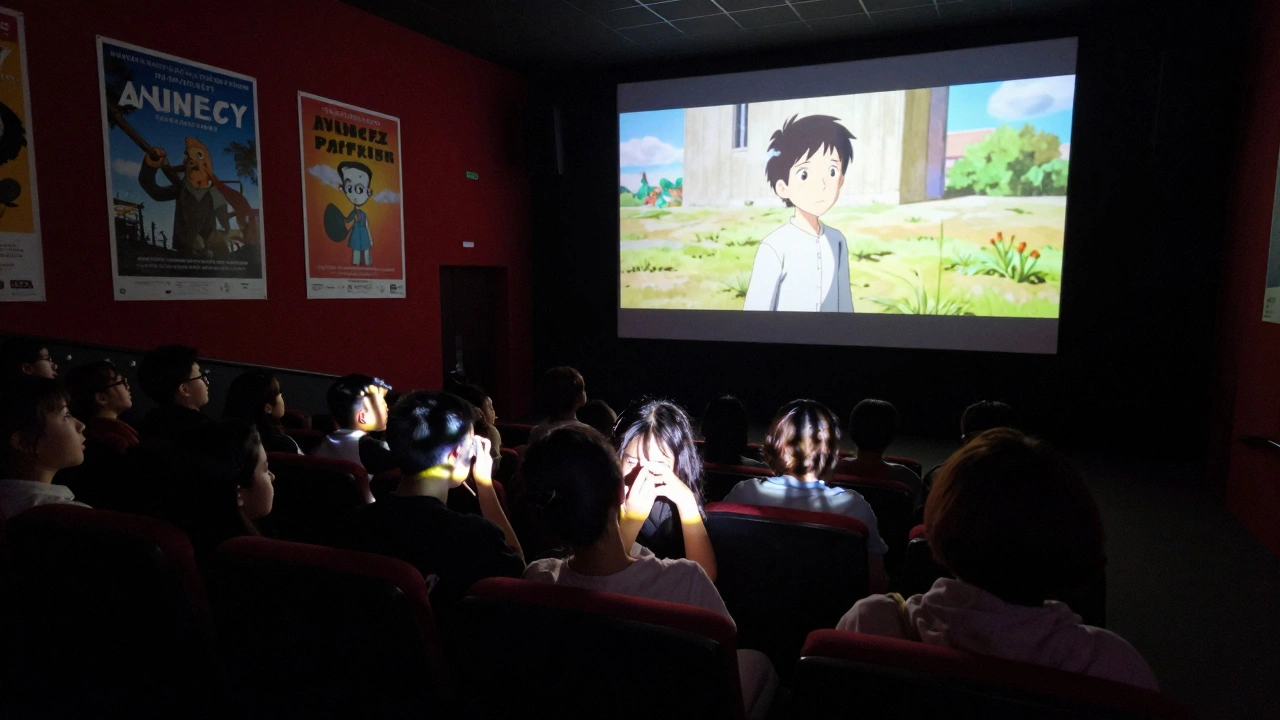
Every year, hundreds of animated films find their first audience not in theaters or on streaming platforms, but at animation film festivals. These aren’t just fancy screenings-they’re the launchpads where studios, indie creators, and student animators make their mark. If you’ve ever watched a Pixar short before it hit Disney+, or seen a hauntingly beautiful indie animation win an Oscar, chances are it started at one of these festivals.
Why Festivals Matter for Animated Films
Animated films don’t always follow the same path as live-action movies. A 10-minute indie short might never get picked up by a distributor unless it wins attention at a festival. Festivals act as filters: they give judges, buyers, and audiences a chance to see what’s new before the floodgates open on Netflix or YouTube. For many animators, getting into even one major festival means validation, exposure, and sometimes a career boost.
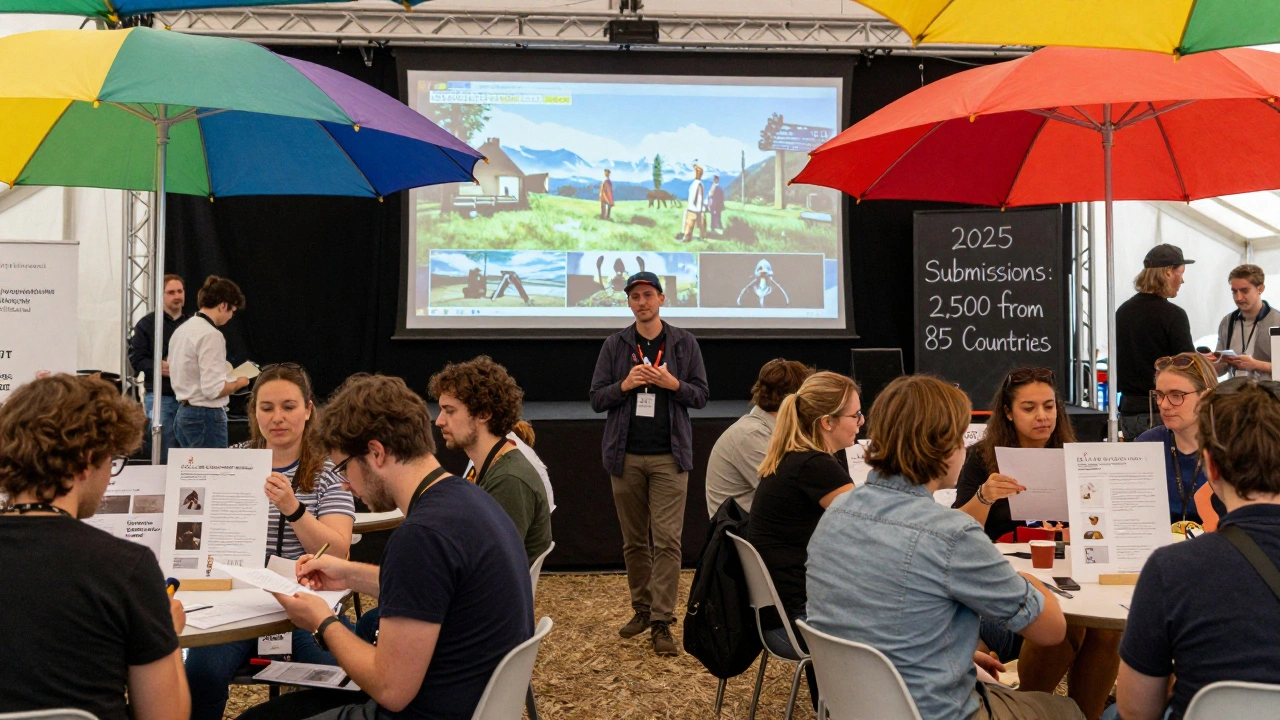
Take Annecy International Animated Film Festival in France. It’s the largest and most respected animation-only festival in the world. In 2025, over 2,500 films were submitted from 85 countries. The winning short film that year went on to be nominated for an Academy Award. That’s not luck-it’s how the system works.
The Big Four Animation Festivals
Not all festivals are created equal. Four stand out as the most influential for animated films:
- Annecy International Animated Film Festival (France) - Founded in 1960, it’s the gold standard. It covers everything from student films to studio blockbusters. Winning here can open doors to studios like Studio Ghibli, DreamWorks, or Netflix Animation.
- Sundance Film Festival (USA) - While not animation-exclusive, Sundance has become a major launchpad for indie animated features. Films like Spider-Man: Into the Spider-Verse and Flee premiered here. If you’re an indie creator with a bold story, Sundance is worth targeting.
- Animafest Zagreb (Croatia) - One of the oldest festivals in the world, dating back to 1972. It’s known for honoring experimental and artistic animation. Many European animators consider it a rite of passage.
- Ottawa International Animation Festival (Canada) - The largest animation festival in North America. It’s especially strong in supporting student work and has helped launch careers for animators from the U.S., Japan, and Australia.
What Happens at These Festivals?
It’s not just about watching films. At Annecy, you’ll find pitch sessions where creators present their next feature to Netflix or Apple TV+ executives. At Ottawa, there are workshops on claymation techniques or AI-assisted frame interpolation. Many festivals host networking mixers, panel discussions with directors like Hayao Miyazaki or Don Hertzfeldt, and even live drawing competitions.
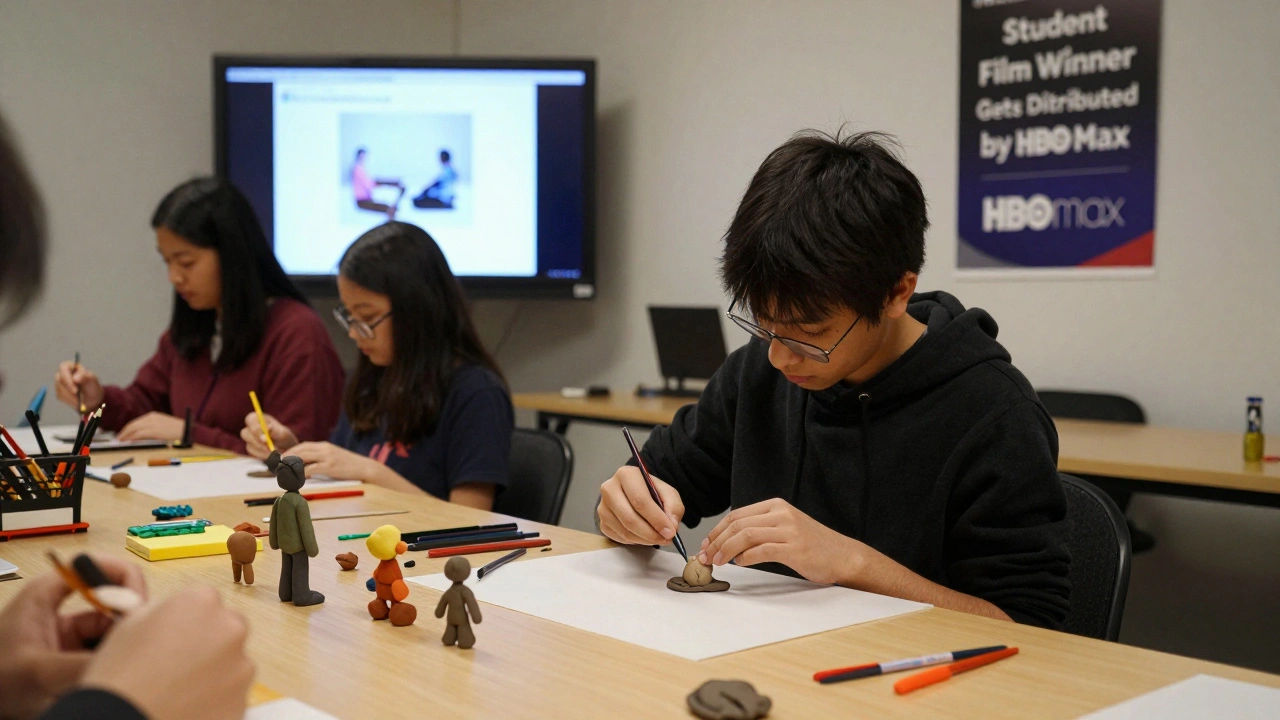
Some festivals offer cash prizes. Annecy gives out over €200,000 in awards annually. Others offer distribution deals. A short film that wins Best Student Film at Ottawa might get picked up by Cartoon Network or HBO Max for online release.
For filmmakers, the real value isn’t just the trophy-it’s the connections. A producer at Annecy might see your film, ask for your email, and invite you to submit your next project. That’s how careers are built.
How to Get Your Film In
Submitting to a festival isn’t as simple as uploading to YouTube. Each has its own rules:
- Check deadlines - Most festivals open submissions 6-8 months before the event. Annecy’s deadline is usually in January for a June festival. Missing it means waiting a full year.
- Follow format guidelines - Some require specific file formats (ProRes 422, H.264), others demand DCPs. Always read the technical specs.
- Pay the fee - Submission fees range from $10 to $75. Student submissions are often discounted. Don’t skip this step-many festivals won’t even screen your film if the fee isn’t paid.
- Target the right category - Is your film a 90-minute feature or a 3-minute experimental piece? Submitting a short to the feature category will get you rejected immediately.
- Prepare a press kit - Include a director’s statement, high-res stills, and a one-sheet poster. Festivals use this for promotion.
Many animators submit to 5-10 festivals in a single year. It’s not about winning every time-it’s about getting seen.
Emerging Festivals Worth Watching
While the Big Four dominate, new festivals are gaining traction:
- Animation Is Film (Los Angeles, USA) - Launched in 2017, it’s quickly becoming a West Coast hub. It screens films from Asia and Eastern Europe that rarely make it to U.S. theaters.
- Windsor International Animation Festival (Canada) - Focused on community-driven animation, it’s a great place for local creators to break in.
- Beijing International Animation Festival - China’s largest, and growing fast. It’s a key gateway for animators targeting Asian markets.
- Animafest Warsaw - A newer player in Europe, known for bold, political, and socially conscious animation.
These festivals aren’t just regional-they’re changing global animation. A film that wins in Beijing might get picked up by a distributor in Brazil. A short that screens in Windsor might land on Hulu. The world of animation is more connected than ever.
What You Won’t Find at These Festivals
Don’t expect red carpets and celebrity interviews like at Cannes. Most animation festivals are low-key. The audience is mostly other animators, students, and passionate fans. You won’t see influencers posting selfies on Instagram. Instead, you’ll find people huddled in the back of a theater, whispering about frame rates or color grading.
Also, don’t assume that if your film doesn’t win, it failed. Many award-winning films were passed over in one festival and found success elsewhere. One filmmaker submitted her 8-minute film to Annecy, Ottawa, and Zagreb-and got rejected by all three. A year later, it was picked up by the Toronto International Film Festival and went on to be nominated for an Oscar.
Why This Matters for Viewers Too
If you love animated films, festivals are where you’ll find the next big thing. The studio system often plays it safe-sequels, familiar characters, safe humor. Festivals are where the weird, the risky, and the deeply personal live. You’ll see animations made with crayons on paper, stop-motion using recycled plastic, or AI-generated dreamscapes that no algorithm could predict.
Festivals keep animation alive as an art form. Without them, we’d only see what’s profitable. With them, we get stories like The Boy and the Heron, Marcel the Shell with Shoes On, or My Life as a Zucchini-films that would never get greenlit in a boardroom.
What’s the easiest animation festival to get into?
For beginners, the Ottawa International Animation Festival and the Windsor International Animation Festival are among the most accessible. They have lower submission fees, generous student discounts, and a strong focus on emerging talent. Many first-time animators start here before aiming for Annecy or Sundance.
Can I submit a film I already posted on YouTube?
Most major festivals require films to be unpublished or unstreamed publicly before submission. If your film is already on YouTube, Vimeo, or any public platform, you’ll likely be disqualified. Some festivals offer "online premiere" categories, but these are rare. Always check the rules before submitting.
Do I need to be from a certain country to submit?
No. Animation festivals are international. Annecy, Ottawa, and Zagreb accept entries from every country. Language isn’t a barrier either-subtitles are expected. The only requirement is that your film meets their technical and content guidelines.
How long does it take to hear back after submitting?
Response times vary. Most festivals notify applicants between 2 and 6 months after the deadline. Annecy usually sends decisions in April for its June festival. If you haven’t heard anything by 3 months out, it’s okay to send a polite inquiry.
Are there animation festivals for kids or family films?
Yes. The Ottawa International Animation Festival has a dedicated Family Program, and the Annecy Festival includes a Children’s Jury that awards a separate prize. There are also niche festivals like the Children’s Film Festival Seattle and the International Festival of Films for Children and Young Adults in Zagreb.







Comments(7)