Imagine the silence in a room holding sixty of the world’s best musicians. They are staring at blank stands, waiting for a single cue. Then, the conductor raises their baton, and a wall of sound erupts-strings soaring, brass thundering, percussion shaking the floorboards. This is not just a concert; it is a high-stakes surgery where every note must align perfectly with a frame of film. Orchestral recording sessions for film music are one of the most complex, expensive, and emotionally charged processes in modern media production.
If you are looking into how these sessions work, you aren't just asking about microphones or sheet music. You are asking about the intersection of art, technology, and extreme logistics. Whether you are a budding composer, a curious film student, or an aspiring audio engineer, understanding the mechanics behind the magic helps demystify why a $50,000 score sounds like a million dollars. Let's break down exactly what happens when the lights go up in a Hollywood scoring stage.
The Anatomy of a Scoring Stage
Not all studios are created equal. For orchestral recording, you need a space designed specifically for large acoustic ensembles. The gold standard remains the scoring stages at major studios like Warner Bros., Universal, or Abbey Road. These rooms have high ceilings, often exceeding 30 feet, and specific architectural features that allow sound to breathe without becoming muddy.
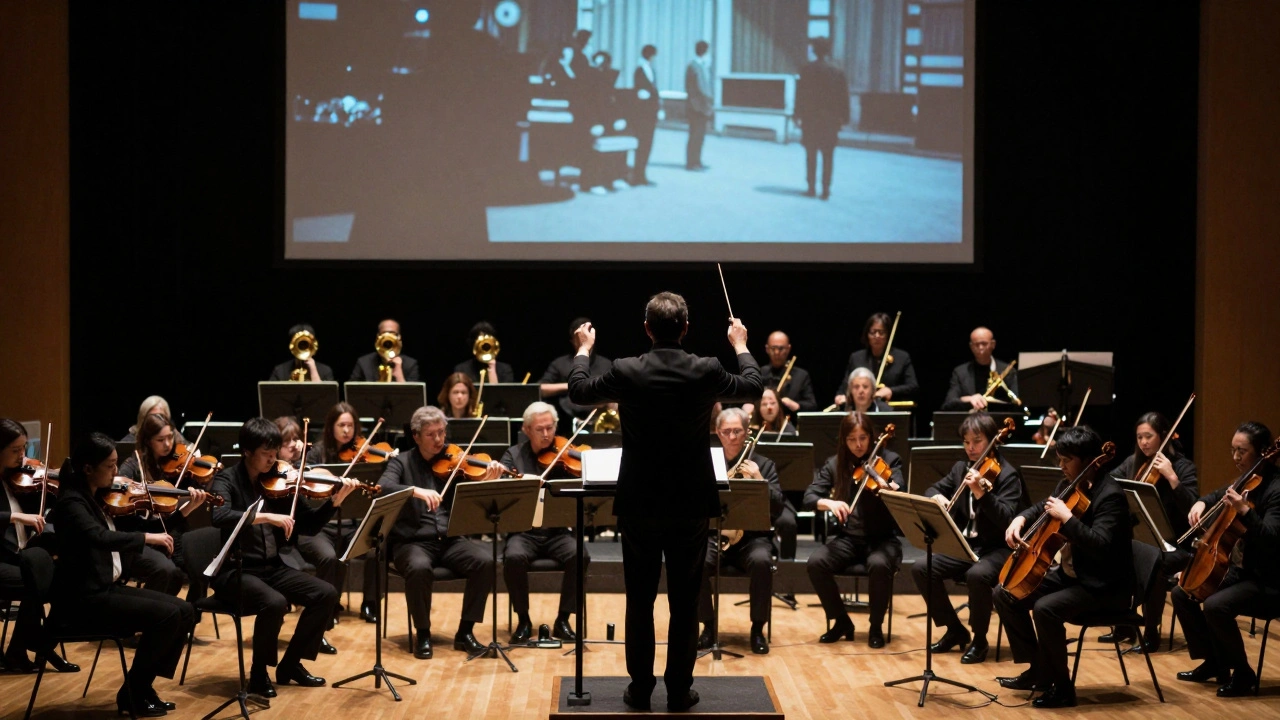
The layout is critical. Unlike a rock band recording where everyone might be close-mic'd in a small booth, an orchestra needs separation. The strings sit in a semi-circle facing the conductor. The woodwinds sit behind them. The brass section stands at the back, usually elevated on risers so their sound projects over the rest of the ensemble. The percussion section takes up the farthest corner, often requiring its own isolation booth because a timpani roll can easily overpower a delicate flute line.
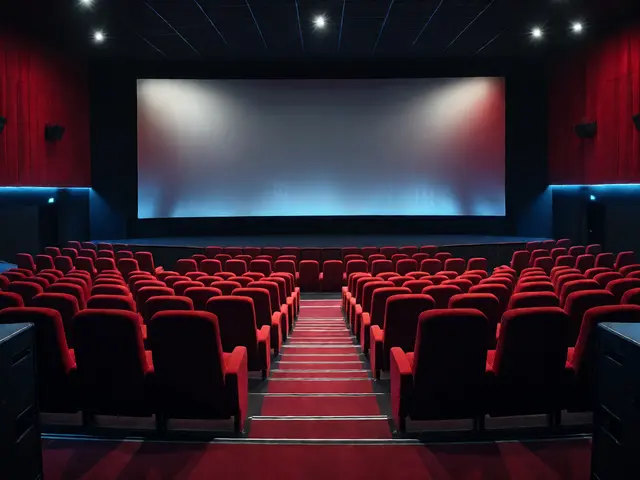
Then there is the scoring stage screen. This is a massive projection surface where the film plays. Musicians read from the screen as much as they read from their sheet music. They need to see the emotional context of the scene-a character crying, a car crashing-to match their dynamics. If the actor looks sad, the violinist softens their bow. If the hero charges forward, the trumpets blast. This visual connection is non-negotiable for authentic performance.
Pre-Production: The Silent Work
What you hear in the final mix is only the tip of the iceberg. Months before the first musician steps foot in the studio, the composer has been working tirelessly. They start by spotting the film, deciding exactly where music begins and ends. This creates a "spotting script" that guides the entire process.
Next comes orchestration. A composer might write a melody on a piano, but an orchestrator expands that into parts for 80 instruments. This requires deep knowledge of instrument ranges, timbres, and physical limitations. Can a flautist play that trill while running out of breath? Will the tuba player have time to turn the page? These details matter. Poorly prepared parts lead to mistakes, and mistakes cost money. In a top-tier session, musicians are paid by the hour, often exceeding $1,000 per hour for the entire ensemble. Every minute of confusion is a financial drain.
Before the live session, the composer produces a mockup. This is a digital version of the score using virtual instruments like Native Instruments or Spitfire Audio libraries. Directors and producers listen to this mockup to approve the musical direction. It serves as a blueprint for the engineers and musicians. However, a mockup is never the final product. It lacks the human imperfection, the collective energy, and the acoustic reality of real instruments playing together in a room.
The Session: Conductor, Composer, and Engineer
When the session begins, three people hold the power: the composer, the conductor, and the recording engineer. The conductor is the bridge between the written score and the musicians. They keep time, shape phrases, and ensure ensemble cohesion. In film scoring, the conductor also watches the screen, ensuring the music hits the picture changes precisely. This is called "playing to the click" or syncing to the frame.
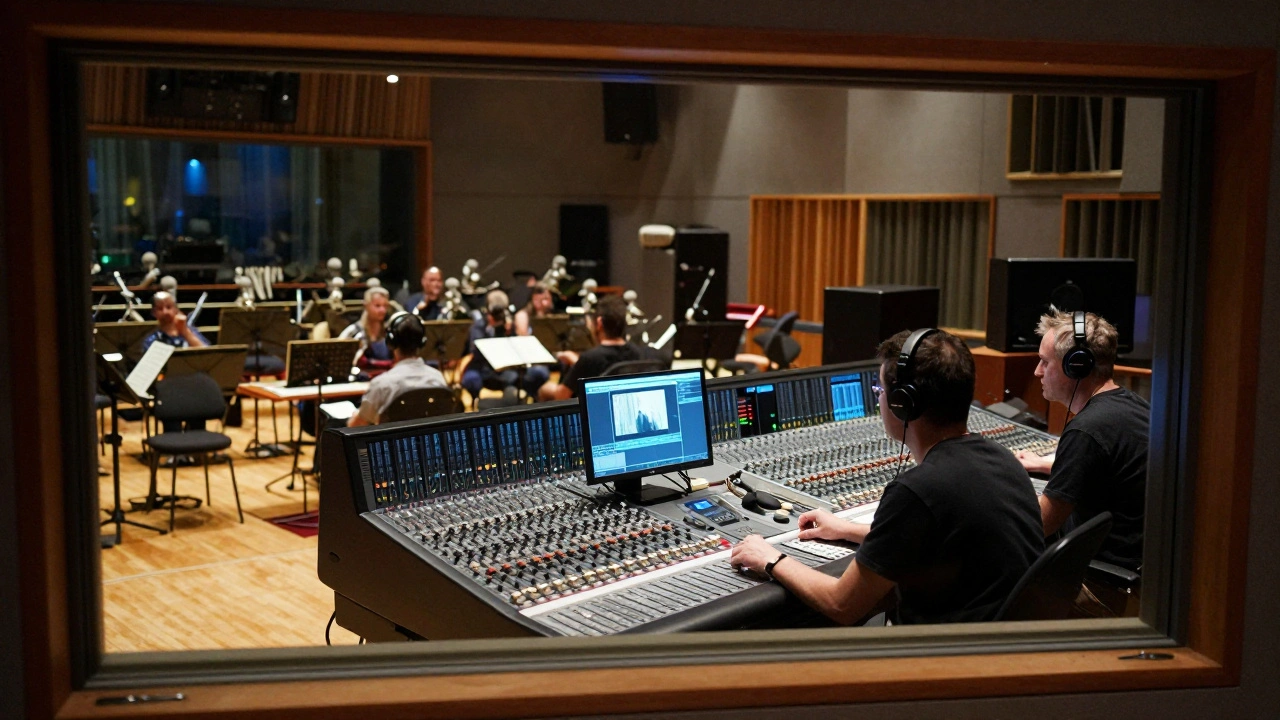
The recording engineer manages the technical side. They set up hundreds of microphones. A typical setup includes individual spot mics for soloists, group mics for sections (like first violins or cellos), and ambient room mics to capture the natural reverb of the hall. The engineer balances these inputs in real-time, sending a mix to the control room where the composer and director sit.
The composer sits in the control room with the director. They watch the film and listen to the live performance through headphones. If the director feels the strings are too aggressive during a tender moment, they call out, "Pull back the violins." The engineer adjusts the faders, or the composer signals the conductor to reduce the volume. This collaborative feedback loop continues until the take is perfect. Sometimes, they record multiple passes-just the strings, then just the brass-to give the editor more flexibility later.
Technical Challenges in Live Recording
Recording an orchestra live presents unique challenges. Phase alignment is a constant concern. Sound travels at different speeds depending on distance. If a microphone is placed two feet from a trumpet and another is ten feet away, the sound arrives at slightly different times, causing phase cancellation that makes the audio sound thin or hollow. Engineers use precise measurement tools and delay compensation plugins to align these signals.
Dynamics range is another issue. Film scores swing from whisper-quiet passages to earth-shattering crescendos. Analog tape machines could handle wide dynamic swings gracefully, but digital recorders can clip if levels get too hot. Engineers must ride the faders constantly, compressing peaks and boosting quiet sections to maintain a clean signal-to-noise ratio. Modern DAWs (Digital Audio Workstations) like Pro Tools allow for multi-track recording, capturing every instrument separately. This gives immense control during mixing but requires careful monitoring to avoid latency issues that could throw off the musicians' timing.
Another challenge is the "wall of sound" effect. When 60 people play loudly, the room itself becomes an instrument. Low frequencies build up, creating standing waves that can muddy the clarity of the mix. Acoustic treatment, such as bass traps and diffusers, helps mitigate this, but no room is perfect. Engineers often rely on EQ cuts to carve out space for each section, ensuring the cello doesn't clash with the trombone.
| Role | Primary Responsibility | Tools Used |
|---|---|---|
| Composer | Creates musical themes and approves final take | DAW, Score Editor, Headphones |
| Conductor | Leads musicians, keeps tempo, syncs to picture | Baton, Click Track, Screen |
| Recording Engineer | Captures audio, balances mic levels, prevents clipping | Mixing Console, Microphones, Pro Tools |
| Orchestrator | Transposes composer's sketch into full instrumental parts | Sibelius, Finale, Dorico |
| Music Copyist | Formats and prints sheet music for musicians | Score Editing Software, Printers |
Post-Session: Mixing and Final Polish
Once the live recording is complete, the work moves to the mixing stage. The mixing engineer takes the dozens of tracks recorded during the session and blends them into a cohesive stereo or surround sound image. This is where the true artistry of sound design emerges. They decide how much reverb each instrument gets, how loud the brass should be relative to the strings, and whether to add electronic elements for texture.
Modern film scores often hybridize live orchestras with synthesizers and found sounds. A mixer might blend a live string section with a granular synth pad to create an otherworldly atmosphere. This layering adds depth and complexity, allowing the score to evolve beyond traditional orchestral boundaries. The goal is always to serve the story. If the scene is tense, the mix might be dry and intimate. If it's epic, the mix will be wide and expansive.
Finally, the score is integrated with dialogue and sound effects in the final mix. This step ensures that the music supports, rather than competes with, the narrative. A well-mixed score enhances emotion without distracting the audience. It is invisible yet essential, guiding viewers through the emotional journey of the film.
Costs and Logistics: Why It Matters
Understanding the cost structure helps explain why some films use smaller ensembles or hybrid approaches. Hiring a 60-piece orchestra for a four-hour session can cost upwards of $50,000 to $100,000, including union fees, studio rental, and personnel. Smaller budgets might opt for a chamber ensemble or rely heavily on mockups. However, nothing replicates the emotional impact of a full live orchestra. The slight variations in timing, tone, and expression that humans bring cannot be fully synthesized.
Logistics also play a huge role. Union rules dictate rehearsal times, break periods, and overtime pay. Sessions often run late into the night, especially in Los Angeles where studio availability is tight. Coordinating musicians, engineers, and creative teams requires meticulous planning. One missed flight or sick musician can disrupt the entire schedule. Professionalism and preparation are paramount.
The Future of Orchestral Recording
Technology continues to reshape how we record film music. Virtual instruments are becoming increasingly realistic, reducing the need for large live sessions in some cases. Remote collaboration tools allow composers to work with musicians across the globe, sending files back and forth instead of gathering in one room. While this offers flexibility and cost savings, it risks losing the communal energy that defines a great orchestral performance.
Despite these changes, the core principles remain the same. Great film music connects emotionally with the audience. Whether recorded live in a historic studio or assembled digitally in a home studio, the goal is to enhance the storytelling. As long as filmmakers seek that powerful, visceral connection, orchestral recording sessions will remain a vital part of cinema.
How many musicians are typically in a film scoring session?
A standard full orchestral session includes around 60 to 90 musicians. This includes strings (violins, violas, cellos, basses), woodwinds (flutes, oboes, clarinets, bassoons), brass (trumpets, trombones, French horns, tuba), and percussion. Smaller scenes may use a chamber ensemble of 10 to 20 players, while epic blockbusters might hire over 100 musicians for maximum impact.
Why do film composers use mockups before recording live?
Mockups allow directors and producers to preview the musical direction before committing to expensive live sessions. They help identify pacing issues, thematic weaknesses, or emotional mismatches early in the process. Using virtual instruments like Native Instruments or Spitfire Audio, composers can create detailed drafts that closely resemble the final sound, saving time and money during the actual recording phase.
What is the role of the conductor in a film scoring session?
The conductor leads the orchestra, ensuring precise timing and emotional expression. In film scoring, they also synchronize the music with the visual cues on the screen. They interpret the composer's intentions, guide the musicians through complex passages, and adjust dynamics based on feedback from the director and composer in the control room. Their ability to communicate instantly with the ensemble is crucial for achieving a polished performance.
How does the recording engineer balance the sound of an entire orchestra?
Engineers use a combination of individual spot microphones, group microphones, and ambient room microphones to capture each section separately. They adjust levels in real-time using a mixing console, ensuring that louder instruments like brass don't overpower quieter ones like woodwinds. Phase alignment and EQ processing help maintain clarity, while compression controls dynamic range. The goal is to create a balanced, immersive soundstage that reflects the composer's vision.
Can virtual instruments replace live orchestras in film scores?
While virtual instruments have become incredibly realistic, they cannot fully replicate the emotional depth and organic variation of live musicians. Human performers bring subtle nuances in timing, tone, and expression that algorithms struggle to mimic. Many composers use a hybrid approach, blending live recordings with synthetic elements to achieve both authenticity and creative flexibility. For high-budget productions, live orchestras remain the preferred choice for their unparalleled impact.