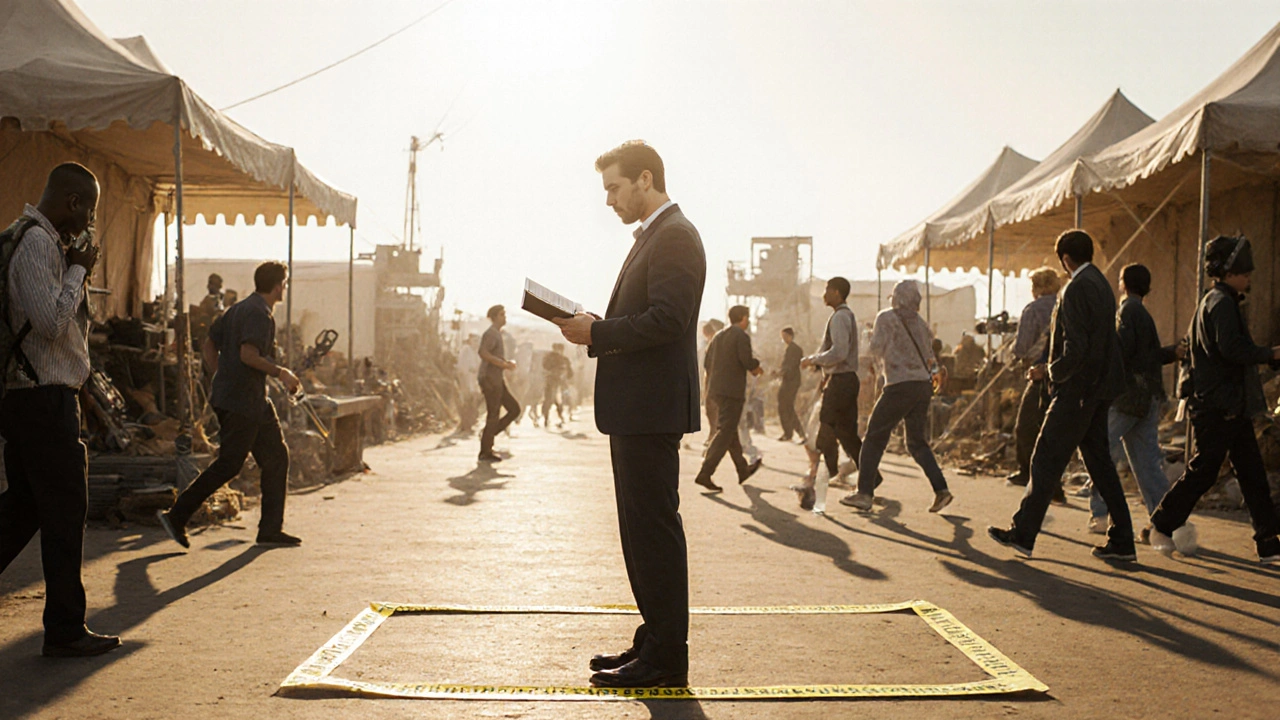
Walking onto a film set for the first time can feel like stepping into a foreign country. Everyone moves fast. Voices crackle over walkie-talkies. Cameras roll without warning. And if you mess up, it’s not just your performance that suffers-it’s the whole day’s schedule, the crew’s pay, and maybe even someone’s career. Professionalism on set isn’t optional. It’s the baseline. Here’s what actually works when you’re trying to be the kind of actor people want to hire again.
Be Early. Always.
Arriving 15 minutes before call time isn’t punctuality-it’s the bare minimum. Most professional sets expect you to be ready to go 30 minutes before your scheduled call. Why? Because you’re not just showing up to act. You’re showing up to be prepared. That means hair, makeup, wardrobe, and mental readiness. If you’re late, you’re not just wasting your own time-you’re holding up the director, the camera crew, the lighting team, and every other actor waiting to shoot their scene. One actor showing up 20 minutes late can delay a $20,000 day of shooting. No one forgets that.
There’s a difference between being on time and being ready. Being on time means you’re standing in the trailer. Being ready means you’ve reviewed your lines, warmed up your voice, and know exactly where your character is emotionally. The best actors I’ve worked with? They’re already in character before the assistant director even calls, “Places, everyone.”
Know Your Lines. Really Know Them.
“I’m still working on my lines” is not an excuse. It’s a red flag. If you’re still memorizing on set, you’re not an actor-you’re a liability. Directors don’t want to hear you say, “Can we do that again? I forgot the third line.” They’ve got a schedule. The crew has a clock. The budget is ticking.
Learn your lines the night before. Not the morning of. Not during lunch. The night before. Say them out loud. Walk around your apartment saying them. Record yourself and listen back. Know not just what you say, but when you pause, when you breathe, when you look away. A line isn’t just words-it’s rhythm. It’s emotion. It’s timing.
And if you forget? Don’t panic. Look at the script supervisor, not the director. They’re there to help. Say, “Can I have the last line?” quietly. Most of the time, they’ll give it to you without breaking the take. But don’t make it a habit. Every time you ask, you’re asking the crew to reset. That’s expensive. That’s disrespectful.
Respect the Space-Yours and Everyone Else’s
On set, every inch matters. The area around the camera is called the “critical zone.” That’s where the gaffer, the camera operator, and the focus puller work. Don’t stand there. Don’t lean on the dolly. Don’t walk through it unless you’re in the shot. If you’re waiting for your scene, stay in the designated actor area-usually marked by tape or a chair. If you’re not sure, ask.
Same goes for the sound team. They’re using hyper-sensitive microphones. A cough, a sneeze, even a zipper can ruin a take. If you need to clear your throat, wait until they call “Cut.” If you’re feeling sick, tell the production assistant before you go on set. They’ll get you tea, cough drops, or even reschedule your scene if needed.
And don’t forget: the set is not your social media stage. No selfies with the director. No posting behind-the-scenes clips unless you’re given permission. Crew members aren’t props. They’re professionals doing hard, physical work. Respect that.

Listen More Than You Talk
Actors often think they need to have opinions on everything-blocking, costume, lighting, even the script. But here’s the truth: on set, your job is to act. Not to direct. Not to produce. Not to fix the script.
That doesn’t mean you can’t speak up. If something’s physically impossible-like if your character’s supposed to climb a ladder that’s too wobbly, or if your costume is cutting off your circulation-say something. But do it quietly, respectfully, and only once. Bring solutions, not complaints. “The ladder feels unsafe-could we test a sturdier one?” is better than “This ladder’s going to kill me.”
And when the director is giving notes? Shut up and listen. Don’t interrupt. Don’t argue. Don’t say, “But I thought my character would do it this way.” That’s not your call. The director’s vision is what matters. Your job is to interpret it, not rewrite it. If you have a real idea, save it for after the take. Say, “I had a thought about the emotional shift in that scene-could we try it after lunch?”
Be Kind to the Crew
Most actors know to be polite to the director and producers. But the real test of professionalism is how you treat the grips, the PA’s, the caterers, the sound techs, and the makeup artists.
These are the people who make your performance possible. The grip who holds the reflector for three hours so your face looks natural. The PA who runs to the gas station at 5 a.m. to get you coffee because you forgot your thermos. The makeup artist who stays up until 2 a.m. fixing your eyeliner after a rain scene.
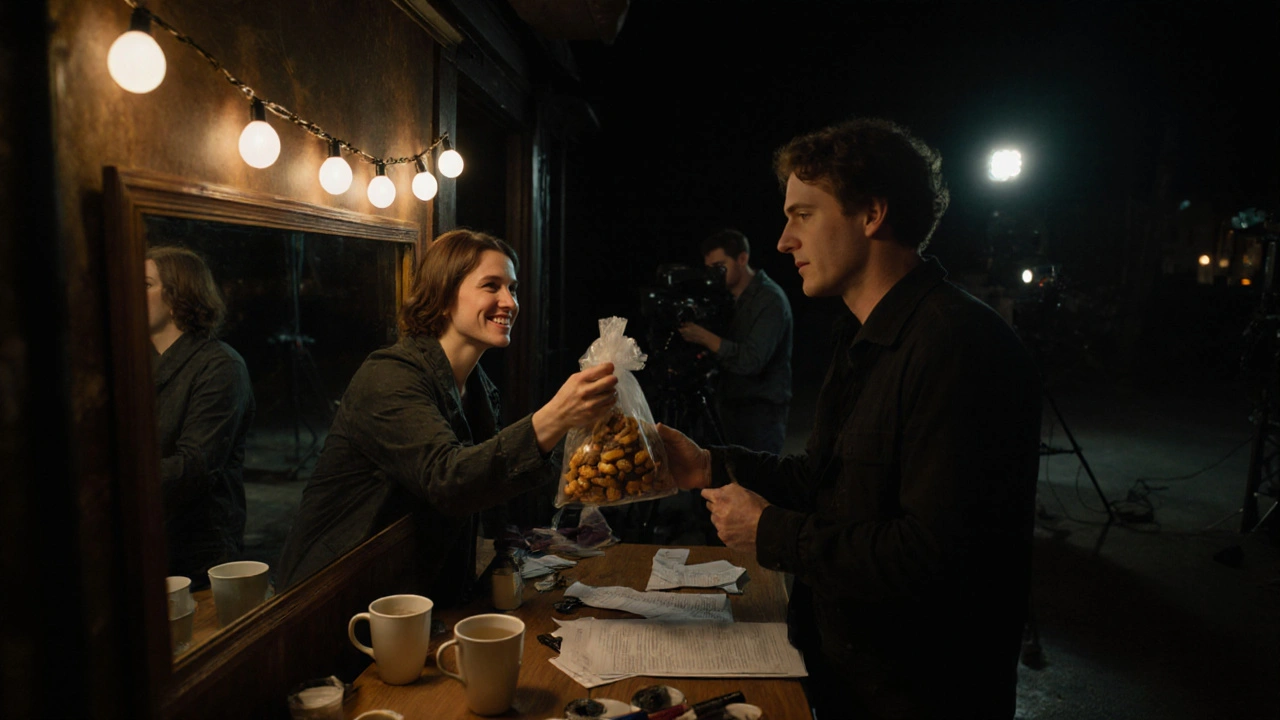
Say thank you. Look them in the eye. Ask their name. Remember it. Bring them snacks if you’re on a tight budget. A simple “Hey, thanks for staying late” goes further than you think. Crew members talk. They tell other crew members. And those crew members tell casting directors. Being the actor who’s kind to everyone? That’s how you get called back for the next job-even if your performance wasn’t perfect.
Don’t Bring Drama
On set, emotions run high. Long hours. Tight deadlines. High stakes. But if you’re the one who’s always upset, always complaining, always gossiping, you’ll be labeled “difficult.” And that label sticks.
It doesn’t matter if you’re having a bad day. You’re not on a therapy couch-you’re on a film set. If you’re feeling overwhelmed, talk to the production manager or your agent. Don’t vent to the other actors. Don’t roll your eyes when the director gives a note. Don’t sulk if you’re not in every scene.
Professional actors don’t disappear for hours. They don’t demand private trailers if they’re not lead roles. They don’t compare their screen time to others. They show up, do the work, and leave the ego at the door. The industry is small. Word gets around.
Know When to Be Quiet and When to Speak Up
There’s a balance. You’re not a robot. You’re an artist. But your art is part of a machine. The machine runs on trust, timing, and respect.
If the script says your character screams at the top of a staircase-but the staircase is 12 feet high and there’s no safety rail-you speak up. If the costume makes it impossible to breathe during your emotional monologue-you speak up. But if you just think your character would say “I hate you” instead of “I’m disappointed,” save it for the rehearsal room.
Ask yourself: Is this about the story? Or is this about me? If it’s about the story, say something. If it’s about your ego, stay quiet.
Leave the Set Better Than You Found It
When your scene is done, don’t just walk away. Check your space. Did you leave a water bottle on the floor? Did you crumple your script on the chair? Did you leave your coat on the costume rack?
Pick up your trash. Fold your chair. Return your script to the script supervisor. Hang your costume back up. This isn’t about being neat-it’s about respect. You’re borrowing someone else’s space, tools, and time. Leave it clean. Leave it ready for the next person.
Some actors think this is beneath them. The truth? The most respected actors I’ve worked with? They’re the ones who clean up after themselves. No one remembers who had the biggest line. But everyone remembers who didn’t leave a mess.
It’s Not About Talent. It’s About Reliability.
There are thousands of talented actors out there. What sets the ones who keep working apart? Reliability. Consistency. Professionalism.
You can have the most stunning audition in the world. But if you’re late, forget your lines, or treat the crew like servants, you won’t get hired again. The industry doesn’t punish bad acting as much as it punishes bad behavior.
Be the actor who shows up early. Who knows their lines. Who listens. Who says thank you. Who cleans up. Who stays calm. Who doesn’t make waves.
That’s not just etiquette. That’s how you build a career.
What happens if I’m late to set?
Being late can delay the entire day’s shoot, costing the production thousands of dollars. Most sets have strict penalties for lateness, including being fired or blacklisted. Even a 15-minute delay can cause scheduling dominoes to fall-shooting schedules are tight, and crews are paid by the hour. Always arrive 30 minutes before call time.
Can I bring my own ideas for my character’s performance?
Yes-but only if you present them respectfully and at the right time. Don’t interrupt the director during a take. Wait until after the scene is filmed, then ask, “I had a thought about how my character might react here-could we try it?” Focus on how your idea serves the story, not just your ego. Most directors appreciate thoughtful input when it’s offered with humility.
Should I socialize with the crew?
Be polite and kind, but don’t overstep. A simple “thank you” or asking someone’s name builds trust. Avoid gossip, oversharing personal drama, or trying to become friends with crew members during work hours. Your goal is to be respected, not popular. Professional boundaries keep your reputation clean.
What if I’m not happy with my role or screen time?
Don’t complain on set. If you’re unhappy, talk to your agent or manager afterward. On set, your job is to do the best you can with what you’re given. Every role, no matter how small, is an opportunity to show your professionalism. Many actors have been cast in bigger roles because they handled small parts with excellence.
Is it okay to use my phone on set?
Only during breaks and only if you’re not in the way. Never use your phone while waiting for your scene or near active equipment. Phones can interfere with sound recording, distract others, and create safety hazards. If you need to check something, step away from the set. Always ask if you’re unsure.
How do I handle criticism from the director?
Listen without arguing. Take notes. Say “thank you” even if it stings. Directors aren’t attacking you-they’re trying to get the best performance out of the scene. Reacting defensively will make them hesitant to work with you again. The best actors treat notes as feedback, not failure.
Can I ask for a copy of the script or footage?
You can ask, but don’t expect to get it. Scripts and raw footage are property of the production. Unless you’re signed to a contract that allows it, you won’t receive copies. If you want to review your performance, ask your agent to request a dailies clip after the fact-some productions will provide it for promotional use.
What’s the worst thing an actor can do on set?
The worst thing is treating people like servants. Whether it’s yelling at a PA, refusing to wear a costume, or making the crew wait because you’re “not in the mood,” that behavior destroys your reputation faster than any bad performance. On-set professionalism isn’t about being perfect-it’s about being reliable, respectful, and human.






Comments(9)