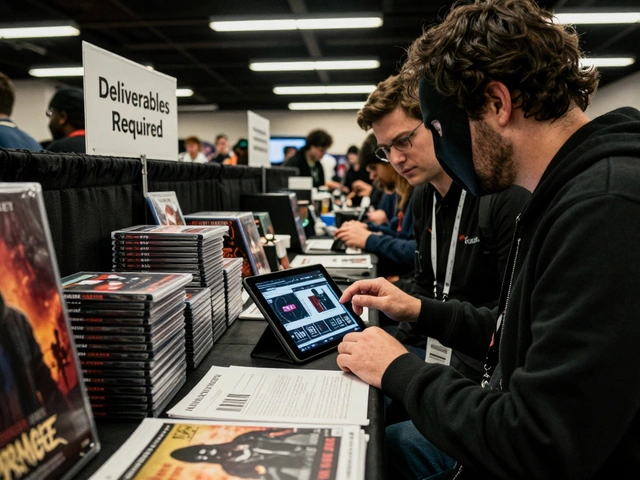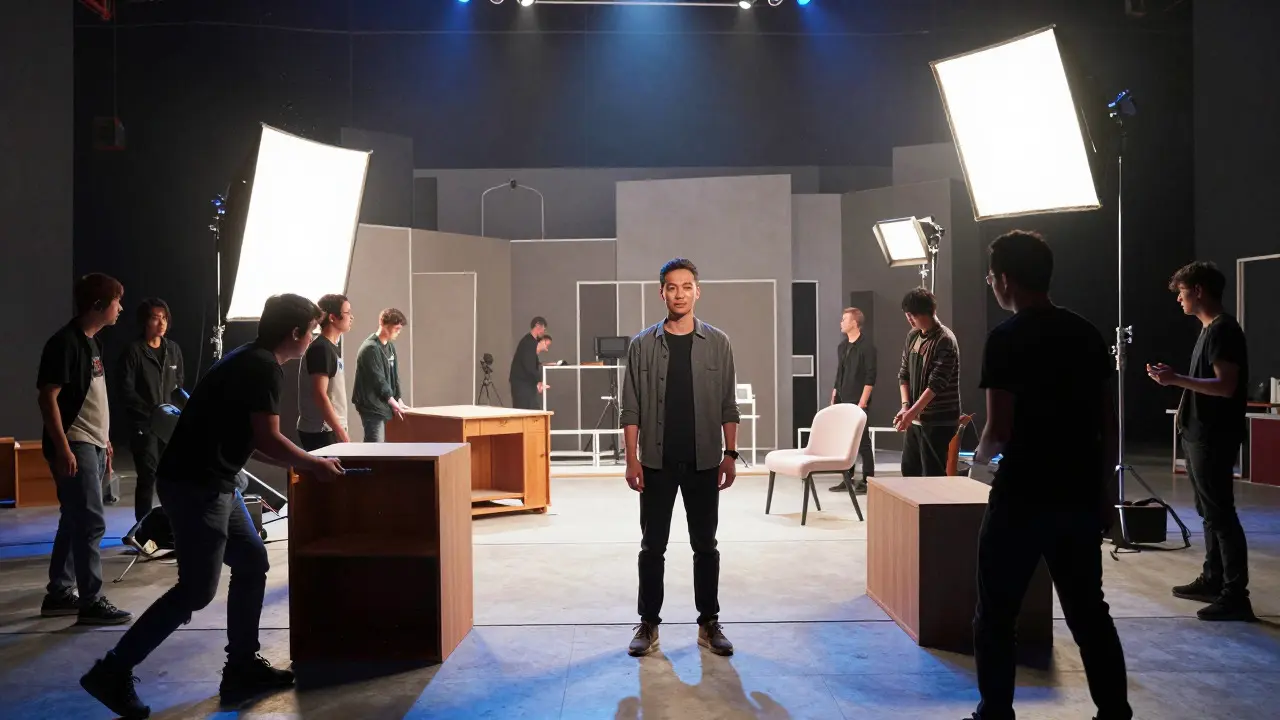
Imagine you are standing in the middle of a soundstage. The director just called for a change. The lighting is wrong, or maybe the actor needs more space to move. Suddenly, that beautiful, carefully crafted room you spent weeks building feels like an obstacle. This is the reality of Production Design the art and technique of creating the visual environment for a film or television show. It is not just about making things look pretty; it is about solving problems fast while keeping the story intact. When the clock is ticking, your ability to adapt defines your success.
The Reality of On-Set Chaos
Filmmaking is rarely linear. You might plan a scene for three days, but the weather changes, the lead actor gets sick, or the script shifts overnight. In these moments, the Art Department the team responsible for constructing and dressing sets becomes the first line of defense. If the camera angle moves two feet to the left, that prop table you built might block the shot. You need to know how to react without panicking. Panic kills creativity. Instead, treat every change as a puzzle piece that fits into a larger picture. Your goal is not to preserve your original idea at all costs, but to serve the current vision of the director and cinematographer.
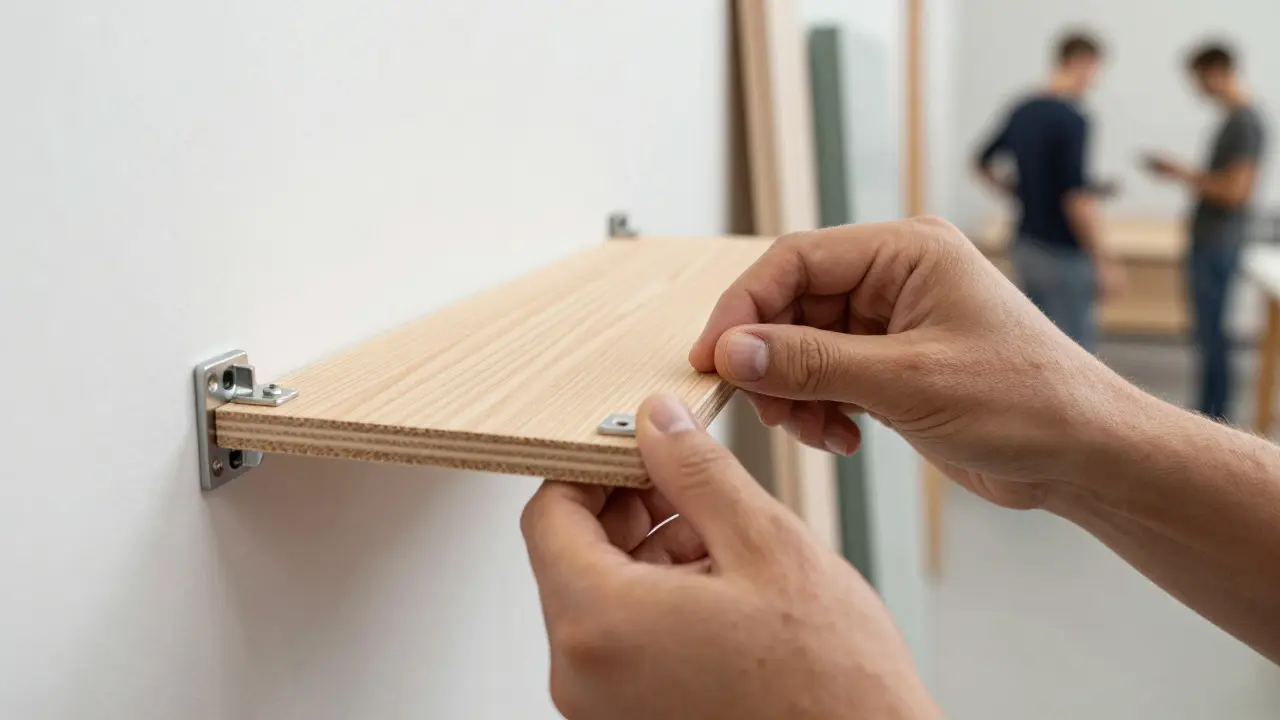
Time pressure often comes from budget constraints. Every hour on set costs money. If a set piece is too heavy to move, you lose time. If a color palette clashes with the new lighting setup, you lose time. The best designers anticipate these friction points before they happen. They build flexibility into their designs from day one. For example, instead of gluing a shelf to the wall, they use magnetic mounts or removable brackets. This small decision saves hours when the director asks for a different layout.
Building Flexible Sets
Flexibility is the single most important trait in on-set design. A rigid set is a liability. Think about the materials you choose. Drywall is cheap and easy to paint, but it cracks if you hit it. Wood is durable but heavier. Modular components allow you to reconfigure rooms quickly. Many successful productions use pre-fabricated walls that can be folded or stacked. This approach reduces construction time and allows for rapid reassembly.
Consider the concept of "dressing depth." This refers to how many layers of detail are visible in a shot. If you only have one layer, any change requires a full rebuild. If you have multiple layers, you can swap out background elements without touching the foreground. This modularity is crucial for scenes that require multiple setups in the same location. It keeps the crew moving and the schedule on track.
| Method | Construction Time | Flexibility | Cost Efficiency | Best For |
|---|---|---|---|---|
| Traditional Stick Build | High | Low | Medium | Unique, one-off hero shots |
| Modular Prefab | Medium | High | High | Recurring locations, quick turns |
| Digital Compositing | Low (On-Set) | Very High | Variable | Backgrounds, extensions, impossible spaces |
Collaboration with Key Departments
You do not work in a vacuum. The Cinematographer the person in charge of capturing the visual image cares about light and shadow. The Director cares about performance and blocking. The Costume Designer the professional who creates wardrobe for actors cares about how clothes interact with sets. When a change happens, you must communicate instantly. Use simple language. Avoid jargon that confuses non-designers. Say "we need to clear this corner for the camera" rather than "adjust the spatial hierarchy of the negative space." Clarity saves time.
Keep a close relationship with the Key Grip the head of the grip department, which handles lighting and camera rigging. They know what equipment will fit where. If you build a set that leaves no room for lights, you create problems later. Walk the set together during prep. Identify potential conflicts early. This proactive step prevents many on-set emergencies.
Managing the Art Department Team
Your team is your greatest asset. A good Set Decorator the designer who selects furniture, props, and other movable items knows thousands of items off the top of their head. They can find a replacement chair in minutes. Trust their instincts. Give them autonomy within the boundaries of the design. If you micromanage every screw, you become a bottleneck. Delegate tasks clearly. Assign specific roles for each shift. Who is handling the front of the set? Who is managing the back? Clear responsibilities prevent confusion during high-stress moments.
Maintain a well-stocked prop library. This collection of reusable items saves massive amounts of time. Categorize everything. Label boxes clearly. If a prop is missing, you can find a substitute quickly. This organizational discipline pays off when the director asks for a sudden change in the scene's era or mood. You don't want to be searching through unmarked crates while the clock runs out.
Tools for Rapid Adaptation
Technology plays a big role in modern production design. Digital pre-visualization allows you to test layouts before you build them. Use software to simulate camera angles. This helps you identify blind spots and awkward spaces. When a change is requested, you can pull up the digital model and see the impact immediately. This reduces guesswork and speeds up decision-making.
Physical tools matter too. Keep a basic toolkit handy on set. Hammers, drills, screws, tape, and clamps should be within arm's reach. Do not wait for the carpenter to bring tools. Be self-sufficient. Small adjustments often require simple fixes. A loose hinge, a wobbly table, a torn curtain. Fixing these yourself keeps the momentum going. It shows the crew that the design team is proactive and reliable.

Case Study: The Sudden Script Change
Let's look at a real scenario. Imagine you are designing a detective's office. The script calls for a messy, cluttered desk. You build it exactly that way. Then, the director decides the character is actually neat and organized. Now, you have to strip the desk clean. If you had glued papers to the surface, you would spend hours scraping them off. But if you used adhesive notes and loose stacks, you can clear the desk in ten minutes. You then add a few framed photos and a tidy stack of files. The set transforms completely. The cost? Minimal. The time saved? Significant. This is the power of reversible design choices.
Psychological Resilience
Finally, manage your own stress. On-set changes can feel personal. It can seem like criticism of your work. Try to detach your ego from the design. The set serves the story, not your portfolio. Embrace the chaos. View it as part of the creative process. The best films often come from happy accidents and last-minute tweaks. Stay calm. Breathe. Solve the problem. Move on. Your resilience sets the tone for the entire art department.
Practical Checklist for On-Set Success
- Build with modular components whenever possible.
- Use removable fasteners instead of permanent glue.
- Walk the set with the Cinematographer and Key Grip during prep.
- Keep a labeled and organized prop library.
- Communicate simply and clearly with all departments.
- Delegate tasks to trusted team members.
- Have a basic repair kit on hand at all times.
- Use digital pre-vis to test major layout changes.
What is the biggest mistake production designers make under time pressure?
The biggest mistake is trying to fix a problem with a permanent solution. Using strong adhesives or cutting into structural elements makes future changes difficult and expensive. Always prioritize reversibility in your design choices.
How do I communicate effectively with the director during a change?
Focus on the outcome, not the method. Explain what the change will achieve visually and narratively. Avoid technical jargon. Show, don't just tell. If possible, use reference images or quick sketches to illustrate your proposed solution.
Is digital pre-visualization worth the investment for smaller productions?
Yes, even basic 3D modeling can save significant time. It allows you to catch layout errors before physical construction begins. The cost of software is low compared to the cost of rebuilding a set on set. It is a worthwhile investment for any scale of production.
How important is the prop library for managing time pressure?
It is critical. A well-stocked library provides instant access to common items. This eliminates the need to source new props, which can take days. It also ensures consistency across different scenes and shooting days, reducing continuity errors.
What role does the set decorator play in on-set changes?
The set decorator is essential for quick adjustments. They handle the movable elements of the set, such as furniture and props. Their ability to rearrange and replace items quickly determines how fast the set can adapt to new requirements.