What distributors really want at film markets
Every year, hundreds of distributors show up at film markets like Cannes, AFM, and Berlinale with one goal: find the next movie that will make money. But they don’t just grab anything that looks flashy. They’ve got a checklist. And that checklist changes depending on where they are. A buyer at the American Film Market isn’t looking for the same thing as one at Cannes or Toronto. Understanding what each market demands can mean the difference between a sale and a silent booth.
American Film Market (AFM) - The Deal-Making Machine
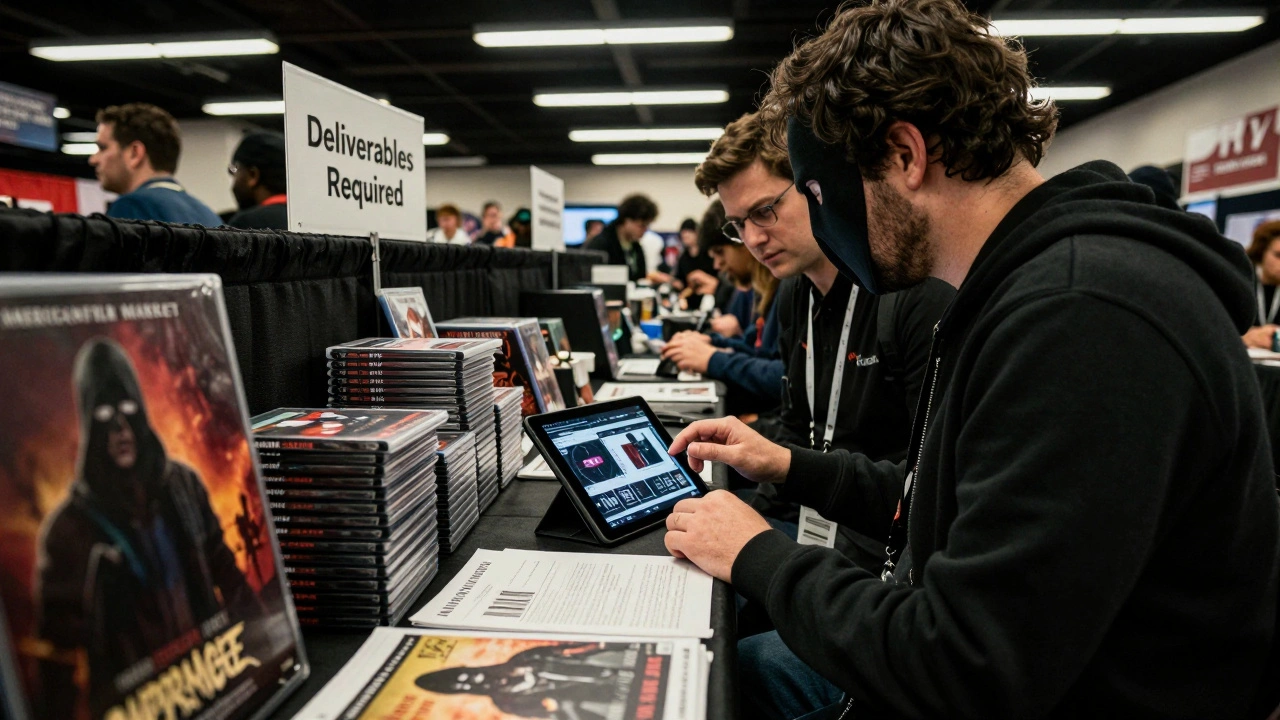
AFM, held every November in Santa Monica, is the biggest film market in the world by volume. It’s not about prestige. It’s about transactions. Buyers here want movies that can be sold quickly-preferably with a finished product, clear rights, and a solid marketing plan. They’re not here to discover art. They’re here to fill shelves.
Distributors at AFM look for three things above all: genre, budget, and deliverables. A horror film with a $500,000 budget and a completed VFX reel gets way more attention than a $3 million drama still in post. Why? Because horror has a global audience, and low budgets mean faster ROI. Buyers also check for locked picture, final sound mix, closed captioning, and a trailer that works without context. If you don’t have those, you’re not even in the conversation.
One distributor from Germany told me last year he bought 17 films at AFM. All of them were under $1 million. Ten were horror or thriller. Seven had actors with recognizable faces from TV or indie hits. He didn’t care about awards. He cared about streaming platforms that need content every week.
Cannes Film Festival - The Brand Builder
Cannes is where reputation is made. Buyers here don’t just want to buy a movie-they want to buy into a story. The Palme d’Or winner from last year, Emilia Pérez, didn’t sell because of its budget. It sold because of its buzz, its director’s track record, and its cultural relevance. Distributors at Cannes are looking for films that can be marketed as events.
They care about awards potential, festival pedigree, and director name recognition. A film with a Sundance premiere and a director who’s been in competition at Berlinale gets a second look. A film with no festival history? It’s hard to get past the first meeting. Buyers at Cannes are often from premium streamers like Netflix, Apple TV+, or MUBI. They’re not chasing volume. They’re chasing prestige and cultural impact.
But here’s the catch: even at Cannes, money talks. A $15 million drama with no star power and no clear international appeal will struggle. The sweet spot? A $5-8 million film with a strong lead actor, a unique hook, and a director with a proven style. Think Parasite-low budget, high art, global resonance.
Berlinale - The European Gateway
Berlinale is where European distributors come to scout. It’s also where U.S. buyers look for films that can work across multiple territories. Unlike Cannes, which leans toward art-house prestige, Berlinale has a stronger commercial edge. Buyers here are looking for films that can travel-especially across Germany, France, Spain, and Scandinavia.
They prioritize films with strong female leads, social themes, and minimal language barriers. A film with heavy dialogue in a regional dialect? It’s a hard sell. A film with visual storytelling and universal emotions? That’s gold. One buyer from Spain told me he bought three films last year-all had protagonists over 50, dealt with family dynamics, and had no reliance on English. He didn’t need subtitles to understand the emotion.
Co-productions are big here. Films backed by German, French, or Swedish funding get priority. Buyers know those countries have public film funds that help with marketing. If your film has a German co-producer listed, you’re already ahead of 70% of the competition.

Toronto International Film Festival (TIFF) - The North American Launchpad
TIFF is where U.S. and Canadian distributors make their biggest moves. It’s not as deal-heavy as AFM, but it’s where buzz turns into sales. Buyers here are looking for films that can open in theaters and then go straight to streaming. They want awards momentum, but they also want box office potential.
The top sellers at TIFF in the last three years all had one thing in common: a star with name recognition. Not necessarily A-list Hollywood, but someone who’s known-like an actor from Succession, Stranger Things, or a breakout indie performer. A film with a lesser-known cast needs a killer logline and a director with a cult following to compete.
Documentaries with social relevance also do well here. Think 20 Days in Mariupol or Navalny. They don’t need big budgets. They need urgency, access, and emotional weight. Buyers at TIFF are looking for films that can spark conversation-and get picked up by Netflix, Hulu, or Amazon.
San Sebastián, Busan, and Rotterdam - The Niche Players
Not every market is for everyone. San Sebastián in Spain attracts buyers focused on Latin America and Iberian markets. Busan in South Korea is where Asian distributors scout for films that can cross into Japan, Thailand, and Indonesia. Rotterdam is where experimental and avant-garde films find their audience.
At San Sebastián, buyers look for films with Spanish or Portuguese language elements, even if they’re not fully in those languages. A film with a Latin American setting and a bilingual cast gets extra points. At Busan, films with strong visual storytelling and minimal dialogue perform best. Rotterdam buyers want innovation-unconventional structure, non-linear narratives, or new forms of documentary.
These markets are smaller, but they’re where deals are made for territories that bigger markets ignore. A film that doesn’t sell in Cannes might find a home in Busan-and then get picked up later by a global streamer.
What distributors don’t tell you
Most filmmakers think distributors are looking for perfect films. They’re not. They’re looking for films that are sellable. That means:
- A clear genre label (even if it’s a hybrid)
- A lead actor who can be marketed
- Deliverables ready before the market starts
- A trailer that works in 30 seconds
- Clear rights ownership-no co-production disputes
One producer told me she lost a $200,000 deal at AFM because her contract didn’t specify who owned the digital rights in Brazil. The buyer walked away. No one told her that until it was too late.
Also, timing matters. If your film is still in color grading when the market opens, you’re behind. Buyers make decisions in days, not weeks. If you’re not ready, you’re not in the game.

How to prepare for any market
Here’s what works, no matter where you go:
- Have a 90-second trailer that shows the tone, conflict, and ending-not just pretty shots.
- Know your budget and where your money came from. Buyers ask this first.
- Identify your target territories. Don’t say “worldwide.” Say “Germany, France, Brazil, Australia.”
- Get your rights cleared. No exceptions.
- Bring a one-sheet and a digital press kit with stills, bios, and press quotes.
Don’t rely on your film being “special.” Be specific. Be ready. And know who you’re talking to.
What’s changing in 2026
Streaming platforms now demand shorter windows. Buyers want films that can go from festival to streaming in under 60 days. That means faster post-production and tighter release schedules.
Also, AI-generated trailers are becoming common. Buyers can now test five different versions of your trailer in minutes. If your trailer doesn’t hook them in the first five seconds, it’s dead. You need to test yours with real audiences before you even pack your bags.
Finally, sustainability is becoming a factor. Buyers are asking: Was this film made with ethical labor? Were crews paid fairly? It’s not a dealbreaker-but it’s a conversation starter.
Final thought
Film markets aren’t about luck. They’re about preparation. The distributor who walks away with your film isn’t the one who made the best movie. They’re the one who made the easiest sale. Know what they want. Be ready before they ask.
Do distributors only buy finished films?
Most do, especially at AFM and TIFF. At Cannes and Berlinale, buyers sometimes commit to films still in post-production-but only if the footage is strong, the director has a track record, and the rights are clear. If you’re not locked, you’re at a major disadvantage.
Can a low-budget film sell at a major market?
Absolutely. Low-budget horror, thrillers, and comedies sell constantly at AFM and Toronto. The key is genre clarity and a strong hook. A $200,000 film with a killer logline and a recognizable lead can outperform a $5 million drama with no clear audience.
What’s the biggest mistake filmmakers make at markets?
Showing up without deliverables. Buyers need a locked picture, final sound, captions, and clear rights. If you don’t have those, you’re wasting your time-and theirs. No one will wait for you to finish editing.
Is it better to go to one market or multiple?
Start with one. If your film fits AFM’s profile-genre-driven, low-budget, deliverables-ready-go there first. If it’s a prestige drama with awards potential, target Cannes or TIFF. Trying to do all of them spreads you too thin. Focus on the market that matches your film’s strengths.
Do distributors care about film festivals?
Yes, but only if they’re relevant. A premiere at Sundance or Berlinale adds credibility. A premiere at a small regional festival? It helps, but not enough. Buyers care about the level of competition and the audience reach. A film that screens at a top-tier market gets noticed. One that doesn’t? It’s harder to break through.




Comments(6)