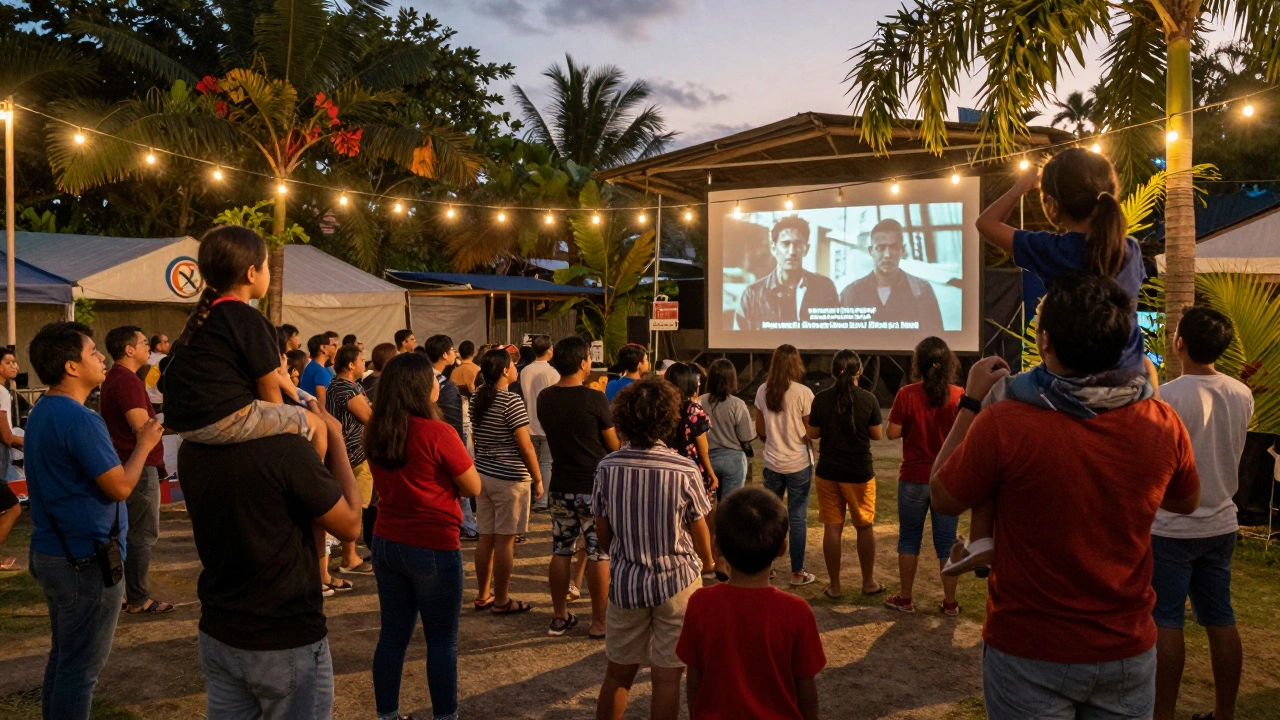
For years, Hollywood and Bollywood dominated global film conversations. But right now, the most exciting growth in cinema isn’t happening in Los Angeles or Mumbai-it’s in Southeast Asia, especially in the Philippines and Indonesia. Both countries are seeing a surge in film production, audience demand, and international recognition. And it’s not just about more movies. It’s about better stories, new technology, and local voices finally getting the spotlight they’ve long deserved.
Philippines: From Blockbusters to Indie Breakouts
The Philippines has been making films since the 1910s, but the last five years have changed everything. In 2023, the country produced 187 feature films-the highest number since 1982. By 2025, that number climbed to over 210, according to the Film Development Council of the Philippines. That’s a 40% increase in just three years.
What’s driving this? A mix of government support, cheaper digital gear, and streaming platforms hungry for local content. The National Film Archive now funds at least 15 indie projects annually. Directors like Lav Diaz and Brillante Mendoza used to struggle to find funding. Now, they’re working with Netflix, Apple TV+, and Viu to reach millions.
One example is On the Job 2: The Missing 8, a crime thriller that premiered at Cannes in 2021 and later became Netflix’s most-watched Filipino film in 2023. It wasn’t just a hit overseas-it sparked a wave of local crime dramas. Studios like Star Cinema and Viva Films started investing in grittier, socially aware stories instead of just romantic comedies.
Even small towns are getting in on the action. In Cebu and Davao, local film festivals now draw crowds of 5,000+. These aren’t just screenings-they’re community events with workshops, Q&As, and even film grants for high school students.
Indonesia: The Rise of the Mass Market
Indonesia is the largest country in Southeast Asia by population-over 275 million people. And now, it’s also the region’s biggest movie market. In 2024, Indonesian cinemas sold 230 million tickets, up from 160 million in 2020. That’s more than Thailand, Vietnam, and Malaysia combined.
The secret? Horror. Not just any horror-Indonesian horror. Films like Impetigore (2019) and The Queen of Black Magic (2019) became global sensations. They weren’t just scary-they were rooted in Javanese folklore, Balinese rituals, and local superstitions. Western audiences didn’t just watch them. They studied them.
But it’s not just horror. Indonesia’s comedy and family films are booming too. Warkop DKI Reborn series, based on a 1980s comedy group, made over $12 million at the local box office in 2023. And My Sassy Girl (2024), a remake of the Korean classic, became the highest-grossing Indonesian film of all time.
What’s changed? Streaming. Gojek’s GoPlay and Vidio now have over 40 million active users. Local studios like MD Pictures and Soraya Intercine Films are producing 50+ films a year, mostly for digital release. The government even launched a tax incentive program in 2023: if a studio spends over $1 million on local production, they get 25% back.

Why Now? The Tech and Money Shift
Both countries had the talent. What they lacked was access. In 2018, a decent digital camera cost over $5,000. Today, you can shoot a feature film on a $1,200 Sony A7S III. Editing software? Free. Distribution? Just upload to YouTube or Netflix.
And the money’s following. In 2025, foreign investment in Southeast Asian film hit $420 million-up from $110 million in 2020. Singapore’s Mediacorp, Hong Kong’s Golden Harvest, and even South Korea’s CJ ENM are co-producing with Filipino and Indonesian teams.
It’s not just about money-it’s about trust. International buyers used to think Southeast Asian films were low-budget, poorly made. Now, they see precision. The Philippines’ Liway (2018) used real political prisoners as actors. Indonesia’s Dead Time: Kala (2022) was shot entirely on location in a real abandoned prison. These aren’t gimmicks. They’re commitments to authenticity.
Challenges Still Remain
It’s not all smooth sailing. Censorship is still a problem. Indonesia’s film board banned My Sister’s Keeper (2024) for depicting LGBTQ+ relationships. The Philippines still requires all films to be reviewed by the MTRCB, and some indie titles get delayed for months.
Infrastructure is uneven. Outside Manila and Jakarta, there’s no reliable film lab, no post-production house, no sound mixing studio. Many filmmakers still send their footage to Bangkok or Seoul for editing.
And talent? There’s a shortage of skilled crew members. In 2024, a survey by the ASEAN Film Association found that 68% of Indonesian productions had to hire technicians from Malaysia or the Philippines because local crews weren’t trained in digital cinematography.
What’s Next? The Global Stage
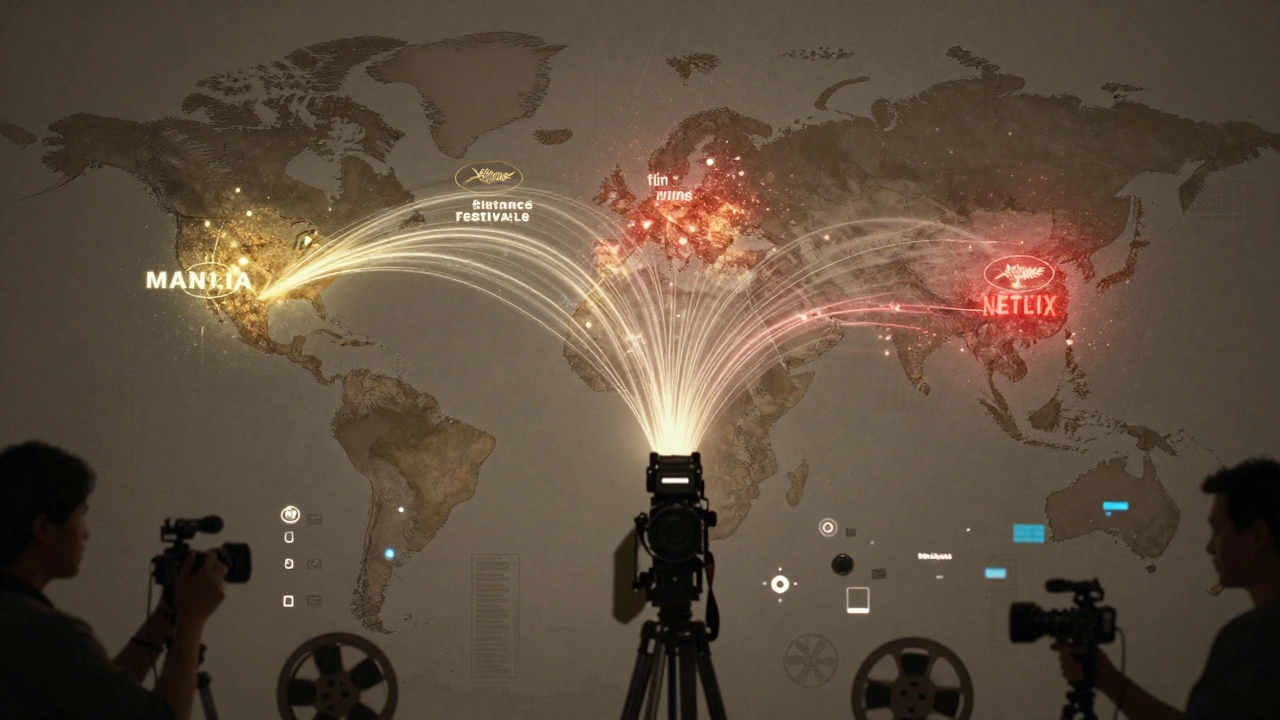
Look at the numbers: in 2025, 12 Filipino films and 15 Indonesian films were selected for international festivals like Sundance, Berlinale, and Busan. That’s more than any other region outside Europe and North America.
Netflix alone has 87 Southeast Asian originals in production-42 from the Philippines, 31 from Indonesia. Amazon Prime is launching a new Southeast Asian film fund with $100 million. Disney+ is planning a regional hub in Jakarta.
The next generation of filmmakers isn’t trying to copy Hollywood. They’re building something new: stories about family in rural villages, about corruption in city slums, about ghosts that don’t just scare-they reflect real pain.
These aren’t just movies. They’re cultural documents. And the world is finally paying attention.
Why is Southeast Asian cinema growing so fast now?
The growth is driven by three things: cheaper filmmaking technology, increased streaming demand, and government incentives. Digital cameras and editing software are now affordable, and platforms like Netflix and Viu are hungry for local stories. Governments in the Philippines and Indonesia now offer tax rebates and grants to producers who film locally.
Are Filipino and Indonesian films only popular locally?
No. Films like On the Job 2 and Impetigore have been screened at Cannes, Sundance, and Toronto. They’ve topped global charts on Netflix and Amazon Prime. International critics now praise their storytelling, not just their novelty. Audiences abroad are drawn to the cultural specificity-these aren’t generic thrillers, they’re rooted in local myths, politics, and daily life.
What genres are driving growth in the Philippines and Indonesia?
In the Philippines, crime dramas and social realism are trending-films like Liway and Rekorder explore real-life issues. In Indonesia, horror dominates, but comedies and family films are catching up fast. Warkop DKI Reborn and My Sassy Girl show that broad, emotional storytelling works just as well as scares.
Do these countries have enough trained film professionals?
Not yet. There’s a major gap in skilled crew members-cinematographers, sound designers, and digital editors. Many productions still hire talent from neighboring countries. Film schools are expanding, but it takes time. The ASEAN Film Association reports that 68% of Indonesian crews lack training in modern digital workflows.
How are streaming platforms changing the film industry in these countries?
Streaming has removed the barrier of theatrical distribution. A film no longer needs to open in 500 theaters to succeed. Now, a well-made indie film can go viral on YouTube or Viu with just a few thousand views. Netflix and Amazon are also funding original productions, giving filmmakers creative freedom they never had before.





Comments(9)