To avoid these shocks, you need to understand that you aren't just paying for a 'song.' You're paying for two different sets of rights. If you don't account for both, you'll find yourself in a legal deadlock during distribution. Let's break down how to actually plan your music licensing costs without losing your mind or your funding.
The Cheat Sheet for Music Budgeting
- Original Score: Fixed cost based on composer's fee + recording costs.
- Existing Songs: Variable cost based on popularity, territory, and usage.
- Library Music: Predictable, lower costs with pre-cleared rights.
- The 10% Rule: Always keep a 10% contingency fund specifically for music clearances.
The Two-Headed Monster: Sync and Master Licenses
Before you put a single number in your spreadsheet, you have to understand the split. Every piece of commercial music has two distinct owners. If you ignore one, the other can sue you or block your film from streaming.
Synchronization License is the right to use the composition-the melody, lyrics, and notes written on paper. This is usually managed by a Music Publisher. If a song was written by three people, you might have to deal with three different publishers.
Master Use License is the right to use the actual sound recording of that composition. This usually belongs to the Record Label. If you want the specific version of a song sung by a famous artist, you need this. If you record a cover version yourself, you only need the Sync license, not the Master.
Think of it like a house. The Sync license is the blueprint (the idea), and the Master license is the actual building (the physical result). You need both to move in.
Budgeting for an Original Film Score
When you hire a composer, you aren't just paying for music; you're paying for a creative partnership. Your budget here depends on the scale of the project and the size of the ensemble. A solo synth composer is a very different price point than a 40-piece orchestra.
For an indie feature, a composer's fee usually falls into one of three buckets: a flat fee, a per-minute rate, or a hybrid. A flat fee is the safest for budgeting. You agree on a total amount-say $5,000 to $20,000-and that covers the composition and delivery. However, you must clarify who pays for the musicians. If your composer wants a live cellist, does that come out of their fee or your production budget?
| Tier | Estimated Cost | What You Get | Typical Setup |
|---|---|---|---|
| Low Budget | $1,000 - $5,000 | Digital/Synth Score | Solo Composer using VSTs |
| Mid-Range | $5,000 - $15,000 | Hybrid Score | Synth + 2-3 Live Musicians |
| High-End Indie | $20,000 - $50,000+ | Orchestral/Full Band | Contracted Ensemble + Studio Time |

The Wild West of Song Clearances
Clearing a song from a major label like Universal Music Group or Sony Music is where budgets go to die. There is no fixed price list. Pricing is based on the "Most Favored Nations" (MFN) clause. This means if you pay the publisher $1,000, you must also pay the record label $1,000. They won't let the other party get a better deal.
Costs are influenced by several levers:
- Placement: A song in the opening credits costs more than a song playing faintly in the background of a coffee shop.
- Duration: A 30-second clip is cheaper than the full track.
- Media: "All Media, Worldwide, in Perpetuity" is the gold standard but the most expensive. If you only clear it for "Film Festivals," you'll have to pay again when you get a distribution deal.
- Artist Stature: An emerging artist on SoundCloud might do it for $500 or even for free for the exposure. A Billboard Top 100 hit could cost $25,000 to $100,000 just for a few seconds of use.
If you're on a tight budget, look for "Pre-cleared" music. These are tracks from production libraries where the Sync and Master rights are bundled together. You pay one fee, and you're done. It's not as prestigious as a chart-topping hit, but it keeps you from getting a cease-and-desist letter from a lawyer.
Working with a Music Supervisor
A Music Supervisor is the bridge between the director's vision and the financial reality. They don't just pick songs; they negotiate the deals. While they charge a fee-often a daily rate or a flat project fee-they usually save you more money than they cost.
A good supervisor knows which publishers are flexible and which ones are "price-gougers." They can suggest "sound-alike" tracks or introduce you to indie artists who want their music in a film. If you're budgeting for a professional supervisor, expect to set aside $2,000 to $10,000 depending on the project's complexity. They handle the paperwork, ensuring your "Chain of Title" is clean for the distributors.
Common Budgeting Pitfalls to Avoid
The biggest mistake filmmakers make is using "temp music" during editing and then refusing to let go of it. You might spend six months editing your film to a specific Radiohead track, only to find out the licensing fee is $50,000. Now you're stuck: do you find more money, or do you re-edit the entire emotional climax of your movie to fit a cheaper song?
Avoid the "Festival Use Only" trap. It's tempting to get a cheap license that only covers festivals to save money upfront. But when a distributor like A24 or Netflix sees your film, they'll require "Step-up" payments to clear the music for commercial release. If the artist has since become a superstar, those step-up costs can bankrupt your post-production budget.
Another hidden cost is the "Session Fee." If you're recording an original song with a vocalist, you have to pay the studio, the engineer, and the performer. These are hourly costs that add up quickly. Always book more studio time than you think you need; there's nothing more expensive than paying an engineer to sit around while you struggle to get the perfect take.
Can I just use "Royalty-Free" music?
Yes, but be careful. "Royalty-free" doesn't mean free. It means you pay a one-time fee up front and don't have to pay royalties every time the movie is played. It's a great option for low-budget projects, but make sure you have the license in writing to avoid copyright strikes on YouTube or Vimeo.
What is MFN in music licensing?
MFN stands for "Most Favored Nations." It's a contractual agreement ensuring that if you pay one rightsholder (like the publisher) more than another (like the label), you must increase the payment to the lower party to match it. It keeps the payment fair across all owners of a single song.
How much should I budget for a music supervisor?
For a small indie project, you might find a supervisor who works for a flat fee of $2,000 to $5,000. For more complex films, they may charge $500 to $1,000 per day. This cost is usually separate from the actual licensing fees paid to the artists.
Do I need to pay the composer for the soundtrack album?
This depends on your contract. Typically, the composer keeps the "Writer's Share" of royalties, while the production company might own the "Master Recording." You should explicitly define who owns the rights to sell the score as a separate album in your initial agreement.
What happens if I use a song without a license?
At best, your film will be muted or taken down from streaming platforms. At worst, you'll face a lawsuit for copyright infringement. Distributors will also refuse to pick up your film if you cannot provide a clean "Music Cue Sheet" proving all rights are cleared.
Next Steps for Your Production
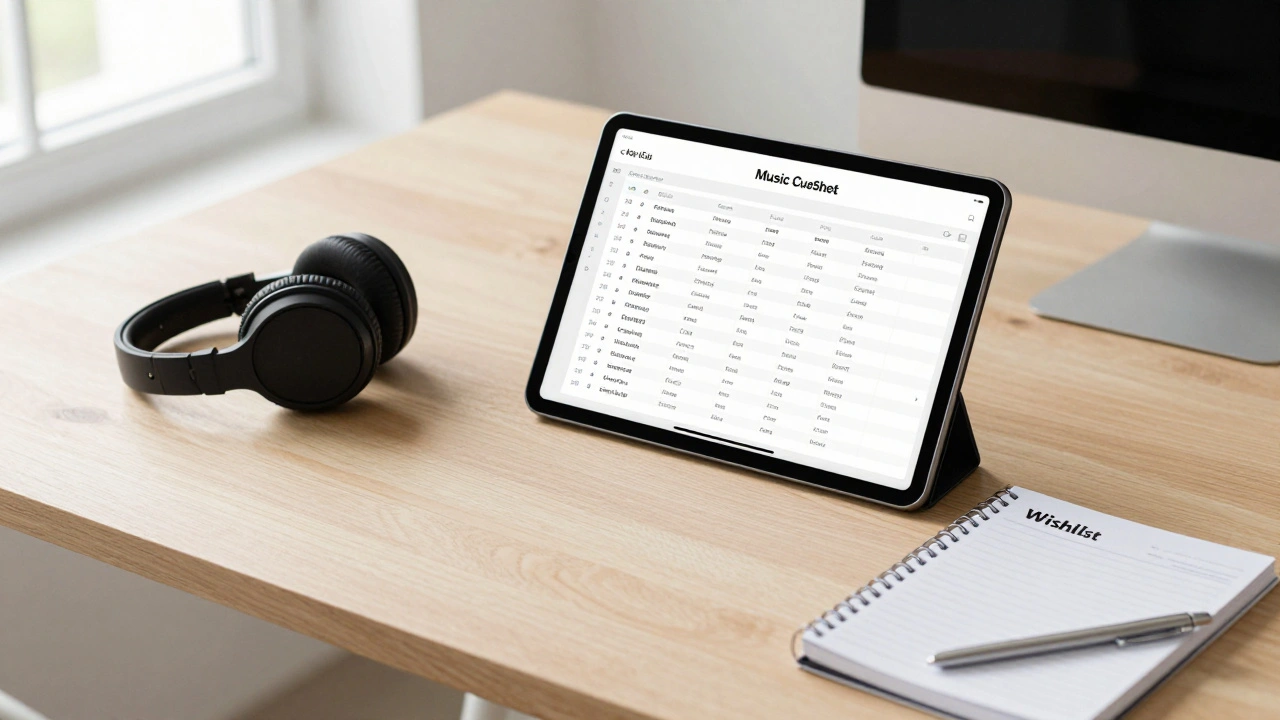
If you're in pre-production, start by creating a "Music Wishlist." Divide it into "Dream Songs" (expensive) and "Alternative Songs" (affordable). This gives you a range to work with. Reach out to a music supervisor early-before you lock your edit-so they can tell you if your dream songs are financially impossible.
For those in post-production, create a detailed Cue Sheet. This is a document that lists every single piece of music, the exact time it starts and ends, and who owns the rights. Your distributor will demand this document. If you don't have it, you don't have a movie that can be legally sold.


Comments(1)