Why IMAX and Premium Large Format Aren’t Just Bigger Screens
When you walk into an IMAX theater and the screen fills your entire vision, the sound hits you like a wave, and the image feels so sharp it’s almost real-you’re not just watching a movie. You’re paying for an experience. And that experience? It’s making studios and theater chains more money than ever. In 2024, films shown in Premium Large Format (PLF) theaters like IMAX, Dolby Cinema, and Cineplex’s SCENE XL generated over 30% of total North American box office revenue, despite making up less than 10% of all screens. That’s not luck. It’s strategy.
What Exactly Is Premium Large Format?
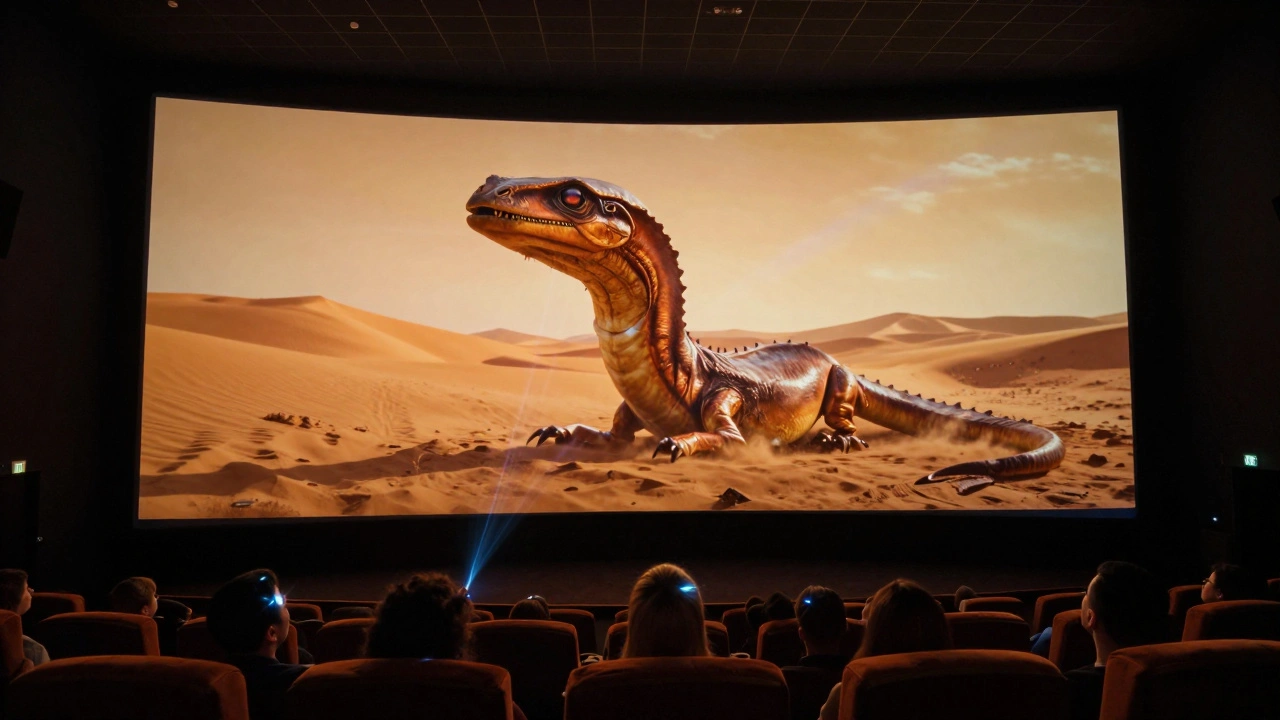
Premium Large Format, or PLF, isn’t just one thing. It’s a category that includes IMAX with laser, Dolby Cinema, Cineplex’s SCENE XL, and AMC’s Prime at AMC. These aren’t your standard 2D screens with extra legroom. They all share three core traits: giant screens (often 70+ feet wide), high-resolution projection (4K or 6K laser), and immersive sound systems (like Dolby Atmos or IMAX’s 12-channel audio). But here’s what most people miss: PLF screens are designed to show movies differently. Studios often shoot or remaster scenes specifically for these formats. Think of the opening sequence of Dune: Part Two-the sandworm rising in IMAX is 26% larger than the standard version. That’s intentional.
How PLF Drives Ticket Prices Up (And Why People Still Pay)
IMAX tickets cost $18 to $25, sometimes more in big cities. Standard tickets? $12 to $15. That’s a 50% price jump. So why do people still buy them? Because they’re not buying a seat. They’re buying a feeling. A 2023 study by the National Association of Theatre Owners found that 68% of PLF ticket buyers said they chose the format because it made the movie feel "more epic" or "unlike watching at home." That’s emotional value. And studios know it. When Avengers: Endgame opened, IMAX screenings made up just 7% of showtimes but brought in 20% of the opening weekend revenue. The same pattern held for Oppenheimer, where IMAX screens generated over $100 million in the U.S. alone, even though they were only 5% of total screens.
Why Studios Love PLF
For studios, PLF isn’t just about higher ticket prices. It’s about protecting the theatrical window. With streaming eating into traditional releases, studios need reasons to get people back into theaters. PLF is the best tool they have. When Warner Bros. released The Batman, they made sure every key action scene was optimized for IMAX. They even delayed the digital release by three weeks to maximize PLF revenue. That’s not a coincidence. PLF screens help justify the $200 million budgets studios are spending. A movie that makes $100 million in PLF revenue can turn a $150 million film into a profit-maker without needing to be a global blockbuster. In 2024, six of the top ten highest-grossing films in North America were PLF-driven titles. That’s a trend, not a fluke.
The Numbers Don’t Lie: PLF vs. Standard Screens
Here’s the real breakdown:
| Format | Avg. Revenue per Screen (USD) | Seats per Screen | Revenue per Seat (USD) |
|---|---|---|---|
| IMAX | $48,200 | 320 | $150.60 |
| Dolby Cinema | $42,100 | 280 | $150.40 |
| Standard 2D | $11,800 | 250 | $47.20 |
| 3D Standard | $15,300 | 240 | $63.75 |
Notice something? Even though IMAX screens hold fewer people than standard ones, they make over four times the revenue per screen. And the revenue per seat? It’s nearly triple. That’s because PLF isn’t competing with standard screens-it’s competing with Netflix and Disney+. People aren’t choosing between IMAX and a regular theater. They’re choosing between IMAX and staying home.
What Movies Benefit Most from PLF?
Not every movie needs a giant screen. Action epics, sci-fi, and nature documentaries dominate PLF revenue. Barbie made $140 million in PLF globally, even though it’s a comedy. Why? Because the pastel-colored, oversized sets looked unreal on a giant screen. Horror films? They barely register. The same goes for indie dramas. PLF works best when the visuals are the star. Studios now plan PLF releases months in advance. If a film has sweeping landscapes, intense action, or high-concept visuals, it gets a PLF push. Mad Max: Fury Road made 40% of its U.S. box office from PLF. Interstellar? 45%. Even animated films like Spider-Man: Across the Spider-Verse earned more than 30% of their revenue from PLF because of the layered, hand-drawn animation that popped on laser projection.
The Dark Side: Over-Saturation and Viewer Fatigue
There’s a risk. Too many theaters are adding PLF screens, and not every location can support them. In small cities, an IMAX screen might sit empty for weeks. And audiences? They’re starting to notice. A 2024 survey from Box Office Pro found that 29% of PLF viewers said they’d pay less if they had to choose between a better PLF experience and more showtimes. That’s a warning sign. Theater chains can’t keep adding PLF screens without matching demand. The sweet spot? Big markets-cities with populations over 500,000-and only for blockbusters. If you’re showing a mid-budget drama in IMAX in Boise, you’re losing money.
What’s Next? The Rise of Hybrid PLF
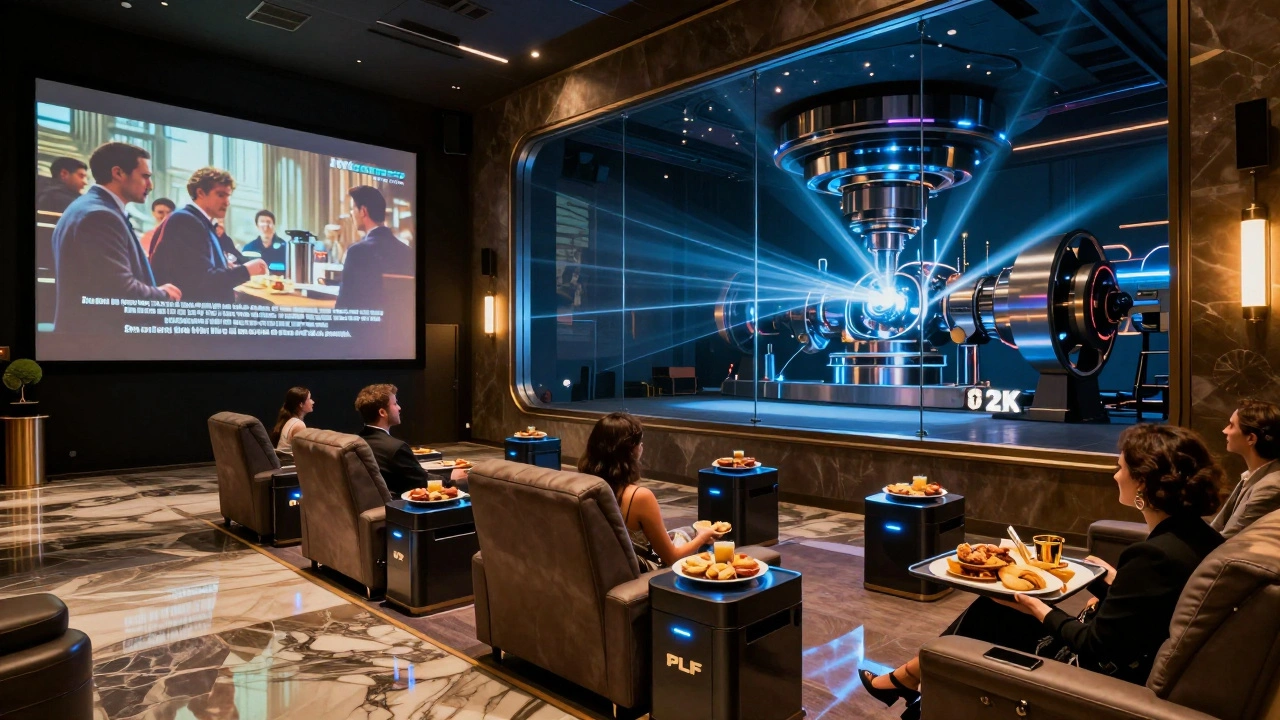
IMAX and Dolby aren’t standing still. New formats are emerging. IMAX’s new 12/12 laser system now supports 12K resolution and 12-channel audio. Dolby Cinema is testing AI-powered sound that adapts to audience size. And some chains are experimenting with "PLF+"-where you get a premium seat, food delivery to your chair, and a 30-minute pre-show documentary about the film’s making. It’s not just about bigger screens anymore. It’s about total immersion. The goal? Make the theater feel like a destination, not a place you just happen to go.
Why This Matters for Moviegoers
Here’s the truth: PLF isn’t just for cinephiles. It’s for anyone who wants to feel something when they watch a movie. If you’re going to pay $15 to see a film, why not pay $22 and feel like you’re inside it? But don’t fall for the hype. Not every movie needs PLF. Check the release notes-many studios now label which scenes are optimized for IMAX. If a film doesn’t have a PLF version, it probably doesn’t benefit from it. And if you’re on a budget? Go for a standard screen on a Tuesday. You’ll save money and still get the story.
Bottom Line: PLF Is the Future of Theaters
Streaming isn’t killing theaters. It’s forcing them to evolve. And PLF is the evolution. Theaters that invested in IMAX, Dolby, and similar formats are thriving. Those that didn’t? They’re closing. The numbers don’t lie: PLF screens make more money, attract more viewers, and give studios a reason to keep making big movies for the big screen. The future of cinema isn’t about cheaper tickets. It’s about unforgettable experiences. And that’s something you can’t stream.
Is IMAX the same as Premium Large Format?
IMAX is one type of Premium Large Format, but not all PLF is IMAX. PLF includes IMAX, Dolby Cinema, Cineplex SCENE XL, and AMC Prime. All of them offer bigger screens, better sound, and higher resolution than standard theaters, but each has its own tech specs. IMAX uses proprietary projection and sound, while Dolby Cinema focuses on contrast and audio precision.
Do all movies get an IMAX version?
No. Only movies that are shot or digitally remastered for PLF get an IMAX or Dolby Cinema release. Studios decide based on budget, visuals, and expected audience. Most action, sci-fi, and animated films do. Most comedies, dramas, and indie films don’t. You can usually tell by checking the theater’s website or the film’s official site-it’ll say "IMAX Enhanced" or "Dolby Cinema Experience" if it’s available.
Is PLF worth the extra cost?
For big-budget blockbusters with visual spectacle-like Dune, Oppenheimer, or Avatar-yes. The difference in immersion is dramatic. For smaller films or those without PLF-specific enhancements, no. You’re paying for tech you won’t fully use. Always check if the film has a PLF version before buying the ticket.
Why do PLF screens cost more to operate?
PLF screens need specialized equipment: laser projectors, high-end sound systems, reinforced screens, and trained staff. A single IMAX laser projector costs over $300,000. Dolby Cinema setups can run $1 million per theater. Maintenance is more complex, and energy use is higher. That’s why theaters charge more-it’s not just markup, it’s cost recovery.
Can I watch PLF movies at home?
Some PLF features are available at home. Dolby Vision and Dolby Atmos are supported on high-end TVs and soundbars. IMAX Enhanced is available on select streaming services like Disney+ and Apple TV+. But you won’t get the same experience. The screen size, sound pressure, and lighting control in a real PLF theater can’t be replicated at home. Theaters still have the edge in immersion.
What to Watch Next
If you’re curious about how theaters are adapting, look into how Cineplex’s SCENE XL and Regal’s RPX are competing with IMAX. Or check out how international markets like China and India are adopting PLF faster than the U.S. The global PLF market is expected to hit $12 billion by 2027. That’s not just growth-it’s a transformation.



Comments(9)