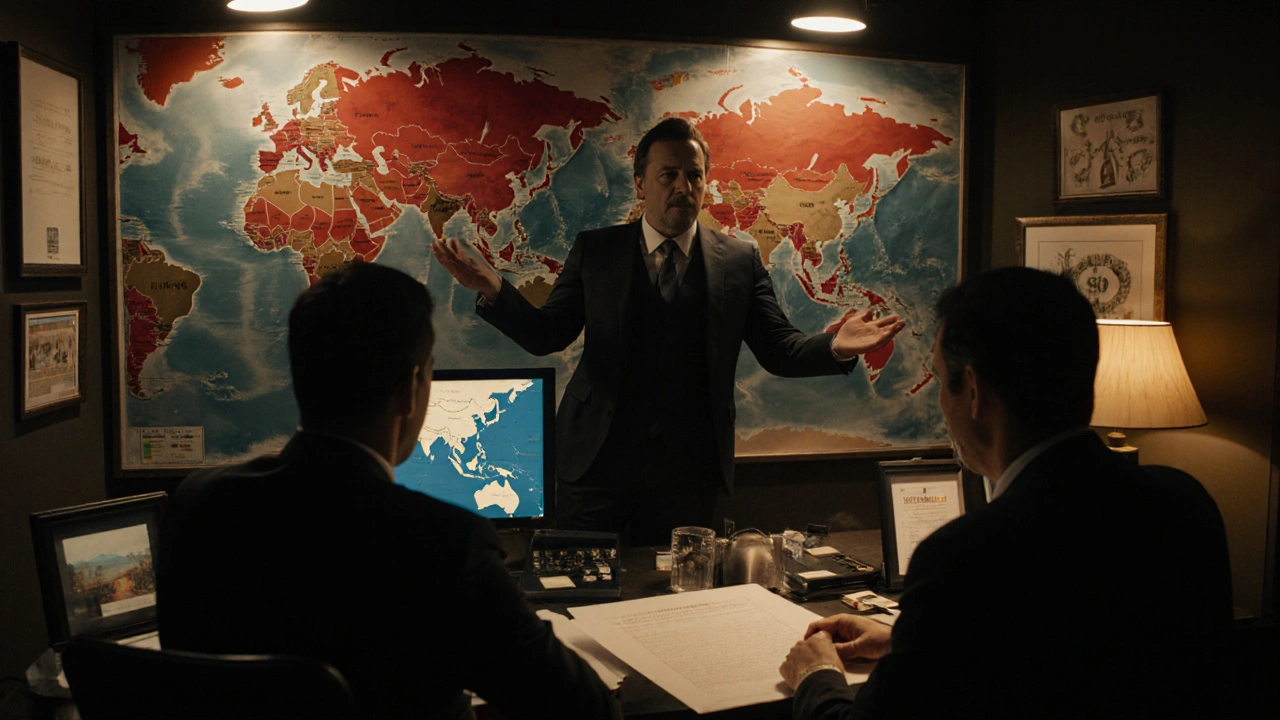
Most people think movies are made because someone had a great idea. But behind every film that gets made - even the small indie ones - there’s a financial engine running. And that engine often starts with presales and foreign sales. These aren’t glamorous jobs. No red carpets. No Oscar speeches. But without them, most films never leave the script stage.
What Presales Actually Mean for a Film
Presales are when a film distributor agrees to pay for the rights to show your movie in a specific country before it’s even shot. That money goes straight into the production budget. It’s not a loan. It’s not a grant. It’s a guaranteed sale. And it’s one of the most reliable ways to fund a film outside of studio backing.
Imagine you’re making a thriller set in Eastern Europe. You don’t have a big-name actor. You don’t have a famous director. But you’ve got a strong script, a clear visual style, and a solid sales agent. You take that package to the Cannes Film Festival. You show clips, the script, and your cast list. A distributor from Poland says, ‘I’ll give you $200,000 for the rights to release this in Poland.’ A buyer from Brazil says, ‘I’ll pay $150,000.’ Now you’ve raised $350,000 - just from presales.
That money becomes your production budget. You hire your crew. You rent equipment. You pay your actors. You shoot the film. And when it’s done, you don’t have to beg for distribution. The buyers already paid.
How Foreign Sales Work
Foreign sales are the backbone of international film financing. They’re not about selling tickets. They’re about selling rights - TV rights, streaming rights, theatrical rights, home video rights - in markets outside the U.S. and Canada.
Each territory has its own rules. In Germany, theatrical releases still matter. In Japan, home video rights can be worth more than streaming. In Latin America, TV networks pay heavily for dubbed content. A good sales agent knows which territories will pay for what, and how much.
For example, a low-budget horror film might only make $50,000 in the U.S. But if it sells for $120,000 in France, $80,000 in Spain, and $60,000 in South Korea, suddenly it’s profitable. That’s why foreign sales are the lifeline for most non-studio films.
These deals are usually handled by sales agents - companies like Films Boutique, HanWay Films, or Fortissimo Films. They don’t produce movies. They don’t finance them. They act as brokers. They take a cut - usually 10% to 15% - and they do the legwork: pitching to buyers, negotiating contracts, managing delivery requirements.
Why Presales Are the Key to Getting Films Made
Independent films live or die by their ability to secure pre-sold territories. Without presales, banks won’t lend. Investors won’t risk their money. Equity financiers need proof of return. Presales give them that proof.
Here’s how it works in practice:
- You have a script. You hire a sales agent.
- The agent creates a sales package: script, director’s statement, cast attachments, lookbook, sample footage.
- The agent pitches it at film markets: Cannes, AFM, Berlin, Toronto.
- Buyers make offers. The agent negotiates.
- You lock in 60% to 80% of your budget through presales.
- You use that as collateral to get a completion bond and a bank loan for the rest.
- You shoot the film.
- When it’s done, you deliver it to your buyers. They pay the rest.
This model is how films like Blair Witch Project, Parasite, and Little Miss Sunshine got made. None of them had studio money upfront. They had presales.

What Buyers Look For in a Presale
It’s not enough to have a good script. Buyers are looking for:
- Cast with international appeal - Even a supporting actor known in Europe or Asia can boost value. Think of how Michael Shannon or Tilda Swinton can open doors in multiple territories.
- Genre with proven global demand - Horror, thrillers, and dark comedies sell everywhere. Romantic comedies? Not so much outside the U.S.
- Director with a track record - Even if they made one film that played at Sundance, that’s enough.
- Clear delivery schedule - Buyers need to know when they’ll get the final cut. Delays cost them money.
- Completion bond - This is insurance. If you go over budget or can’t finish, the bond company steps in. Buyers won’t pay without it.
Without these elements, even the best script will get ignored at film markets. Sales agents don’t just sell movies - they sell confidence.
The Risks of Relying on Foreign Sales
Presales aren’t magic. They come with real risks.
First, the money isn’t always paid upfront. Sometimes, 50% is paid at signing, 50% after delivery. If your film doesn’t meet delivery specs - wrong aspect ratio, missing subtitles, no SSL certificate - buyers can withhold payment.
Second, market values change. A film that looked like a $500,000 prospect in 2023 might only fetch $150,000 in 2025 because streaming platforms changed their acquisition strategies. That’s happened to dozens of films since 2020.
Third, some territories are unreliable. Russia, Iran, and Venezuela used to be big markets. Now? Almost none of them pay. Buyers there often disappear. That’s why smart producers avoid putting more than 10% of their budget on unverified territories.
That’s why experienced producers always build a buffer. They never rely on presales for 100% of the budget. They always have a backup plan - a tax credit, a private investor, a crowdfunding campaign.

How to Get Started
If you’re a filmmaker looking to fund your next project:
- Don’t start shooting until you’ve talked to a sales agent.
- Find an agent who’s sold films similar to yours - check their catalog on FilmAffinity or IMDbPro.
- Prepare a sales package: script, director’s bio, cast list, lookbook, 5-minute teaser.
- Attend AFM (American Film Market) in November. It’s the biggest market for presales.
- Be ready to negotiate. Buyers will ask for exclusivity, minimum guarantees, delivery deadlines.
- Get a completion bond from a company like The Hanover Company or Motion Picture Guarantors.
Most filmmakers think they need money first. The truth? They need a plan first. And presales are the plan that turns scripts into movies.
What Happens When Presales Fail
Not every film sells. Sometimes, the market shifts. Sometimes, the cast drops out. Sometimes, the script doesn’t translate.
When presales fall short, filmmakers are left with three choices:
- Self-distribute - Upload to Vimeo On Demand, sell directly to audiences. It’s hard, but possible. Films like The Last Days of American Crime made $1.2 million this way.
- Wait and repackage - Add a known actor, re-edit the trailer, pitch again next year.
- Accept a lowball deal - Sell to a streaming service for a flat fee, often under $100,000. You lose control, but you get paid.
There’s no shame in any of these. The film industry is built on resilience. The ones who make it aren’t the ones with the biggest budgets. They’re the ones who keep pitching.
Final Reality Check
Presales and foreign sales aren’t about art. They’re about economics. The movie business is a global trade. And like any trade, it runs on contracts, currencies, and confidence.
If you want to make a film outside the studio system, you need to think like a trader. Not a poet. Not a visionary. A trader. You need to know what sells where, who pays when, and how to protect yourself when the market turns.
That’s the real work behind the magic of cinema. And if you understand it, you’re already ahead of 90% of filmmakers.
Can a film be financed entirely through presales?
Yes, but it’s rare. Most films use presales to cover 60-80% of the budget, then fill the rest with tax credits, private equity, or bank loans. A film with strong international appeal - like a genre film with a known actor - can sometimes cover 100% through presales. But that requires perfect timing, a solid sales agent, and buyers who trust the project.
Do presales work for documentaries?
Yes, but they’re harder. Documentaries rarely attract big foreign buyers unless they have a strong subject with global relevance - like climate change, political scandals, or cultural movements. Films like 13th or Won’t You Be My Neighbor? sold well internationally because they tapped into universal themes. Most documentaries rely on grants, public broadcasters, or streaming deals instead of traditional presales.
What’s the difference between presales and pre-sales?
In film financing, ‘presales’ is the correct term. It refers to the sale of distribution rights before production. ‘Pre-sales’ (with a hyphen) is a general business term meaning any sale made before delivery. In the film industry, you’ll only hear ‘presales’ used. Don’t confuse the two.
Which countries pay the most for foreign film rights?
The top buyers are France, Germany, the UK, Japan, South Korea, Australia, and the Nordics. These markets have strong theatrical cultures, active TV networks, and deep-pocketed streaming platforms. Latin America is unpredictable - Brazil and Mexico pay well for dubbed content, but other countries often delay or cancel payments. Avoid relying on Russia, Iran, or Venezuela - they’re high risk.
How much does a sales agent charge?
Standard commission is 10% to 15% of gross receipts from foreign sales. Some agents take 20% if they’re taking on more risk - like financing the marketing materials or covering travel to markets. Never pay an agent upfront. Legitimate agents only get paid when you get paid.







Comments(6)