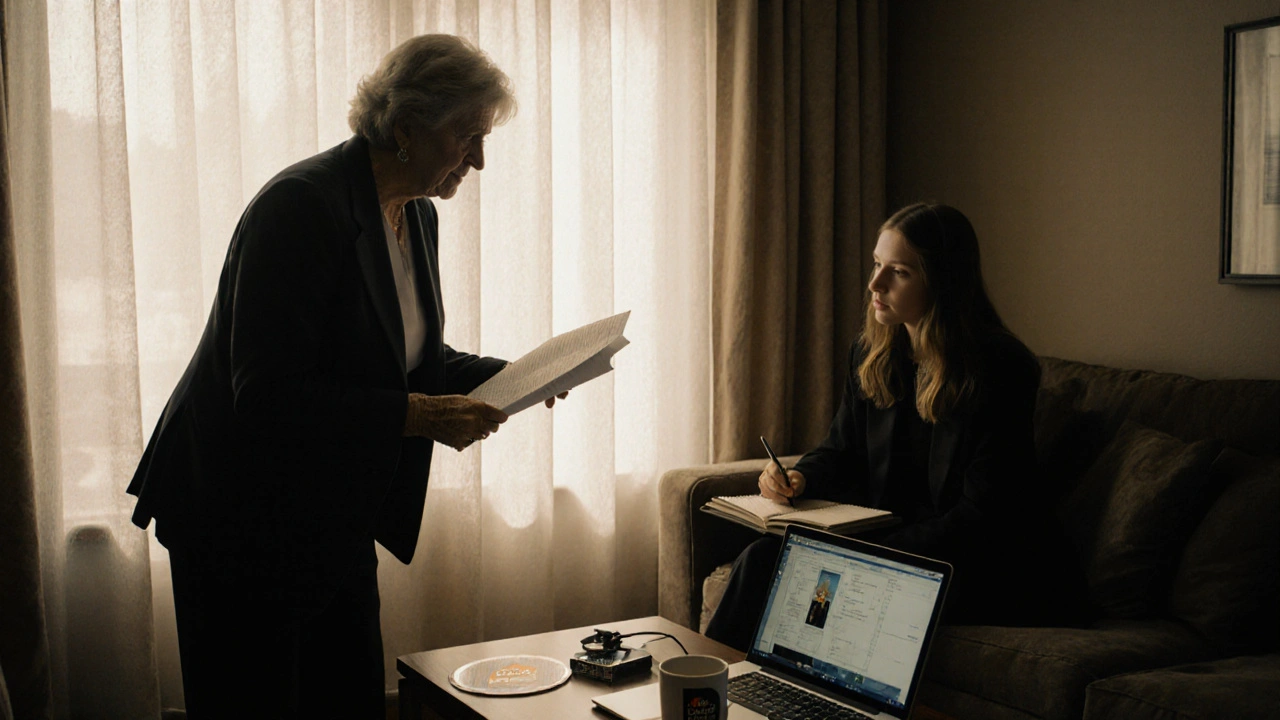
For decades, women directors have been underrepresented in cinema. Even today, only about 20% of the top 100 films each year are directed by women, according to the Center for the Study of Women in Television and Film at San Diego State University. That’s not a lack of talent. It’s a lack of access. Mentorship programs are changing that - quietly, steadily, and with real results.
Why Mentorship Matters for Women Directors
Getting your first feature film funded isn’t just about having a great script. It’s about who you know. Who vouches for you. Who opens the door. Men have long had networks - old boys’ clubs, alumni connections, industry dinners - that gave them early access to producers, financiers, and studio heads. Women didn’t. And still don’t, in many cases.
Mentorship bridges that gap. A seasoned director taking time to review a script, introducing a protégée to a cinematographer, or recommending her for a second-unit gig can be the difference between stagnation and breakthrough. It’s not charity. It’s strategy. The film industry runs on relationships. Mentorship programs formalize those relationships so they’re not left to chance.
How Mentorship Programs Actually Work
Not all mentorship is the same. Some are loose networks. Others are structured, year-long programs with clear goals. Take the Women in Film a nonprofit organization founded in 1973 that supports women in the entertainment industry through mentorship, advocacy, and grants program in Los Angeles. Each year, they pair emerging women directors with established ones - like Ava DuVernay or Greta Gerwig - for monthly meetings, script feedback, and studio introductions.
Another example is the Sundance Institute’s Women at Sundance a program that provides mentorship, funding, and networking opportunities for female filmmakers. Since 2015, over 80% of participants who completed the mentorship track went on to direct a feature film within three years - double the national average for women directors without such support.
These aren’t just coffee chats. They include:
- One-on-one script development sessions with industry veterans
- Access to pitch decks and funding templates used by successful directors
- Invitations to private screenings and industry mixers
- Guidance on navigating contracts and distribution deals
The most effective programs track outcomes. They don’t just say, “We helped 50 women.” They say, “Six of them got distribution deals. Three won awards at Sundance. Two got hired to direct studio films.” That kind of data turns anecdote into evidence.
Real Success Stories
Take Aisha Tyler, who directed her first feature in 2022 after being selected for the Directors Guild of America’s Women’s Steering Committee Mentorship Program a program that connects emerging female directors with DGA members for career development. She was paired with a director who had helmed two major studio comedies. That mentor didn’t just give feedback - he introduced her to his producer, who ended up backing her film. It premiered at Tribeca and sold to a streaming platform.
Or Kasi Lemmons, who credits her early mentor, Julie Dash (director of Daughters of the Dust), for pushing her to apply for the Sundance Lab. Without that push, Lemmons might never have made Eve’s Bayou, a film now studied in film schools across the country.
These aren’t outliers. They’re proof that when access is intentionally created, talent rises.

What These Programs Don’t Do
Mentorship isn’t a magic fix. It doesn’t erase systemic bias. It doesn’t guarantee funding. And it won’t work if the mentors aren’t committed.
Some programs fail because they treat mentorship like a checkbox. “We had a lunch. Check.” That’s not mentorship. That’s networking with a fancy label.
True mentorship requires:
- Time - at least 10 hours a year per mentee
- Access - real introductions to decision-makers
- Accountability - tracking progress, not just attendance
- Advocacy - speaking up for the mentee in rooms they’re not invited to
The best programs don’t just teach women how to pitch. They teach the industry how to listen.
Where to Find the Best Programs
If you’re a woman director looking for support, here are five active, well-documented programs as of 2025:
| Program Name | Organization | Duration | Key Benefit | Selection Rate |
|---|---|---|---|---|
| Women in Film Mentorship | Women in Film, Los Angeles | 12 months | Studio introductions and script feedback | 12% |
| Sundance Women at Sundance | Sundance Institute | 9 months | Funding + festival access | 8% |
| Directors Guild Mentorship | DGA Women’s Steering Committee | 6 months | Contract negotiation training | 15% |
| She Should Run Film Lab | She Should Run | 8 months | Focus on political and social narratives | 10% |
| FFWD (Film Forward) | FFWD Foundation, New York | 10 months | International co-production support | 7% |
Most programs accept applications in late winter or early spring. Deadlines are strict. Requirements vary, but most ask for a short film, a director’s statement, and two letters of recommendation. Don’t wait until you feel “ready.” You’ll never feel ready. Apply anyway.
What the Industry Still Needs to Do
Mentorship programs are essential - but they’re not enough. Studios and streaming platforms still hire directors based on past credits. And most past credits belong to men.
True progress requires two things:
- Studio leadership must commit to hiring women for second-unit directing roles and assistant director positions - the traditional stepping stones.
- Financiers must fund women-led projects without demanding “proof” of box office success - something men rarely have to provide.
Some studios are starting to act. Netflix’s “Women in Film” fund has backed over 30 female-directed projects since 2021. Amazon Studios now requires at least one woman director on every new series they greenlight. These aren’t just PR moves. They’re changing who gets to tell stories.
What You Can Do Right Now
You don’t need to wait for a program to start helping. Start small:
- Reach out to a director whose work you admire. Ask for 15 minutes. Most say yes.
- Join a local film collective. Many cities have women-focused screening groups that offer peer feedback.
- Volunteer on a film set. Even if it’s unpaid. You’ll learn more in three days on set than in three months in a classroom.
- Document your work. Keep a reel, a one-sheet, and a one-paragraph pitch ready. You never know when an opportunity will appear.
Change doesn’t come from grand gestures. It comes from consistent action - one connection, one script, one opportunity at a time.
Frequently Asked Questions
Are mentorship programs only for beginners?
No. While many programs target emerging directors, others are designed for mid-career women looking to break into studio films or move from shorts to features. Some programs even offer reverse mentorship, where younger directors advise veteran filmmakers on new technologies and streaming trends.
Do I need to live in LA or NYC to join these programs?
Not anymore. While many programs are based in major film hubs, most now offer virtual components. Sundance, Women in Film, and FFWD all host Zoom meetings and digital workshops. Some even provide travel stipends for in-person sessions. Location is no longer a barrier - commitment is.
Can men participate in these mentorship programs?
Most are women-only for mentees, but male allies are often welcome as mentors - especially if they’ve actively supported women’s careers. The goal isn’t exclusion. It’s correction. For too long, men dominated the pipeline. Now, the pipeline needs to be rebuilt with more balance.
How do I know if a mentorship program is legit?
Look for transparency. Legit programs publish their outcomes: how many mentees got hired, funded, or screened. They list past mentors by name and show their credits. They don’t charge application fees. If a program asks for money upfront, walk away. Real mentorship invests in you - it doesn’t profit from you.
What if I’m not a U.S. citizen?
Several programs are international. FFWD (Film Forward) specifically supports filmmakers from Latin America, Africa, and Asia. The British Film Institute and Canada’s Telefilm also run similar initiatives. Don’t assume you’re excluded. Research globally. Many programs welcome applicants from anywhere - as long as your project has a compelling story.
Next Steps
Start today. Visit the websites of Women in Film, Sundance Institute, and the DGA. Download their application guides. Write your director’s statement. Update your reel. Reach out to one director you admire. Don’t wait for permission. Don’t wait for the perfect moment. The door isn’t locked - it’s just not always visible. Mentorship programs are the flashlights. Use them.







Comments(9)