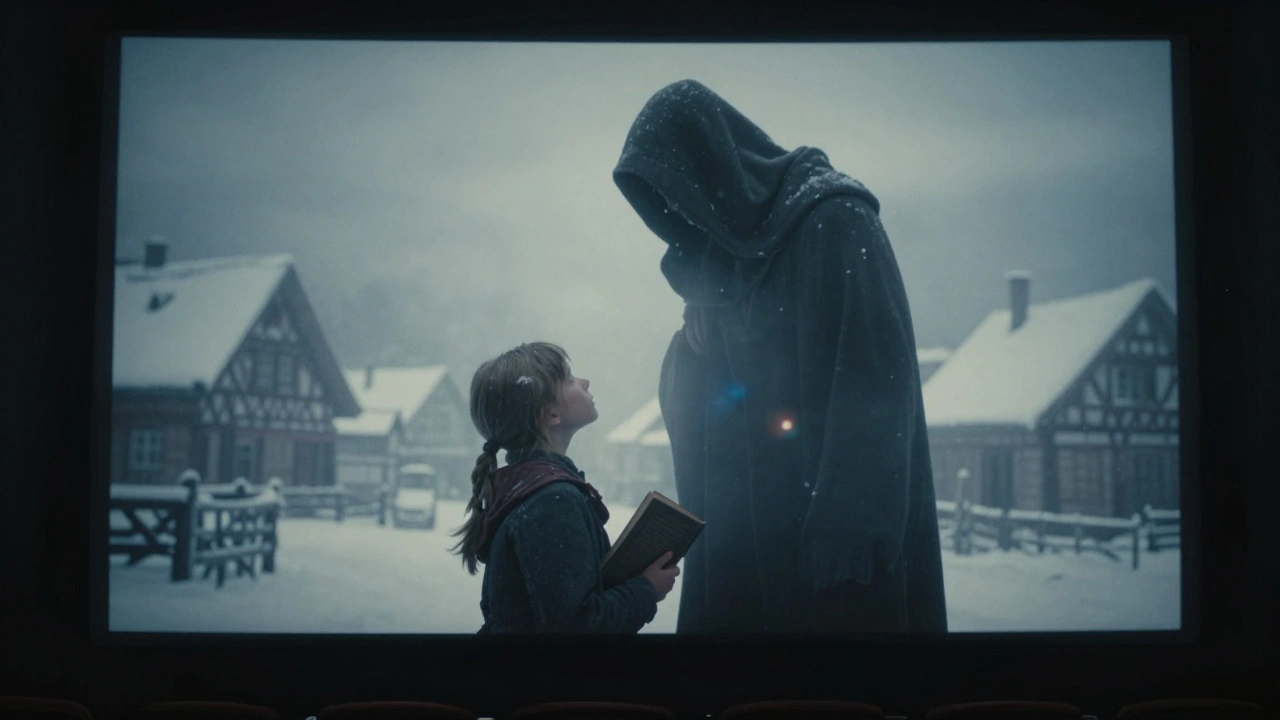
When a book becomes a movie, something gets lost-and sometimes, something gains weight. One of the oldest tricks in the adaptation toolbox is voiceover narration. Think of voiceover in The Great Gatsby (2013) or the quiet, introspective monologues in American Beauty. It’s a direct line from the character’s mind to your ear. But is it a gift or a crutch?
Why Filmmakers Use Voiceover in Adaptations
Books are full of inner thoughts. Characters ruminate. They remember. They doubt. Movies don’t have pages. You can’t just show a character reading their own diary unless you want to turn the whole film into a slideshow. That’s where voiceover steps in. It’s the easiest way to translate internal conflict into visual storytelling.
Take Fight Club. The entire plot hinges on the narrator’s unreliable perception. Without his voiceover, the twist falls flat. The narration isn’t just exposition-it’s the glue holding the psychological layers together. In The Shawshank Redemption, Red’s calm, weathered voiceover doesn’t just explain the prison system; it makes you feel the weight of time. These aren’t lazy shortcuts. They’re deliberate tools.
Adaptations of dense literary works-like Middlemarch or Gravity’s Rainbow-often rely on voiceover simply because the source material is too complex to show visually. A director might choose narration to preserve the tone, rhythm, or thematic depth that would otherwise dissolve in translation.
The Risks of Overusing Voiceover
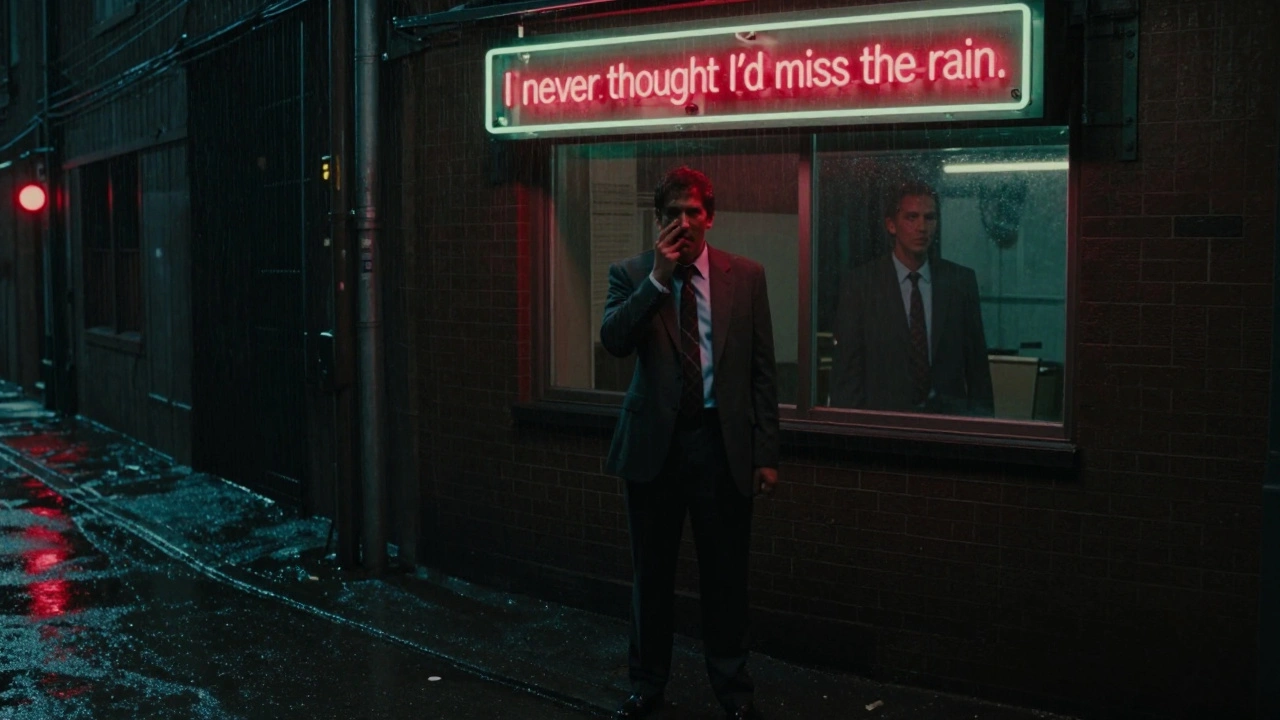
But here’s the catch: audiences hate being told what to feel. Voiceover that explains actions instead of letting them unfold feels like a parent whispering the punchline of a joke. You’ve seen it: a character stares out a window, and then-"I never thought I’d miss the rain." Cue sad music. It’s not subtle. It’s not cinematic. It’s lazy.
A 2021 study by the University of Southern California’s Cinematic Arts department found that films using voiceover for basic plot exposition scored 37% lower in audience engagement ratings than those that showed the same information visually. The problem isn’t voiceover itself-it’s using it as a replacement for storytelling.
Look at the 2005 adaptation of Pride & Prejudice. No voiceover. Instead, the tension between Elizabeth and Darcy is built through glances, pauses, and silence. The result? A film that feels alive. Compare that to the 2008 version of Wuthering Heights, where Heathcliff’s inner torment is hammered home with constant narration. Critics called it "emotionally flat." The book’s power came from ambiguity. The movie removed it.
When Voiceover Works: The Art of Subtlety
The best voiceovers don’t explain-they deepen. They add texture. In Stand by Me, adult Gordie’s narration doesn’t retell the story. It reflects on it. He’s not describing what happened-he’s telling you how it changed him. That’s the difference between a summary and a revelation.
Even in genre films, voiceover can be powerful. Blade Runner 2049 uses minimal narration, but when K speaks, it’s not to clarify the plot. It’s to show his loneliness, his search for identity. The voiceover is poetic, sparse, and haunting. It doesn’t tell you what to think. It makes you feel it.
Some adaptations use voiceover to honor the original voice of the author. The Book Thief (2013) uses Death as the narrator. That’s not just a gimmick-it’s core to the book’s soul. Removing it would’ve been like cutting out the heart. The film kept it, and it worked because the narration wasn’t explaining events. It was framing them.
What Replaces Voiceover in Strong Adaptations
Great adaptations don’t rely on narration because they find other ways to carry the book’s emotional weight. They use visuals, sound design, performance, and pacing.
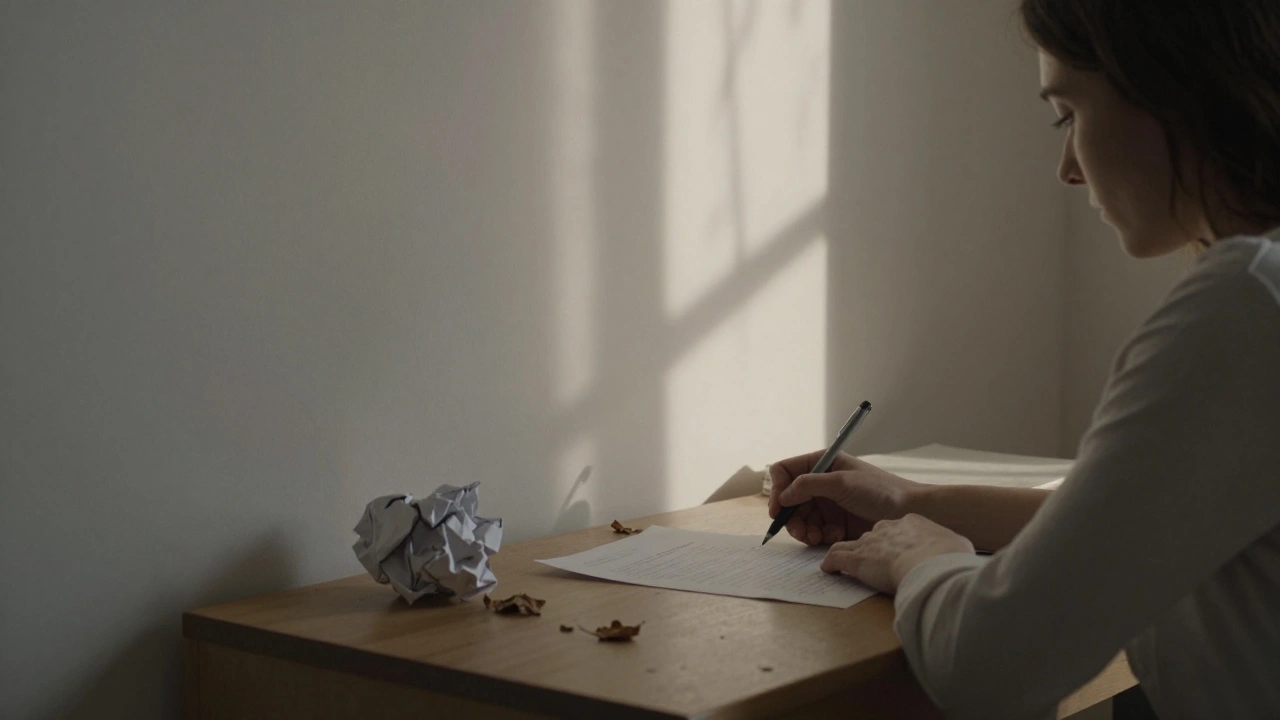
Little Women (2019) doesn’t use a single line of voiceover. Instead, Jo’s writing process is shown through quick cuts of her scribbling, the crumpled pages, the ink-stained fingers. Her ambition isn’t told-it’s built through action. The same goes for Manchester by the Sea. The grief isn’t explained by a character talking about it. It’s in the way he stares at the ocean, the way he can’t bring himself to light a cigarette.
Some directors use music as emotional narration. The Revenant has almost no dialogue, let alone voiceover. The score carries the character’s pain. Others use silence. In No Country for Old Men, the absence of voiceover makes the violence feel more real. You’re not being guided-you’re left to sit with the chaos.
Choosing Between Voiceover and Visual Storytelling
So when should you use voiceover in an adaptation? Here’s a simple rule: Use it only when the inner life of the character cannot be shown through behavior, expression, or environment.
Ask yourself:
- Can the emotion be conveyed through an actor’s face or body language?
- Can the backstory be revealed through objects, letters, or flashbacks?
- Does the narration add something new-or just repeat what’s already on screen?
If the answer to the third question is "just repeat," then cut it. If the answer is "it changes how you see the character," then keep it.
Also, consider tone. A gritty noir might thrive with a hard-boiled narrator. A quiet indie drama might drown in it. The medium matters. A novel can afford pages of introspection. A two-hour film cannot.
The Audience’s Reaction
Viewers aren’t against voiceover. They’re against bad voiceover. Polls from IMDb and Letterboxd show that audiences tolerate voiceover when it feels earned. In Goodfellas, Henry Hill’s narration is sharp, witty, and dangerous. It matches his personality. It’s not there to explain the mob-it’s there because Henry wants you to know how he saw it.
On the flip side, adaptations like Twilight (2008) used voiceover to explain every romantic thought. Fans of the book loved it. Critics called it "teenage diary on screen." The difference? The first was confident. The second was insecure.
There’s also generational taste. Older audiences, raised on classic literary adaptations, often welcome narration. Younger viewers, raised on fast-paced, visually driven stories, see it as outdated. That doesn’t mean it’s wrong-it means context matters.
Final Thought: Voiceover as a Mirror, Not a Map
Voiceover in film adaptations isn’t good or bad. It’s a tool. Like a camera lens or a color palette, it’s only as powerful as how it’s used. The best adaptations don’t just translate words-they translate feeling. If voiceover helps you feel what the character felt, then it’s not a cheat. It’s a bridge.
But if it’s there because the filmmaker didn’t trust the audience to understand, or because they didn’t know how else to tell the story-then it’s a sign the adaptation didn’t go far enough. The goal isn’t to recreate the book. It’s to make the story live in a new form.
Is voiceover always a sign of a weak adaptation?
No. Voiceover isn’t inherently weak. Some of the most acclaimed adaptations-like Fight Club, Stand by Me, and The Book Thief-rely heavily on narration. What makes it weak is when it’s used to explain what should be shown. Strong voiceover adds emotional depth, not plot summary.
Can a film adaptation succeed without any narration?
Absolutely. Many of the most powerful adaptations-like Little Women (2019), Manchester by the Sea, and No Country for Old Men-use no voiceover at all. They rely on performance, visual storytelling, and sound design to convey inner lives. The key is whether the emotion lands, not whether someone is speaking it aloud.
Why do book fans often prefer voiceover in adaptations?
Book readers often connect deeply with the author’s voice and the character’s internal monologue. Voiceover gives them a direct line back to that experience. It’s comforting. But that doesn’t mean it’s the best cinematic choice. What works on the page doesn’t always work on screen.
Do modern audiences dislike voiceover more than older generations?
Yes, generally. Younger viewers, raised on fast-paced, visually driven content like TikTok and streaming series, tend to find traditional voiceover slow or unnecessary. Older audiences, familiar with classic literary films from the 70s and 80s, are more accepting of it. But taste varies-some young viewers love Goodfellas’ narration because it’s sharp and character-driven.
What’s the biggest mistake directors make with voiceover in adaptations?
Using it as a crutch. The worst mistake is having a character narrate what’s already visible on screen: "I walked to the store," while the camera shows them walking to the store. That’s not storytelling-it’s redundancy. Voiceover should reveal what can’t be seen: thoughts, regrets, secrets, or shifts in perspective.




Comments(5)