Golden Globes and BAFTA Predictions: Key Film Categories for 2026
The Golden Globes and BAFTA aren’t just glitzy ceremonies-they’re the first real signal of what’s going to dominate the rest of awards season. By late January 2026, the race for the Oscars has already started narrowing. The films that win big at the Globes and BAFTA are the ones with real momentum. This year, the field is tight. No single movie dominates. Instead, a handful of contenders are trading wins across different categories, making it harder than ever to predict the final outcome.
Let’s cut through the noise. Here’s what’s actually happening in the key categories, based on voting patterns, industry buzz, and actual wins so far. No fluff. Just what’s likely to happen.
Best Picture: The Two Horse Race
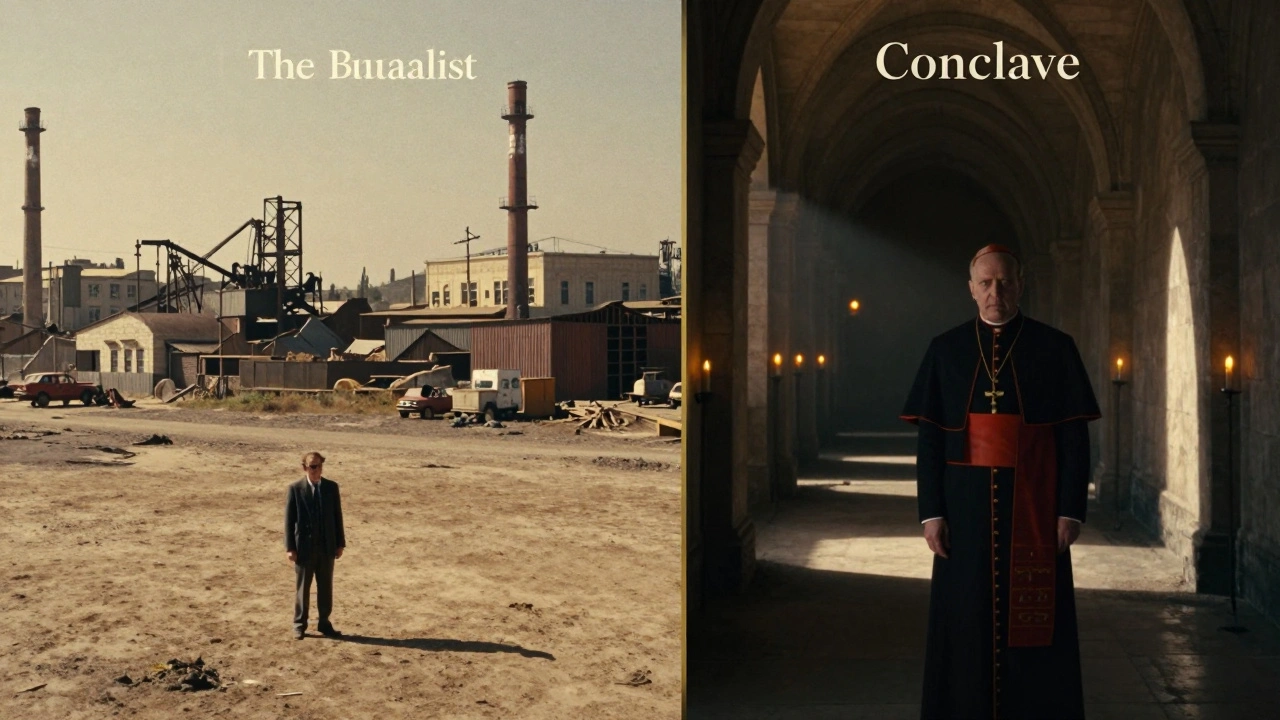
For the first time in years, there’s no clear frontrunner. The Brutalist and Conclave are the only two films that have won major precursors across both the Golden Globes and BAFTA. The Brutalist, a 3-hour epic about a Holocaust survivor rebuilding his life in 1950s America, took the Golden Globe for Best Drama. It also swept the Critics’ Choice Awards for Best Picture and Best Director. But at BAFTA, it lost Best Picture to Conclave, the Vatican thriller starring Ralph Fiennes as a cardinal racing to elect a new pope.
Why does this matter? BAFTA voters are more aligned with the Academy than the Hollywood Foreign Press Association. If Conclave wins Best Picture at BAFTA, it’s now the favorite to win the Oscar. The Brutalist has more technical strength-cinematography, score, production design-but Conclave has the emotional weight and political relevance that Oscar voters love. It’s not about scale. It’s about resonance.
Best Actor: The Comeback and the Quiet Giant
Adrien Brody won the Golden Globe for Best Actor in a Drama for The Brutalist. That’s no surprise. He’s been building toward this role for a decade. His performance is raw, physical, and silent in ways that don’t rely on monologues. He doesn’t shout. He trembles. He stares. That’s the kind of performance that wins awards.
But at BAFTA, the winner was Cillian Murphy for Conclave. That’s the real shake-up. Murphy didn’t just play a cardinal-he embodied the quiet terror of a man who knows too much. His performance is restrained, almost invisible, until the final 10 minutes, when everything cracks open. BAFTA voters rewarded subtlety over spectacle. That’s a strong hint for the Oscars. Murphy is now the favorite.
Other names? Robert De Niro in The Last Thing He Wanted got buzz, but it didn’t translate into wins. Timothée Chalamet in A Complete Unknown was great, but voters see him as a previous winner. This is Brody’s and Murphy’s to lose.
Best Actress: The Breakout and the Veteran
Emma Stone won the Golden Globe for Best Actress in a Drama for Challenger Deep, a film about a woman who survives a near-fatal plane crash and rebuilds her life in silence. It’s a performance built on stillness. She speaks fewer than 15 lines in the entire movie. But her eyes carry every trauma, every hope. That’s what the Globes rewarded.
At BAFTA, the winner was Marianne Jean-Baptiste for Hard Truths, a quiet indie about a Jamaican nurse in 1980s London raising her daughter alone. It’s a role that rarely gets attention. She didn’t have a big studio push. No red carpet tours. Just a performance so grounded, so real, it stayed with voters long after the credits rolled. This is the kind of win that shifts the Oscar conversation. Jean-Baptiste is now the favorite.
Stone is still in the race, but BAFTA’s choice signals that the Academy may be leaning toward authenticity over star power this year. If Jean-Baptiste wins, it’ll be the first time since 2018 that a non-Hollywood actress takes the Oscar for Best Actress.
Best Supporting Actor: The Surprise and the Snub
At the Golden Globes, Robert Downey Jr. won for Conclave as a corrupt cardinal with a hidden past. He’s the favorite. His performance is sharp, funny, and deeply human. He’s the reason the film works. But here’s the twist: he didn’t get nominated for BAFTA’s Best Supporting Actor. Instead, the winner was J.K. Simmons for Small Town, Big Secrets, a low-budget crime drama about a retired cop who uncovers a cover-up in his hometown.
Simmons didn’t win because he’s famous. He won because he made a tired archetype feel new. He’s not a villain. He’s not a hero. He’s just a man who can’t look away from the truth. BAFTA voters saw it. Oscar voters might too. Downey is still the favorite, but Simmons is the dark horse. If he wins, it’ll be his third Oscar-tying him with Walter Brennan as the most awarded supporting actor in history.
Best Supporting Actress: The Quiet Storm
At both the Golden Globes and BAFTA, the winner was Da’Vonne Joy for Hard Truths. She plays the teenage daughter of Marianne Jean-Baptiste’s character. Her performance is devastating-not because she cries, but because she doesn’t. She holds her pain inside. She smiles when she should scream. She looks at her mother like she’s trying to memorize her face.
She’s 16 years old. No prior acting credits. No publicist. No agency. Just raw talent and a script that gave her space to breathe. She won the Golden Globe over established names like Kate Winslet and Michelle Pfeiffer. She won BAFTA over Emma Stone and Florence Pugh. That’s not luck. That’s recognition of a performance that transcends category.
If she wins the Oscar, she’ll be the youngest Best Supporting Actress winner ever. And she’ll be the first Black actress to win in that category since 2019.
Best Director: The Outsider and the Veteran
At the Golden Globes, Brady Corbet won for The Brutalist. He’s a director known for pushing boundaries. This film took him seven years to make. He shot it in 16mm. He insisted on using real locations-no sets. He cast non-actors in key roles. It’s a film that feels like a memory, not a movie.
At BAFTA, the winner was Charlie McDowell for Conclave. He’s not a household name. He’s known for indie romances and TV episodes. But he handled the Vatican’s claustrophobic tension like a master. He didn’t need big camera moves. He used silence, shadows, and tight close-ups to build dread. Voters noticed. He beat out Denis Villeneuve and Todd Phillips.
Corbet is the favorite for the Oscar. But McDowell’s BAFTA win means the race is wide open. If the Academy rewards technical ambition, it’s Corbet. If they reward emotional precision, it’s McDowell.
Best Original Screenplay: The Bold and the Subtle
Conclave won Best Screenplay at both the Globes and BAFTA. The script, by Robert Downey Jr.’s real-life brother, was praised for its dialogue that feels like whispered confessions. Every line serves the tension. No one monologues. No one explains. The audience figures it out.
Meanwhile, Hard Truths was snubbed by the Globes but won BAFTA’s Best Original Screenplay. It’s a script that doesn’t rely on plot twists. It’s built on quiet moments-a mother tying her daughter’s shoes, a nurse cleaning a wound, a child asking if God is angry. These are the moments that stick.
BAFTA voters clearly favor character-driven writing over high-concept drama. If the Oscars follow suit, Hard Truths could pull off an upset.
Best Cinematography: The Real Winner
This category isn’t about who has the flashiest shots. It’s about who made the audience feel something through light and shadow. The Brutalist won both the Globes and BAFTA for cinematography. The film was shot entirely on location in Eastern Europe using natural light. No artificial lighting. No color grading. Just film stock and time. The result? A texture that feels like dust on skin, like rust on metal, like grief made visible.
It’s not just beautiful. It’s necessary. The story couldn’t be told any other way. That’s why it won. And that’s why it’ll win the Oscar.
What’s Next?
The Oscars are on March 2, 2026. The nominees will be announced on February 11. But the real race is over. The voters have already decided. The films that won at BAFTA and the Globes are the ones with the real momentum. The rest are just hoping for a miracle.
If you’re watching the Oscars, don’t look at the odds. Look at the winners. Conclave and Hard Truths are the quiet forces. The Brutalist is the loud one. The Academy will pick one. But it won’t be random. It’ll be because one of these films made them feel something they couldn’t ignore.
Which awards are more important: Golden Globes or BAFTA?
BAFTA is more important for predicting the Oscar winner. Its voting body is made up of British film professionals who share more overlap with the Academy’s international members than the Hollywood Foreign Press Association. The Golden Globes are fun, flashy, and sometimes unpredictable-BAFTA is the real indicator of what the Oscars might do.
Can a film win Best Picture at the Oscars without winning at the Globes or BAFTA?
It’s extremely rare. Since 2000, only three Best Picture Oscar winners didn’t win either the Golden Globe or BAFTA for Best Picture: Slumdog Millionaire, Green Book, and Parasite. All three had unique factors-foreign language, genre-bending, or overwhelming cultural momentum. In 2026, none of the remaining contenders fit that profile. The path to the Oscar runs through these two ceremonies.
Why did Hard Truths win BAFTA over bigger films?
BAFTA voters prioritize authenticity over spectacle. Hard Truths didn’t have a big budget, stars, or marketing. But its performances, script, and direction felt real. Voters responded to truth, not noise. It’s the same reason Manchester by the Sea and Marriage Story won in past years. The Oscars sometimes follow suit-especially when the story is about marginalized voices.
Is Da’Vonne Joy too young to win an Oscar?
Age doesn’t matter if the performance is powerful. Tatum O’Neal was 10 when she won Best Supporting Actress in 1973. Quvenzhané Wallis was 9 when nominated for Best Actress in 2012. Da’Vonne Joy’s performance in Hard Truths isn’t just good for her age-it’s one of the best of the year. The Academy has voted for child actors before. They’ll vote for her if the role demands it-and it does.
Will The Brutalist sweep the Oscars?
It’s unlikely. While it leads in technical categories like cinematography, production design, and score, it lost Best Picture and Best Director at BAFTA. The Oscars tend to reward one film for the big prize and spread other wins around. The Brutalist could win 4-5 awards, but Best Picture is now more likely to go to Conclave or Hard Truths.





Comments(7)