Key Takeaways
- Location dressing is about adding layers of narrative through objects, textures, and lighting.
- The goal is to make a space feel lived-in and authentic to the character's psychology.
- Practicality is king; everything added must be safe for the crew and removable for the owner.
- Collaboration between the Production Designer and the Set Dresser is what prevents a space from looking like a museum.
The Psychology of the Lived-In Look
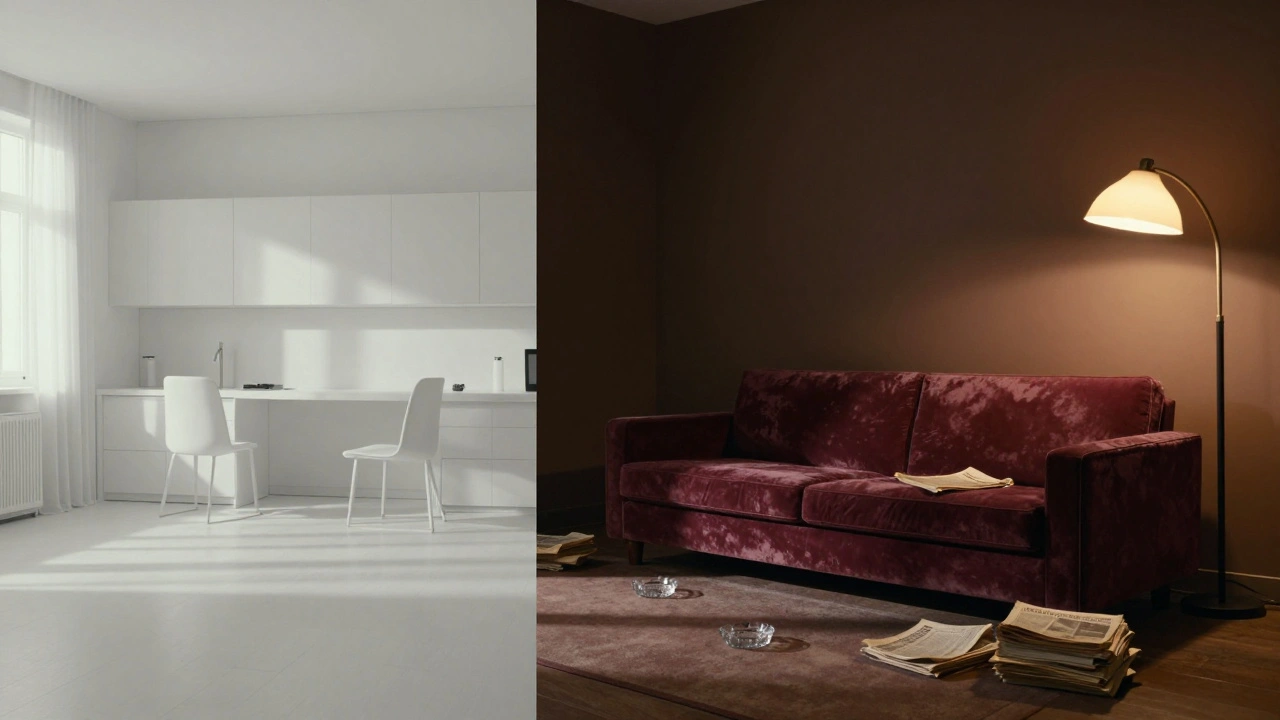
A room in a movie shouldn't just look like a room; it should look like a biography. When we talk about Production Design, we aren't just talking about where the sofa goes. We're talking about why that sofa is positioned facing away from the door. Is the character hiding? Are they antisocial? Do they crave sunlight?
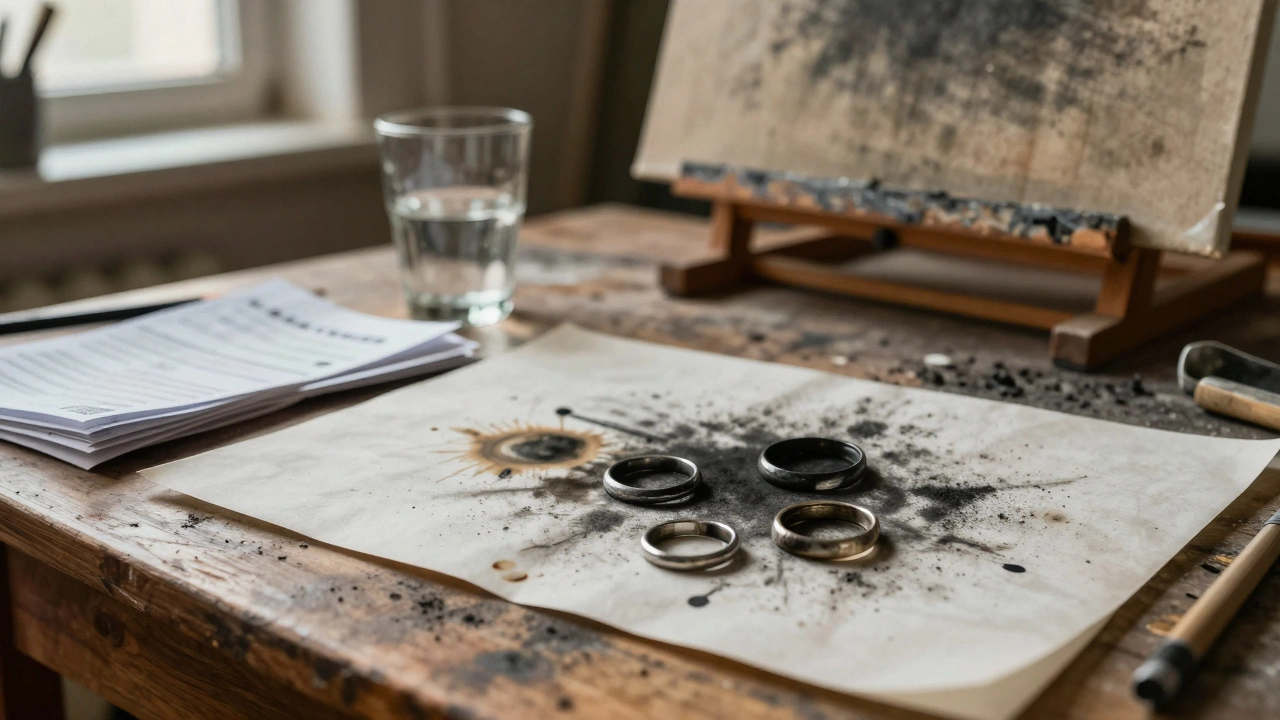
Real houses are messy. They have 'clutter'-the kind of stuff people actually keep, like a random pile of mail on the counter or a half-empty glass of water by the bed. In the industry, we call this 'aging' or 'distressing.' If you're filming a scene about a struggling artist, you don't just put a canvas on an easel. You add charcoal dust to the floor, old coffee stains on the table, and a stack of unpaid bills. These small details act as silent dialogue, telling the audience who this person is before they even speak a word.
The Toolkit of a Professional Set Dresser
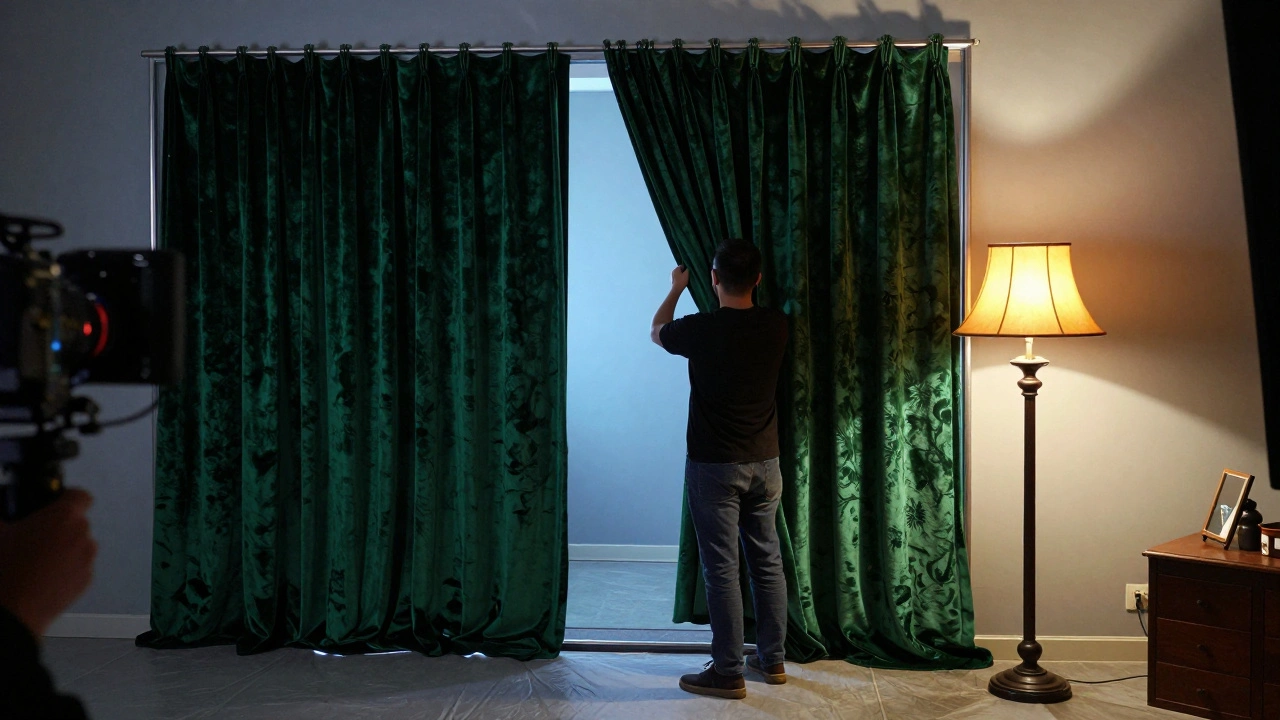
You can't just walk into a home and start moving things. A professional Set Dresser uses a specific strategy to transform a space without damaging it. The first step is always the 'protection phase.' This means laying down Ram Board or heavy-duty plastic to ensure that moving heavy furniture doesn't leave a scratch on the owner's hardwood floors.
Once the space is protected, the dresser brings in the 'kit.' This isn't just a box of props; it's a curated collection of elements. Consider the following attributes that a dresser manages:
| Element | Purpose | Example Value |
|---|---|---|
| Textiles | Adds warmth, color, and texture | Velvet curtains, worn rugs, linen throws |
| Small Props | Indicates character habits | Vintage clocks, specific books, medicine bottles |
| Atmospherics | Changes the mood and depth | Haze machines, practical lamps, faux dust |
| Wall Treatments | Defines the era or social status | Peeling wallpaper, framed art, scuff marks |
Balancing Aesthetics with Camera Angles
One of the biggest mistakes beginners make is dressing the *entire* room. In film, you only dress what the camera sees. This is known as 'dressing for the frame.' If the scene only takes place in a tight medium shot of two people talking at a kitchen table, there is no need to spend six hours detailing the guest bathroom down the hall.
However, you have to be careful about depth. A flat wall looks boring on screen. This is where the Art Department uses 'layers.' By placing a plant in the foreground, a table in the mid-ground, and a bookshelf in the background, you create a three-dimensional feel. This is especially critical when working with shallow depth of field, where the blur of a foreground object can lead the eye toward the actor.
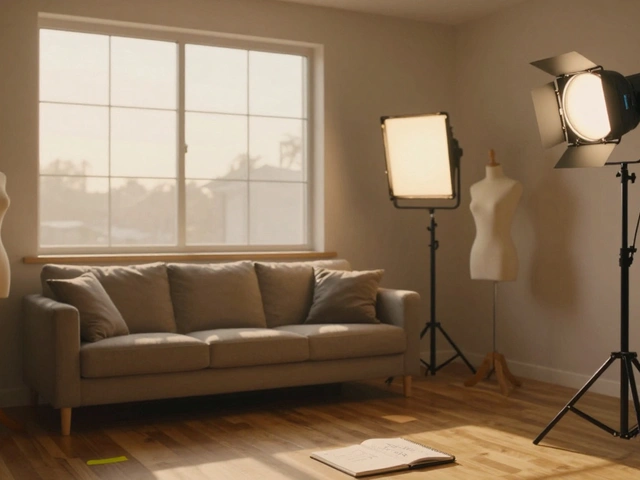
Ask yourself: where is the light coming from? If you've added a beautiful vintage lamp but it's positioned in a way that creates a glare on the actor's face, it has to go. The dressers must work hand-in-hand with the Director of Photography (DP) to ensure that the objects aren't just visually appealing, but functionally compatible with the lighting setup.
Dealing with Period Pieces and Era Accuracy
Transforming a modern space into a period piece is the ultimate test of a location dresser. Let's say you've found a great house, but it has double-paned PVC windows and recessed LED ceiling lights-both of which are dead giveaways that the house was built in 2015, not 1950.
The solution is 'masking.' To hide modern elements, dressers use heavy curtains, temporary wallpaper, or strategically placed furniture. For those recessed lights, a dresser might bring in 'practicals'-period-accurate lamps that provide the primary light source, allowing the DP to turn off the ugly modern ceiling fixtures. If the walls are too white and clean, a 'wash' of thin, watered-down paint or a temporary fabric drape can age the room instantly.
Accuracy isn't just about the year; it's about the class. A wealthy family in 1950 would have different textures (silk, polished mahogany) than a working-class family (linoleum, chipped paint). Using Prop Houses is the best way to source these specific items. Instead of buying a random chair from a thrift store, a pro will rent a specific mid-century modern piece that fits the exact social strata of the character.
The Logistics of the 'Strike'
The most overlooked part of location dressing is the 'strike'-the process of taking everything out. Remember, you are often working in someone's home. If you've spent three days filling their living room with fake dirt and old newspapers, you cannot simply leave a vacuum and a 'thanks for having us' note. A professional strike involves a detailed inventory list created during the load-in.
Every item brought into the space must be accounted for. This prevents the nightmare scenario where a production leaves a rented 1920s telephone behind or, worse, accidentally throws away the homeowner's actual vase. The 'return to original state' rule is absolute. If the homeowner had a specific arrangement of photos on the mantel, the dresser should have taken a photo of that arrangement before touching anything, ensuring it can be restored exactly as it was.
Practical Tips for Indie Filmmakers
If you don't have a massive budget or a dedicated art department, you can still achieve high-end results. Start by auditing your own network. Most people have 'junk' in their garages that would look great on camera. The key is to curate. Don't just take everything; take the pieces that fit a specific color palette.
Use 'texture boosters.' A cheap wool blanket thrown over a modern sofa can hide the fabric and add an instant sense of warmth and age. Swap out the light bulbs. Switching from a cold white LED to a warm, amber-toned bulb can change the entire mood of a room without moving a single piece of furniture. Finally, focus on the 'touch points.' The things the actors actually interact with-the phone, the glass, the door handle-should be the highest quality items in the room because the camera will be closest to them.
What is the difference between a Prop and Set Dressing?
The simplest rule is interaction. If an actor touches, picks up, or uses an object to further the plot (like a gun, a letter, or a phone), it is a prop. If the object is there to define the environment and the actor doesn't interact with it (like a rug, a curtain, or a painting on the wall), it is set dressing.
How do I hide modern features in an old-looking location?
Use 'masking' techniques. Heavy drapes can hide modern windows, and temporary wallpaper or fabric can cover contemporary wall textures. For lighting, use 'practicals' (lamps that fit the era) to draw the eye away from recessed ceiling lights or modern fixtures.
Do I need a permit for location dressing?
While dressing itself doesn't usually require a separate permit, the location agreement you sign with the homeowner should explicitly state that you have permission to move furniture and bring in additional items. This protects you legally if a dispute arises over the state of the property.
What is 'distressing' in set decoration?
Distressing is the process of making new items look old or used. This can involve sanding down edges of furniture, using a 'fuller's earth' powder to simulate dust, or adding fake tea stains to papers to make them look aged.
How do I choose a color palette for a room?
Start with the character's emotion. Cool blues and greys can suggest isolation or sadness, while warm oranges and reds suggest comfort or tension. Look at the existing colors of the location and choose 'accent' pieces that either complement those colors for harmony or clash with them to show the character is out of place in their own environment.
Next Steps for Your Production
If you're moving into the execution phase, your first move should be a 'location scout' specifically for the art department. Don't just look for a pretty room; look for the 'bones' of the space. Can the furniture be moved? Is there enough room for the crew to stand behind the dresser's additions? Create a 'mood board' with images of similar spaces to show your team exactly what 'lived-in' means for this specific project.
For those working on high-budget projects, ensure your inventory tracking system is digital and real-time. Using a simple shared spreadsheet can prevent the loss of expensive rentals. For indie creators, start building your own 'kit' of versatile textiles and lighting gels now-they are the cheapest way to drastically change the look of any room you find.




Comments(8)