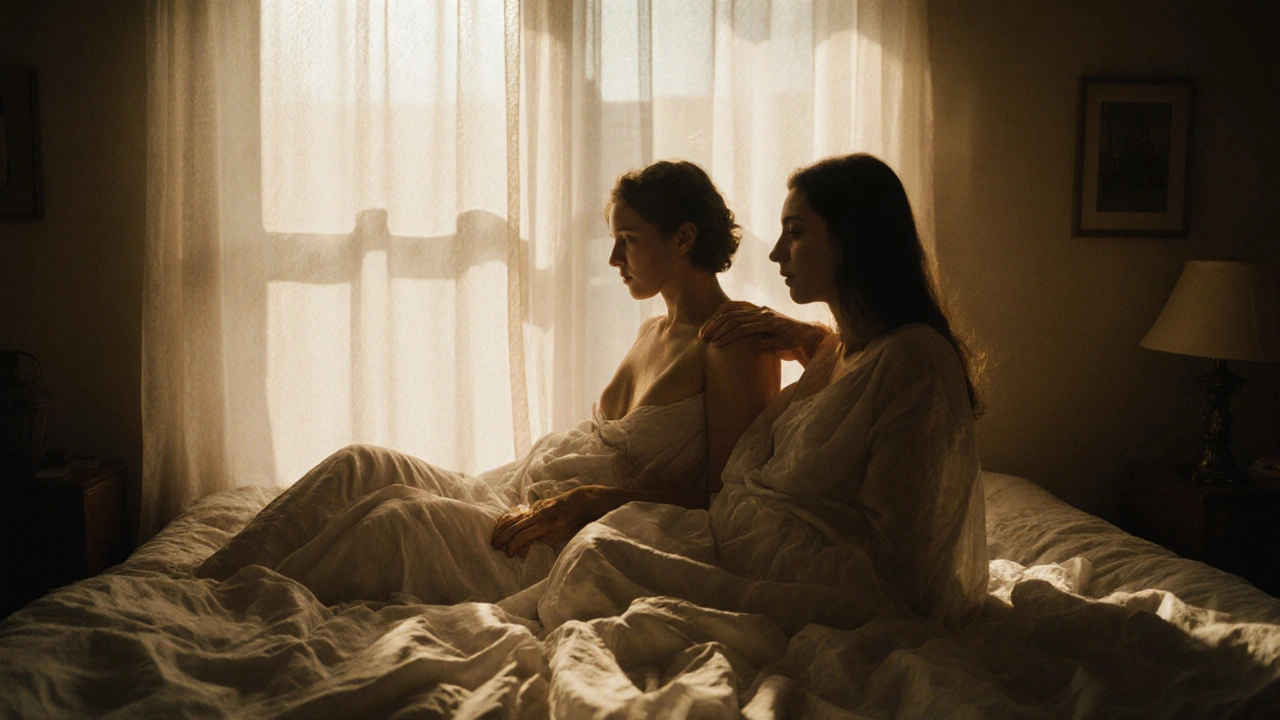
Arthouse erotica isn’t about sex for shock value. It’s not porn with a pretentious filter. It’s about desire as a human force-raw, quiet, complicated-and how filmmakers use the body, light, silence, and space to say what words can’t. When done right, it lingers in your mind long after the credits roll. When done wrong, it feels like a cheap excuse to show skin. The difference isn’t how much is shown. It’s why it’s shown.
What Makes Erotica Artistic?
Think of arthouse erotica as cinema that treats intimacy like poetry. Not as spectacle, but as revelation. In films like Blue (1993) by Derek Jarman or The Dreamers (2003) by Bernardo Bertolucci, sex isn’t the point-it’s the lens. The camera doesn’t zoom in on bodies to titillate. It lingers on a hand brushing against a shoulder, the way light falls across a bare back, the weight of silence after a kiss. These moments aren’t included because they’re hot. They’re included because they reveal character, power, loneliness, or connection.
Compare that to mainstream erotic films, where the camera often feels like a voyeur with a checklist: breasts, hips, thrusting, moans. Arthouse doesn’t need those cues. It trusts the viewer to feel the tension in the air, the unspoken history between two people, the way a bedsheet wrinkles under a shifting body. The art is in what’s left out. The breath between touches. The glance that says more than a scream ever could.
The Line Between Provocation and Exploitation
Every filmmaker who works in this space walks a tightrope. The line between artistic expression and exploitation is thin-and often drawn by culture, time, and who’s behind the camera. A scene that feels profound in 1975 might feel dated or even offensive in 2025. Why? Because context changes.
Take Last Tango in Paris (1972). At the time, its raw, unfiltered depiction of grief-fueled sex shocked audiences and critics alike. Today, many see it as a product of its era: male gaze, power imbalance, emotional manipulation disguised as intimacy. The film’s intent was to explore trauma through physicality. But without a clear emotional anchor for the female character, it became a case study in how art can accidentally become abuse on screen.
Modern arthouse films like Portrait of a Lady on Fire (2019) or The Handmaiden (2016) get it right because they center agency. The bodies on screen aren’t objects to be consumed-they’re subjects with desire, fear, and choice. The camera doesn’t invade. It observes. The eroticism comes from restraint, not exposure.
Intent Is Everything
There’s no formula for what makes erotic cinema art. But there is one non-negotiable rule: intent matters more than imagery. A scene can be fully nude and still be sacred. Another can be clothed and still feel invasive.
Ask yourself: Is the sex serving the story-or is the story just an excuse for the sex? In Secretary (2002), the BDSM dynamic isn’t there to titillate. It’s there to show how a woman who was silenced her whole life finds her voice through control and consent. The eroticism is in the transformation, not the act.
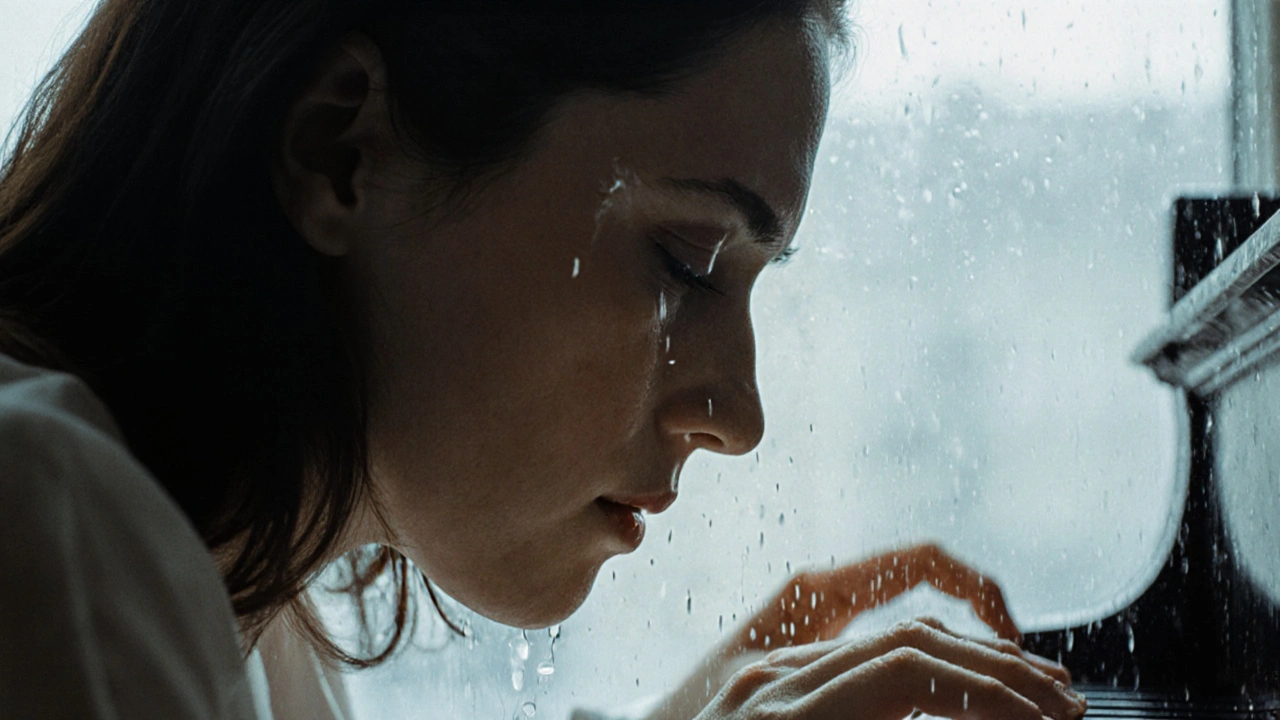
Same with The Piano (1993). The scene where Ada and Baines make love in the rain isn’t about nudity. It’s about the first time she chooses to be seen-not as a mute woman, but as a person. The camera holds on her face, not her body. That’s the difference.
Who Gets to Tell These Stories?
For decades, arthouse erotica was dominated by male directors. The result? A lot of beautiful women, often passive, often silent, often serving male fantasy under the guise of “art.” That’s changing. Female and non-binary filmmakers are reshaping the genre by reclaiming the gaze.
Look at Titane (2021) by Julia Ducournau. It’s grotesque, sensual, and deeply strange. There’s nudity. There’s bodily transformation. But it’s never for the viewer’s pleasure. It’s about identity, alienation, and the horror of being trapped in a body you don’t recognize. The eroticism is unsettling because it’s not meant to be consumed-it’s meant to be felt.
Or Women Talking (2022), which has no explicit sex scenes at all. Yet the entire film is saturated with the weight of sexual violence, silence, and the quiet rebellion of women choosing their own futures. The absence of erotic imagery speaks louder than any close-up ever could.
Why This Genre Still Matters
Arthouse erotica isn’t about sex. It’s about truth. About how people connect-or fail to connect-when language fails. In a world where algorithms push us toward quick, loud, and easy stimulation, these films remind us that desire is slow, messy, and deeply personal.
They challenge the idea that nudity equals sexuality. That moans equal passion. That exposure equals honesty. The most erotic moments in cinema often happen without a single touch. A hand reaching across a table. A sigh in the dark. The way someone looks at you when they think you’re not watching.
These films demand patience. They ask you to sit with discomfort. To question your own expectations. To wonder: Why am I looking? What am I really seeing?
Where to Start
If you’re curious about arthouse erotica but don’t know where to begin, start here:
- Portrait of a Lady on Fire (2019) - Quiet, devastating, and achingly beautiful. No sex scenes, but every frame pulses with desire.
- The Handmaiden (2016) - A slow-burn erotic thriller with layers of deception, power, and genuine tenderness.
- Blue (1993) - A film made after the director lost his sight. It’s all sound, memory, and color. The eroticism is emotional, not physical.
- Secretary (2002) - A romantic drama disguised as a BDSM story. It’s about healing, not fetish.
- Titane (2021) - Not for everyone. But if you want to see how far eroticism can stretch into surrealism and horror, this is it.
These films don’t ask you to enjoy them. They ask you to understand them.
Final Thought: Art Doesn’t Need Permission
Some will always call arthouse erotica immoral, decadent, or unnecessary. That’s their right. But art has never been about what’s comfortable. It’s about what’s true. And desire-real, messy, complicated desire-is one of the most human truths there is.
When filmmakers treat it with honesty, not exploitation, they don’t cross a line. They redraw it.
Is arthouse erotica the same as porn?
No. Porn is designed to stimulate arousal quickly and directly. Arthouse erotica is designed to provoke thought, emotion, or reflection. It may include nudity or sexual acts, but those elements serve a narrative or psychological purpose-not just physical release. The pacing, framing, and intent are fundamentally different.
Why do some people find arthouse erotica offensive?
Because it often challenges societal norms around sexuality, gender, and power. When a film shows a woman in control of her desire, or depicts intimacy without romance, it disrupts traditional narratives. Some viewers mistake this disruption for indecency. But the offense usually comes from discomfort with truth, not the imagery itself.
Can a film be erotic without showing nudity?
Absolutely. Films like The Piano and Women Talking prove that. Eroticism lives in tension, glances, silence, and unspoken longing. A hand brushing against another’s, a shared breath in the dark, the way someone hesitates before touching-they can be more erotic than any explicit scene.
Are there modern directors known for this style?
Yes. Directors like Céline Sciamma (Portrait of a Lady on Fire), Park Chan-wook (The Handmaiden), Julia Ducournau (Titane), and Lucrecia Martel (The Headless Woman) are shaping the new wave. Their work focuses on female desire, psychological depth, and visual poetry over explicitness.
Is arthouse erotica only for film buffs?
Not at all. It’s for anyone who’s ever felt desire without words, or been moved by a look rather than a line. You don’t need to know film theory. You just need to be willing to sit with discomfort, to feel rather than consume. The best of these films speak to the quiet parts of you that mainstream media ignores.


Comments(10)