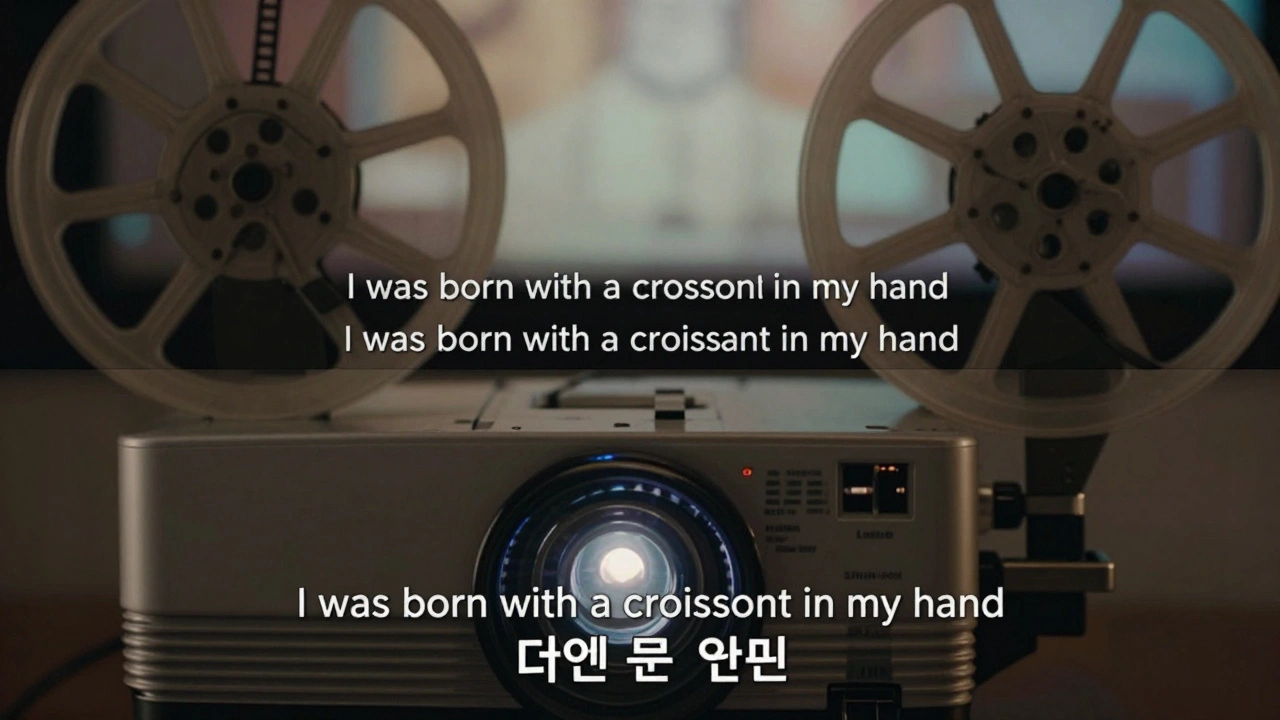
When you hit play on a foreign film on Netflix, Hulu, or Disney+, you’re not just watching a movie-you’re experiencing a carefully rebuilt version of it. The original dialogue, jokes, music cues, and even the way characters move through space have been reshaped for your culture. This isn’t magic. It’s localization-the quiet, complex process behind every subtitle and dubbed line you hear.
Subtitles: The Invisible Bridge
Subtitles are the most common form of localization on streamers. They’re cheaper, faster, and preserve the original performances. But they’re not just word-for-word translations. A 12-second line of Spanish dialogue might become five words in English because screen space and reading speed limit what viewers can absorb. Professional subtitlers aim for 14-18 characters per second. Too fast, and viewers miss it. Too slow, and the pacing feels off.Take a joke in a French comedy. The punchline relies on a pun involving a word that doesn’t exist in English. The subtitler doesn’t translate the pun-they replace it with a culturally equivalent joke. In one case, a French character says, “Je suis un vrai Parisien” (“I’m a real Parisian”), and the subtitle reads, “I was born with a croissant in my hand.” It’s not literal. It’s accurate in spirit.
Timing matters too. Subtitles must appear and disappear in sync with speech, but not so fast that they feel like a scrolling news ticker. Most platforms enforce a two-line limit per screen. If a character speaks rapidly, the subtitler must split lines intelligently-not mid-sentence, but at natural pauses. A bad subtitle can make a dramatic scene feel silly or a quiet moment feel rushed.
Dubbing: When Voice Becomes Identity
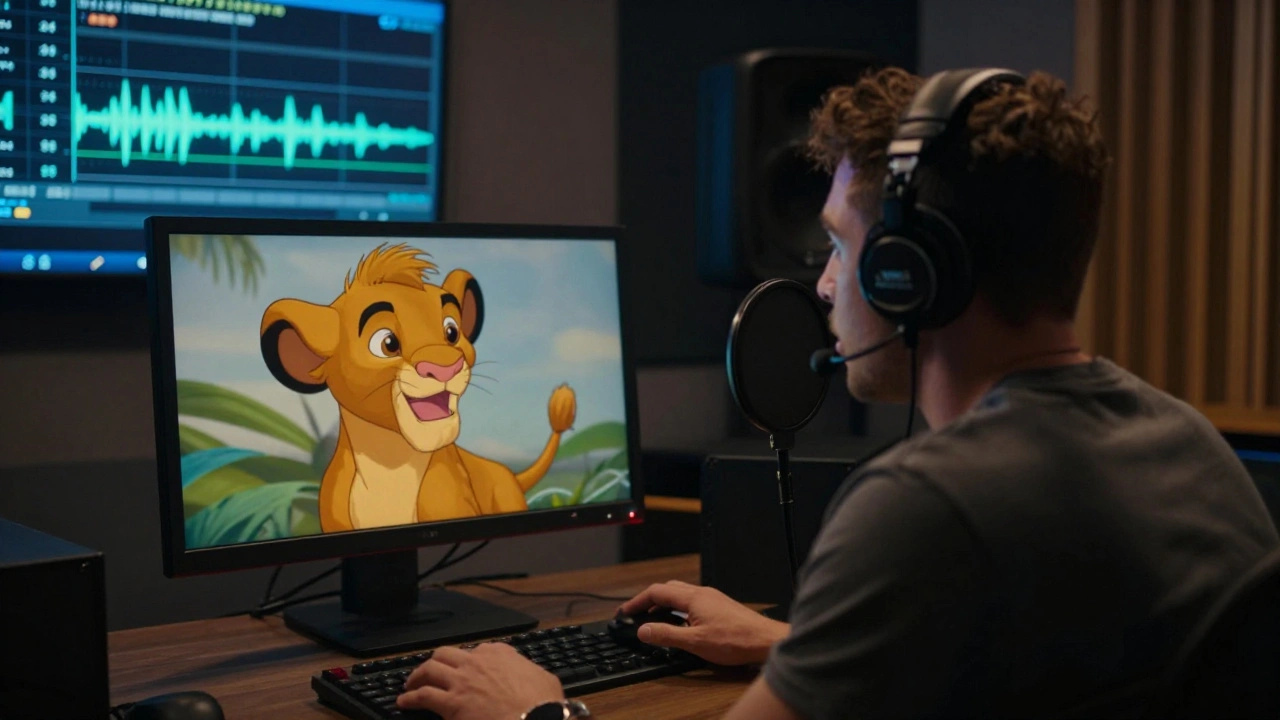
Dubbing is where localization gets theatrical. Instead of reading words on screen, you hear them spoken in your language, perfectly timed to lip movements. It’s harder than it looks.In Spanish-language dubs, actors often re-record lines in studios months after filming. They watch the original footage, matching mouth shapes to syllables. A single word like “amor” might need to stretch over three frames of lip movement. If the dubber says it too fast, the character looks like they’re stuttering. Too slow, and they look like they’re drunk.
Some dubs become iconic. The German dub of The Lion King gave Simba a voice that felt more serious, almost Shakespearean. In Japan, the dub of Friends turned Chandler Bing’s sarcastic one-liners into witty, exaggerated punchlines that matched Japanese comedic timing. These aren’t translations-they’re performances.
But dubbing has limits. Big-budget films often use A-list voice actors for main characters, but minor roles get less attention. You might hear a Hollywood star’s voice in English, then a lesser-known voice actor in the Spanish dub. That mismatch can break immersion. And some actors refuse to dub their own work. In those cases, the studio hires someone who sounds similar. Sometimes, the difference is obvious.
Cultural Edits: Rewriting the Story Without Changing the Plot
Sometimes, the problem isn’t language-it’s meaning.A scene in a Korean drama shows a character bowing deeply to their boss. In the U.S. version, the bow is cut. American viewers might interpret it as subservience, not respect. So the edit removes the gesture and replaces it with a nod. The plot stays the same. The emotion changes.
Religious references get rewritten too. In an Italian film, a character says, “Dio mi aiuti” (“God help me”). In the Arabic dub, that becomes “Allah yusahhil” (“May Allah make it easy”). In a Chinese version, it might become “天哪” (“Oh heavens”)-neutral, but still emotional.
Even humor gets retooled. A British sitcom joke about tea culture won’t land in Brazil. Instead, the script swaps tea for coffee and adds a line about morning rush hour. The joke’s structure stays intact-misunderstanding + absurdity-but the cultural fuel changes.
Some edits go deeper. In the Hindi dub of Avengers: Endgame, a line where Tony Stark says, “I am Iron Man,” was changed to “Main Iron Man hoon.” It’s a direct translation. But in the Thai version, the line became, “This is who I am.” The studio feared the literal translation sounded too boastful in Thai culture, where humility is valued. That’s not censorship. It’s cultural adaptation.
Why Some Films Lose Their Soul in Translation
Not every localization works. Sometimes, the effort backfires.There’s a famous case with the film Parasite. In its original Korean version, the family uses honorifics constantly to show class differences. When subtitled into English, those nuances vanished. English doesn’t have the same layered honorific system. Viewers missed how the maid’s speech shifted subtly when she was around the rich family versus her own. The subtitles didn’t explain it. The film lost part of its social commentary.
Another example: a Norwegian thriller used silence as a tool. Long pauses between lines built tension. In the French dub, the editor added background music to “fill the quiet.” The result? The dread disappeared. The film felt like a TV soap opera.
And then there’s the “Netflix effect.” Some streamers automatically generate AI subtitles for non-English content. They’re fast, but often wrong. Names get misspelled. Context gets lost. A line like “I’m not your father” becomes “I’m not your dad,” and suddenly the emotional weight changes. AI doesn’t know when a whisper matters more than a shout.
What Makes a Good Localization?
A great localization doesn’t make you think, “This was translated.” It makes you forget it was ever foreign.It respects the original tone. A dark horror film stays dark. A lighthearted rom-com stays silly. The translation doesn’t try to “improve” it.
It uses native speakers-not just bilingual translators. A person who grew up in Mexico City will know how a teenager in Guadalajara actually speaks. That’s different from someone who studied Spanish in college.
It involves the filmmakers. When the director of Money Heist was consulted during the English dub, they insisted on keeping the Spanish curse words. “That’s how they talk,” they said. The result? The English version kept the raw, unfiltered energy of the original.
And it tests with real audiences. Before release, streamers often run focus groups in target markets. They show the dubbed or subtitled version to locals and ask: Did it feel natural? Did you laugh at the right moments? Did anything feel off? If 30% of viewers say a line sounded weird, they re-record it.
The Future: AI, Personalization, and Choice
Streamers are starting to experiment with more flexible localization. Netflix now lets you choose between multiple subtitle styles: “Standard,” “Literal,” and “Fun.” The “Fun” version adds emojis and slang. The “Literal” version keeps every word, even if it’s awkward.Some platforms are testing AI-powered dubbing that can mimic an actor’s voice. You can now watch a Japanese anime with a voice that sounds exactly like the original performer-just speaking English. It’s not perfect yet. The tone can feel robotic. But it’s getting closer.
Soon, you might pick your own localization style: “British English,” “Indian English,” “Brazilian Portuguese,” or even “Slang-heavy.” One day, a film could have 20 different versions of the same scene, tailored to regional dialects. The story stays the same. The feeling changes with your background.
Localization isn’t about making films universal. It’s about making them feel personal. The best versions don’t erase the original-they honor it, reshape it, and hand it back to you like a gift wrapped in your own culture’s language.
Why do some subtitles feel rushed or hard to read?
Subtitles are limited by reading speed and screen space. Most platforms allow only 14-18 characters per second, and two lines per screen. If the original dialogue is too long, subtitlers must cut words, simplify grammar, or split lines at natural pauses. Rushed subtitles happen when the translation doesn’t account for how fast people actually read, especially on smaller screens.
Is dubbing better than subtitles?
Neither is better-it depends on what you want. Subtitles preserve the original audio, tone, and emotion, which is great for films where performance matters. Dubbing feels more immersive if you don’t like reading while watching, especially for action or fast-paced scenes. But dubbing can lose nuance if the voice actor doesn’t match the original actor’s delivery. Many viewers switch between both depending on the film.
Why do some films change jokes or cultural references in dubs?
Jokes and references often rely on language-specific puns, history, or social norms. A British joke about tea or a Japanese reference to a local TV show won’t make sense elsewhere. Translators replace them with culturally similar equivalents-like swapping a reference to the Queen with one to a popular local celebrity. It’s not censorship; it’s making sure the humor lands.
Do streamers edit films for religious or political reasons?
Yes, but it’s usually subtle. Religious phrases like “God” might become “heaven” in Muslim-majority markets. Political references tied to specific countries might be softened to avoid offense. These edits aren’t about banning content-they’re about avoiding unintended offense in cultures with different norms. Most streamers work with local consultants to decide what to change.
Can AI replace human translators for localization?
AI can handle basic translation and even mimic voices, but it still struggles with tone, emotion, and cultural context. It doesn’t know when a pause is meaningful or when a swear word carries weight. Human translators understand how people really speak-not just what words mean, but how they feel. For now, AI is a tool, not a replacement. The best results come from humans using AI to speed up the process.



Comments(8)