When you’re making a film, music isn’t just background noise-it’s part of the storytelling. A well-placed song can make a scene unforgettable. A poorly budgeted score can sink your whole project. The truth is, most indie filmmakers underestimate how much music costs, and end up either overpaying for songs they don’t need or missing out on the perfect track because they ran out of cash. So how do you actually balance hiring a composer for an original score with licensing existing songs? It’s not magic. It’s math.
Know Your Music Costs Up Front
There are two main types of music in films: original score and licensed tracks. Each has wildly different price tags, and mixing them without a plan is how budgets explode.
An original score means hiring a composer to write custom music for your film. On a low-budget indie film ($500K-$2M), you’re looking at $10,000-$50,000 for the full score. That includes writing, arranging, recording with live musicians, and mixing. For bigger films, composers charge $100,000-$500,000+. You’re not just paying for notes-you’re paying for time, studio space, musicians, and editing.
Licensed songs? Those are trickier. A popular song from a major artist can cost $50,000 to $500,000 just for synchronization rights (the right to use the song in your film). Add in master recording rights, and you’re looking at double that. Even lesser-known indie tracks can run $5,000-$20,000. And don’t forget: if you want to use a song in trailers, TV spots, or streaming platforms, you need additional licenses-and those cost extra.
Here’s the hard truth: you can’t afford all the music you want. So you have to choose.
Start With the Story, Not the Song
Too many filmmakers fall in love with a song and then build their scene around it. That’s backwards. The music should serve the story-not the other way around.
Ask yourself: does this scene need a lyric-driven song, or would an instrumental score work better? A moment of quiet tension? A character’s emotional breakthrough? A chase scene? These are the questions that determine whether you need a licensed track or a custom composition.
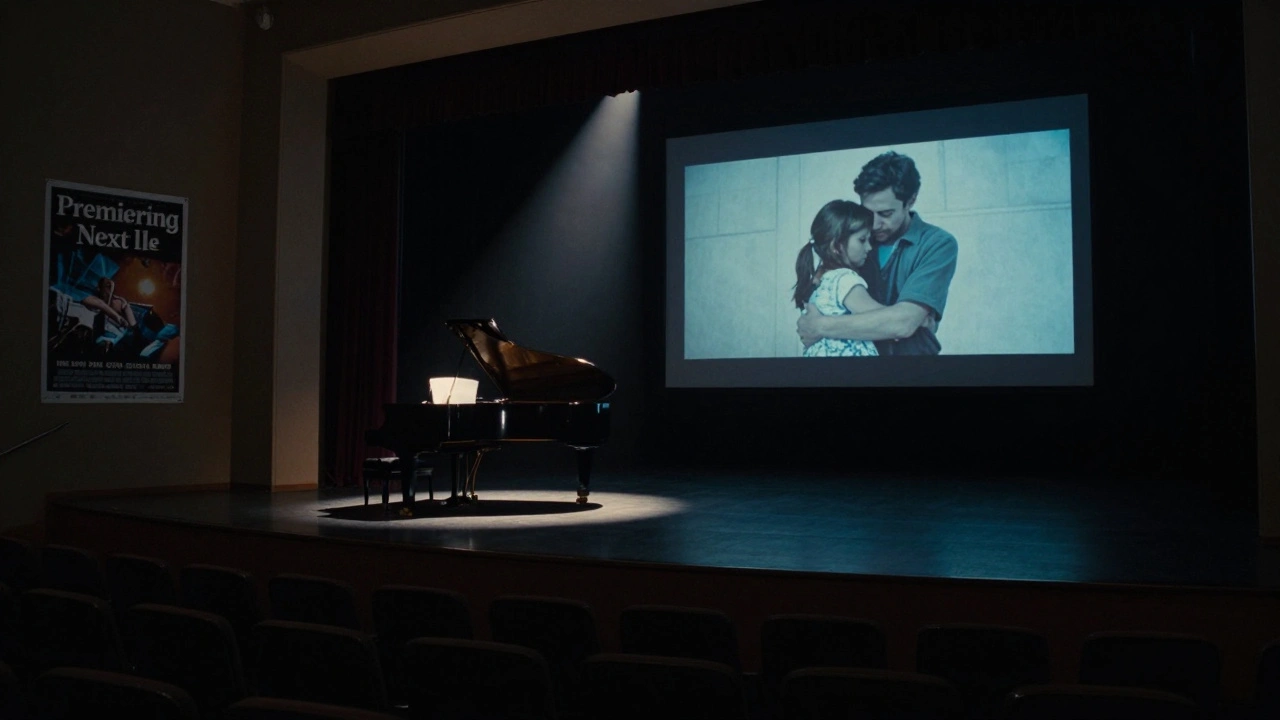
For example, if your film is set in 1983 and you need a song that captures the era, licensing a real track might be worth it. But if you’re telling a universal emotional story-say, a father and daughter saying goodbye-original music will feel more personal and cost less in the long run.
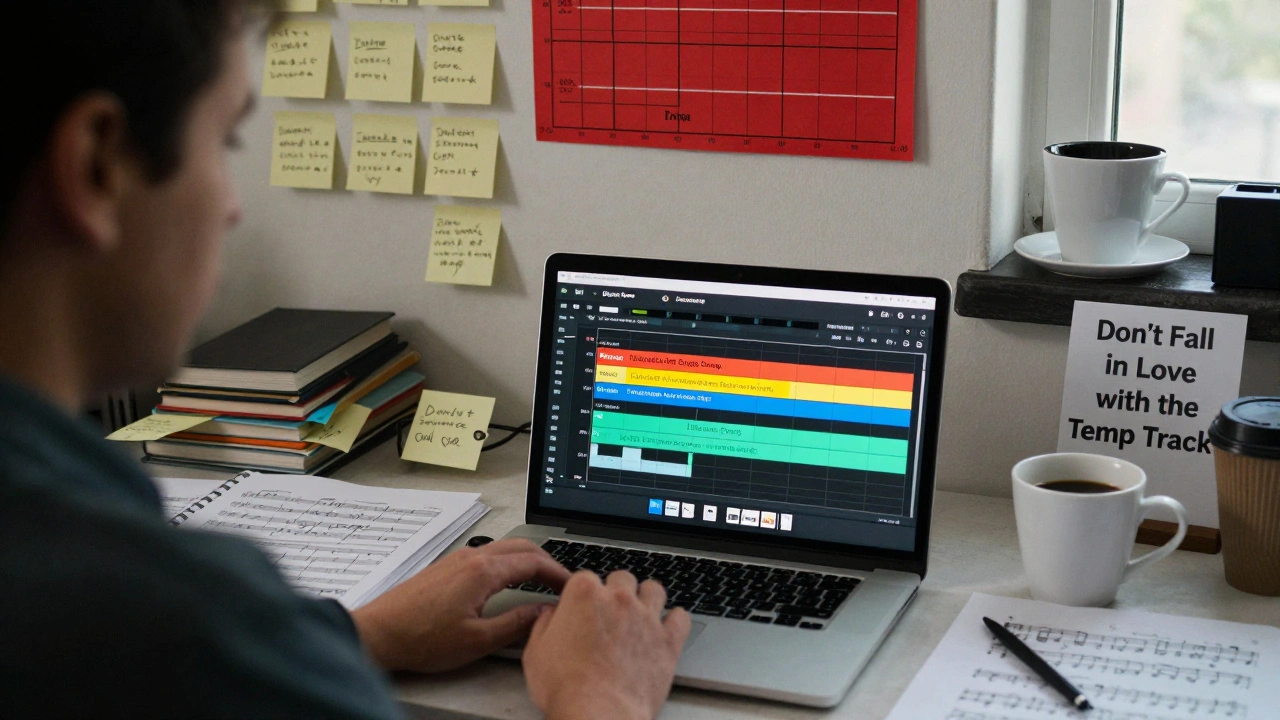
Use temp tracks during editing to find the right feel, but don’t get attached. A temp track is a placeholder, not a promise. If you fall in love with a Beyoncé song as your temp, you’re setting yourself up for disappointment-or bankruptcy.
How to Split Your Budget: A Real-World Example
Let’s say your film has a $150,000 music budget. Here’s how a smart allocation looks:
- Original score: $75,000 - This covers a composer, 3 recording sessions with a 12-piece ensemble, and mixing. You get 45 minutes of custom music.
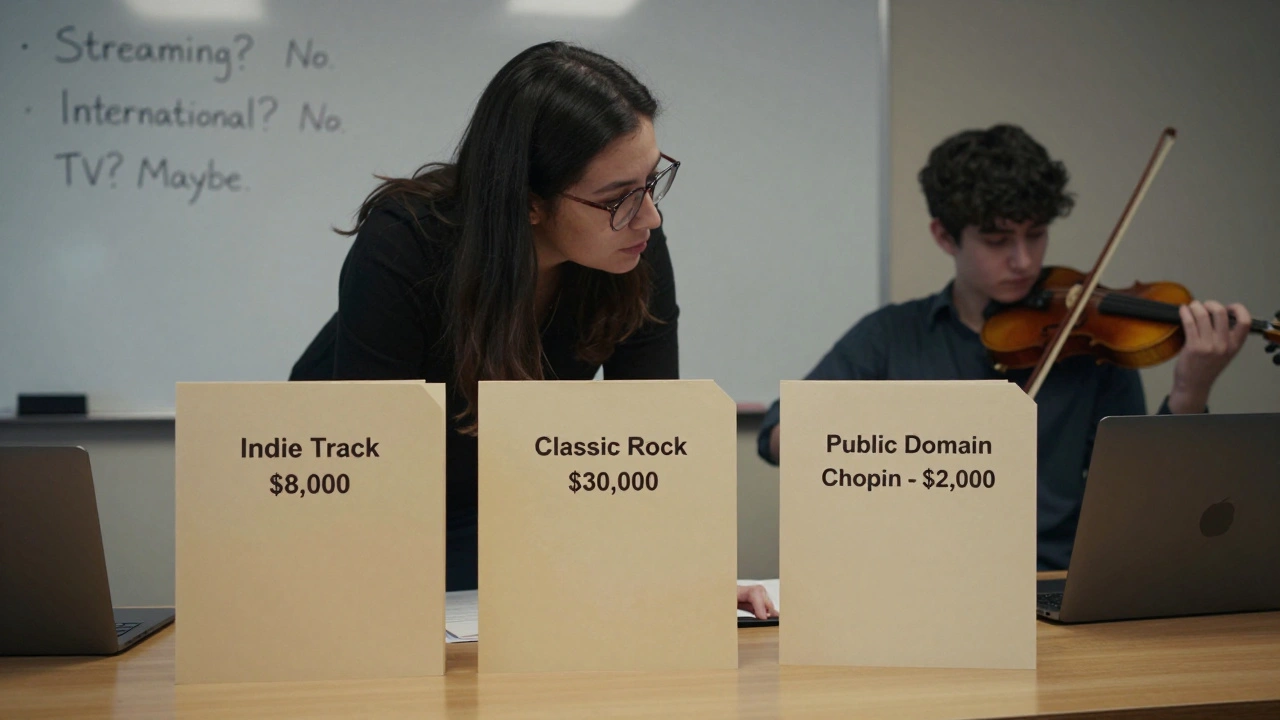
- Licensed songs: $50,000 - You use 3 songs: one indie track for the opening ($8,000), one classic rock song for a key montage ($30,000), and one short instrumental loop for a transition ($12,000).
- Music supervision: $15,000 - A professional music supervisor helps you find affordable tracks, negotiate rights, and avoid legal traps. This isn’t optional.
This split gives you emotional depth from the score and cultural punch from the songs. It’s balanced. It’s doable.
Compare that to a bad budget: $10,000 for a composer, $120,000 for one licensed song, and $20,000 left over for legal fees after you get sued for using a song without proper clearance. That’s not a film-it’s a lawsuit waiting to happen.
Use Licensing Smartly: Less Is More
Don’t use a licensed song just because it’s cool. Use it because it’s necessary.
Every licensed song adds layers of complexity:
- You need both synchronization and master recording rights.
- Some rights holders won’t license for streaming or international release.
- Clearances can take 6-12 weeks. If you’re on a tight deadline, you might not make it.
- Some songs have multiple owners-publishers, estates, record labels. You need everyone to say yes.
Instead of trying to license 10 songs, pick 2 or 3 that are absolutely essential. A single powerful song in the climax can do more than five mediocre ones scattered throughout.
And here’s a pro tip: use public domain music. Classical pieces like Mozart or Vivaldi don’t require licensing fees. You still pay for arrangement and recording, but you avoid the nightmare of negotiating with rights holders. A well-performed Chopin nocturne can be more moving than a pop song.
Don’t Skip Music Supervision
Music supervision is not a luxury. It’s your insurance policy.
A good music supervisor knows:
- Which songs are actually available to license (many aren’t)
- Who to contact for rights (not the artist, but their publisher)
- How to negotiate lower fees for indie films
- How to get blanket licenses for festivals
- When to walk away from a song that’s too expensive
For under $15,000, a music supervisor can save you $100,000 in legal fees and missed deadlines. They’ll find alternatives you never thought of-like a lesser-known band from Brazil that sounds exactly like your temp track, but costs $3,000.
And if you’re on a tight budget? Look for music supervisors who work on spec-they take a percentage of future revenue instead of upfront fees. It’s risky for them, but it’s a lifeline for you.
What Happens When You Get It Wrong
There are horror stories out there. One filmmaker spent $80,000 on a single song for their festival premiere-only to find out the rights didn’t cover digital distribution. Their film vanished from Netflix. Another used a song that was later pulled from YouTube because the artist’s estate changed licensing terms. Suddenly, their entire marketing campaign was silent.
These aren’t outliers. They’re common. And they’re avoidable.
Always get your licenses in writing. Always confirm the scope: which platforms, which territories, which uses (theatrical, streaming, TV, merch). Never assume. Always ask.
Final Rule: The 70/30 Guideline
Here’s the simplest way to think about it: spend 70% of your music budget on original score, and 30% on licensed songs.
Why? Because original music is yours forever. Once you pay for it, you own the rights. You can use it in trailers, sequels, YouTube clips, and fan edits. Licensed songs? They’re rented. They can be taken away. They come with strings.
That 70/30 split isn’t a law-it’s a rule of thumb for films under $5 million. If you’re doing a big studio picture, you might flip it. But for most indie films, the score is your long-term asset. The songs are your flash.
Build your emotional core with original music. Use licensed songs to punctuate, not to carry the weight.
What If You Have No Budget?
Some films are made for $20,000. You can’t hire a composer or license anything. So what do you do?
- Use royalty-free music from trusted libraries like Free Music Archive or a curated collection of legal, royalty-free tracks for indie filmmakers.
- Collaborate with music students. Film schools have composers dying to build their portfolios.
- Record your own sounds. A door slamming, a clock ticking, a voice whispering-these can become your score.
- Use public domain music. Bach, Beethoven, Debussy-they’re all free to use.
It’s not ideal. But it’s possible. And many Oscar-nominated films started this way.
How much does it cost to license a song for a film?
Licensing a song can range from $5,000 for an indie track to over $500,000 for a hit song by a major artist. You need two licenses: synchronization (to use the composition) and master recording (to use the specific version). Costs depend on the song’s popularity, how it’s used (opening credits vs. background), and whether you need rights for streaming, TV, or international release.
Can I use a popular song if I don’t have money for licensing?
No. Even if you’re not making money from your film, using a copyrighted song without permission is illegal. Rights holders can and do sue for infringement, even for festival screenings. Your film could be pulled from platforms, and you could face legal penalties. Always clear rights before finalizing your edit.
Is it cheaper to hire a composer or license songs?
For most indie films, hiring a composer is cheaper in the long run. A custom score costs $10,000-$50,000 and becomes your permanent asset. Licensing one major song can cost more than that-and you don’t own it. Plus, licensed songs often come with restrictions on how and where you can use them.
What’s the difference between synchronization and master rights?
Synchronization rights let you pair a song’s composition (the melody and lyrics) with your visuals. Master rights let you use the specific recording (the version by the artist). You need both. For example, if you want to use Adele’s "Hello," you need permission from the songwriter (sync) and from her record label (master). These are two separate negotiations.
Can I use public domain music without paying anything?
Yes, but not entirely. The music itself-like Beethoven’s Fifth Symphony-is free to use. But if you want a professional recording of it, you’ll need to pay musicians or a studio to perform and record it. That’s where the cost comes in. You’re not paying for the composition-you’re paying for the performance.





Comments(7)