
When a cartoon character opens their mouth and speaks, it should feel natural-like they’re really thinking, feeling, and reacting. But here’s the truth: no one’s actually saying those words in front of a microphone while the animator draws every frame. That’s where lip sync comes in. It’s the invisible art that turns recorded voice lines into believable speech on screen. Get it wrong, and the character feels robotic. Get it right, and the audience forgets they’re watching drawings-they just believe the story.
Why Lip Sync Matters More Than You Think
Lip sync isn’t just about matching mouth shapes to sounds. It’s about rhythm, emotion, and timing. Think about how you speak when you’re excited versus when you’re tired. Your jaw moves differently. Your lips purse tighter. Your tongue pushes against your teeth. Animated characters need those same nuances-or they’ll feel flat, even if the voice actor gives a brilliant performance.
Take Spider-Man: Into the Spider-Verse. Miles Morales doesn’t just move his lips-he shuffles his jaw, bites his cheek when he’s nervous, and lets his mouth hang open slightly when he’s stunned. These tiny details make him feel alive. That’s not luck. It’s deliberate lip sync design.
Animation studios used to rely on a basic system: eight mouth shapes (A, B, C, D, E, F, G, H) to represent all English phonemes. But modern animation doesn’t settle for that. Audiences now expect subtlety. They notice when a character’s lips don’t move the way real lips do during a whisper, a laugh, or a stutter.
The Anatomy of a Lip Sync Frame
Every spoken word breaks down into sounds called phonemes. In English, there are about 44 of them. But animators don’t need to draw 44 unique mouth shapes. They group them into broader categories called visemes.
Here’s how it works:
- Open (A) - Sounds like ‘ah’, ‘aw’, ‘o’ (as in ‘hot’)
- Wide (B) - Sounds like ‘ee’, ‘ay’, ‘i’ (as in ‘see’)
- Close (C) - Sounds like ‘m’, ‘b’, ‘p’
- Tongue Up (D) - Sounds like ‘t’, ‘d’, ‘n’
- Tongue Back (E) - Sounds like ‘k’, ‘g’, ‘ng’
- Lip Round (F) - Sounds like ‘w’, ‘oo’, ‘o’ (as in ‘who’)
- Neutral (G) - The resting position between words
- Half Open (H) - Sounds like ‘uh’, ‘er’, ‘schwa’
These eight shapes cover 90% of spoken English. But the real magic happens in the transitions. Animators don’t just snap from one shape to the next. They blend them. A word like ‘cat’ might start with a Wide shape for the ‘c’ sound, slide into a Close for the ‘a’, then flick to Tongue Up for the ‘t’-all in under half a second.
Timing Is Everything
Most beginners think lip sync is about matching mouth shapes to syllables. That’s only half the story. The real challenge is matching the energy behind the words.
Let’s say a character says, ‘I can’t believe this!’ with pure shock. The voice actor might hold the ‘I’ for a beat, then rush through ‘can’t believe’ and explode on ‘this!’ The animator has to mirror that. If they draw each syllable with equal timing, the line feels flat-even if the mouth shapes are perfect.
Good lip sync follows the same rhythm as the voice track. That means:
- Pauses before and after lines need to be animated too
- Emphasis on certain words requires extra jaw movement or eyebrow lift
- Stutters, breaths, and sighs aren’t just audio-they need visual weight
At Pixar, animators often watch the voice recording on loop while sketching. They don’t just count syllables-they feel the emotion. If the actor gasps, the character’s chest rises. If they laugh mid-sentence, the mouth opens wider than normal. These aren’t just technical choices. They’re storytelling tools.
Tools of the Trade
Modern studios use software that helps automate parts of lip sync-but never replaces the artist’s judgment.
Tools like Adobe Character Animator and Blender’s Auto Lip Sync can generate rough mouth shapes from audio files. They’re great for rough animatics or indie projects with tight deadlines. But they’re not enough for feature films.
Why? Because they treat all voices the same. A child’s voice has faster, sharper movements. An older character might speak slower with more pauses. A drunk character slurs. A robot doesn’t move its lips at all-until it tries to fake being human.
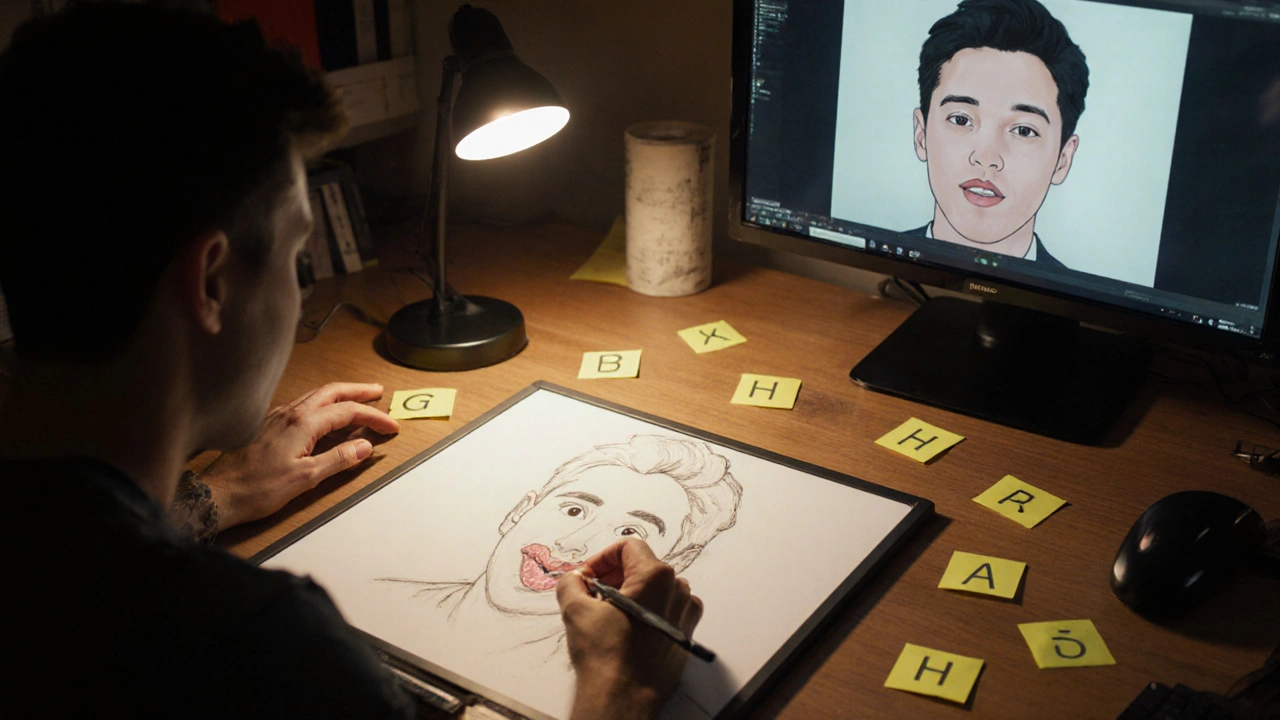
Professional animators use these tools as a starting point. Then they go frame by frame, adjusting each viseme to match the actor’s unique delivery. Some studios even record reference video of the voice actor speaking the lines. They study how their face moves, then translate that into animation.
Common Mistakes and How to Fix Them
Even experienced animators slip up. Here are the most common lip sync errors-and how to avoid them:
- Mouth stays open too long - After a vowel sound ends, the mouth should start closing. If it doesn’t, the character looks like they’re frozen mid-sentence.
- Too many shapes - Don’t switch visemes for every tiny sound. Blend. Over-animation looks jittery and unnatural.
- Ignoring breath - People breathe before they speak. A quick inhale before a line adds realism. Skip it, and the character sounds like they’re telepathically talking.
- Matching every ‘t’ and ‘k’ - Hard consonants don’t always need a full viseme. Sometimes a quick flick of the tongue or jaw is enough. Less is more.
- Forgetting the jaw - Lips don’t move alone. The jaw drops, tilts, and shifts. If the jaw stays still, the mouth looks like it’s floating.
One trick animators use: mute the audio and watch the lip sync alone. If it still looks believable, you’ve nailed it. If it looks robotic, go back and adjust the timing.
Real-World Examples
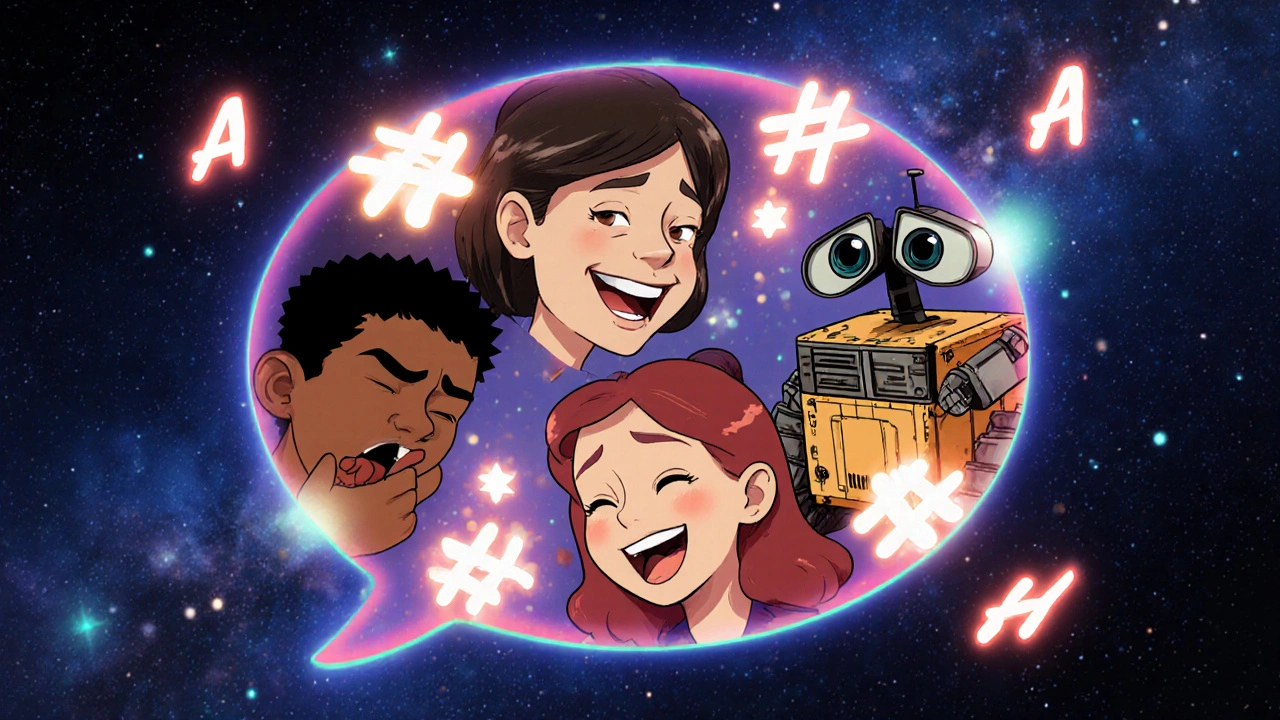
Look at The Mitchells vs. The Machines. The main character, Katie, talks fast, interrupts herself, and laughs mid-sentence. Her lip sync is chaotic-but intentional. Each mispronounced word, each breathy laugh, each rushed syllable matches her personality. It’s not perfect. And that’s why it works.
Compare that to Wall-E. Wall-E doesn’t speak English. He beeps and whirs. But his ‘speech’ is still synced. His eye blinks match the rhythm of his sounds. His head tilts with the pitch. He doesn’t have lips-but his entire body becomes his mouth.
Even non-human characters need lip sync. It’s not about realism. It’s about clarity. The audience needs to know when a character is speaking, what they’re feeling, and how they’re saying it.
How to Practice Lip Sync Yourself
If you’re learning animation, here’s how to build your lip sync skills:
- Record yourself saying simple phrases: ‘Hello,’ ‘I’m hungry,’ ‘What’s going on?’
- Watch the video without sound. Trace the movement of your lips and jaw with your finger.
- Try drawing just five frames: start, peak, end, and two in-betweens.
- Repeat with different emotions: angry, scared, sleepy, excited.
- Use free tools like Blender or OpenToonz to animate your own voice clips.
Don’t aim for perfection. Aim for believability. A slightly off lip sync that feels real is better than a perfect one that feels mechanical.
What’s Next for Lip Sync Animation?
AI is starting to help with lip sync-tools like NVIDIA’s VASA and Meta’s Audio2Face can generate realistic facial animations from audio in seconds. But they still struggle with style. They can make a face move, but they can’t make it act.
For now, the best lip sync still comes from animators who listen deeply, observe closely, and care about the character’s soul-not just the shape of their mouth.
Animation isn’t about drawing what you see. It’s about drawing what you feel. And that starts with the lips.
What are the eight basic mouth shapes used in lip sync animation?
The eight standard visemes are: Open (A) for ‘ah’ or ‘o’, Wide (B) for ‘ee’ or ‘ay’, Close (C) for ‘m’, ‘b’, ‘p’, Tongue Up (D) for ‘t’, ‘d’, ‘n’, Tongue Back (E) for ‘k’, ‘g’, ‘ng’, Lip Round (F) for ‘w’ or ‘oo’, Neutral (G) for resting, and Half Open (H) for ‘uh’ or ‘er’. These cover most English sounds, though skilled animators blend and adjust them for realism.
Do all animated characters need perfect lip sync?
No. Some characters, like Wall-E or Boo from Monsters, Inc., communicate without traditional speech. Others, like cartoonish sidekicks, use exaggerated or stylized lip movements. Perfect sync isn’t the goal-emotional clarity is. If the audience understands the feeling behind the words, the lip sync has done its job.
Can AI replace animators in lip sync work?
AI can generate rough lip sync quickly, but it can’t interpret emotion or character. Tools like VASA or Audio2Face produce technically accurate mouth movements, but they lack the nuance of a human animator who knows when a character should hesitate, swallow, or smirk mid-sentence. AI is a helper, not a replacement.
Why does lip sync look bad in low-budget animations?
Low-budget projects often use automated tools without manual refinement. They might snap between mouth shapes too quickly, ignore breaths, or use the same mouth positions for every character. Without attention to timing, emotion, and jaw movement, the result feels robotic and disconnected from the voice performance.
How do animators handle accents or dialects in lip sync?
Accents change how words are shaped. A Southern drawl stretches vowels; a British accent clips consonants. Animators study reference footage of real people speaking that dialect. They adjust viseme timing, mouth openness, and jaw movement to match the rhythm-not just the phonemes. It’s not about stereotypes-it’s about authenticity.



Comments(6)